What cultural etiquette should I know for Petra?
Jordan is conservative and Muslim-majority. Cover your shoulders and knees in Wadi Musa town. At Petra's archaeological site, dress is more relaxed because of the heat, but Bedouin families there still appreciate modesty. Greet everyone with "as-salamu alaykum," accept offered tea, use your right hand, and never photograph Bedouin women without asking.
The greeting that opens every door in Wadi Musa is "as-salamu alaykum." You'll hear it from hotel staff, taxi drivers, and the Bedouin guides stationed at the Visitor Centre near the site entrance. The Jordanian reply is "wa alaykum as-salam." Handshakes are warm and sometimes linger among men. If you're a man meeting a Jordanian woman, wait for her to extend her hand first. If she doesn't, place your right hand over your heart. In Jordanian social code, that gesture reads as respectful, not awkward. Worth noting, Jordanians tend to stand closer in conversation than most Western visitors expect, about 30-40 cm closer than the North American norm. Don't step back from it. In Wadi Musa, stepping away signals coldness.
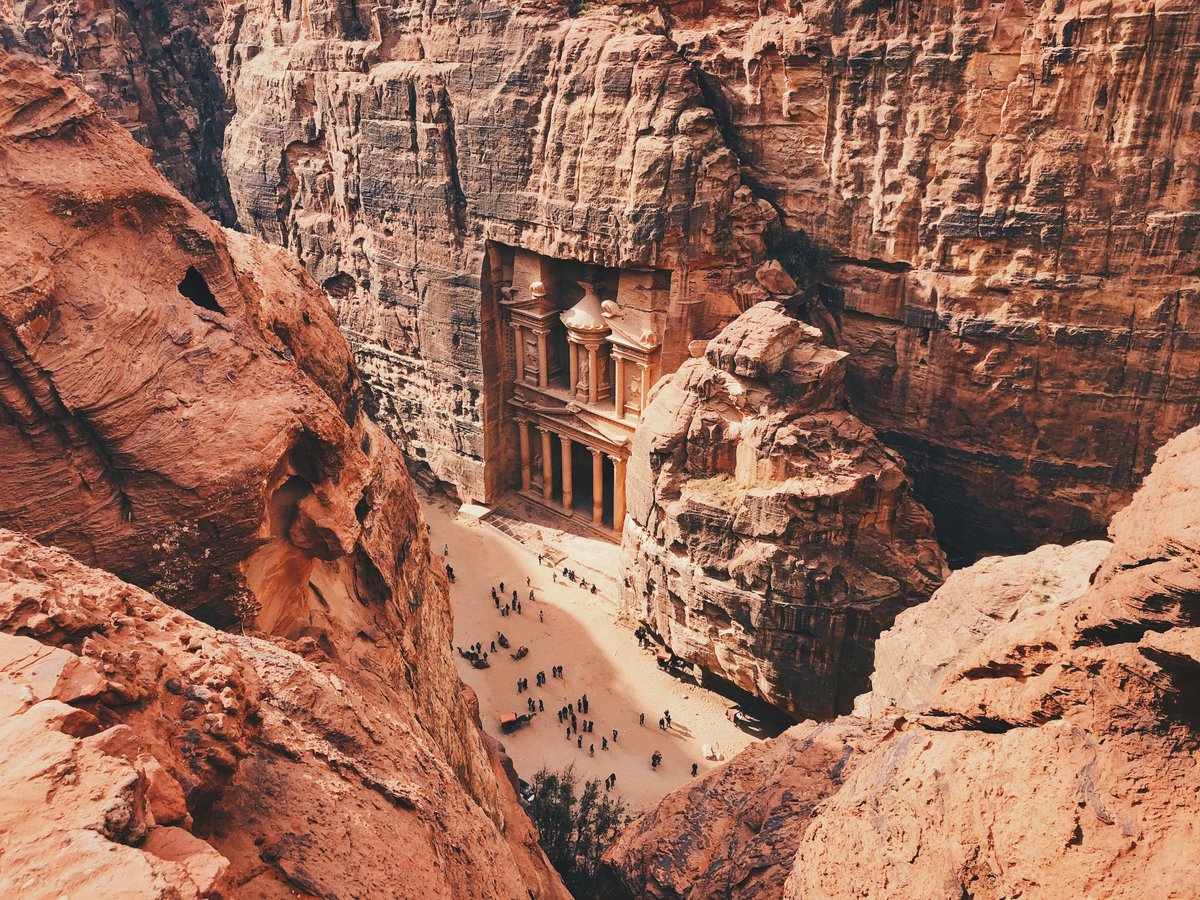
Inside the Siq and around Al Khazneh, you'll encounter Bedouin families who have lived in and around these sandstone canyons for generations. They might offer you sage tea brewed on a small fire between the rocks. The smoke smells sharp and herbaceous, and the tea tastes faintly of the desert sage that grows wild in the hills above Wadi Araba. Accept it. Refusing tea in Bedouin culture is a mild insult, and honestly, after the 1.2 km walk through the Siq in June heat that can reach 35°C by midday, you'll want it. If a Bedouin invites you to sit, remove your shoes at the edge of the rug. Never point the soles of your feet toward your host. Use your right hand to accept the glass. The left hand is considered unclean across Jordan, not only among the Bedouin. Photographing men selling souvenirs near Qasr al-Bint is usually fine if you ask first, but never photograph women or children without explicit permission. Some visitors treat the vendors as photo subjects rather than people. Don't be that visitor.
Wadi Musa is a conservative town of roughly 15,000 residents. Shoulders and knees should be covered when you're walking through town, buying supplies at the shops along Tourism Street, or eating at Al-Arabi or Petra Kitchen. At the archaeological site, the dress code is more relaxed because of the terrain and the heat, which currently sits around 22°C at 8am but climbs past 35°C by midday in June. Still, very short shorts or going shirtless draws stares from Bedouin staff. Jordan is about 97% Muslim. The call to prayer sounds five times daily from the mosques in Wadi Musa, and in the early morning it echoes off the sandstone with a resonance that stops you mid-step. During Ramadan, which shifts roughly 10 days earlier each year, avoid eating, drinking, or smoking in public before sunset. Some restaurants in Wadi Musa close during daylight hours in Ramadan. The Movenpick Resort at the site entrance and a few tourist-facing spots stay open but serve discreetly.
Tipping in Jordan follows a loose 10% guideline at sit-down restaurants. At casual spots near the Visitor Centre, rounding up by 1-2 JD (about $1.40-2.80) is the norm. Petra guides expect 10-20 JD for a half-day walk. Donkey and camel handlers who offer rides along the path to Ad Deir tend to ask for 5-10 JD, though the price is negotiable. Mind you, animal welfare at Petra has been a documented concern since at least the mid-2010s. The Brooke charity has worked with handlers on conditions for the working animals, and many visitors now walk the 800 steps to Ad Deir instead. Bargaining at the Bedouin stalls inside Petra is expected, but aggressive haggling over sandstone carvings and sand bottles that sell for 3-5 JD feels petty. These families earn most of their income during the October-to-April tourist season. A fair price, paid without theatrics, is better etiquette than a hard-won 1 JD discount.
Cultural norms
Jordanians greet with "As-salaam alaikum" and expect "Wa alaikum as-salaam" in reply before other conversation. A handshake between men is standard, but a man should wait for a Jordanian woman to extend her hand; if she does not, place your right hand over your heart. Small talk about family and health comes before business, and jumping straight to a request reads as rude.
At the archaeological site and inside the Petra Church remains, bare shoulders and shorts above the knee draw disapproving looks from local staff and Bedouin vendors. Women entering any mosque in Wadi Musa should carry a loose scarf to cover their hair and wear sleeves past the elbow. Men should avoid sleeveless shirts in the town centre, particularly near the mosque on the main street.
Tipping is expected: one to two Jordanian dinars for a guide through the Siq, the same for a donkey or camel handler, and roughly ten percent at restaurants in Wadi Musa. Pay in dinars rather than dollars or euros; foreign currency signals you have not bothered to exchange and vendors will round aggressively in their favour.
The fastest way to offend is photographing Bedouin women or children without asking, pointing the sole of your shoe toward someone while sitting, or refusing offered tea. A single sip and a "shukran" satisfies the obligation.
Greetings
"As-salamu alaykum" opens every interaction in Wadi Musa and across Jordan. The reply is "wa alaykum as-salam." Handshakes between men are warm and can linger. If you're a man meeting a Jordanian woman, wait for her to extend her hand. If she doesn't, place your right hand over your heart instead.
Don't do this
- Photographing Bedouin women or children without explicit permission
- Refusing offered tea or coffee from a Bedouin host
- Pointing the soles of your feet at anyone while seated
- Using your left hand to eat, pass items, or greet someone
- Eating, drinking, or smoking in public during Ramadan daylight hours
- Public displays of affection beyond a brief handshake in Wadi Musa
- Touching, climbing on, or carving initials into facades at Al Khazneh or Ad Deir
- Criticizing the Hashemite royal family or King Abdullah II
Tipping
10% at sit-down restaurants in Wadi Musa. Round up by 1-2 JD at casual spots. Petra guides expect 10-20 JD for a half-day. Donkey and camel handlers ask 5-10 JD, negotiable.
Dress code
Cover shoulders and knees in Wadi Musa town, its shops on Tourism Street, and restaurants like Al-Arabi. At Petra's archaeological site, the code relaxes because of the terrain, but going shirtless or wearing very short shorts draws quiet disapproval from Bedouin staff.
Religious norms
Jordan is about 97% Muslim. The call to prayer sounds five times daily from Wadi Musa's mosques. During Ramadan, avoid eating, drinking, or smoking in public before sunset. Some Wadi Musa restaurants close during daylight hours, though the Movenpick Resort and tourist hotels stay open discreetly. The Tomb of Aaron on Jabal Harun is a pilgrimage site for Muslims, Christians, and Jews. Remove shoes if invited into any prayer space.
Last verified by automated review (v1.7.2) on . What is automated review?