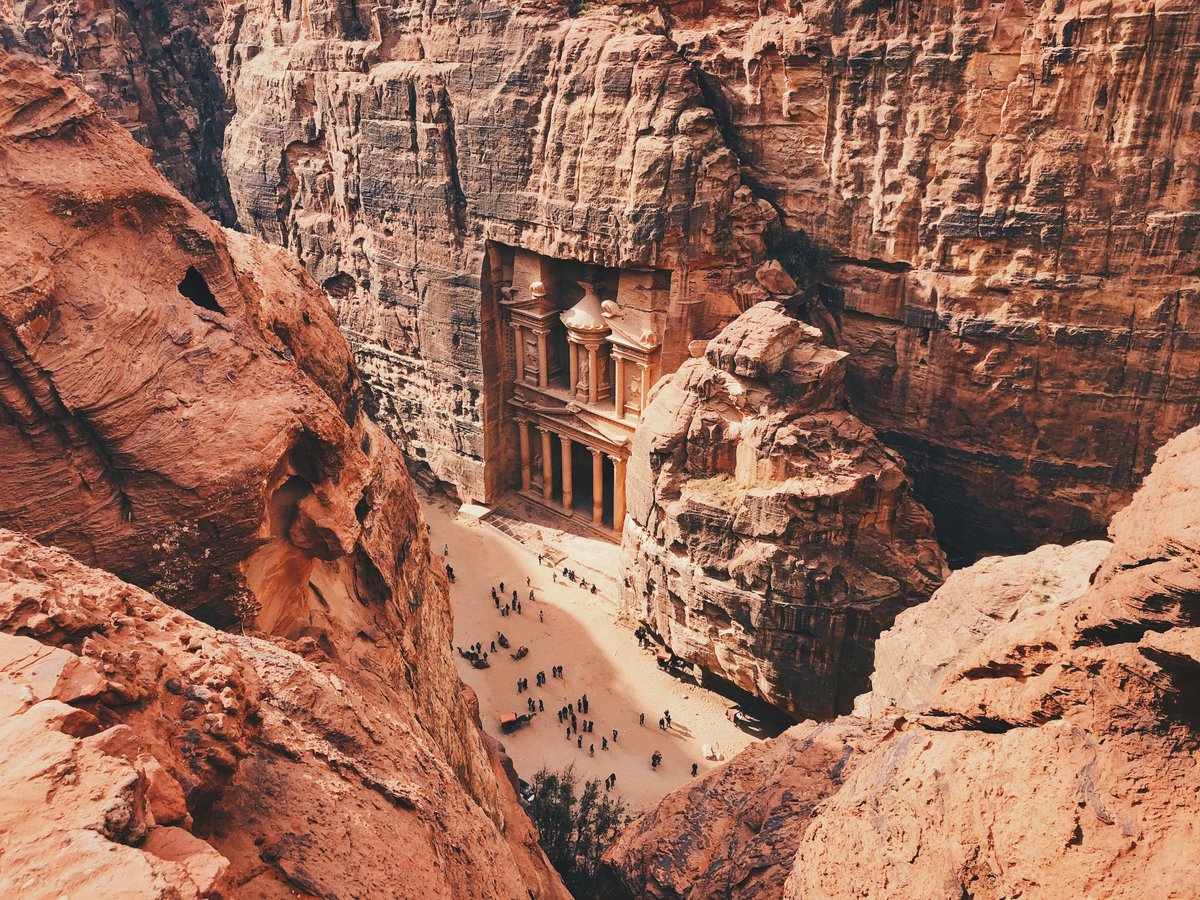
Petra's 50 JOD entry fee (about 70 USD as of 2024) gets most of the attention, and fair enough. It's one of the priciest single-site tickets on earth. But the Nabataeans carved more than one settlement into this sandstone, and some of it costs nothing to see. Siq al-Barid, commonly called Little Petra, sits about 9 kilometers north of the main gate and charges no admission. Neither does the Al-Beidha Neolithic Village next to it, one of the world's oldest known farming communities at roughly 7000 BCE. The Petra Museum, opened in 2019 near the Visitor Centre with Japanese JICA funding, currently appears to offer free admission and holds over 280 artifacts spanning from the Neolithic through the Islamic period. Then there's Wadi Musa itself. The town smells of roasting coffee and wild sage in the mornings, and its terraced hillsides run with water channels that have been flowing since Nabataean engineers first carved them. You could fill 3 solid days exploring Siq al-Barid, Al-Beidha, the Sharah Mountain trails, and Wadi Musa's old quarter without buying a single ticket.
Free attractions
-
Siq al-Barid (Little Petra)
A 350-meter narrow gorge with carved Nabataean facades, cisterns, and triclinia on both sides. The scale is smaller than the main Siq, but the carvings feel closer, more immediate. You can walk the full canyon in about 20 minutes, though most people linger longer. No fence, no gate, no ticket booth. Tour buses from Amman tend to arrive between 10am and noon, so the late afternoon light after 3pm is when you'll likely have the most space to yourself. The sandstone shifts from pale cream to warm rose depending on the hour. To be fair, the facades are less elaborate than what's inside the main park. But the silence and the freedom to explore at your own pace more than compensate.
Near Beidha, about 9km north of Wadi MusaArchaeological Site -
The Painted Biclinium (The Painted House)
Inside the last chamber on the right side of Siq al-Barid, look up. The ceiling still holds fragments of a roughly 2,000-year-old Nabataean fresco, one of the only surviving examples of Nabataean painting anywhere. The pigments show grapevines, birds, and small winged figures (erotes) in a Hellenistic style. The colors have faded, naturally, but the reds and greens are still visible in morning light when the sun angles in through the entrance. Conservation work has protected the ceiling with a modern roof, so the chamber feels slightly different from the surrounding rock-cut rooms. Most people rush through Little Petra and miss it entirely. Worth stopping for 10 minutes at minimum.
Inside Siq al-Barid (Little Petra)Archaeological Site / Art -
Al-Beidha Neolithic Village
About 1 kilometer north of Little Petra's entrance, this settlement dates to approximately 7000 BCE and ranks among the earliest known farming communities in the Levant. British archaeologist Diana Kirkbride excavated the site in the 1960s, uncovering round stone houses, grinding tools, and evidence of early domesticated barley and goat herding. Several structures have been partially restored with interpretive signage in English and Arabic, making it function as an open-air museum of pre-Nabataean life. The circular stone foundations sit low in the ground, and on a windy day you can hear the same dry whistle through the canyon walls that the Neolithic residents would have known. No entrance fee, and no staff on site most of the time. Worth noting that most visitors to Little Petra walk right past the turnoff to Al-Beidha without realizing it's there.
Near Siq al-Barid, about 1km northOpen-Air Museum / Archaeological Site -
Ain Musa (Moses' Spring) and Gardens
The spring in central Wadi Musa where local tradition holds that Moses struck the rock and water flowed. A small white-domed structure marks the spot, and the surrounding area has been planted with olive trees, jasmine, and flowering shrubs that make it one of the few genuinely green patches in this dry landscape. The water still flows, piped now into the town's irrigation channels. Mornings at Ain Musa tend to be noticeably cooler than midday, and the scent of jasmine carries in the still air before the heat builds. Free to walk through at any hour. The garden area is small, maybe 15 minutes of wandering, but it gives a different texture to a day spent mostly on bare rock.
Wadi Musa centerHistorical Landmark / Garden -
Petra Museum
Opened in 2019 with funding from Japan's JICA cooperation program, this standalone building sits near the Petra Visitor Centre at the park entrance. It currently appears to offer free admission independent of the 50 JOD park ticket, though you might want to confirm at the door as policies can shift. The collection spans roughly 9,000 years, from Neolithic tools found at Al-Beidha to Nabataean pottery, Roman-era coins, and Islamic-period ceramics. Around 280 artifacts are on display across several chronologically arranged galleries. The building is air-conditioned, which on a 38-degree July afternoon in Wadi Musa is worth noting on its own. Plan about 45 minutes to see everything properly.
Near Petra Visitor Centre, Wadi MusaMuseum -
Wadi Musa Old Quarter
The older part of town climbs the hillside above the main commercial strip, with narrow stone-stepped lanes and flat-roofed houses that predate the tourism boom of the 1990s. You'll pass small grocery shops, a few traditional bakeries where flatbread comes out of tabun clay ovens around 7am, and residential streets where children play in the late afternoon. It's not a manicured heritage district. Mind you, that's part of what makes it feel genuine. The walk from the town center up to the higher residential areas takes about 25 minutes and offers widening views south toward the Wadi Araba valley.
Upper Wadi MusaHistoric Neighborhood -
Jabal ash-Sharah Nature Trails
The Sharah Mountains rise east of Wadi Musa, reaching elevations above 1,500 meters. At that altitude, the landscape shifts from dry canyon scrub to juniper and wild pistachio woodland, a genuine surprise if you've only seen the desert floor. Several unmarked trails lead from the upper edges of Wadi Musa into the hills. The hiking is free and unregulated, though you should carry water and tell someone at your hotel where you're going, as mobile signal drops out above the ridgeline. Spring (March through May) brings wildflowers, and the morning air at altitude has a clean, resinous bite from the juniper. No facilities, no signage, no other hikers most days.
Sharah Mountains, east of Wadi MusaNature / Green Space -
Wadi Musa Terraced Hillsides
The hillsides around Wadi Musa are carved into agricultural terraces that local families have maintained for generations. Olive trees, fig trees, and grapevines grow on the stepped plots, fed by an ancient system of water channels that still carries spring runoff from the Sharah heights. Walking through these terraces in late September or October, you might catch families harvesting olives by hand, spreading tarps beneath the trees and beating the branches with long sticks. The warm smell of crushed olive leaves and sun-heated stone is distinctive. The terraces are not fenced or restricted. You can walk freely, though staying on the paths between plots is the polite thing to do.
Hillsides surrounding Wadi MusaGreen Space / Agricultural Landscape
Free activities
-
Walking from Wadi Musa to Little Petra
The road from Wadi Musa to Siq al-Barid covers about 9 kilometers through dry, open terrain with scattered Bedouin camps along the way. The walk takes roughly 2 hours at an easy pace. Setting out before 8am avoids the worst heat and gets you to Little Petra before the first tour buses from Amman arrive. Bring at least 2 liters of water. The route follows the paved road, so navigation is straightforward, and you'll pass a handful of roadside stalls selling tea and cold drinks (1 JOD or less) if you need a break.
Wadi Musa to BeidhaWalking Route -
Browsing the Wadi Musa Souk
The main commercial street in Wadi Musa runs downhill toward the Petra Visitor Centre and is lined with shops selling Dead Sea cosmetics, Hebron glass, Bedouin silver jewelry, and sand bottles. Those layered-sand art pieces are something of a Wadi Musa specialty, and watching the artisans make them costs nothing. You'll also find small supermarkets where a 1.5-liter bottle of water runs about 0.35 JOD and a falafel sandwich costs 0.50 to 1 JOD. Browsing costs nothing, and the shopkeepers in Wadi Musa tend to be less insistent than in Amman's downtown souks.
Wadi Musa main streetMarket / Shopping -
Sunset Viewpoints Above Wadi Musa
From the upper residential streets of Wadi Musa, looking west toward Wadi Araba and the Negev beyond, the sunset drops below the horizon in shades of copper and dusty purple. The best vantage tends to be from the higher roads on the western edge of town, near the Taybet Zaman area, where the land drops away sharply. No charge, no formal viewpoint structure. In winter (November through February), sunset comes as early as 4:30pm, so plan accordingly. Summer sunsets around 7:30pm give you more time but the lingering heat can be intense even at elevation.
Upper Wadi Musa, near Taybet ZamanViewpoint / Photography -
Visiting Sand Bottle Artisan Workshops
Several family-run workshops along the main road and in the side alleys of Wadi Musa produce sand bottle art using naturally colored sands from different geological formations around Petra. The artisans layer reds, oranges, whites, and purples inside glass bottles to create desert landscapes, camels, and Nabataean facades, working with thin metal tools in real time. Watching is free, and most artisans are happy to explain their techniques. A finished sand bottle starts at about 3 JOD for small sizes if you decide to buy one, but there's no obligation.
Wadi Musa main street and side alleysCultural Activity / Craft
Free events
-
Wadi Musa Friday Market
Fridays, morning through early afternoonEach Friday morning, vendors set up along the side streets near Wadi Musa's town center selling fresh produce from the Jordan Valley, household goods, clothing, and local spices like za'atar and sumac. The market is primarily a local affair rather than a tourist attraction. Bargaining is expected but gentle. It typically winds down by early afternoon.
Wadi Musa town center side streets -
Eid al-Fitr and Eid al-Adha Public Celebrations
Twice yearly, following the Islamic lunar calendar (dates shift annually)Both Eid holidays bring public gatherings to Wadi Musa's streets and open spaces. Families share meals, children receive sweets, and the atmosphere in town shifts noticeably. Shops may close for the first day or two, but informal hospitality tends to pick up. Dates follow the Islamic lunar calendar and shift each year by roughly 10 to 11 days, so check the calendar for your travel dates.
Wadi Musa town center and residential neighborhoods -
Jordanian Independence Day Celebrations
May 25, annuallyOn May 25, Wadi Musa joins the rest of Jordan in marking Independence Day. Government buildings and some shops display Jordanian flags, and local families often gather outdoors for meals. The celebrations tend to be modest compared to Amman's parades, but you'll likely notice flags, occasional live music in public spaces, and a generally festive mood across the town.
Wadi Musa public spaces
Little Petra in the Afternoon Light
Most organized tours from Amman or Aqaba visit Siq al-Barid between 10am and 1pm. After that window, the canyon empties out noticeably. The afternoon light between 3pm and 5pm transforms the sandstone from flat beige to warm amber, and the Painted Biclinium's remaining ceiling pigments show most clearly when the sun is lower in the west. If you're staying in Wadi Musa for more than a day, consider saving Little Petra for a late afternoon visit. Bring a headlamp or phone light if you want to explore the deeper chambers at the far end of the gorge. The silence after the last bus pulls away is striking. You'll hear pigeons in the carved niches and wind moving through the rock and not much else. That said, the canyon has no artificial lighting, so once the sun drops behind the western ridge, visibility inside the deeper carved rooms drops fast. Plan to be walking out by about an hour before sunset.
What the 50 JOD Ticket Covers (and What It Does Not)
The 50 JOD one-day ticket (as of 2024) covers the main Petra Archaeological Park, including the 1.2-kilometer Siq corridor, the Treasury (Al-Khazneh), the Street of Facades, the Royal Tombs, the Colonnaded Street, Qasr al-Bint, the Monastery (Ad-Deir), and two small on-site museums (the Petra Archaeological Museum near Qasr al-Bint and the Petra Nabataean Museum by the Basin restaurant). Multi-day passes reduce the per-day cost. A 2-day pass currently runs 55 JOD, and a 3-day pass costs 60 JOD. Jordanian citizens enter free with a national ID. The Jordan Pass bundles the visa fee (typically 40 JOD) with site entry, starting at 70 JOD for a 1-day Petra visit, and might save money if you're also visiting other Jordanian sites like Jerash or Wadi Rum. None of the free sites described in this guide require any of these passes. Siq al-Barid, Al-Beidha, Ain Musa, and the Petra Museum sit outside the paid park boundary entirely.
Practical Notes for Free-Only Visitors
Wadi Musa's tap water is generally considered safe, though many visitors prefer bottled. A 1.5-liter bottle at a Wadi Musa shop costs about 0.35 JOD. At Little Petra and Al-Beidha, there are no water taps or shops, so bring at least 1.5 liters per person. ATMs along Wadi Musa's main road (Arab Bank and Cairo Amman Bank branches seem to be the most reliable) dispense Jordanian dinars. Most shops accept cash only. A basic shared room in a Wadi Musa guesthouse starts around 10 to 15 JOD per night, and a plate of mansaf (Jordan's national lamb-and-yogurt rice dish) at a local restaurant runs about 4 to 6 JOD. Street-side shawarma wraps go for 0.75 to 1.50 JOD. You can eat well for under 10 JOD a day if you stick to local places rather than the tourist-facing restaurants near the Visitor Centre.
FAQ
Can I visit the main Petra Archaeological Park for free?
Not as a foreign visitor. The one-day ticket currently costs 50 JOD (about 70 USD). Jordanian nationals enter free with a national ID card. The Jordan Pass (starting at 70 JOD, which also covers the entry visa fee for many nationalities) includes Petra access and may save money overall depending on your other stops in Jordan. There is currently no regular free-admission day for foreign visitors at the main site.
Is Little Petra (Siq al-Barid) really free to enter?
Yes. Siq al-Barid has no entrance fee, no ticket booth, and no formal opening or closing gate. You can walk in during daylight hours freely. The site is about 9 kilometers north of Wadi Musa. A taxi from town costs roughly 5 to 7 JOD one way, or you can walk the paved road in about 2 hours.
How do I get from Wadi Musa to Little Petra without a car?
By taxi, the ride takes about 15 minutes and typically costs 5 to 7 JOD one way. Agree on the price before getting in. Some hotels and guesthouses arrange shared transport for guests heading to Siq al-Barid. Walking is possible along the paved road, roughly 9 kilometers and about 2 hours on foot. There is no regular public bus service between Wadi Musa and Little Petra as of 2024.
What is the best time of year to visit Petra's free outdoor sites?
March through May and September through November tend to offer the most comfortable temperatures for walking and hiking, with daytime highs between roughly 20 and 28 degrees Celsius at Wadi Musa's elevation of around 1,000 meters. Summer (June through August) brings temperatures above 35 degrees, making midday outdoor walking uncomfortable. Winter (December through February) can be cold, with occasional rain and nighttime temperatures sometimes dropping near freezing. Spring wildflowers on the Jabal ash-Sharah trails are a particular draw in April.
Are the free sites accessible for visitors with limited mobility?
Ain Musa and the Petra Museum sit on paved, relatively flat ground and should be manageable for most visitors. The Wadi Musa souk runs along a sloped but paved road. Little Petra (Siq al-Barid) involves walking on uneven, rocky ground with some steps carved into sandstone, making wheelchair access very difficult. Al-Beidha Neolithic Village has a dirt path with moderate unevenness. The Jabal ash-Sharah mountain trails are rugged hill terrain and not suitable for wheelchairs or visitors with significant mobility limitations.
Last verified by automated review (v1.7.2) on . What is automated review?