When's the best time to visit Petra in 2026?
March through May and October through mid-November, when daytime highs near Al Khazneh reach 20-28°C. Summer temperatures hit 38°C with zero shade in the basin. Winter brings flash-flood risk in the Siq and sunsets before 5pm. Spring morning light on the Treasury facade falls best between 9am and 11am.
Visit Petra between March and May or October and mid-November. Spring daytime highs sit between 20°C and 28°C across the basin, and the 8 km walk from the Visitor Centre past Al Khazneh to Ad Deir feels like a proper hike rather than a heat-endurance test. Autumn tends to be drier, with near-zero rainfall through October, and the tour-bus crowds thin once European school holidays end in September. To be fair, you'll share the Treasury viewpoint with 50 to 100 other visitors at any time of year. But in April or late October, midday temperatures won't force you back to Wadi Musa by 1pm.
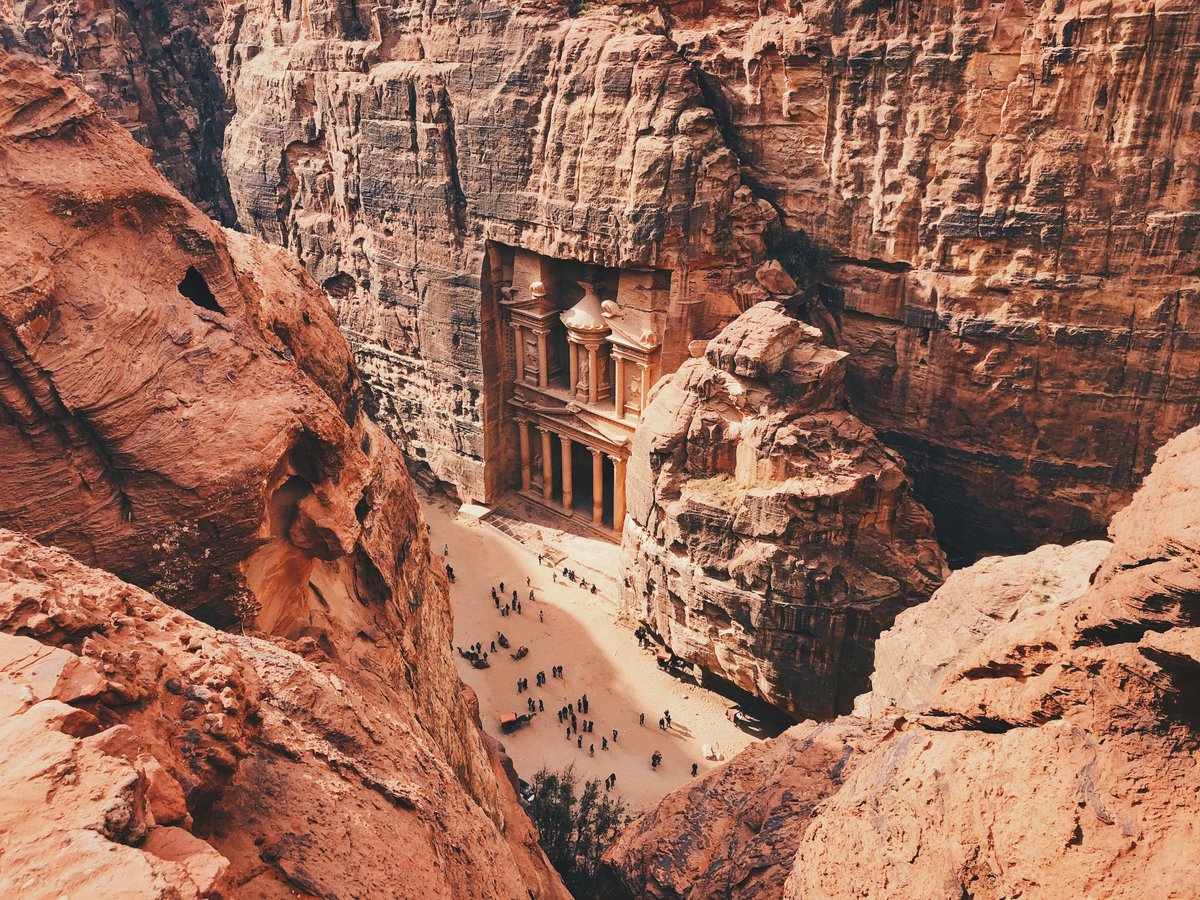
Spring mornings at the Siq start cool, around 12-15°C at 6am when the gates open. The narrow canyon walls hold that temperature for the first 2 hours and amplify every footstep into an echo that rolls ahead of you. The light is the real reason to come in March or April. Al Khazneh faces east, and direct sun hits the carved facade between roughly 9am and 11am. The Nubian sandstone shifts from grey-pink to deep orange in that window. Photographers stake out the opposite cliff viewpoint, reachable from a trail near the Street of Facades, for exactly this shot. By May, afternoon temperatures push past 30°C in the open ground near Qasr al-Bint, and the 800-step climb to Ad Deir at 1,000m elevation will leave you soaked through. Wildflowers line the wadis from late March into April, with oleander and wild iris along the trail to the High Place of Sacrifice.
October and November bring drier air and shorter queues at the ticket office in Wadi Musa. Hotel rates in town drop 20-30% compared to the Easter peak. The Petra by Night walk, held Monday, Wednesday, and Thursday evenings, feels less cramped with 100 to 200 visitors instead of the 400+ who pack the Siq during spring sessions. Sunset from the High Place of Sacrifice around 5:30pm in late October gives you a clear line across the entire basin, with the Sharah Mountains turning purple behind the Royal Tombs. That said, November nights drop to 5-8°C, so pack layers if you're planning the 5-hour round-trip hike to the Tomb of Aaron on Jabal Harun. The first winter rains can arrive in late November, and the Siq has a real flash-flood history. Authorities now close the entrance when rain is forecast.
Skip June through August. Temperatures in the basin reach 36-40°C with no tree cover between Al Khazneh and the Colonnaded Street. The sandstone radiates stored heat from every surface, and you'll taste grit in your teeth by noon. Most local guides won't attempt the Ad Deir climb after 10am in July. A 2-day Jordan Pass, which bundles the 50 JOD Petra entry fee (about $70 USD) with visa costs, runs the same price regardless of season. No discount for suffering through the heat. December and January bring highs of only 10-12°C, with occasional snow on the surrounding peaks and usable daylight of about 6 hours. The site closes at 4pm in winter. Little Petra, known locally as Siq al-Barid, sits 9 km north and charges no entry fee. It gets almost no visitors in January. The adjacent Neolithic village of Beidha, settled around 7500 BC, will likely be yours alone.
One timing detail that matters more than the season. Petra charges 50 JOD for a 1-day pass, 55 JOD for 2 days, and 60 JOD for 3 days. A single day is a mistake any time of year. The walk from the gate to Ad Deir and back covers roughly 14 km with 800 carved steps at the far end. You need 2 days at minimum. Spend the first morning in the Siq and at Al Khazneh before tour groups arrive around 9:30am. Save the Ad Deir monastery climb for day two, starting at 7am. Book accommodation in Wadi Musa within walking distance of the Visitor Centre. The Mövenpick Resort Petra sits directly across the street from the gate. The Rocky Mountain Hotel is 500m uphill at around 40-60 JOD per night in October, with wild sage and thyme scenting the air on the terrace.
Month-by-month outlook
- Jan Shoulder
- Feb Shoulder
- Mar Ideal
- Apr Ideal
- May Shoulder
- Jun Avoid
- Jul Avoid
- Aug Avoid
- Sep Shoulder
- Oct Ideal
- Nov Ideal
- Dec Shoulder
Year-round climate
Averages from the last 5 years.
| Month | Avg high (°C) | Avg low (°C) | Rainfall (mm) |
|---|---|---|---|
| Jan | 14 | 7 | 33 |
| Feb | 14 | 6 | 41 |
| Mar | 18 | 9 | 37 |
| Apr | 25 | 14 | 11 |
| May | 28 | 17 | 6 |
| Jun | 31 | 21 | 0 |
| Jul | 32 | 22 | 0 |
| Aug | 33 | 23 | 0 |
| Sep | 30 | 20 | 1 |
| Oct | 25 | 17 | 4 |
| Nov | 21 | 14 | 20 |
| Dec | 16 | 9 | 35 |
Spring 20-28°C with light rain; summer 36-40°C, no shade in the basin; winter 10-12°C with flash-flood risk Nov-Mar. About 150mm annual rainfall, mostly Dec-Feb.
Go deeper into Petra
Last verified by automated review (v1.7.2) on . What is automated review?