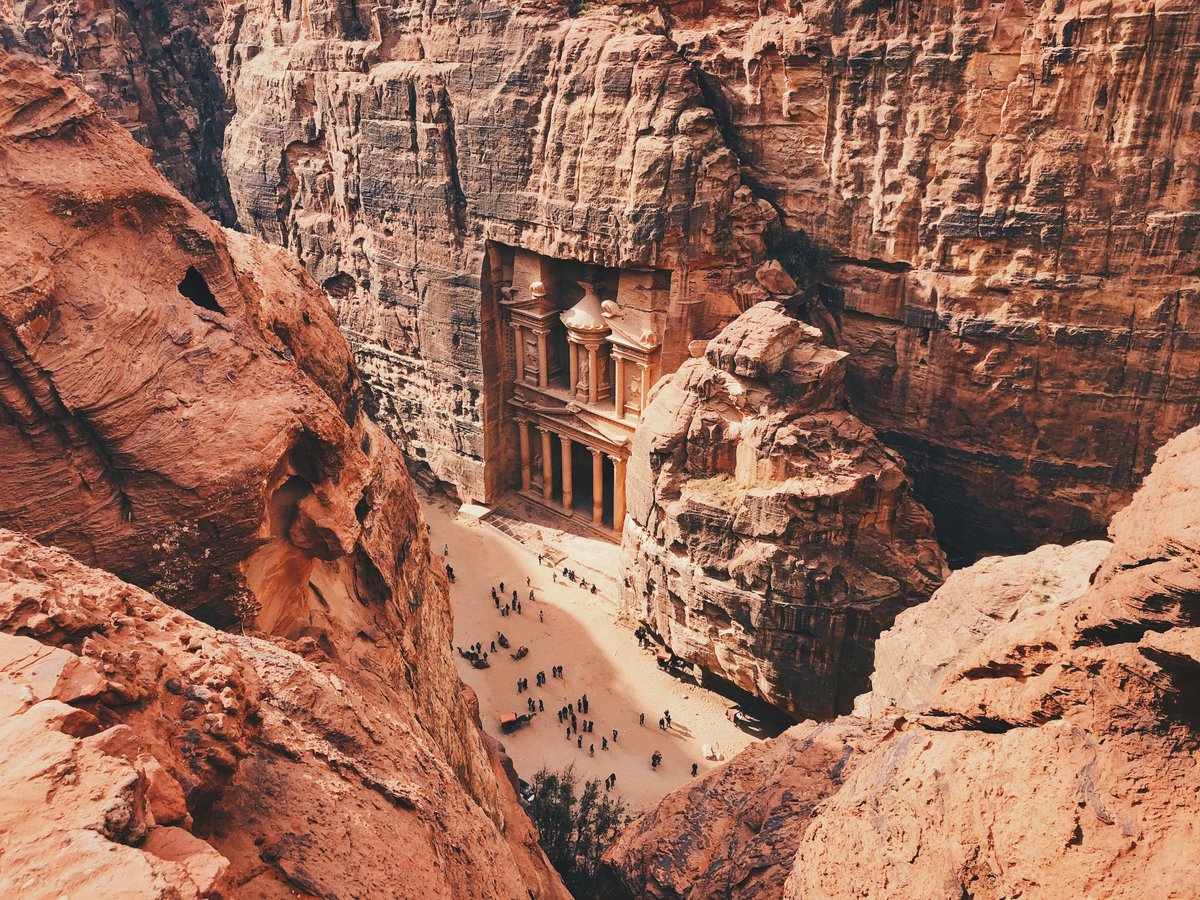
Stay in Petra in June
52 hotels in the Trip.com pool for Petra, from US$10 a night.
Opens Trip.com on Fri 4 Jun to Sun 6 Jun 2027; change the dates there.
June in Petra is hot and dry. That is the single most important thing to know. Daytime temperatures reach 30.9°C (88°F) on average, and the sandstone canyon walls tend to hold and radiate that heat back at you well into the evening. Rainfall is essentially zero. The humidity sits around 37%, which keeps the heat from feeling suffocating, but the direct desert sun between 11am and 3pm can be genuinely punishing. You will need to plan your days around it.
That said, June has a real advantage that the spring crowds have largely gone home. The March-to-May peak season draws the heaviest visitor numbers, and by June the site feels noticeably emptier. You might find yourself walking through the Siq with only a handful of other people at 6:30am. The Treasury, Al-Khazneh, which can feel like a tourist bottleneck in April, opens up. The Petra Museum has breathing room. Hotel rates in Wadi Musa drop from their spring highs.
The trade-off is straightforward. You get fewer crowds and lower prices, but the midday heat forces a split-day schedule. Most experienced visitors treat June in Petra like a dawn-and-dusk destination. You hike from gate-open until late morning, retreat to your hotel or a shaded restaurant in Wadi Musa for 4 hours, and return for the golden-light hours before close. If you are willing to work around the heat, you will see Petra in relative solitude. If you want full-day exploration without restrictions, come in October or March instead.
Why visit in June
- Significantly fewer visitors than the March-May peak. You can photograph Al-Khazneh without 40 people in the frame, and trails to Ad-Deir and the High Place of Sacrifice feel almost private some mornings.
- Hotel rates in Wadi Musa drop roughly 20-30% from the spring peak. Mid-range hotels that charge 80-100 JOD per night in April often list for 55-70 JOD in June.
- Zero rainfall. You will not lose a single day to weather. The Siq stays dry and easy to walk, and flash flood risk is essentially nil.
- Long daylight hours. The sun rises around 5:25am and sets near 7:45pm, giving you over 14 hours of light. The site opens at 6am, so the first 4-5 hours of hiking happen in manageable temperatures.
- Dry heat at 37% humidity is far more tolerable than the same temperature would feel in a humid climate. Shade and a breeze make a real difference here.
Worth knowing
- Midday temperatures in the canyon can feel several degrees hotter than the reported 31°C because the sandstone absorbs and re-emits heat. The 4-hour midday gap is not optional, it is necessary.
- Exposed trails like the climb to Ad-Deir (over 800 rock-cut steps) and the ascent to the High Place of Sacrifice offer almost no shade. Starting after 9:30am on either route is genuinely risky.
- Evening dining options in Wadi Musa are limited compared to Amman or Aqaba. The town has maybe 15-20 restaurants, and some reduce hours or close for the low season.
- The Wadi Rum desert, a common day trip from Petra, reaches 35-38°C in June. Combining the two in a single trip means consecutive days of serious heat exposure.
Best for
Think twice if
June in Petra is hot, dry, and cloudless. Expect consistent sunshine from dawn to dusk with effectively zero chance of rain. The 37% humidity keeps the heat from feeling oppressive in shade, but direct sun on exposed rock is intense. Mornings start pleasantly around 21°C (69°F) and warm steadily through the morning. By early afternoon, temperatures peak near 31°C (88°F), though reflected heat in narrow canyons like the Siq can push the felt temperature higher. Evenings cool gradually, and nights settle around 21°C, warm enough for short sleeves outdoors.
Seasonal caution
- Direct sun exposure in the canyon between 11am and 3pm pushes felt temperatures well above the 31°C average. Heatstroke is a real risk for visitors who underestimate the reflected heat off sandstone walls.
- Water access inside the site is limited to a few Bedouin stalls. Carry at least 3 liters (100 oz) per person for a morning session. Dehydration sets in faster than most visitors expect at this humidity level.
- The 800+ step climb to Ad-Deir is almost entirely exposed. Starting this climb after 9am in June means ascending in full sun with no shade breaks for 45 minutes to an hour.
Year-round climate
Averages from the last 5 years.
| Month | Avg high (°C) | Avg low (°C) | Rainfall (mm) |
|---|---|---|---|
| Jan | 14 | 7 | 33 |
| Feb | 14 | 6 | 41 |
| Mar | 18 | 9 | 37 |
| Apr | 25 | 14 | 11 |
| May | 28 | 17 | 6 |
| Jun | 31 | 21 | 0 |
| Jul | 32 | 22 | 0 |
| Aug | 33 | 23 | 0 |
| Sep | 30 | 20 | 1 |
| Oct | 25 | 17 | 4 |
| Nov | 21 | 14 | 20 |
| Dec | 16 | 9 | 35 |
Best things to do in June
Dawn entry to Al-Khazneh through the Siq
sightseeingThe Petra site opens at 6am. Walking the 1.2km Siq in the first light of morning, when temperatures sit around 21-23°C and the canyon walls glow pink and orange, is the single best experience in June. You will likely share the walk with fewer than 20 other visitors at that hour. The Treasury catches direct sunlight on its upper facade between roughly 9am and 11am, depending on the time of year.
June's 6am opening aligns with comfortable temperatures and low visitor density. By contrast, in April you share this walk with 10 times as many people.Booking tipNo booking needed for the walk itself. Buy your Petra pass online at least a day ahead to skip the ticket office queue at dawn.
Sunset climb to the High Place of Sacrifice (Al-Madbah)
hikingThe High Place of Sacrifice sits on a ridge above the main valley, reached by a 30-40 minute climb from the Street of Facades. In June, the late afternoon light from about 5:30pm to 7pm turns the sandstone a deep copper. The viewpoint looks down over Wadi Araba and the entire Petra basin. The descent via Wadi Farasa passes rock-cut facades and a Roman soldier's tomb that most visitors miss entirely.
The extended June daylight means you can start this climb at 5pm when the heat has broken, summit for sunset around 7:30pm, and still descend with 15-20 minutes of light remaining.Booking tipNo booking needed. Bring a headlamp in case the descent takes longer than planned.
Night visit to the Treasury (Petra by Night)
culturalPetra by Night runs on Monday, Wednesday, and Thursday evenings. The walk through the Siq to the Treasury takes about 25 minutes, and the Treasury plaza is lit by roughly 1,500 candles spread across the ground. Bedouin musicians play traditional instruments. The temperature at 8:30pm in June hovers around 24-25°C, warm enough for short sleeves.
In cooler months the nighttime temperature drops to single digits, making the 2-hour seated event uncomfortable. June evenings sit around 24°C. Pleasant without a jacket.Booking tipTickets cost 17 JOD and should be purchased at the Petra Visitor Centre by late afternoon, as they sometimes sell out. The event starts at 8:30pm.
Morning hike to Ad-Deir (The Monastery)
hikingThe Monastery is Petra's other monumental facade, 45 meters tall and carved into the cliff at the far end of the site. Reaching it requires climbing over 800 rock-cut steps from the basin floor. The route takes 45-60 minutes for most hikers. The facade sits in shade until mid-morning, making the arrival rewarding even in summer.
The only safe window for this climb in June is before 9am, when temperatures are still below 27°C and the steps are in partial shadow. The low June crowds mean you might have the Monastery plaza nearly to yourself.Booking tipStart from the Petra gate at 6am and head directly to Ad-Deir first, before exploring the Treasury and lower sites on the way back. This reverses the typical tourist flow and puts you at the Monastery by 7:30am.
Half-day trip to Siq al-Barid (Little Petra)
sightseeingLittle Petra sits about 9km north of the main site. It is a smaller Nabataean settlement with carved dining rooms, cisterns, and painted ceiling frescoes still visible in one of the triclinia. The site is free to enter and rarely has more than a dozen visitors. A local Bedouin family typically runs a tea stall near the entrance.
Use Little Petra as your midday activity alternative. The site has more natural shade than the main Petra basin, the canyon is narrower, and you can see the key features in 60-90 minutes. It fills the midday gap without overheating.Booking tipNo ticket needed. Drive or take a taxi from Wadi Musa for about 5 JOD each way. Mornings before 8am or late afternoons after 4pm are also fine, but midday is when you need something to do and this fits.
Explore the Royal Tombs at golden hour
sightseeingThe Royal Tombs, a row of four massive carved facades (Urn Tomb, Silk Tomb, Corinthian Tomb, and Palace Tomb) on the east cliff face, catch the last direct sunlight of the day. The Urn Tomb in particular has a cavernous interior that was later converted into a Byzantine church in 447 AD. Carved inscriptions from that conversion are still visible on the back wall.
In June, the setting sun hits these facades between 5pm and 7pm. The east-facing rock glows in a way that photographs poorly in midday overhead light but strikingly in the late golden hour. With few visitors at this time, you can sit inside the Urn Tomb alone.Booking tipNo additional ticket needed beyond the Petra pass. The tombs are a 10-minute walk from the main Colonnaded Street.
Visit the Petra Museum
culturalThe Petra Museum, which opened in 2019 near the main entrance, houses over 280 artifacts from Nabataean and Roman periods. The climate-controlled galleries offer a genuine break from the heat, with exhibits spanning Nabataean trade routes, hydraulic engineering, and the carved facades' construction techniques. The museum typically takes 60-90 minutes.
This is your midday heat refuge. Between 11am and 3pm when the site is too hot for comfortable hiking, the air-conditioned museum is the most productive use of those hours. June's lower crowds mean you will not be queuing for exhibit spaces.Booking tipEntry is included with the Petra pass. The museum closes at 7pm in summer.
What to eat in June
In season: fruit
Mishmish (Apricots)
June is peak apricot season across Jordan. The fruit appears at roadside stands along the King's Highway and in the Wadi Musa market, often picked that morning. Jordanian apricots tend to be smaller and more intensely flavored than European varieties. You will also find qamar al-din, a thick apricot paste drink, served cold at restaurants in town.
Watermelon (Batteekh)
Watermelon season hits full stride in June across the Jordan Valley. Vendors in Wadi Musa sell whole melons for 1-2 JOD, and most hotel breakfast buffets feature thick slices. After a morning hike in 30°C heat, cold watermelon is likely the most satisfying thing you will eat all day.
Fresh Figs (Teen)
Early figs start appearing at market stalls in Wadi Musa in late June. The season runs through August, but the first figs of the year have a particular sweetness. You might find them alongside local goat cheese at breakfast.
On menus now
Mansaf
Jordan's national dish, lamb cooked in fermented dried yogurt (jameed) and served over rice, is available year-round. But June is when the local jameed from spring production is freshest. Restaurants in Wadi Musa serve it for around 8-12 JOD per plate. The dish is heavy for hot weather, so locals often eat it in the evening.
What to drink
Limonana
This blended frozen mint lemonade is served at nearly every restaurant and cafe in Wadi Musa during summer. The combination of fresh mint, lemon, ice, and a touch of sugar is the unofficial drink of a Petra summer visit. Expect to pay around 2-3 JOD per glass.
Regular events in June
Petra by Night
Candlelit walk through the Siq to the Treasury, with Bedouin music and tea. Runs every Monday, Wednesday, and Thursday year-round, but the warm June evenings make the 2-hour seated portion much more comfortable than in winter months.
Every Monday, Wednesday, and Thursday at 8:30pmArmy Day and Anniversary of the Great Arab RevoltFree
A Jordanian national holiday on June 10 marking the 1916 Arab Revolt. Government offices and banks close. The Petra site itself remains open, but some shops and services in Wadi Musa may have reduced hours. Military parades take place in Amman, not Petra, but you might notice flags and decorations around town.
June 10Eid al-Adha (date varies by Islamic calendar)Free
The Feast of Sacrifice is a major Islamic holiday lasting 3-4 days. In some years it falls in late May or June (the Islamic lunar calendar shifts it roughly 10-11 days earlier each Gregorian year). During Eid, Jordanian domestic tourism rises sharply, and Wadi Musa hotels fill with Jordanian families. Some restaurants close for the first day or two. Check the Islamic calendar for the specific year you plan to visit.
Varies annually (follows the Islamic lunar calendar)Best places this June
Al-Khazneh (The Treasury)
archaeological sitePetra's most recognized monument, a 40-meter carved facade dating to the 1st century BC. In June, arrive by 6:30am to see it in soft morning light with minimal visitors. The upper portion catches direct sunlight after 9am. A small cafe opposite the facade sells tea and cold drinks.
Petra BasinWadi Farasa
hiking trailA quieter trail descending from the High Place of Sacrifice past the Garden Tomb, the Roman Soldier's Tomb, and a carved triclinium with some of Petra's most detailed interior rock carving. Most tour groups skip this route entirely. The narrow wadi provides more shade than the main basin trails.
Southern PetraThe Byzantine Church
archaeological siteA 6th-century church in the main Petra basin with remarkably preserved floor mosaics depicting animals, birds, and personifications of the seasons. A protective roof structure shelters the mosaics and provides shade. The mosaics were rediscovered in 1993 and restored by the American Center of Oriental Research.
Colonnaded Street areaQasr al-Bint
archaeological siteThe only freestanding building in Petra, a Nabataean temple from the 1st century BC dedicated to the deity Dushara. The 23-meter walls still stand to nearly their original height. Located at the far end of the Colonnaded Street, past the Great Temple.
Western Petra BasinSiq al-Barid (Little Petra)
archaeological siteA smaller Nabataean site 9km north of the main entrance. The narrow siq contains carved triclinia (dining rooms) used to host visiting traders, with one featuring rare surviving Nabataean painted ceiling frescoes. Free entry. Far fewer visitors than the main site on any given day.
Beidha areaJebel al-Khubtha viewpoint
viewpointA trail from the Royal Tombs climbs to this viewpoint overlooking the Treasury from directly above. The hike takes about 20 minutes and offers the classic aerial photograph of Al-Khazneh. Best in morning light before 9am in June. The trail is exposed, so carry water.
Eastern cliff faceThe Petra Museum
museumModern museum near the main gate with 280+ Nabataean and Roman artifacts, interactive displays on the water management systems that sustained the ancient city, and climate-controlled galleries. Opened in 2019. Takes 60-90 minutes for a thorough visit.
Wadi Musa (entrance area)
Your packing checklist
Tick items off as you pack. Your progress saves in this browser.
All packed — have a great trip.
Insider tips
Enter at 6am sharp and walk directly to Ad-Deir first, skipping the Treasury entirely on the way in. Every tour group does the opposite, starting at the Treasury and reaching Ad-Deir by late morning in full heat. You will have the Monastery to yourself at 7:30am and see the Treasury in golden light on your way back out around 10am.
The Bedouin tea stalls inside the site charge 1-2 JOD for tea but also sell cold water bottles for the same price you would pay in Wadi Musa (0.5 JOD). There is no reason to carry 6 bottles from town. Buy two to start and refill as you go.
The Wadi Musa town market, about 800 meters downhill from the Movenpick hotel, sells fresh apricots, flatbread, hummus, and labneh for a fraction of restaurant prices. Build a lunch from the market and eat it at your hotel during the midday heat.
Petra by Night tickets sometimes sell out by midday. Buy yours at the Visitor Centre when you pick up your Petra pass in the morning, even if the event is 2 days away. The 17 JOD ticket is worth locking in early.
The 2-day and 3-day Petra passes cost 55 JOD and 60 JOD respectively, compared to 50 JOD for a single day. The marginal cost of extra days is 5 JOD each. In June, spreading the site over 3 mornings instead of cramming it into one full day is a far more comfortable strategy.
Avoid these mistakes
- Attempting the Ad-Deir climb after 9:30am. The 800+ steps are almost fully exposed to direct sun, and the ascent takes 45-60 minutes. Hikers who start at 10am or later in June risk genuine heat exhaustion. Two or three visitors per week need medical attention at the site during summer months.
- Carrying too little water. First-time visitors often bring one 500ml bottle, thinking they can buy more inside. The Bedouin stalls are spaced far apart, and some are seasonal. Three liters per person is the safe baseline for a June morning session.
- Planning a full day at the site without a midday break. The instinct to maximize a 50 JOD entry pass by staying all day leads to exhaustion and diminishing returns. A split schedule of 6am-11am and 4pm-7pm covers more ground with less suffering than a straight 6am-4pm push.
- Skipping Little Petra entirely. Many visitors treat it as an afterthought, but the painted Nabataean frescoes in Siq al-Barid are unique in the region and take only 60-90 minutes to explore. It is free, shaded, and fills the midday gap perfectly.
Practical tips for June
Buy the Jordan Pass online before arrival. It bundles the Petra entry fee (50-60 JOD depending on days) with the Jordan tourist visa fee (40 JOD), saving money on both. The pass must be purchased before you land at Queen Alia Airport to qualify for the visa waiver. Book accommodation in Wadi Musa rather than trying to day-trip from Amman (3+ hours each way). Hotels near the Petra gate, within the first kilometer of the entrance, command a 15-20% premium over those 2km downhill, but the proximity matters when you are starting at 6am. Dress respectfully in town. Wadi Musa is a conservative Jordanian community, not a resort town. Shoulders and knees should be covered when walking through the commercial streets, though hiking attire at the archaeological site is expected. ATMs exist in Wadi Musa but sometimes run out of cash on weekends. Bring enough Jordanian dinars from Amman to cover 2-3 days of expenses. Friday is the weekly day off in Jordan. Some Wadi Musa restaurants and shops close or shorten hours. The Petra site itself remains open. Check the Islamic calendar before booking. If Eid al-Adha falls during your visit, expect higher domestic tourist numbers and some restaurant closures for 1-2 days.
FAQ
Is June a good time to visit Petra?
June is fair, not ideal. The heat (averaging 31°C / 88°F) limits comfortable hiking to early morning and late afternoon, roughly 6am-11am and 4pm-7pm. That said, the trade-offs have real value. Zero rainfall means no lost days, crowds are significantly thinner than the March-May peak, and hotel rates drop 20-30%. If you are comfortable with desert heat and willing to structure your days around it, June works. If you want full-day comfort without restrictions, October and March are better choices.
What is the weather like in Petra in June?
Hot, dry, and consistently sunny. Average highs reach 30.9°C (88°F) with lows around 20.7°C (69°F). Rainfall is effectively zero. Humidity sits at about 37%, which keeps the heat dry and more tolerable in shade. The sandstone canyon walls absorb and re-emit heat, so enclosed areas like the narrow Siq and the Treasury plaza can feel warmer than the reported temperature. Mornings start pleasant, around 21-23°C, and warm steadily through the day.
Is Petra crowded in June?
No. June is one of the quieter months. The peak season runs from March through May and again in October-November, when tour groups from Europe and East Asia arrive in large numbers. By June, daily visitor counts drop noticeably. You will still see other tourists, especially at the Treasury and the Monastery, but nothing like the congestion of April. Entering at 6am in June, you might share the Siq with 10-15 other people instead of 100+.
How many days do I need for Petra in June?
Three mornings is ideal in June. The heat forces a split-day schedule, so you realistically get 5-6 productive hours per day instead of the 8-10 possible in cooler months. Day 1 covers Ad-Deir and the main basin. Day 2 covers the Royal Tombs, High Place of Sacrifice via Wadi Farasa, and the Byzantine Church. Day 3 covers Little Petra at Siq al-Barid, the Jebel al-Khubtha viewpoint, and any sites worth revisiting. The 3-day pass costs 60 JOD, only 10 JOD more than a single day.
Should I combine Petra with Wadi Rum and the Dead Sea in June?
You can, but manage expectations. Wadi Rum reaches 35-38°C in June, and the Dead Sea area hits 40°C+ regularly. Three desert destinations in one trip means relentless heat exposure. If you do it, schedule Wadi Rum as an overnight (the desert cools to 18-20°C after dark, and a night camp under the stars is genuinely worthwhile), visit the Dead Sea early morning only, and give yourself a rest day between sites. Do not try to rush all three in under 5 days.
Find a flight to Petra
Live fares to Petra appear here once cookies are accepted.
Last verified by automated review (v1.7.2) on . What is automated review?