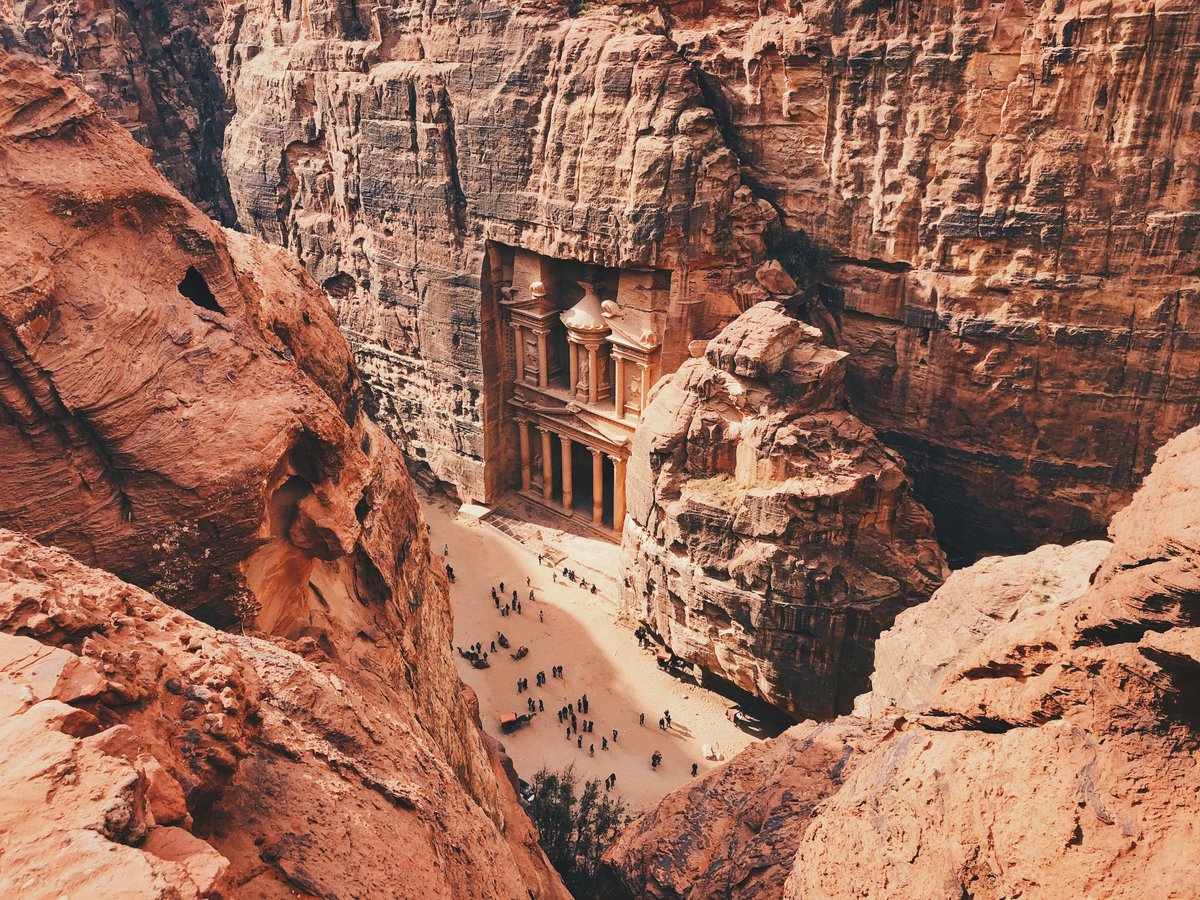
Stay in Petra in January
52 hotels in the Trip.com pool for Petra, from US$10 a night.
Opens Trip.com on Fri 1 Jan to Sun 3 Jan 2027; change the dates there.
January in Petra is cold. That's the first thing to know, and it catches most visitors off guard. Daytime highs reach only about 13.9°C (57°F), and after sunset temperatures in the canyon drop toward 7°C (45°F), sometimes lower. The sandstone walls of the Siq hold the chill, and by 4pm the Treasury sits in deep shadow. Petra is a high-altitude desert site at roughly 900 metres (2,950 feet) above sea level, and January is one of its coldest, wettest months.
That said, January brings something the popular spring and autumn months can't. Crowds thin out dramatically. On a Tuesday morning in mid-January, you might have the Street of Facades nearly to yourself for 20 minutes. The light tends to be soft and low-angled, which photographers prize for the way it picks out the carved details on the Urn Tomb and the Silk Tomb. Wadi Musa, the town at Petra's gate, feels quieter too, with restaurants and hotels willing to negotiate.
The real concern isn't cold. It's rain. January averages 33mm across roughly 6 rainy days, and Petra's narrow canyons are flash-flood channels. The Siq was carved by water over millennia, and it still floods when storms hit the surrounding Sharah Mountains. In November 2018, flash floods forced the evacuation of roughly 3,700 tourists. The site management has improved warning systems since then, but a January visit requires checking forecasts daily and respecting closures when they happen.
Why visit in January
- Visitor numbers drop 40-60% compared to the peak months of March, April, and October, which means less time waiting behind tour groups in the narrow Siq and more room to sit and absorb the Treasury facade without elbows
- Low winter sun creates warm-toned, raking light across Petra's sandstone facades, particularly between 8-10am on the Royal Tombs. Photographers working the Urn Tomb and Palace Tomb get golden side-light that disappears entirely in the high-sun summer months
- Hotel rates in Wadi Musa are at their lowest point of the year, and guesthouses that charge premium rates in April are often open to walk-in negotiation
- Temperatures stay comfortable for sustained hiking. The climb to Ad-Deir (the Monastery), roughly 800 steps, is far more pleasant at 12°C than at the 33°C highs of August
Worth knowing
- Flash flood risk in the Siq and low-lying wadis is real in January. When heavy rain hits the Sharah Mountains, water funnels through Petra's canyons within minutes. Site authorities may close the Siq entrance with little advance notice, sometimes for a full day
- Daylight hours are short. The sun rises around 6:30am and sets by 5pm, which gives you roughly 9-10 hours of usable light inside the site. The Monastery, a 45-minute climb from the Basin, needs to be reached by early afternoon to allow a return before the canyon darkens
- Petra by Night, the candlelit walk to the Treasury held on Monday, Wednesday, and Thursday evenings, happens in near-freezing temperatures. Sitting on the ground for 90 minutes in 5°C (41°F) air without adequate layers is genuinely miserable
- Some Bedouin-run tea stalls and souvenir stands inside the site operate reduced hours or close entirely in January, particularly beyond the Basin area toward the Monastery trail
Best for
Think twice if
January is one of Petra's two coldest months, along with February. Mornings start cool, around 7°C (45°F), and the narrow canyons hold shade well into mid-morning. Afternoons reach roughly 14°C (57°F) in direct sun, but it feels colder in the shadowed Siq and inner gorges. Rainfall arrives in short, sometimes intense bursts, typically 33mm spread over about 6 days. The humidity sits around 64%, which is moderate for a desert region. Wind chill is a factor, especially on exposed climbs like the High Place of Sacrifice trail. Clear days do happen, and when the sun is out and the wind is still, midday can feel surprisingly mild at the Basin restaurant area.
Seasonal caution
- Flash flooding in the Siq and low-lying wadis is the primary January hazard. Rain in the Sharah Mountains above Petra can produce wall-to-wall water in the narrow gorge within 30 minutes, even when the sky above the site looks clear. Heed all closure warnings from the Petra Development and Tourism Region Authority
- Overnight temperatures at the Petra site occasionally dip below 0°C (32°F) in January, particularly in exposed areas like the path to Jabal Haroun. Frost on sandstone steps makes the Monastery climb treacherous in early morning
- Wind chill on the High Place of Sacrifice plateau and other elevated viewpoints can make 10°C feel like 3-4°C. The exposed ridge has no shelter from the prevailing westerly wind
Year-round climate
Averages from the last 5 years.
| Month | Avg high (°C) | Avg low (°C) | Rainfall (mm) |
|---|---|---|---|
| Jan | 14 | 7 | 33 |
| Feb | 14 | 6 | 41 |
| Mar | 18 | 9 | 37 |
| Apr | 25 | 14 | 11 |
| May | 28 | 17 | 6 |
| Jun | 31 | 21 | 0 |
| Jul | 32 | 22 | 0 |
| Aug | 33 | 23 | 0 |
| Sep | 30 | 20 | 1 |
| Oct | 25 | 17 | 4 |
| Nov | 21 | 14 | 20 |
| Dec | 16 | 9 | 35 |
Best things to do in January
Photography at the Royal Tombs in morning light
photographyThe cluster of carved facades on Petra's east cliff face, including the Urn Tomb, Silk Tomb, Corinthian Tomb, and Palace Tomb, catches direct morning sun from roughly 8:00 to 10:30am. The low January sun angle creates deep orange tones and long shadows that pick out details in the carved columns and pediments. In peak season, dozens of photographers compete for the same angles. In January, you'll likely share the viewpoint with 3 or 4 others.
Low winter sun angle produces warm, raking light on the east-facing tombs. Fewer visitors mean cleaner compositions without waiting for crowds to clear.Booking tipNo booking needed. Arrive at the site entrance when gates open at 6:00am and walk directly to the Royal Tombs area, bypassing a long stop at the Treasury.
Hiking to Ad-Deir (the Monastery)
hikingThe roughly 800-step climb from the Basin area to Ad-Deir takes 45-60 minutes and gains about 200 metres of elevation. The Monastery itself is larger than the Treasury, 47 metres wide and 48 metres tall, carved into a cliff face above a wide terrace. In summer months, this climb in full sun can be genuinely dangerous. In January's 12-14°C air, it's a comfortable, steady walk. The rock steps are hand-carved Nabataean, uneven and sometimes slippery after rain.
Cool air makes the sustained steep climb comfortable rather than punishing. Summer temperatures above 30°C turn this same hike into a heat-risk activity requiring 2-3 litres of water.Booking tipStart by 10am at the latest. You need time at the top and 30-40 minutes to descend. The canyon darkens quickly after 3:30pm in January.
Petra by Night
culturalOn Monday, Wednesday, and Thursday evenings, roughly 1,500 candles in paper bags line the floor of the Siq and the open area before the Treasury. The walk starts at 8:30pm from the Visitor Centre. The 1.2km Siq passage lit only by candlelight is genuinely atmospheric. You sit on mats before the Treasury facade while Bedouin musicians play rababa (a single-stringed fiddle) and tell stories. The whole event lasts about 2 hours.
January's low crowds mean the Petra by Night experience feels more intimate. In April or October, 300+ people pack the Treasury plaza. In January, it might be 60-80, which changes the atmosphere from tourist event to something quieter.Booking tipTickets are sold separately from the main Petra pass. Buy at the Visitor Centre in Wadi Musa earlier in the day. Bring a blanket or thick jacket for sitting on the ground for 90 minutes in 5°C air.
Full-day hike via the High Place of Sacrifice to Wadi Farasa
hikingThis route takes you up the steps near the theatre to the High Place of Sacrifice altar at 1,035 metres, then descends through Wadi Farasa past the Lion Fountain, the Garden Temple, and the Soldier's Tomb. The loop returns to the main colonnaded street. The total hike is 4-5 hours with stops. The High Place plateau offers a 360-degree view of Petra's canyon system and, on clear January days, you can see toward Wadi Araba and the Negev beyond.
The exposed climb to the High Place and the descent through Wadi Farasa involve sustained physical effort. January's 12-14°C temperatures keep this manageable. In summer, the shadeless plateau at the top bakes above 35°C.Booking tipNo separate booking needed, but consider hiring a local Bedouin guide from the Basin area for the Wadi Farasa descent. The trail is less marked than the main Siq route.
Day trip to Little Petra (Siq al-Barid)
culturalLittle Petra sits about 9km north of the main site, a smaller canyon with carved Nabataean dining halls, water channels, and one painted ceiling (the only surviving Nabataean fresco). The site is free to enter, rarely crowded even in high season, and takes 1-2 hours to explore. A Bedouin family typically runs a tea stall at the entrance. In January, you might be the only visitor for an hour at a stretch.
January's low visitor numbers make Little Petra feel like a private archaeological site rather than a secondary tourist stop. The painted Biclinium ceiling, which shows vine scrolls and birds in red and blue pigment, is easier to photograph without other visitors' heads in the frame.Booking tipYou'll need a taxi or rental car from Wadi Musa. Negotiate the fare before departing. Some hotels arrange shuttles for 10-15 JOD round trip.
Wadi Rum overnight camp in winter
adventureWadi Rum, about 1.5 hours south of Petra by road, offers Bedouin desert camps with jeep tours through the sandstone landscape. January nights are cold, often near 0°C (32°F), but the camps provide thick blankets and heated communal tents. The winter sky over Wadi Rum is exceptional. Low humidity and cold, stable January air produce some of the clearest stargazing conditions of the year. The Milky Way is visible to the naked eye.
January's cold, dry atmosphere creates superior stargazing. Summer haze and dust reduce visibility. The tradeoff is real cold at night, but most camps have adapted with insulated tents and portable heaters.Booking tipBook a camp that specifically advertises heated tents for winter stays. Ask about bedding weight. A sleeping bag rated to -5°C is worth bringing as insurance.
Exploring Petra's water channels and cisterns after rain
culturalThe Nabataeans engineered an elaborate water management system across Petra, with carved channels, cisterns, dams, and ceramic pipes visible throughout the site. After January rain, some of these 2,000-year-old channels carry water again. You can trace the channel that runs along the left wall of the Siq from the dam at the entrance to the city centre. It's a different way to see the site, focusing on infrastructure rather than facades.
January rain activates water channels that sit bone-dry from May through November. Seeing water flow through Nabataean engineering changes how you understand the city's logistics.What to eat in January
In season: fruit
Jordan Valley citrus
January is peak citrus season in the Jordan Valley, about 2 hours north. Sweet oranges and clementines from the valley around Deir Alla and the Ghor reach the fruit stalls and juice carts of Wadi Musa at their ripest. Freshly squeezed orange juice at a roadside stand typically costs 1-2 JOD.
On menus now
Mansaf
Jordan's national dish of lamb slow-cooked in dried fermented yogurt (jameed) over rice. It's served year-round, but January is when it feels right. The rich, tangy broth and tender lamb are cold-weather food, and Wadi Musa restaurants like those along Tourism Street serve generous portions. Traditionally eaten with the right hand from a shared platter.
Zarb (Bedouin underground barbecue)
Meat and vegetables slow-cooked in a buried metal drum over hot coals, a Bedouin tradition still practiced in the Wadi Rum camps and some Wadi Musa restaurants. The smoky, falling-apart lamb and root vegetables warm you after a full day in the cold canyons. The cooking process takes 3-4 hours, so most places start it at midday for an evening meal.
Street food peaks
Knafeh
A warm pastry of shredded phyllo dough layered over soft white cheese, soaked in sugar syrup and topped with crushed pistachios. It's sold year-round, but in January the contrast of the hot, stretchy cheese against cold canyon air makes it particularly satisfying. The town bakeries in Wadi Musa prepare it fresh in large round trays each morning.
What to drink
Meramiyyeh (sage tea)
Wild sage grows in the hills around Petra, and Bedouin tea stalls inside the site brew it fresh. In January, a glass of hot sage tea at a stall near the Qasr al-Bint temple after the Monastery climb is one of those small pleasures that sticks with you. The herb has a slightly camphor-like warmth that clears the sinuses in cold, dry air.
Regular events in January
Petra by Night
Candlelit evening walk through the Siq to the Treasury, with Bedouin music and storytelling at the base of the facade. Runs every Monday, Wednesday, and Thursday year-round, but January's smaller crowds give it a more intimate feel.
Every Monday, Wednesday, and Thursday evening, starting at 8:30pmJordan Trail hiking seasonFree
The 650km Jordan Trail from Umm Qais to Aqaba passes through Petra. January sits within the trail's primary hiking season (October through April), and you'll occasionally encounter through-hikers on the Dana to Petra segment. The Jordan Trail Association coordinates group departures for multi-day sections.
Ongoing through January, with group departures posted by the Jordan Trail AssociationOrthodox Christmas and Epiphany observancesFree
Jordan's Christian minority (roughly 4% of the population) marks Orthodox Christmas on January 7 and Epiphany on January 19. While Petra itself is not a centre for these observances, the nearby town of Taybeh and churches in Wadi Musa hold services. The Greek Orthodox Baptism Site at Bethany Beyond the Jordan (Al-Maghtas), about 3 hours north, holds a large ceremony on Epiphany.
January 7 (Orthodox Christmas) and January 19 (Epiphany)Best places this January
The Siq
natural landmarkThe 1.2km narrow gorge that serves as Petra's main entrance. Walls rise 80 metres on both sides, and the passage narrows to about 3 metres at its tightest point. In January, the cold air trapped in the canyon and the sound of water dripping from overnight rain create a particular atmosphere. Look for the carved Nabataean water channels on both walls and the remnants of the original paved road underfoot. The January light barely reaches the canyon floor before 9am, which means the first 20 minutes of your walk are in blue shadow.
Main entranceAl-Khazneh (The Treasury)
archaeological sitePetra's most recognized facade, 40 metres tall, carved into pink sandstone at the end of the Siq. In January, direct morning sunlight hits the facade from about 9:00 to 11:30am, turning it from shadow-grey to orange-gold over about 30 minutes. The viewing plaza is often uncrowded enough in January to sit on the rocks opposite and watch the light change. Worth visiting twice in one day, morning and late afternoon, for completely different colour temperatures.
Central PetraThe Theatre
archaeological siteA Nabataean-era theatre later expanded by the Romans, carved directly into the hillside with seating for roughly 8,500 people. It sits at the junction where the Siq opens into the wider Wadi. The rock-cut seats, still showing tool marks from the original carving, are an unexpected place to sit and warm up in the midday sun. From the upper tiers, the view back toward the Street of Facades shows how the Nabataeans carved tombs directly into the cliff face above the theatre.
Central PetraQasr al-Bint (Castle of the Pharaoh's Daughter)
archaeological siteThe only major freestanding building in Petra, a Nabataean temple from the 1st century BC. Most of Petra's structures are rock-cut, so this constructed stone building stands out. It sits at the far end of the Colonnaded Street, near the Basin restaurant area. In January, the late afternoon sun catches its western wall. The surrounding open ground is one of the few flat, sunny spots inside the site where you can sit and warm up after hours in the shaded canyons.
The BasinLittle Petra (Siq al-Barid)
archaeological siteA smaller Nabataean site 9km north of the main entrance, likely a suburb and caravanserai for traders approaching Petra. The painted Biclinium here preserves the only known Nabataean ceiling fresco, with grapevines, birds, and cupids in faded red and blue pigment. The site is free, uncrowded, and manageable in 1-2 hours. In January, the Bedouin family at the entrance still operates their tea stall most days.
Siq al-BaridThe Monastery (Ad-Deir) viewpoint terrace
viewpointAfter the 800-step climb, the wide terrace in front of Ad-Deir offers not only the 47-metre facade but a viewpoint looking west toward Wadi Araba and, on clear January days, the Negev Desert in the distance. A small cafe operates near the viewpoint, selling tea and cold drinks. The scale of Ad-Deir is easier to appreciate with fewer people on the terrace. You might share it with 10-15 others rather than the 50+ of peak season.
Upper PetraPetra Museum
museumLocated near the Visitor Centre in Wadi Musa, this modern museum opened in 2019 and houses artefacts from the site including Nabataean pottery, coins, jewellery, and carved stone fragments. On a rainy January day when the Siq is closed due to flood risk, the museum gives you 2-3 hours of context that changes how you see the site when it reopens. The ground-floor gallery covers Petra's water engineering in detail, which becomes more meaningful after seeing the channels in person.
Wadi MusaWadi Musa town centre and Tourism Street
neighborhoodThe main commercial strip of Wadi Musa runs downhill toward the Petra gate, lined with restaurants, souvenir shops, and small groceries. In January evenings, the restaurants that stay open serve hot lentil soup (shorbat adas) and grilled meats to returning hikers. The town is compact enough to walk in 20 minutes end to end. A few rooftop restaurants on the upper section offer views across the valley toward the Sharah range.
Wadi Musa
Your packing checklist
Tick items off as you pack. Your progress saves in this browser.
All packed — have a great trip.
Insider tips
Enter the site as close to the 6am gate opening as possible. The first 30-40 minutes in the Siq, before the large tour groups arrive from their hotels around 8am, is the quietest the gorge ever gets. In January, you'll walk the Siq in near-silence, with only the sound of your boots and occasional birdsong from the cliff ledges above.
Check the Petra Development and Tourism Region Authority's announcements each morning before heading in. Flash-flood closures of the Siq happen with short notice in January, sometimes closing just the main entrance while the back trail from Umm Sayhoun remains open. Your hotel reception usually knows the status by 7am.
Buy a multi-day pass even if you think one day is enough. The price difference between a 1-day and 2-day Petra pass is small, and in January a rainy day can cut your exploration short. A 2- or 3-day pass lets you return when the weather improves without paying full price again.
The Bedouin-run tea stall near the Qasr al-Bint temple serves the best sage tea inside the site. It's not a branded cafe, just a family setup with a fire and metal kettle. In January, sitting by their fire after the Monastery climb and drinking a glass of sweet sage tea for 1-2 JOD is one of those quiet, warming moments that stays with you.
For a quieter approach to the Monastery, take the trail from the Petra Basin rather than following the main staircase. Most tour groups take the obvious stepped path. The trail to the left, past the Lion Triclinium, is less trafficked and offers views of Wadi Farasa on the way up.
Avoid these mistakes
- Underestimating the cold and packing for the desert sun they've seen in photos. Petra's canyon system is cold in January, not warm. Visitors in light t-shirts and sandals at 7am are miserable by 8am. Layer as you would for a cool autumn hike in the mountains, not a beach holiday.
- Planning only one day for Petra. January's shorter daylight (roughly 6:30am to 5pm) and possible rain closures mean a single-day visit risks seeing only the Treasury and the main Colonnaded Street. Two full days allow for the Monastery, the High Place route, and a return to photograph the Treasury in different light.
- Ignoring flash-flood warnings and entering the Siq after rain. The temptation is strong when you've flown to Jordan for 3 days and a storm arrives. But the 2018 flood that swept through the Siq moved fast enough to trap people against the walls. The warnings exist because the risk is real. Use a rainy day for the Petra Museum, Little Petra (which has no deep canyons), or the drive to Dana Nature Reserve.
- Skipping the back trails. Most January visitors stick to the Treasury-to-Basin main route because guides default to it. The High Place of Sacrifice loop and the Wadi Farasa descent pass tombs, temples, and rock-cut fountains that 80% of visitors never see. In January's cooler temperatures, these longer hikes are comfortable rather than exhausting.
Practical tips for January
Book accommodation in Wadi Musa, which is the gateway town directly adjacent to the Petra Visitor Centre. Hotels range from budget guesthouses near the town centre to mid-range options along Tourism Street. In January, advance booking is less critical than in March-April or October-November, but confirm that your hotel has working heating, as some budget places have inconsistent systems in winter. The Petra Visitor Centre opens at 6:00am and the site closes at 6:00pm in January, though you'll want to be heading back well before 5pm when the canyons darken. Friday is the busiest day, as Jordanian families visit on weekends (Friday-Saturday). Tuesday and Wednesday tend to be quietest. The Jordan Pass, which bundles the Petra entry fee with the Jordanian visa fee, should be purchased online before arrival. It covers 1, 2, or 3 consecutive days at Petra. Dress modestly in Wadi Musa town, particularly near mosques. Inside the site itself, practical hiking clothes are fine. ATMs are available in Wadi Musa, but carry some cash in Jordanian dinars for Bedouin stalls, tips, and smaller restaurants. Tipping guides and donkey handlers is customary. January is Ramadan-adjacent in some years, so check the Islamic calendar. During Ramadan, some restaurants in Wadi Musa close during daylight hours, though most tourist-oriented ones remain open.
FAQ
Is January a good time to visit Petra?
January is a fair time. It's not the best month, that would be October or April, when temperatures sit around 25°C and rain is minimal. But January has genuine advantages. Crowds are low, prices are down, and the hiking temperature of 12-14°C is comfortable for the strenuous trails. The tradeoffs are real though. Short daylight, cold mornings, and the possibility of flash-flood closures in the Siq mean you need flexibility in your schedule. If you can commit 3 days, January works well. For a single-day visit on a tight itinerary, the risk of losing that day to weather makes spring or autumn a safer bet.
What is the weather like in Petra in January?
Cold and occasionally wet. Average daytime highs reach about 13.9°C (57°F), and lows drop to 7.1°C (45°F). Inside the shaded Siq and canyon bottoms, it feels colder than the ambient temperature suggests. January averages 33mm of rain across roughly 6 days. Humidity sits around 64%. Snow is rare at Petra's elevation but not impossible. The surrounding Sharah Mountains occasionally get a dusting. Clear January days can feel pleasant in direct sun by midday, but the moment you step into shadow, the chill returns.
Is Petra crowded in January?
No, January is one of the quieter months. You'll share the main Treasury plaza with far fewer visitors than in the March-April or October-November peak seasons. Weekday mornings, especially Tuesday and Wednesday, can feel remarkably empty for a UNESCO World Heritage Site that receives over a million visitors per year. Tour buses from Aqaba and Amman still arrive, typically between 9-11am, so the main axis from the Treasury to the Basin gets moderate foot traffic midday. But the back trails, the Monastery, and the High Place route are often near-empty.
Are flash floods in Petra common in January?
Flash floods are not daily events, but they happen often enough in January to take seriously. The 33mm monthly average doesn't sound like much, but desert rainfall tends to arrive in short, concentrated downpours rather than steady drizzle. The Siq acts as a natural drainage channel for a wide catchment area, so rain falling on hills kilometres away can send water rushing through the gorge within 30 minutes. Partial or full closures of the Siq happen several times each winter. The authorities have installed a flood-warning system and a bypass tunnel, but the fundamental geology hasn't changed. Check forecasts each morning and respect any closure signs.
How many days do I need for Petra in January?
Three days is ideal for January. The first day covers the Siq, the Treasury, the Colonnaded Street, and the Royal Tombs. The second day takes on the Monastery climb and the back trails through Wadi Farasa. The third day is insurance against weather, plus a visit to Little Petra, which is 9km north and often overlooked. With January's short daylight window of roughly 10.5 hours and the risk of a flash-flood closure taking out a half-day or full day, two days feels tight and one day is a gamble.
Find a flight to Petra
Live fares to Petra appear here once cookies are accepted.
Last verified by automated review (v1.7.2) on . What is automated review?