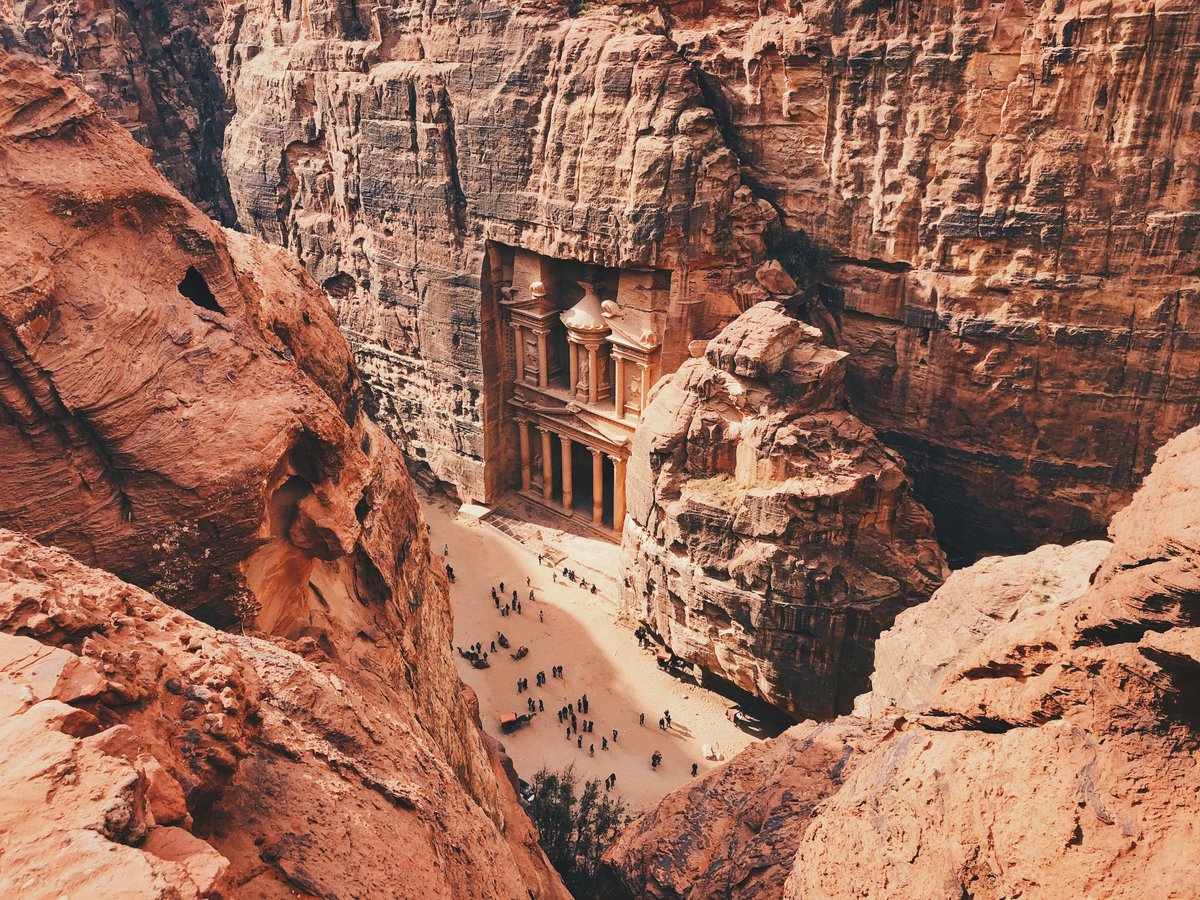
Stay in Petra in February
52 hotels in the Trip.com pool for Petra, from US$10 a night.
Opens Trip.com on Fri 5 Feb to Sun 7 Feb 2027; change the dates there.
February is Petra's wettest month, averaging 41mm of rain across roughly 8 rainy days. That single fact shapes the entire visit. Daytime highs reach about 13.5°C (56°F), which is genuinely comfortable for the long hikes to Ad-Deir and the High Place of Sacrifice. But mornings at the Siq entrance hover around 6°C (43°F), and the narrow canyon walls hold cold air well past 10am. You'll feel the chill in your fingertips as you walk the 1.2km corridor toward the Treasury.
That said, February has real advantages. The site receives a fraction of the visitors it draws in April or October. You might have the Royal Tombs facade nearly to yourself on a weekday morning. Hotel rates in Wadi Musa drop noticeably from spring pricing, and the cool air makes the 800-step climb to the Monastery far more manageable than it would be in 33°C August heat. The low winter sun hits the sandstone at angles that seem to deepen the rose and amber tones, particularly along the Street of Facades before noon.
The serious caveat is flash flooding. The Siq sits at the bottom of a natural drainage basin, and winter rains can send water through the canyon with little warning. The Petra Development and Tourism Region Authority closes the Siq entrance when flood risk is high. It doesn't happen every visit, but it can cost you a morning or, in rare cases, a full day. The carved Nabataean water channels along the Siq walls are a reminder that this civilization took floodwater seriously. So should you.
Why visit in February
- Crowd levels are a fraction of peak season (March-May, October-November), meaning fewer people in your photographs at the Treasury and quieter trails to the Monastery
- Cool 13-14°C daytime temperatures make the 20+ km of hiking trails inside the park far more comfortable than the 30°C+ months from June through September
- Hotel rates in Wadi Musa typically drop 20-30% below spring peak pricing, and multi-night discounts are easier to negotiate
- The low winter sun angle intensifies the color of the sandstone facades, particularly along the Street of Facades and the Royal Tombs between 9am and 11am
- Clear days between rain showers bring crisp visibility across the Wadi Araba valley from the High Place of Sacrifice viewpoint
Worth knowing
- February averages 41mm of rainfall across 8 days, the highest of any month, and rain can close the Siq entrance without much warning due to flash flood risk
- The site closes at 4:30pm in winter, cutting roughly 90 minutes off a summer day, which makes it harder to reach both the Monastery and the High Place of Sacrifice in a single visit
- Morning temperatures around 6°C (43°F) require proper layering, and the Siq canyon feels several degrees colder still due to shade and channeled wind
- Some trails, particularly the steps to Ad-Deir and the scramble up to the Monastery viewpoint, become slippery on wet sandstone after rain
Best for
Think twice if
February is the wettest month in Petra's calendar, with about 41mm of rain spread across roughly 8 days. Daytime highs reach 13.5°C (56°F), comfortable for extended hiking, but mornings start cold at around 6°C (43°F). Humidity sits at 67%, higher than the bone-dry summer months. The rain tends to arrive in short, intense bursts rather than day-long drizzle. Clear spells between showers bring crisp visibility across the Wadi Araba valley. Wind picks up through the open basin areas and along the ridgeline trails, making it feel several degrees cooler than the thermometer reads.
Seasonal caution
- Flash flooding in the Siq is a genuine safety risk in February. The canyon drains a wide catchment area, and storms 10+ km away can funnel water through the corridor with limited warning. The Petra authorities close the Siq entrance when risk is elevated. Follow their guidance without exception.
- Overnight temperatures can approach 0°C (32°F) in exposed areas, particularly near the Monastery and along the ridgeline trails. If you plan a predawn start for sunrise photos, prepare for near-freezing wind chill.
Year-round climate
Averages from the last 5 years.
| Month | Avg high (°C) | Avg low (°C) | Rainfall (mm) |
|---|---|---|---|
| Jan | 14 | 7 | 33 |
| Feb | 14 | 6 | 41 |
| Mar | 18 | 9 | 37 |
| Apr | 25 | 14 | 11 |
| May | 28 | 17 | 6 |
| Jun | 31 | 21 | 0 |
| Jul | 32 | 22 | 0 |
| Aug | 33 | 23 | 0 |
| Sep | 30 | 20 | 1 |
| Oct | 25 | 17 | 4 |
| Nov | 21 | 14 | 20 |
| Dec | 16 | 9 | 35 |
Best things to do in February
Hike to Ad-Deir (The Monastery)
hikingThe 800-step trail from the Basin restaurant to Ad-Deir climbs roughly 200 meters through a sandstone canyon. The Monastery facade is 47 meters wide and 48 meters tall, larger than the Treasury but far less visited. A small Bedouin cafe at the viewpoint sells tea and coffee with a panoramic view of the Wadi Araba.
February's 13°C average makes this steep climb far more comfortable than the 30°C+ summer months. The trail is less crowded, and you'll likely share the Monastery platform with fewer than 10 other visitors on a weekday.Booking tipNo booking needed, but start by 9am to allow time for the climb plus the Monastery viewpoint trail that continues 15 minutes further.
Petra by Night
culturalThe Siq and Treasury plaza are lit by over 1,500 candles laid along the canyon floor. A 30-minute Bedouin music and storytelling performance takes place in front of the candlelit Treasury. The walk through the dark, candle-lined Siq takes about 25 minutes each way.
February's low visitor numbers mean fewer people in the Treasury plaza during the performance. The cold night air (around 4-5°C) and dark canyon walls give the candlelit walk a sharper, more atmospheric quality than warm-weather sessions.Booking tipRuns Monday, Wednesday, and Thursday evenings. Buy tickets at the Petra Visitor Centre by early afternoon, as they do sell out even in low season. Starts at 8:30pm.
High Place of Sacrifice trail (Al-Madbah)
hikingA 45-minute climb from the Street of Facades leads to a Nabataean sacrificial altar at roughly 1,035 meters elevation. The platform offers 360-degree views over the Petra basin, the Wadi Araba, and the distant peaks of the Negev. The descent via the Wadi Farasa route passes the Lion Fountain and the Garden Temple.
February's clear post-rain air produces some of the year's best visibility from the summit. The cool temperature makes the exposed ridgeline walk tolerable, while summer heat makes this same trail dangerous after 10am.Explore Little Petra (Siq al-Barid)
sightseeingA smaller canyon system 9 km north of the main Petra entrance, with carved Nabataean dining rooms, cisterns, and a painted ceiling in the Painted House. The site is free to enter and takes 1-2 hours to explore. The carved triclinia (banquet halls) still show traces of original plaster.
February sees very few visitors at Little Petra, often fewer than 20 in an entire morning. The site is not affected by Siq flood closures, making it a strong backup plan on rainy days.Booking tipNo ticket needed. Drive or taxi from Wadi Musa, about 15 minutes. Visit in morning for the best light on the carved interiors.
Walk the Wadi Farasa trail
hikingA less-traveled route through the southern part of the Petra basin, passing the Renaissance Tomb, the Soldier's Tomb, the Garden Triclinium, and the Lion Fountain. The trail descends from the High Place of Sacrifice or can be accessed from Qasr al-Bint. The carved facades along this route show distinctly different architectural styles from the Royal Tombs.
February's low foot traffic means you'll likely have this trail entirely to yourself. The damp sandstone after rain reveals color striations in the rock that are invisible when dry.Visit the Petra Museum
museumOpened in 2019 near the Visitor Centre, the museum holds over 280 artifacts from the Nabataean period, including pottery, jewelry, coins, and carved stone. The exhibit on Nabataean water engineering is particularly relevant after you've seen the carved channels in the Siq. Entry is included with your Petra ticket.
A rainy February morning is the ideal time to explore the museum without feeling like you're missing good hiking weather. It's rarely crowded in winter, and the water management exhibits give useful context before or after walking the Siq.Day trip to Wadi Rum
excursionThe desert valley 60 km south of Petra offers 4x4 tours past sandstone arches, Nabataean inscriptions, and Lawrence of Arabia's alleged campsite at Lawrence's Spring. The red sand and rock formations feel worlds apart from Petra's carved facades. The drive from Wadi Musa takes about 90 minutes.
February daytime temperatures in Wadi Rum reach about 15°C, comfortable for sitting in an open-top jeep. Summer tours are punishing in the exposed desert. Night camps in February are cold (near 0°C) but spectacular for stargazing in the dry desert air.Booking tipBook a Wadi Rum tour through your hotel or a local operator at least 2 days ahead. A full-day 4x4 tour runs about 45-65 JD per person.
What to eat in February
In season: fruit
Jordan Valley citrus
Oranges, clementines, and lemons from the Jordan Valley reach peak ripeness in February. Fruit stalls in Wadi Musa sell bags of sweet, thin-skinned oranges for 1-2 JD per kilo. The freshly squeezed orange juice at roadside stands is worth stopping for.
On menus now
Mansaf
Jordan's national dish, lamb slow-cooked in dried fermented yogurt (jameed) and served over rice. The hearty, rich broth is particularly welcome after a cold day hiking Petra's trails. Restaurants along the main street in Wadi Musa serve it as a Friday lunch specialty.
Zarb
Bedouin underground barbecue. Lamb, chicken, and root vegetables are slow-cooked in a sand-covered pit for several hours. The smoky, tender meat emerges with a flavor you won't replicate above ground. Wadi Rum camp operators and some Wadi Musa restaurants serve it, but February's cold nights make the fireside ritual particularly atmospheric.
Galayet bandora
Tomatoes cooked down in generous olive oil with garlic and chili, served with fresh taboon bread. It appears on most breakfast tables in Wadi Musa and uses preserved summer tomatoes and freshly pressed winter olive oil, both at their best in February.
Street food peaks
Knafeh
Warm shredded pastry layered over soft white cheese, soaked in sugar syrup, and finished with crushed pistachios. Available year-round but especially welcome in February's cold evenings. The Nabulsi-style version, with its stretchy cheese pull, is the one to seek out in Wadi Musa.
What to drink
Maramiyyeh (sage tea)
Wild sage grows in the hills around Petra, and February is peak tea-brewing season. Bedouin tea sellers along the trail to the High Place of Sacrifice serve it sweetened for about 1 JD per cup. The warm, earthy flavor cuts the chill.
Regular events in February
Petra by Night
Candlelit walk through the Siq to the Treasury, with Bedouin music performance. Over 1,500 candles line the canyon floor. Runs year-round on Monday, Wednesday, and Thursday evenings from 8:30pm.
Every Monday, Wednesday, and ThursdayJordan Trail thru-hiking season openingFree
The 650 km Jordan Trail from Umm Qais to Aqaba becomes hikeable in its southern sections as winter moderates. The Dana to Petra segment (4-5 days, roughly 73 km) is one of the trail's most popular stretches, and February marks the beginning of the spring hiking window before temperatures climb.
Late February through AprilAlmond blossom season in Dana Nature Reserve
Wild almond trees in the Dana Nature Reserve, about 50 km north of Petra, begin blooming in late February. The white and pink blossoms against the red sandstone of the Wadi Dana canyon make a striking contrast. The reserve's Rummana campground reopens for the spring season.
Late February to mid-MarchBest places this February
Al-Khazneh (The Treasury)
archaeological sitePetra's most recognized facade, 40 meters tall, carved directly into the rose-pink sandstone cliff. In February, the low morning sun hits the facade between about 9am and 11am, producing the warm golden-pink color that photographs well. Fewer visitors in February means you can stand in the open plaza without dozens of people in the frame.
The SiqThe Royal Tombs
archaeological siteA row of monumental carved facades on the eastern cliff face, including the Urn Tomb, the Silk Tomb, the Corinthian Tomb, and the Palace Tomb. The afternoon sun in February lights these facades directly from about 2pm until close. The Urn Tomb's interior was later converted into a Byzantine church, and you can still see the arched windows.
Central BasinQasr al-Bint
archaeological siteThe only freestanding structure in Petra, a 23-meter-tall Nabataean temple near the Basin restaurant area. Most visitors walk past it on the way to the Monastery trail, but in February's thin crowds you can appreciate the construction details. The dressed sandstone blocks and the remnants of the original plaster covering are clearer up close.
The BasinPetra Museum
museumThe modern museum near the Visitor Centre displays over 280 Nabataean artifacts across 9 rooms. The water management exhibit explains the sophisticated system of dams, channels, and cisterns that made Petra possible in a desert environment. Free with Petra entry. A strong option for a rainy February morning.
Wadi MusaLittle Petra (Siq al-Barid)
archaeological siteA smaller canyon 9 km north of the main site, with carved Nabataean banquet halls, the Painted House (one of the few surviving examples of Nabataean frescoes), and ancient cisterns. Free entry. In February, you may be the only visitor for an hour or more. The painted ceiling of the Painted House is best viewed with a flashlight.
BeidhaDana Nature Reserve
nature reserveJordan's largest nature reserve, stretching from 1,500 meters elevation down to the Wadi Araba rift valley. Late February brings early almond blossoms and the start of wildflower season. The reserve holds over 700 plant species and is home to the Nubian ibex. About 50 km north of Petra by car.
TafilehHigh Place of Sacrifice viewpoint
viewpointAt 1,035 meters, this Nabataean sacrificial platform offers the widest panoramic view in Petra. On clear February days after rain has washed the air, you can see across the Wadi Araba to the Negev. Two carved obelisks near the summit stand about 6 meters tall. The 45-minute climb from the Colonnaded Street rewards with solitude in February.
Southern Ridge
Your packing checklist
Tick items off as you pack. Your progress saves in this browser.
All packed — have a great trip.
Insider tips
The back trail to the Monastery enters through Umm Sayhoun village, bypassing the Siq entirely. If the Siq is closed for flood risk, this alternative route still gives you access to Ad-Deir and the upper parts of the site. Ask at your hotel for directions or a local guide.
Bedouin tea sellers along the High Place of Sacrifice trail sell sweet sage tea (maramiyyeh) for about 1 JD. In February, the warm cup is worth every fils. The sellers are Bdoul Bedouin families who were relocated from the Petra caves in 1985 and still know the site better than any guidebook.
The Petra Museum near the Visitor Centre is free with your entry ticket but most visitors skip it. Go on a rainy morning. The water engineering exhibit explains how the Nabataeans collected 12 million gallons of rainwater annually, which makes the carved channels you'll see in the Siq far more interesting.
A 2-day Petra pass costs 55 JD versus 50 JD for a single day. In February, the extra day is almost free insurance against weather closures, and the thin crowds mean a second-day visit feels like a private tour. The 3-day pass at 60 JD is even better value if you want to explore Wadi Farasa and the less-visited southern routes.
If you're planning to combine Petra with Wadi Rum, do Wadi Rum first. The desert air and open landscape recalibrate your sense of scale, and arriving at Petra's carved facades afterward hits harder than the reverse.
Avoid these mistakes
- Wearing only a t-shirt for the morning walk through the Siq. The canyon is in shadow until mid-morning and the stone walls hold cold air. In February, the Siq can feel 5-8°C cooler than the open areas beyond the Treasury. By midday you'll be glad to strip layers, but at 7am you'll regret not having them.
- Ignoring flash flood warnings. Some visitors assume light drizzle in Wadi Musa means light rain inside Petra. The Siq drains a wide catchment, and storms 10+ km away can funnel water into the canyon without any rain at the site itself. When the authorities close the Siq, they have telemetry you don't.
- Trying to see everything in one day. The 4:30pm winter closing time cuts your day short compared to summer's 6pm close. The Monastery alone takes 3-4 hours round-trip including time at the top. A 2-day pass costs only 5 JD more than a single day, and February's low crowds make both days rewarding.
- Skipping Little Petra because it sounds like a lesser version. Siq al-Barid is a different kind of site, with intimate carved dining rooms and the only surviving Nabataean painted ceiling. It's free, uncrowded in February, and takes 1-2 hours. Pair it with a rainy day when the main Siq might close.
Practical tips for February
Book the Jordan Pass online before arrival. It bundles the 50 JD Petra entry fee (roughly 70 USD for a single day) with your visa cost, saving about 40 JD over paying separately. In February, most hotels in Wadi Musa offer flexible cancellation, so book early and adjust if weather forecasts turn poor for your dates. The Petra Visitor Centre opens at 6am year-round, but February sunrise is around 6:30am, so arriving before 6:15 gains you little except a dark Siq. The site closes at 4:30pm in winter (6pm in summer), cutting about 90 minutes from a summer day. Plan your longest hike, likely the Monastery, for late morning when temperatures peak and light fills the canyon. Carry cash in Jordanian dinars for the small Bedouin cafes inside the site. The Basin Restaurant near the start of the Monastery trail is the only sit-down dining option inside the park. Check the weather forecast each evening. If rain is predicted, shift your plan to the Petra Museum, Little Petra, or a Wadi Rum day trip rather than risking a closure at the Siq.
FAQ
Is February a good time to visit Petra?
February is a good but not ideal time. The cool temperatures (13.5°C highs, 6°C lows) make hiking comfortable, and visitor numbers are well below the spring and autumn peaks. The main downside is that February is Petra's wettest month at 41mm across roughly 8 rainy days, which brings a real risk of flash-flood closures in the Siq. If you can build flexibility into your schedule (a 2 or 3-day pass helps), February offers a quieter, more affordable experience than March through May.
What is the weather like in Petra in February?
Expect daytime highs around 13.5°C (56°F) and overnight lows near 6°C (43°F). Humidity averages 67%. Rain falls on roughly 8 of the month's 28 days, totaling about 41mm, usually in short bursts rather than all-day drizzle. The Siq canyon feels noticeably colder than open areas due to shade and wind channeling. Clear days between showers are crisp and bright, with good visibility from the ridgeline viewpoints.
Can flash floods happen in Petra in February?
Yes. February is the highest-risk month for flash flooding in the Siq because it receives the most rainfall. The Siq is a natural drainage channel for a wide catchment area, and water from storms well outside the visible horizon can rush through the canyon. The Petra authorities monitor conditions and close the Siq entrance when risk is elevated. Deaths have occurred in past decades from flash floods in the canyon. Take closure signs seriously and have a backup plan (Little Petra, the museum, Wadi Rum) for rainy days.
How many days do I need for Petra in February?
Two full days is the sweet spot. The 4:30pm winter closing time makes it difficult to reach both the Monastery and the High Place of Sacrifice in a single day, and February's weather can close the Siq for a morning. A 2-day pass costs 55 JD versus 50 JD for a single day. With February's low visitor numbers, a second day lets you explore the quieter trails like Wadi Farasa and the back routes without feeling rushed. Three days (60 JD) is worthwhile if you want to sketch, photograph, or simply sit with a cup of sage tea at the Monastery viewpoint.
Is Petra crowded in February?
No. February is one of Petra's quietest months. Peak season runs from March through May and September through November, when tour groups from Europe and East Asia arrive in large numbers. In February, you'll share the Treasury plaza with a fraction of the spring crowds, and trails like the High Place of Sacrifice and Wadi Farasa may feel nearly empty on weekdays. Petra by Night sessions are smaller, and you won't queue at the Siq entrance in the morning.
Find a flight to Petra
Live fares to Petra appear here once cookies are accepted.
Last verified by automated review (v1.7.2) on . What is automated review?