Stay in Petra in August
52 hotels in the Trip.com pool for Petra, from US$10 a night.
Opens Trip.com on Fri 6 Aug to Sun 8 Aug 2027; change the dates there.
August in Petra is hot. That is the single fact that should shape every decision you make about this trip. Daytime temperatures average 32.7°C (91°F) and routinely push past 36°C (97°F) by early afternoon, turning the sandstone canyons into something like a convection oven with no off switch. The saving grace is the dryness. Humidity sits around 40%, and there is effectively 0mm of rainfall for the entire month, so the heat is less suffocating than equivalent temperatures in coastal cities. You will still feel it, though, especially on the 800-step climb to Ad-Deir or the exposed ridge trail to the High Place of Sacrifice.
This is Petra's deep low season. The tour buses from Amman thin out considerably compared to March or October, and you might find yourself nearly alone in the Siq at 6:30 in the morning. Hotel rates in Wadi Musa drop to their annual lows. A room that costs 120 JOD in October might go for 50-60 JOD in August. The trade-off is real, though. By 11:00, the site becomes genuinely uncomfortable for sustained walking, and by 14:00 it can feel punishing on exposed routes like the Street of Facades.
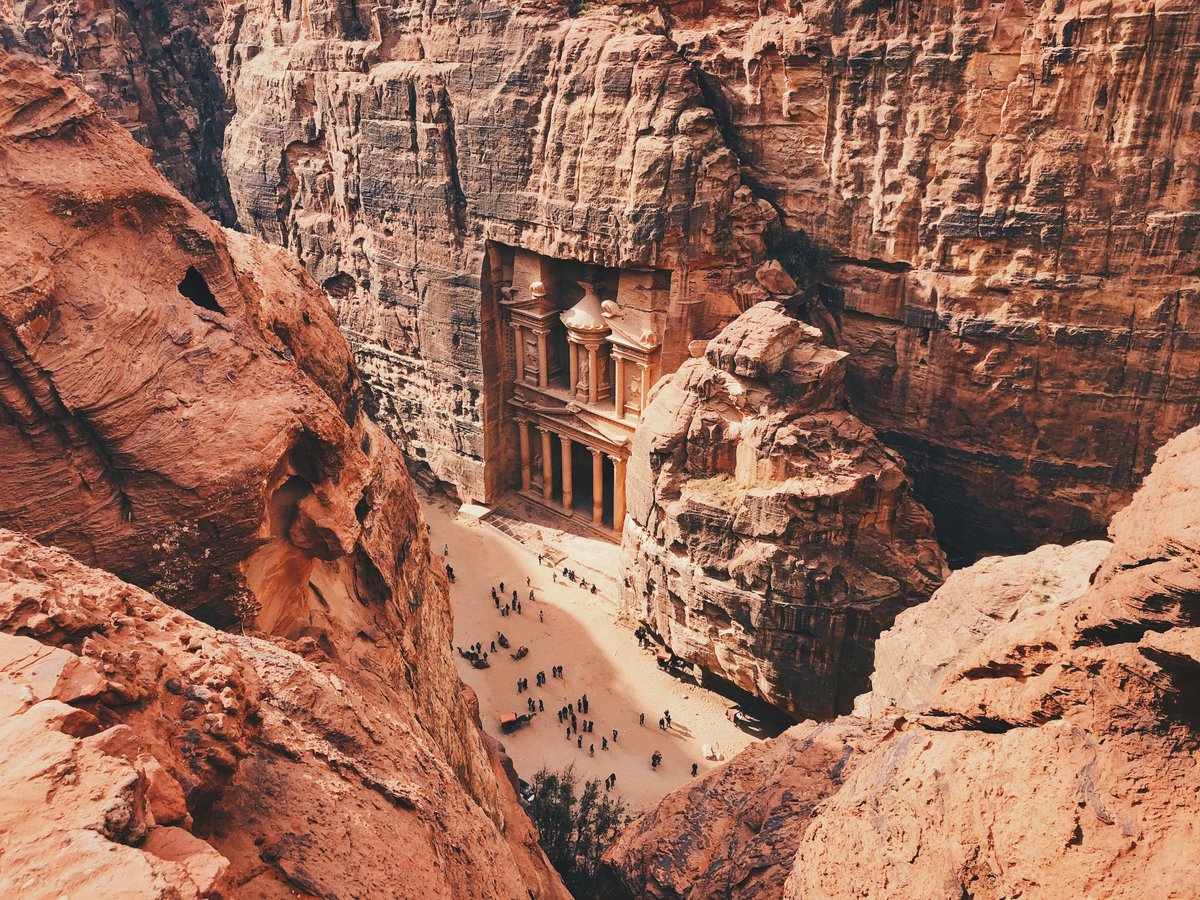
If you can tolerate early mornings and long midday retreats to your hotel, August rewards you with something the peak-season visitor rarely gets. Space. Silence in the Treasury plaza before 8:00. Unobstructed photos at the Royal Tombs. The Bedouin tea sellers in the shade near Qasr al-Bint have time to sit and talk. That said, you need to be honest with yourself about heat tolerance before booking. This is not a month for leisurely 8-hour explorations of the site.
Why visit in August
- Crowd levels drop to their annual low. In peak months like October and March, the Treasury plaza can feel like a queue. In August, you might share it with fewer than 20 people at 7:00 in the morning.
- Hotel rates in Wadi Musa fall 40-50% below the spring and autumn peaks. Budget travelers can find decent rooms for 35-50 JOD per night, roughly half what they would pay in October.
- Zero rainfall and cloudless skies mean guaranteed clear conditions for photography. The warm sandstone of the Treasury glows copper and pink in low-angle morning light without a single cloud to flatten the contrast.
- Petra by Night, the candlelit walk through the Siq to the Treasury, feels more intimate with fewer visitors. In peak season, 300+ people crowd the seating area. In August, it tends to be closer to 80-100.
Worth knowing
- Sustained heat above 33°C (91°F) limits comfortable exploration to roughly 6:00-10:30 in the morning and 16:00-18:30 in the evening. That gives you about 7 usable hours, compared to a full 10-12 in spring or autumn.
- The 800-step climb to Ad-Deir (the Monastery) becomes a serious physical challenge in midday heat. Heatstroke is a real risk for visitors who underestimate the exposed switchbacks and don't carry enough water.
- Many of the Bedouin-run stalls and cafes inside the site operate on reduced hours or close entirely during the hottest weeks, limiting food and shade options beyond the main Basin Restaurant area.
- The Dead Sea, a common day trip from Petra at 2.5 hours by car, reaches water temperatures above 35°C (95°F) in August. It feels more like a warm bath than a refreshing swim.
Best for
Think twice if
August is Petra's hottest month and the peak of a dry, rainless summer that stretches from June through September. The Wadi Araba rift valley to the west radiates stored heat upward, and the sandstone canyon walls retain warmth well into the evening. Mornings typically start around 23°C (74°F) at 6:00, which feels pleasant. By 10:00 the temperature passes 30°C (86°F), and the early afternoon high averages 32.7°C (91°F). On hotter days, the canyon floor near the Street of Facades can feel 3-4°C warmer than the official reading due to radiated heat from the rock. Nights cool to around 23.2°C (74°F), warm enough for outdoor dining in Wadi Musa town center without a jacket. The 40% humidity is low enough that sweat evaporates quickly, which helps with cooling but accelerates dehydration. You might not feel how much fluid you are losing until symptoms appear.
Seasonal caution
- Temperatures regularly exceed 35°C (95°F) on the hottest afternoons, with radiated canyon heat adding 3-5°C to the perceived temperature on exposed trails like the High Place of Sacrifice ascent and the Ad-Deir staircase.
- Dehydration risk is high due to the combination of physical exertion, dry air at 40% humidity, and limited water sources inside the archaeological site. The Jordanian Ministry of Tourism recommends carrying at least 3 litres (0.8 gallons) per person per day.
- Though August rainfall is 0mm on average, extremely rare flash floods can occur from storms over nearby highlands. The Siq has flood warning infrastructure, and park rangers will close it if there is any upstream risk. Follow posted warnings without exception.
Year-round climate
Averages from the last 5 years.
| Month | Avg high (°C) | Avg low (°C) | Rainfall (mm) |
|---|---|---|---|
| Jan | 14 | 7 | 33 |
| Feb | 14 | 6 | 41 |
| Mar | 18 | 9 | 37 |
| Apr | 25 | 14 | 11 |
| May | 28 | 17 | 6 |
| Jun | 31 | 21 | 0 |
| Jul | 32 | 22 | 0 |
| Aug | 33 | 23 | 0 |
| Sep | 30 | 20 | 1 |
| Oct | 25 | 17 | 4 |
| Nov | 21 | 14 | 20 |
| Dec | 16 | 9 | 35 |
Best things to do in August
Dawn walk through the Siq to the Treasury
sightseeingThe Petra site opens at 6:00 in summer, and the first hour is when August becomes genuinely magical. The Siq's 80-metre-high walls block direct sun until mid-morning, keeping the narrow canyon cool. You walk through 1.2 kilometres of carved rock in near-silence, with the temperature still below 25°C (77°F), and emerge at the Treasury when the first light hits the upper facade. In October, you would share this moment with 50+ people. In August, you might share it with 10.
The 6:00 summer opening is earlier than the 6:30 winter opening, and August's low visitor numbers mean the Siq is nearly deserted at dawn. This combination exists only in July and August.Booking tipNo booking needed. Arrive at the gate by 5:45 to be among the first 20 visitors through.
Petra by Night
culturalThe Monday, Wednesday, and Thursday evening walk through the candlelit Siq to the Treasury starts at 20:30 and runs about 2 hours. Over 1,500 candles in paper bags line the path, and the Treasury facade is lit by candlelight while a Bedouin musician plays the rababa. The air temperature at 21:00 in August is typically around 27°C (81°F), warm but comfortable. The 17 JOD ticket is separate from daytime entry.
August's low crowd levels mean fewer than 100 people typically attend, compared to 300+ in peak season. The intimate scale changes the experience entirely. The warm evening air also means you do not need layers.Booking tipBuy tickets from the Petra Visitor Centre by 17:00 on the day. They occasionally sell out even in low season when a tour group books in bulk.
Pre-dawn climb to Ad-Deir (the Monastery)
hikingThe 800-step ascent to Ad-Deir takes 45-60 minutes and is one of Petra's most rewarding climbs. The Monastery itself is larger than the Treasury, carved into a cliff face at 1,060 metres above sea level. In August, this climb is only comfortable before 8:00. Start from the Basin Restaurant trailhead at first light. The route is partially shaded by canyon walls for the first half, then fully exposed for the final 15 minutes.
Starting at dawn in August means arriving at Ad-Deir by 7:00, when the morning sun illuminates the facade head-on and you will likely have the entire plaza to yourself. In cooler months, most visitors climb at midday, so you share the view with crowds.Booking tipNo booking needed. Bring at least 1.5 litres of water for the ascent alone. A Bedouin tea stall at the top usually opens by 7:30 in summer.
Overnight camping in Wadi Rum
adventureWadi Rum's desert camps sit about 1.5 hours south of Petra by car. August nights in Wadi Rum are warm, around 22-25°C (72-77°F), so you can sleep outside on a mattress under open sky without a sleeping bag. The desert silence is total. The Milky Way is visible to the naked eye on moonless nights, and in August, the Perseid meteor shower peaks around August 11-13.
The Perseid meteor shower peaks in mid-August, and Wadi Rum's zero light pollution makes it one of the best viewing locations in the Middle East. Warm overnight temperatures also mean you can sleep outdoors without any cold-weather gear.Booking tipBook a Bedouin-run camp at least 1 week ahead, even in low season. Camps near Jebel Um Ishrin tend to have less generator noise at night than those closer to the village entrance.
Little Petra (Siq al-Barid) afternoon visit
sightseeingLittle Petra sits 9 kilometres north of the main site and is free to enter. The narrow siq is only 350 metres long but contains carved Nabataean dining rooms with surviving ceiling frescoes from the 1st century CE. The canyon walls provide shade through most of the afternoon, making this one of the few Petra-area sites that remains comfortable after 14:00 in August.
The shaded canyon stays 4-5°C cooler than exposed areas, giving you a meaningful afternoon activity when the main site is too hot. In cooler months, there is no reason to avoid the main site in the afternoon, so this advantage disappears.Booking tipNo booking or ticket needed. Drive or take a taxi from Wadi Musa for about 3-4 JOD each way.
Sunset at the High Place of Sacrifice viewpoint
hikingThe High Place of Sacrifice (Al-Madbah) sits on a ridge above the main valley at about 1,035 metres. The 45-minute climb from the Street of Facades is steep and exposed, but starting at 16:30 in August puts you on top by 17:15, when the temperature has dropped to around 28-29°C (82-84°F). The 360-degree view takes in the Treasury below, the Wadi Araba valley to the west, and the Sharah Mountains to the east. Sunset in August falls around 19:15.
August's late sunset at 19:15 gives you nearly 2 hours of comfortable viewing time after the climb. The absence of clouds (0mm rainfall) means reliable sunset conditions. In winter, sunset falls at 16:45, leaving almost no time at the top before dark.Booking tipCarry a headlamp for the descent. The trail is not lit, and you will be coming down in fading light after a 19:15 sunset.
Evening food tour of Wadi Musa
foodAfter 19:00, the main street of Wadi Musa comes alive as temperatures drop below 28°C (82°F). The town has roughly 30 restaurants within walking distance. Start at the upper end near the Petra Visitor Centre and walk downhill. The shawarma and falafel stands near the roundabout in the town center are where local drivers and guides eat, and a full meal with hummus, falafel, pickles, and tea runs about 3-4 JOD.
In August, the evening cool-down turns Wadi Musa's main street into the social center of the town. Locals and the small number of summer tourists mingle more than in peak season, when restaurants are packed with tour groups on fixed schedules.Booking tipNo booking needed for casual spots. For the handful of hotel restaurants with panoramic views, like those in the upper part of town near the Mövenpick, reserve by 17:00.
Dana Nature Reserve day hike
natureDana Biosphere Reserve lies about 50 kilometres north of Petra and sits at 1,500 metres elevation, making it 5-7°C cooler than the Petra canyon floor in August. The Rummana Trail (2.5 hours, moderate) winds through juniper and oak forest above the Wadi Araba escarpment. The RSCN (Royal Society for the Conservation of Nature) guesthouse at Dana Village serves lunch on a terrace overlooking the rift valley.
The 5-7°C temperature drop at Dana's higher elevation makes it the most comfortable full-day hike within an hour of Petra during August. The reserve also sees very few visitors in summer, so you might have the trails entirely to yourself.Booking tipBook RSCN accommodation or guided hikes through the RSCN website at least 3 days ahead. The Dana Village guesthouse has limited rooms.
What to eat in August
In season: fruit
Teen (Fresh Figs)
August is peak fig season across the Jordan Valley and the highlands around Wadi Musa. Green and purple varieties appear at roadside stalls and in the Wadi Musa morning market, often picked the same day. The local Bedouin preparation is simple. Split, drizzled with local honey, sometimes served alongside fresh labneh.
Enab (Table Grapes)
Jordanian grape harvest runs from late July through September, and August is the sweet spot. The small, intensely sweet green grapes from the Shoubak and Tafilah regions appear in every Wadi Musa grocery and restaurant. They taste nothing like supermarket imports.
Sabr (Prickly Pear)
The cactus fruit that Jordanians call sabr reaches peak ripeness in August. Street vendors in Wadi Musa peel them on the spot for about 0.25 JOD each. The flesh is cool, sweet, and full of small seeds. Worth noting, the name sabr means 'patience' in Arabic, likely a reference to the thorns you need to navigate.
On menus now
Mansaf
Jordan's national dish of lamb cooked in fermented dried yogurt (jameed) over rice is served year-round, but August is when local families in the Wadi Musa area are most likely to prepare it for guests and gatherings. The jameed comes from sheep and goat herds that have been grazing on summer-dry herbs, which tends to give the yogurt a slightly sharper, more concentrated flavor.
What to drink
Qamar al-Din
This chilled apricot nectar, made from dried apricot paste dissolved in cold water with a touch of rose water, is a Jordanian summer staple. Restaurants in Wadi Musa serve it ice-cold, and it is genuinely one of the most refreshing things you can drink after a morning in the canyon. The paste originates from the apricot orchards near Damascus, though Jordanian-made versions exist.
Laban Ayran
Cold salted yogurt drink that Jordanians consume in large quantities during summer. Every restaurant in Wadi Musa serves it, and the local versions tend to be thicker and tangier than the Turkish-style ayran you might know. At 0.50-1 JOD per glass, it is the cheapest way to replace salt and fluids after a morning hike.
Regular events in August
Petra by Night
Candlelit walk through the Siq to the Treasury, with traditional Bedouin music at the base of the facade. Runs every Monday, Wednesday, and Thursday evening at 20:30 year-round. Tickets are 17 JOD, sold at the Petra Visitor Centre.
Every Monday, Wednesday, and Thursday throughout AugustJerash Festival of Culture and Arts
Jordan's largest cultural festival, held in the ancient Roman city of Jerash (3 hours north of Petra). Features Jordanian and Arab musicians, theater, poetry readings, and dance performances across the ancient ruins, including the 3,000-seat South Theatre. Typically runs for 2-3 weeks from late July into early August. Worth the day trip from Petra if dates align.
Late July through first week of August (exact dates vary by year)Perseid Meteor Shower peak viewingFree
The Perseid meteor shower peaks in mid-August, and the clear desert skies around Petra and Wadi Rum offer some of the best viewing conditions in the region. Several Bedouin camps in Wadi Rum organize informal stargazing gatherings. No formal event structure, but the natural spectacle is real.
August 11-13 (peak nights), visible from approximately August 4-17Best places this August
The Siq
archaeological siteThe 1.2-kilometre narrow gorge that serves as Petra's main entrance stays shaded by its 80-metre-high walls until mid-morning. In August, this makes the Siq the most comfortable part of the site between 6:00 and 9:00. The water channels carved into the rock walls by the Nabataeans are dry in August, but the engineering is still visible at eye level. Walk slowly and look up. The rock formations shift from rose to amber to deep red depending on the light angle.
Main EntranceAl-Khazneh (The Treasury)
archaeological sitePetra's most famous facade stands 39 metres tall at the Siq's exit. In August, arrive before 7:00 to see the sun creep down the upper pediment. The plaza in front is nearly empty at this hour. The Corinthian columns and the carved figures of Castor and Pollux flanking the entrance are best photographed in the first hour of direct light, before the contrast becomes too harsh around 9:30.
Central PetraQasr al-Bint
archaeological siteThe only freestanding structure in Petra that was not carved from rock. This Nabataean temple from the 1st century BCE sits at the end of the colonnaded street and is one of the few spots inside the site with natural shade from surrounding cliffs in the afternoon. The Bedouin tea stalls nearby operate in reduced but still functional hours in August, typically 7:00 to 14:00.
Western PetraRoyal Tombs
archaeological siteThe Urn Tomb, Silk Tomb, Corinthian Tomb, and Palace Tomb line the eastern cliff face above the colonnaded street. The Urn Tomb's interior, converted to a Byzantine church in 446 CE, offers shade and cooler air inside its carved chambers. In August, visit between 7:00 and 9:00 when the morning sun lights the facades directly. The Urn Tomb's arched lower level provides a shaded rest spot with a view over the valley.
Eastern CliffsLittle Petra (Siq al-Barid)
archaeological siteA 350-metre miniature version of Petra's main siq, 9 kilometres north of the main entrance near the village of Umm Sayhoun. The carved Nabataean dining rooms (tricliniums) with 1st-century ceiling frescoes are the highlight. Free entry, no crowds in August, and the narrow canyon provides shade through most of the day. The Painted House, with its grapevine and cupid frescoes, is on the left side about 200 metres in.
Siq al-BaridPetra Archaeological Museum
museumA small but well-curated museum built into a carved cave near the Basin Restaurant inside the site. Air-conditioned, which in August is worth mentioning. The collection includes Nabataean pottery, coins, and jewelry excavated from Petra. A good midday refuge when the outdoor heat peaks. Open 8:00 to 17:00.
Central PetraWadi Musa town center
town centerThe modern town that serves as Petra's gateway has a walkable main street running downhill from the Petra Visitor Centre. After 19:00 in August, when temperatures drop below 28°C (82°F), the street fills with locals and the few summer tourists. The lower roundabout area has the highest concentration of restaurants, money changers, and small shops selling Hebron glass and Dead Sea products. The Spring of Moses (Ain Musa) is at the upper end of town.
Wadi MusaDana Village
villageA 15th-century stone village perched on the edge of the Wadi Araba escarpment, about 50 kilometres north of Petra. The RSCN-managed guesthouse here sits at roughly 1,500 metres elevation, 5-7°C cooler than Petra's canyon floor. The terrace overlooks the rift valley all the way to the Negev. In August, this is the best half-day escape from the heat if you have a car.
Dana Biosphere Reserve
Your packing checklist
Tick items off as you pack. Your progress saves in this browser.
All packed — have a great trip.
Insider tips
The Petra Visitor Centre sells 2-day passes for 75 JOD and 3-day passes for 80 JOD. In August, the 3-day pass is the obvious choice. The 5 JOD difference over the 2-day pass gives you a third morning, and in this heat, you genuinely need 3 short mornings instead of 2 long days to see everything without exhausting yourself.
Fill your water bottles with ice from your hotel before the 6:00 opening. Most Wadi Musa hotels will give you ice for free if you ask at reception the night before. The temperature difference at 14:00 between ice water from a vacuum flask and a warm bottle from a vendor stall is the difference between wanting to keep exploring and wanting to quit.
The back trail from Ad-Deir descends through Wadi al-Deir to the Turkmaniyya Tomb and exits near Qasr al-Bint. In August, this route is 3-4°C cooler than retracing the 800 steps because the canyon provides afternoon shade. It adds about 30 minutes to the walk but saves your knees and keeps you out of direct sun.
If you are staying more than 2 nights, drive 20 minutes to the village of Taybeh for dinner. Two or three small family-run restaurants serve home-style Jordanian food, including fresh taboon bread baked in a wood-fired oven, at about half the price of Wadi Musa tourist restaurants. Ask your hotel reception for a current recommendation, as the best one tends to change.
The Petra Visitor Centre has free filtered water refill stations. Fill up before entering the site. The first water vendor inside is near the Treasury, roughly 25 minutes from the gate, and in August that 25-minute walk through the Siq with no water source feels longer than it sounds.
Avoid these mistakes
- Planning a midday start. Some visitors arrive at 10:00 or 11:00 thinking they will explore until late afternoon. By noon in August, exposed areas of Petra reach 35-37°C (95-99°F), and the carved-stone paths radiate stored heat upward. Heatstroke cases at Petra happen almost exclusively to visitors who entered the site after 10:00 in summer months. Start at 6:00. Return to your hotel by 11:00.
- Underestimating water needs. The standard advice of '2 litres per day' is not enough for active hiking in 33°C dry heat. You need 3-4 litres minimum for a 5-hour morning visit, and there are only 2-3 vendor stalls inside the site that reliably operate in August. Running out of water on the Ad-Deir climb with no shade and 30 minutes of exposed switchbacks remaining is genuinely dangerous.
- Wearing shorts and a tank top. The instinct to wear as little as possible in the heat is wrong here. Exposed skin absorbs radiated heat from the sandstone walls and burns faster due to UV reflection off the pale rock. Lightweight long sleeves and trousers keep you cooler and prevent the sunburn that will make day 2 miserable. Jordan is also a conservative country, and covering shoulders and knees is respectful in town.
- Booking only 1 day. A single-day 70 JOD ticket in August gives you roughly 5-6 comfortable hours. That is enough for the Siq, the Treasury, and the Street of Facades, but not enough for Ad-Deir, the High Place of Sacrifice, and the Royal Tombs. The 3-day pass at 80 JOD lets you spread the site across 3 cool mornings, which in August is the only sustainable approach.
Practical tips for August
Book accommodation in the upper part of Wadi Musa, within walking distance of the Petra Visitor Centre. The 15-minute uphill walk back from the lower town in 33°C heat after a morning at the site is miserable, and taxis charge 2-3 JOD for a ride you would not need in a better location. Most hotels offer free breakfast starting at 5:30 in summer, which aligns perfectly with a 5:45 departure for the 6:00 gate opening. The Jordan Pass (available online for 70-80 JOD depending on the number of Petra days included) bundles the Petra entry fee with the Jordan tourist visa fee, saving roughly 40 JOD if you need a visa on arrival. Buy it before traveling. The site closes at 18:00 in summer (last entry at 17:00), but the Siq itself stays open until the last visitor exits. Dress conservatively in Wadi Musa town, especially if visiting during Ramadan-adjacent months (check the Hijri calendar for the year of your visit). ATMs exist in Wadi Musa but occasionally run out of cash in low season. Bring Jordanian dinars from Amman or Aqaba as backup. The drive from Queen Alia International Airport in Amman to Petra takes about 3 hours via the Desert Highway (Route 15) or 4 hours via the scenic King's Highway (Route 35) through Madaba, Kerak, and Dana. In August, the Desert Highway is faster and air-conditioned cars handle it better. JETT buses run daily from Amman's Abdali station to Wadi Musa, departing at 6:30 and arriving around 10:30.
FAQ
Is August a good time to visit Petra?
Honestly, it is one of the least comfortable months. August is Petra's hottest month, with average highs of 32.7°C (91°F) and occasional spikes above 36°C (97°F). The heat compresses your usable visiting time to about 5-6 hours in the early morning and late afternoon. That said, August has real advantages if you can handle the conditions. Crowds drop to their annual low, hotel prices fall 40-50% below the spring and autumn peaks, and you get photographic conditions that peak-season visitors rarely see. It is a fair month, not a poor one, but it should not be your first choice unless budget or schedule drives the decision.
What is the weather like in Petra in August?
Hot and dry. The average high is 32.7°C (91°F) and the average low is 23.2°C (74°F). Rainfall is 0mm. That is zero. Humidity sits around 40%, which keeps it from feeling as oppressive as coastal heat but also means dehydration sneaks up on you. The canyon walls absorb and radiate heat, so the perceived temperature inside the Siq and near the Street of Facades can feel 3-5°C higher than the official reading. Nights cool to the low 20s, comfortable enough for outdoor dining in Wadi Musa without a jacket.
Is Petra crowded in August?
No. August has the lowest visitor numbers of the year along with July. The contrast with peak months is dramatic. In October, the Treasury plaza might have 50-100 people at any given moment. In August, you might count 10-15 before 8:00. Petra by Night, which draws 300+ people in peak season, typically has fewer than 100 in August. The trade-off is that some Bedouin stalls inside the site operate on reduced hours or close entirely, and you will see fewer guides and services available.
How many days do I need for Petra in August?
Plan for 3 days using the 80 JOD 3-day pass. In cooler months, fit visitors can see most of Petra in 2 full days. In August, the heat limits each visit to roughly 5-6 hours (6:00 to 11:00 in the morning, with an optional 16:30 to 18:00 evening session). Day 1 covers the Siq, the Treasury, and the Street of Facades. Day 2 is for the early-morning Ad-Deir climb and the Royal Tombs. Day 3 is for the High Place of Sacrifice at sunset, Little Petra, and anything you missed. Trying to compress this into 1 day in August means either missing major sites or risking heat exhaustion.
How much water should I carry inside Petra in August?
At least 3 litres (about 100 oz) per person for a 5-hour morning visit. This is more than the standard recommendation because the 40% humidity and 33°C heat cause rapid fluid loss through evaporation, and you may not feel how much you are sweating because it dries almost instantly. There are 2-3 vendor stalls inside the site that sell bottled water for 1-2 JOD, but their operating hours are unpredictable in low season. The Petra Visitor Centre has free filtered water refill stations. Fill your insulated bottles with ice water from your hotel before departure.
Find a flight to Petra
Live fares to Petra appear here once cookies are accepted.
Last verified by automated review (v1.7.2) on . What is automated review?