Stay in Innsbruck in March
43 hotels in the Trip.com pool for Innsbruck, from US$91 a night.
Opens Trip.com on Fri 5 Mar to Sun 7 Mar 2027; change the dates there.
March in Innsbruck is defined by altitude. The city sits at 574m in the Inn Valley, where daytime highs reach about 12°C (54°F) and the last of the winter snow turns to grey slush along Maria-Theresien-Straße. Ride the Nordkettenbahn for 20 minutes and you step out at 2,300m into a proper winter landscape, with the crunch of spring corn snow underfoot and the kind of cold, thin air that stings your nostrils. That 1,700m vertical gap is the entire story of March here.
The February ski crowds have largely gone home. Hotel rates in Saggen and Pradl tend to drop 20-30% from the winter peak, and the museums, the Tiroler Landesmuseum Ferdinandeum and the Hofkirche with its 28 bronze statues in particular, are quiet enough that you can hear your own footsteps on the stone floors. If Easter falls in April, the Ostermarkt opens in the Altstadt by mid-March. It tends to be a smaller, calmer affair than the December Christkindlmarkt. The smell of Glühwein and roasted Maroni drifts between wooden stalls on Marktplatz.
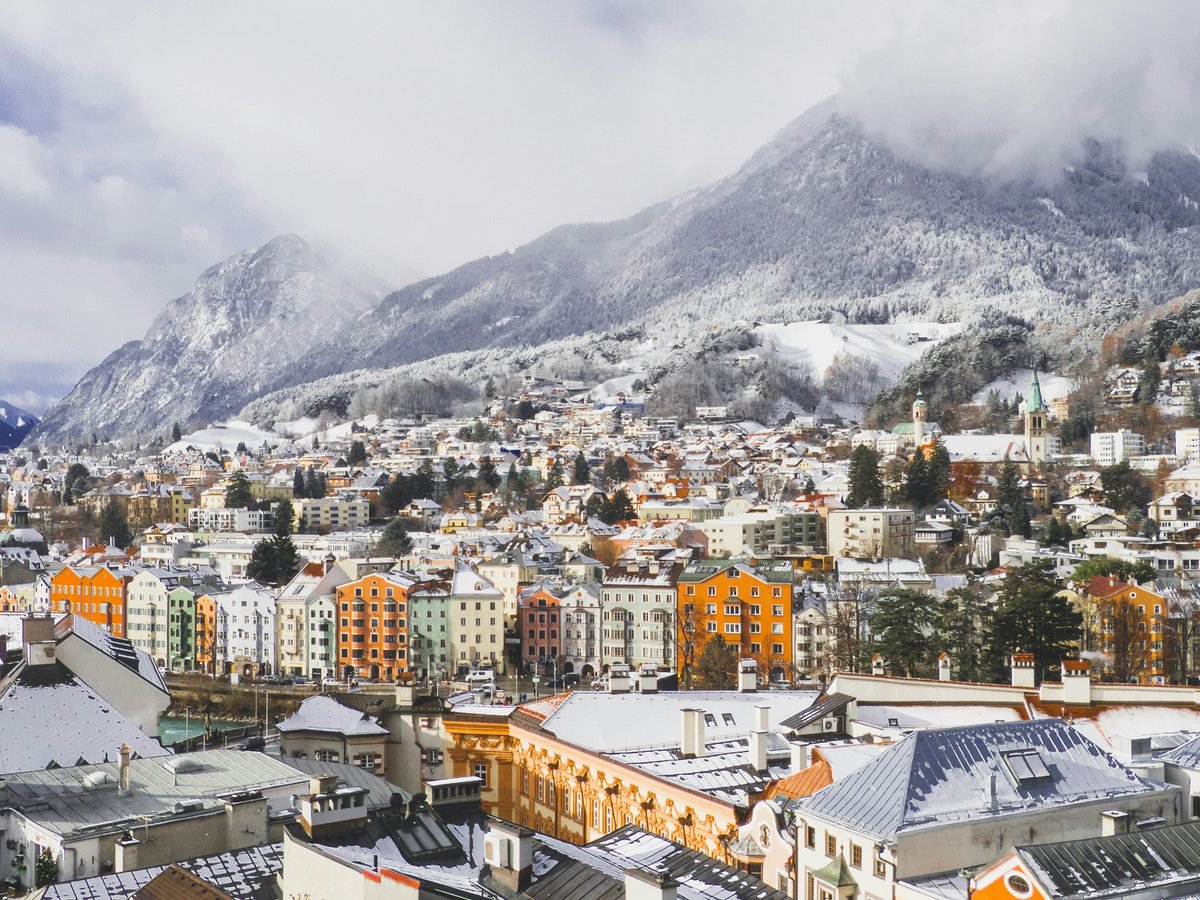
To be fair, the city at 574m is not at its most photogenic. The Hofgarten is still brown and bare, the Inn River runs high and silty with snowmelt, and overcast days make the valley feel hemmed in between the Nordkette and Patscherkofel. You might get 3 or 4 grey days in a row where the painted facades on Herzog-Friedrich-Straße provide the only real color. On a clear Föhn day, though, the warm southerly wind strips the sky to deep blue and temperatures can climb to 18-20°C by early afternoon.
Why visit in March
- Spring skiing above 2,000m with a fraction of the February crowds. Lift lines at Nordkette and Axamer Lizum shorten considerably, and the softer spring snow tends to be more forgiving for intermediate skiers.
- Hotel rates in Innsbruck typically drop 20-30% from the December-February winter peak. Properties in Saggen and Pradl offer particular value, while slope-adjacent hotels hold their rates slightly longer.
- Longer daylight, roughly 12 hours by late March, gives skiers more time on the slopes and allows late-afternoon runs that midwinter's 4:30pm sunset rules out.
- Cultural sites like the Hofkirche, Tiroler Landesmuseum Ferdinandeum, and Hofburg are nearly empty compared to the summer tourist season. You can spend time with Maximilian I's bronze tomb guards without anyone brushing past.
- Föhn days in March produce some of the best atmospheric visibility of the year. From Hafelekar at 2,334m, you can see more than 100km south toward the Dolomites on these clear, windswept afternoons.
Worth knowing
- The city at 574m looks worn in March. Sidewalks along Maria-Theresien-Straße are slushy, the Hofgarten is brown and bare, and the Inn River runs high and silty with snowmelt. If you want postcard Innsbruck, come in January for snow or June for green.
- Expect about 89mm of precipitation across 14 days, and overcast stretches of 3 or 4 consecutive grey days are normal. The valley floor between the Nordkette and Patscherkofel feels closed in under low cloud.
- Hiking is largely off-limits. Trails above 1,500m remain snowbound, and popular routes like the Goetheweg along the Nordkette ridge typically don't open until late May or June.
Best for
Think twice if
March weather in Innsbruck swings between frosty mornings near 2°C (36°F) and mild afternoons around 12°C (54°F). The month brings about 89mm of precipitation across 14 rainy days, falling as rain at valley level and snow above roughly 1,500m. Humidity averages a comfortable 68%. The Föhn wind, a warm southerly gust, can push temperatures to 18-20°C without warning and clear the sky to deep blue. Overcast stretches of 3 or 4 grey days are common, and the valley between the Nordkette and Patscherkofel can feel hemmed in under low cloud.
Seasonal caution
- Nighttime temperatures regularly drop below 0°C (32°F) in early March, and wind chill at summit stations like Hafelekar (2,334m) can make it feel like -15°C (5°F). Frostbite is a genuine risk for exposed skin above 2,000m without gloves and face protection.
- Avalanche risk in backcountry areas around Innsbruck remains elevated through March, particularly after warm days followed by cold nights. Never leave marked ski runs without checking the Lawinenwarndienst Tirol avalanche report first.
- The Föhn wind can arrive within hours and push temperatures 10°C above the forecast. While the clear skies are welcome, the wind commonly triggers headaches and restlessness. Locals call the syndrome Föhnkrankheit.
Year-round climate
Averages from the last 5 years.
| Month | Avg high (°C) | Avg low (°C) | Rainfall (mm) |
|---|---|---|---|
| Jan | 6 | -3 | 73 |
| Feb | 9 | -1 | 59 |
| Mar | 12 | 2 | 89 |
| Apr | 15 | 4 | 89 |
| May | 19 | 9 | 176 |
| Jun | 26 | 14 | 146 |
| Jul | 26 | 15 | 162 |
| Aug | 26 | 15 | 143 |
| Sep | 22 | 11 | 142 |
| Oct | 18 | 8 | 78 |
| Nov | 11 | 1 | 100 |
| Dec | 7 | -1 | 78 |
Holidays and festivals in March
Public holidays
- Saint Joseph's Day(Josefstag)19 March 2027
- Easter Sunday(Ostersonntag)28 March 2027
- Easter Monday(Ostermontag)29 March 2027
Best things to do in March
Spring skiing at Nordkette
skiingThe Nordkette ski area sits directly above Innsbruck, accessible by the Nordkettenbahn from the Congress station in the city center. The runs above Seegrube (1,905m) hold reliable snow through March. The descent from Hafelekar to Seegrube offers steep, north-facing terrain that keeps its snow quality even as temperatures rise.
February's crowds have thinned by roughly 30-40%, lift lines are shorter, and spring daylight gives you about 12 hours of skiing time by late March compared to January's 8.5 hours.Booking tipBuy your Nordkettenbahn ticket online the evening before to skip the morning queue at the Congress station.
Day trip to Stubaier Gletscher
skiingThe Stubai Glacier sits at 3,210m, about 45 minutes by car or shuttle from Innsbruck. It offers the most reliable snow conditions in the region through March and into May, with wide, groomed runs above the tree line and a panoramic terrace at the Jochdohle, one of the highest restaurants in Austria.
March snow at 3,200m is still 2-3m deep, and the spring sun makes the glacier terrace warm enough for lunch in a t-shirt while surrounded by snow-covered peaks. Lower resorts are already getting patchy.Booking tipThe free Stubaier Gletscher shuttle runs from Innsbruck Hauptbahnhof several times daily. Check the timetable, as the last return bus is typically around 5pm.
Nordkettenbahn to Hafelekar summit
sightseeingThe cable car and funicular system takes you from the Altstadt (574m) to Hafelekar (2,334m) in about 20 minutes. At the summit, a short walk to the viewing platform gives a 360-degree panorama over the Inn Valley, the Karwendel range to the north, and the Stubai Alps to the south.
Föhn days in March produce the clearest visibility of the year. When the warm southerly wind clears the atmosphere, you can see past the Brenner Pass into Italian South Tyrol, more than 100km away. Summer haze rarely allows this clarity.Booking tipCheck the Nordkettenbahn website for Föhn forecasts or maintenance closures before heading up. The station at Hungerburg also connects via the Hungerburgbahn funicular, designed by Zaha Hadid.
Visit the Hofkirche and the Schwarze Mander
cultureThe Court Church on Universitätsstraße houses Emperor Maximilian I's cenotaph, flanked by 28 larger-than-life bronze statues known as the Schwarze Mander (Black Men). The figures represent Maximilian's ancestors and allies, some standing over 2m tall. The craftsmanship is remarkable at close range.
In March, you'll likely have the nave to yourself. Summer tour groups of 20-30 people make it difficult to stand close to the bronze figures. March visitor counts are among the lowest of the year.Explore the Tiroler Landesmuseum Ferdinandeum
cultureThe museum on Museumstraße in Saggen holds Tyrolean art from the Gothic period through the 20th century, along with archaeological and natural history collections. The Gothic altarpiece collection on the upper floor is one of the best in the Alps.
March crowds are minimal. In summer, the ground floor galleries can feel cramped with tour groups. In March, you can spend an unhurried hour with the Gothic panels and have the rooms largely to yourself.Bergisel Schanze panoramic platform
sightseeingThe Zaha Hadid-designed ski jump at Bergisel in Wilten doubles as a panoramic viewpoint. An inclined elevator takes you to the tower restaurant and viewing platform at the top of the jump, 50m above the landing slope. The view north over Innsbruck and into the Karwendel range is one of the best in the city.
March snow still covers the surrounding peaks, giving the panorama a dramatic contrast with the greening valley floor below. The platform is far less crowded than in summer, when tour buses fill the parking lot.Booking tipVisit on a weekday morning. The platform opens at 9am, and you'll often have it to yourself for the first hour.
Markthalle food tour on Saturday
foodThe Markthalle on the south bank of the Inn River houses permanent food stalls selling Tyrolean specialties, Italian produce, and international foods. The Saturday Bauernmarkt expands into the surrounding area, with Tyrolean farmers selling Speck, Graukäse, Bergkäse, mountain honey, and seasonal preserves directly.
Late March brings the first Bärlauch (wild garlic) from lower-elevation forests to the market stalls. The winter-heavy selection of cured meats, cheeses, and preserves is still the focus, and the Saturday market is less hectic than in summer tourist season.Snowshoeing in Sellraintal
outdoorThe Sellrain Valley, about 30 minutes southwest of Innsbruck by car, offers marked snowshoe trails through forests of spruce and larch above the village of Gries im Sellrain. The trails at 1,200-1,800m typically hold snow through March, and guided tours are available through local mountain guides.
March snow in the Sellraintal is still deep enough for proper snowshoeing, but the longer daylight and warmer temperatures (compared to January) make the experience more comfortable. By April, lower trails begin to melt out.Booking tipBook a guided snowshoe hike at least 3-4 days in advance through the Innsbruck tourist office or a local Bergführer (mountain guide).
What to eat in March
On menus now
Kaspressknödel
Fried cheese dumplings made with Graukäse and stale bread, traditionally served in a clear beef broth. March is the last full month to eat these properly in a ski hut on the Nordkette or at Axamer Lizum, where they appear on nearly every mountain restaurant menu.
Tiroler Gröstl
Pan-fried potatoes with sliced pork or beef, onions, and a fried egg on top. This is the standard post-ski lunch across Tyrolean Gasthäuser. In March, restaurants in Wilten and St. Nikolaus still serve the heavier winter version with extra Speck.
Germknödel
A steamed yeast dumpling filled with Powidl (plum jam) and topped with melted butter, poppy seeds, and vanilla sauce. The definitive ski hut dessert in Tyrol, and March is one of the last months you'll find it on every mountain restaurant's menu before spring menus rotate in.
Kaiserschmarrn
Fluffy shredded pancake dusted with powdered sugar, served with Preiselbeeren (lingonberry) compote or apple sauce. March at altitude still calls for this kind of warm, sweet fuel after a morning on the slopes. Seegrube's sun terrace serves a solid version.
What to drink
Zirbenschnaps
A clear digestif distilled with Zirbe (Swiss stone pine) cones, producing a resinous, slightly sweet flavor that smells like a forest floor. Tyrolean Gasthäuser in Hötting and Wilten pour small glasses of it after heavy winter meals. March evenings are still cold enough to appreciate it.
In markets
Bärlauch
Wild garlic leaves start appearing in lower-elevation forests south of Innsbruck by late March. Restaurants in the Altstadt work it into soups, Knödel fillings, and pasta dishes for a few short weeks. The peppery, garlicky smell is distinctive when you walk through damp woodland near the Sill River.
Regular events in March
Ostermarkt in der AltstadtFree
Innsbruck's Easter market fills Marktplatz with about 30 wooden stalls selling hand-painted eggs, Tyrolean crafts, beeswax candles, and seasonal food. It is smaller and more locally oriented than the winter Christkindlmarkt, with Glühwein, Maroni, and Kiachl (fried dough) stalls.
Typically opens mid-to-late March and runs through Easter Sunday (exact dates shift with the liturgical calendar)Tiroler Landestheater Spring Season
The state theater on Rennweg opens its spring program in March, typically featuring new productions in opera, ballet, and spoken drama. The neoclassical house seats about 800 and hosts performances most Wednesday through Sunday evenings.
Throughout March, performance schedule varies by weekBauernmarkt at MarkthalleFree
The weekly farmers market inside and around Innsbruck's Markthalle brings 20-30 Tyrolean producers selling Speck, Graukäse, mountain honey, bread, and seasonal preserves directly to the public. It is more local than tourist-facing.
Every Saturday morning, roughly 7am to 1pmBest places this March
Seegrube Sun Terrace
viewpointThe Nordkettenbahn's middle station at 1,905m has a large south-facing terrace with panoramic views over Innsbruck and the Stubai Alps. In March, the terrace catches afternoon sun while still surrounded by snow. Locals come up for coffee and Weißbier on clear days, sometimes in t-shirts despite the altitude.
HöttingMarkthalle Innsbruck
marketThe indoor market hall on the south bank of the Inn River houses permanent food stalls and hosts the Saturday Bauernmarkt. The building stays warm and dry, making it a good refuge on grey March mornings. The range covers Tyrolean cheeses and cured meats, Italian delicatessen, and Middle Eastern groceries.
MariahilfHofgarten
parkThe imperial garden east of the Hofburg is still brown and bare in early March, but by month's end the first crocuses and snowdrops push through. The park is quiet and atmospheric, with the snow-covered Nordkette rising directly behind it. A good spot for a cold-weather walk without the slush of the main streets.
SaggenHerzog-Friedrich-Straße and Goldenes Dachl
historicThe main street of the Altstadt runs from the Goldenes Dachl (Golden Roof, with its 2,657 gilded copper tiles) north to the Inn River. The painted facades on this street are among the most photographed in Tyrol. In March, you can walk the length without the summer crowds blocking the narrow passage.
AltstadtBergisel Schanze
viewpointThe Zaha Hadid-designed ski jump in Wilten offers a panoramic platform 50m above the landing slope. The inclined elevator ride is short but dramatic. On a clear March day, the view north over the city and into the Karwendel range is arguably the best single viewpoint in Innsbruck.
WiltenAlpenzoo Innsbruck
zooEurope's highest-elevation zoo at 750m on the Hungerburgbahn route houses Alpine species including ibex, brown bears, wolves, and golden eagles. In March, the animals tend to be more active than in deep winter as daylight hours increase. The walk from the Hungerburg station down through the zoo to the river takes about 90 minutes.
HöttingTiroler Landesmuseum Ferdinandeum
museumThe main art and history museum on Museumstraße holds Gothic altarpieces, Tyrolean landscape paintings, and archaeological finds from the Brenner Pass region. The upper-floor Gothic collection is particularly strong. March visitor numbers are low enough that you can study individual panels without interruption.
Saggen
Your packing checklist
Tick items off as you pack. Your progress saves in this browser.
All packed — have a great trip.
Insider tips
The Seegrube sun terrace at 1,905m on the Nordkette is where Innsbruck locals go for afternoon drinks in March. On clear days, you'll find people in t-shirts with Weißbier and a view of the Stubai Alps. Take the last Nordkettenbahn down around 5:15pm and you'll likely catch the sunset turning the Karwendel range pink.
Skip the Altstadt restaurants for lunch and walk 10 minutes south to Wilten. The Gasthäuser around Stift Wilten serve the same Tyrolean food, Gröstl, Knödel, Kaiserschmarrn, at noticeably lower prices than anything within sight of the Goldenes Dachl.
If the Föhn blows, drop everything and get up to Hafelekar (2,334m). Föhn days in March produce visibility of 100km or more, and you can see south past the Brenner Pass toward the Italian Dolomites. These days might happen only 3 or 4 times in the month. Locals know to seize them.
The Markthalle opens at 7am on Saturdays. Arrive before 8am for the best Bauernmarkt selection. The Tyrolean Graukäse is an acquired taste, dry and crumbly with an intense sour tang, but it's one of the few cheeses genuinely unique to this region. Ask to sample before you buy.
The Sillschlucht (Sill Gorge) walk starts near Bergisel and follows the Sill River through a narrow, rocky gorge. In March, snowmelt makes the river louder and more dramatic than in summer. The walk takes about 45 minutes one way and is usually passable by mid-March, though check locally for ice on the path.
Avoid these mistakes
- Planning a multi-day hiking trip. Most trails above 1,500m remain under snow through March, and lower valley paths can be muddy with icy patches in shade. The Goetheweg and Arzler Alm routes along the Nordkette ridge are still firmly closed. Wait for June.
- Skipping sunscreen because it's 12°C and overcast in the city. At 2,000m on the Nordkette or 3,200m on Stubai Glacier, UV reflection off snow causes sunburn even through cloud cover. The raccoon-face goggle tan is a March cliché in Innsbruck, and it happens faster than you'd think.
- Booking accommodation at a distant resort like St. Anton (90 minutes west by car) when the Nordkette ski area is 20 minutes from the Innsbruck Altstadt by cable car. Staying in the city gives you both slopes and museums without a car.
- Packing away your winter layers after one warm Föhn day. A Föhn afternoon can reach 18-20°C, but the next morning might bring fresh snow to valley level and temperatures near 0°C. March weather in the Inn Valley changes faster than almost any other month.
Practical tips for March
March in Innsbruck demands layers you can add and shed throughout the day. The temperature gap between a shaded morning street in the Altstadt and a sunny afternoon terrace at Seegrube (1,905m) can reach 15°C. Book ski rental equipment at a shop in Pradl or along Maria-Theresien-Straße rather than at the resort base station, where prices tend to run noticeably higher. The Innsbruck Card comes in 24-hour, 48-hour, and 72-hour versions and covers the Nordkettenbahn, Alpenzoo, most major museums, and local public transport. It typically pays for itself within 2 activities. Restaurant reservations are rarely needed in March except Friday and Saturday evenings in the Altstadt. The Nordkettenbahn occasionally closes for maintenance in early spring, so check their schedule before planning a summit day. Most shops close by 6pm on weekdays and 5pm on Saturdays. Sunday remains a rest day in Austria, with nearly all retail shut. Tipping at restaurants is usually 5-10% in Tyrol, rounded up to a convenient figure.
FAQ
Is March a good time to visit Innsbruck?
March is a solid shoulder-season option if your priorities align with what the month offers. Spring skiing above 2,000m is still reliable, particularly at the Stubai Glacier and on the Nordkette. Hotel rates drop 20-30% from the December-February peak, and the major museums and Altstadt sites have minimal crowds. The trade-off is the city itself, which tends to look grey and slushy at valley level as winter snow melts. If you want green Alpine meadows and hiking, wait for June. If you want guaranteed powder, come in January. March sits between those two peaks and works best for travelers who want a mix of skiing and city culture at moderate prices.
What is the weather like in Innsbruck in March?
Expect highs around 12°C (54°F) and lows near 2°C (36°F), though individual days can swing well outside those averages. The Föhn wind, a warm southerly gust, can push afternoon temperatures to 18-20°C without warning, while a cold snap can bring fresh snow to valley level. March sees about 89mm of rain across 14 days, which falls as snow above roughly 1,500m. Humidity averages 68%. Mornings are typically cold and crisp, afternoons mild if sunny, and daylight lasts until about 6:30pm by month's end.
Can you still ski in Innsbruck in March?
Yes, and for some visitors March is the preferred ski month. The Nordkette resort runs directly above the city with reliable snow above 2,000m. The Stubai Glacier at 3,210m stays open into May and has the most consistent conditions in the region. Axamer Lizum, a Winter Olympics venue about 20 minutes southwest, also holds snow through March. Expect softer spring corn snow rather than powder, roughly 12 hours of daylight by late March, and significantly shorter lift lines than January or February.
Is Innsbruck crowded in March?
No. March is one of the quieter months. The peak winter tourism season (December through February) has wound down, and the summer hiking and cultural tourism wave (June through September) hasn't started. You can expect short queues at the Nordkettenbahn, easy access to restaurant tables in the Altstadt, and hotel availability without advance booking at most properties. The exception is Easter week if it falls in late March, which brings a moderate bump in domestic Austrian visitors.
What should I pack for Innsbruck in March?
Layers are non-negotiable. Morning temperatures near 0°C demand a warm base layer, fleece, and a waterproof shell. By afternoon, you might be comfortable in a single layer if the sun is out. Pack SPF 50 sunscreen for any time above 2,000m, as UV reflection off snow is strong even on overcast days. Waterproof boots with good grip handle both slushy city pavements and icy patches on valley paths. If you plan to ski, rent equipment in the city (Pradl or Maria-Theresien-Straße area) rather than at the resort base, where rental prices tend to be higher.
Find a flight to Innsbruck
Live fares to Innsbruck appear here once cookies are accepted.
Last verified by automated review (v1.7.2) on . What is automated review?