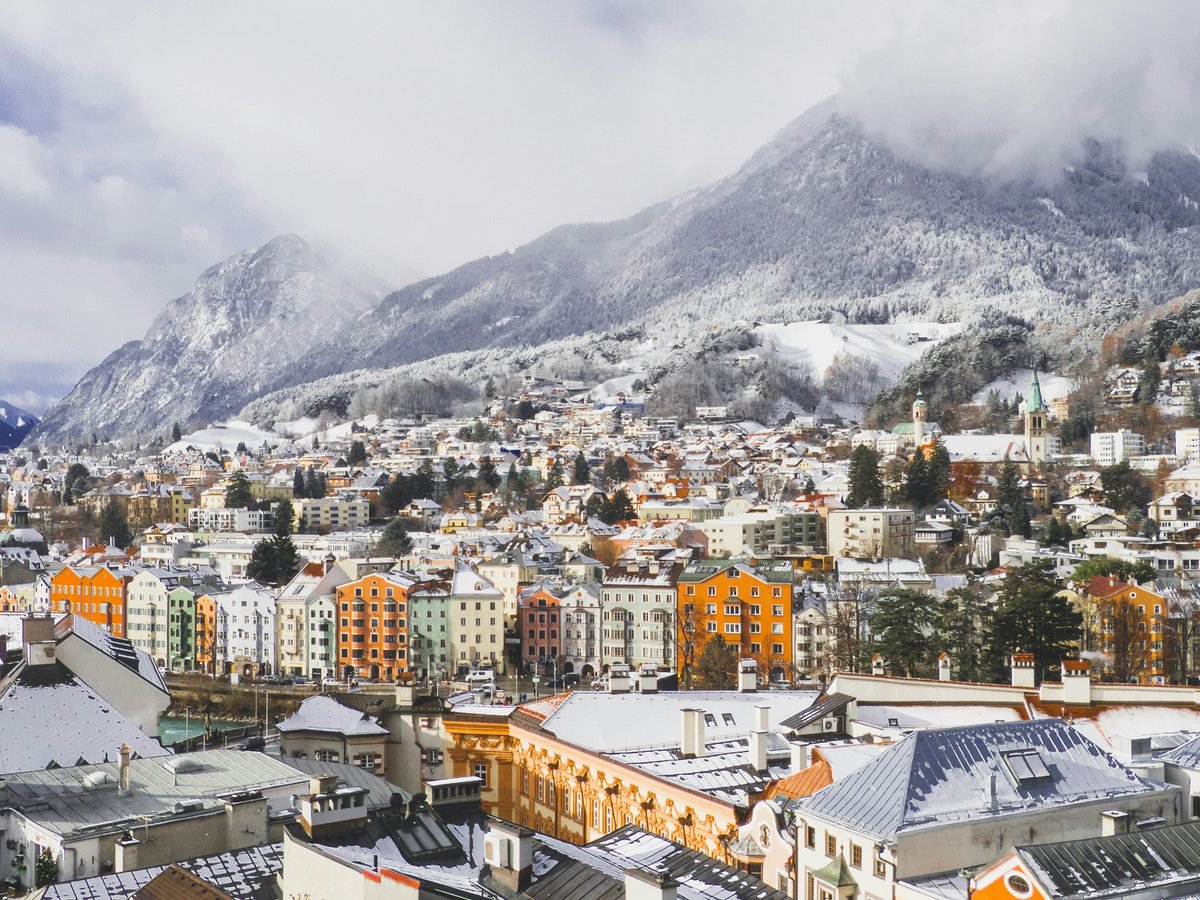
Innsbruck sits in the Inn Valley with the Nordkette range filling the sky behind every shopfront, and its retail scene tends to reflect that alpine identity more than it chases international fashion. The city of roughly 130,000 people has a compact, walkable center where Tyrolean craft traditions still hold real commercial weight. Swarovski's headquarters in Wattens, about 15 km east, casts a long shadow, but the more interesting shopping here leans toward Speck, Schnaps, mountain cheese, and handmade wool and felt goods. You'll find the usual European high-street chains along Maria-Theresien-Straße, but the Old Town lanes and the Markthalle are where Innsbruck feels like itself. Worth noting, this is a small city. You can cover the entire central shopping area on foot in 20 minutes, which means you might circle back to the same streets twice and still discover something new in a doorway you walked past.
Shopping districts
-
Maria-Theresien-Straße
mid-rangeThe main commercial artery runs roughly 500 meters from the Triumphpforte (the triumphal arch built in 1765) north toward the Old Town. The southern half is dominated by international chains like H&M, Zara, and similar mid-range brands. Kaufhaus Tyrol, a glass-fronted shopping center designed by David Chipperfield, sits about halfway up and holds around 50 shops across multiple floors. The street widens into a pedestrian zone with good mountain views, and on a clear afternoon the Nordkette behind the rooftops is genuinely distracting. Locals do their everyday shopping here, so it doesn't feel staged for tourists. Cafes line both sides, and the Annasäule column (erected in 1706) marks roughly the center of the strip.
Best for: Everyday clothing, electronics, and mainstream retail in a scenic pedestrian zone
-
Altstadt (Old Town) and Herzog-Friedrich-Straße
mid-range to highThe medieval lanes around the Goldenes Dachl (the famous gilded roof from 1500) have shifted toward a mix of souvenir shops, Trachten outfitters, and small specialty stores. Herzog-Friedrich-Straße is the spine, narrow enough that you can hear accordion music echoing off the painted facades. The buildings here date to the 15th and 16th centuries, and some ground-floor shops still have vaulted ceilings from that era. Prices tend to run higher than on Maria-Theresien-Straße, partly because of the location premium and partly because the goods lean artisanal. Trachten shops selling dirndls and lederhosen are concentrated here, and you'll likely smell roasted chestnuts or Kiachl (fried dough) from a nearby stand. Mind you, the souvenir shops vary wildly in quality, so look for goods labeled as Tyrolean-made rather than generic Austrian kitsch.
Best for: Trachten clothing, Tyrolean souvenirs, and specialty food shops in a medieval setting
-
Rathaus Galerien
mid-rangeThis shopping center sits at the northern end of Maria-Theresien-Straße, right where the Old Town begins. It holds around 30 shops across 4 floors and tends to draw a younger crowd than Kaufhaus Tyrol. The architecture connects old and new, with a glass atrium opening onto the rooftops. It's useful for a rainy afternoon when the mountain weather turns, though the selection is more practical than exciting. Fashion, cosmetics, and a few electronics shops fill most of the space. The top floor has a food court with views toward the Bergisel ski jump to the south.
Best for: Quick indoor shopping near the Old Town, especially useful in bad weather
-
Meraner Straße and Brixner Straße
budget to mid-rangeThese two parallel streets run south of Maria-Theresien-Straße and have been quietly developing a more independent character. Smaller boutiques, vintage shops, and local designers have set up here over the past decade. The foot traffic is lower, the storefronts are more modest, and the prices tend to be a shade below the main strip. You'll find a few secondhand bookshops, independent jewelers, and the occasional Tyrolean design studio. This is where university students and younger locals gravitate, and the area has a few wine bars and small cafes tucked between the retail.
Best for: Independent boutiques, vintage finds, and local designers away from tourist crowds
-
Sillpark
budget to mid-rangeInnsbruck's largest shopping center sits about 1.5 km south of the Altstadt, along the Sill River. It holds around 130 shops, a large Interspar supermarket, and a cinema. This is where locals go for practical, everyday needs. Fashion chains, a Saturn electronics store, pharmacies, and shoe shops fill the floors. The atmosphere is pure suburban mall, no mountain charm, but if you need something specific like hiking gear, phone accessories, or children's clothing, it tends to be cheaper here than in the pedestrian zone. Tram line 1 connects it to the center in about 10 minutes.
Best for: Practical everyday shopping with a wider selection than the city center
-
DEZ Einkaufszentrum
budget to mid-rangeThe DEZ (short for Dez Einkaufszentrum) sits on the eastern edge of Innsbruck near the Olympiaworld complex. It holds roughly 80 shops and functions as the second-largest mall in the city. A large Merkur supermarket anchors the ground floor. The drive takes about 10 minutes from the center, and there's ample parking. It's useful if you're heading to or from the Autobahn and need to stock up on supplies. The selection mirrors Sillpark but with slightly more space and less foot traffic during weekdays.
Best for: Car-accessible shopping for residents and travelers passing through the eastern suburbs
Markets
-
Markthalle Innsbruck
foodThe covered market hall on the south bank of the Inn River, near the Innrain, has been a local food hub since the 1970s. The current building replaced an older market structure. Inside you'll find around 10 to 15 permanent stalls selling Tyrolean Speck, Bergkäse (aged mountain cheese from valley dairies), fresh bread, seasonal produce, olives, fish, and flowers. A few prepared food counters serve Turkish, Italian, and Austrian lunches, and locals treat it as a casual canteen. The smell of smoked meat and fresh herbs hits you at the entrance. Saturday mornings are the busiest, with families picking up weekend provisions. The quality of the Speck here tends to be better than what the tourist shops on Herzog-Friedrich-Straße carry, and prices are lower.
Monday to Friday approximately 7:00 to 18:30, Saturday approximately 7:00 to 13:00
-
Bauernmarkt (Farmers Market) at Sparkassenplatz
food and farmersA small weekly outdoor farmers market sets up on Sparkassenplatz, a square between Maria-Theresien-Straße and Museumstraße. Local producers from the Inn Valley and surrounding Tyrolean valleys sell seasonal vegetables, eggs, honey, jams, goat cheese, and herbs. The selection is modest compared to, say, the Naschmarkt in Vienna, but the produce is genuinely local. In autumn you might find chanterelles, pumpkin seed oil, and fresh-pressed apple juice. The vendors tend to be the farmers themselves, so you can ask about provenance and get a real answer.
Typically Friday mornings, seasonal
-
Innsbruck Christkindlmarkt (Christmas Markets)
seasonal and artisanFrom mid-November through late December, Innsbruck runs several Christmas markets across the city. The main one fills the Altstadt around the Goldenes Dachl, with wooden stalls selling Glühwein, Lebkuchen (gingerbread), handmade ornaments, beeswax candles, and Tyrolean felt goods. A second market clusters on Maria-Theresien-Straße near the Annasäule, and a smaller, more family-oriented Christkindlmarkt operates at Hungerburg up on the mountainside. The Altstadt market gets crowded on December weekends, with the smell of mulled wine and cinnamon filling the narrow lanes. Prices for crafts are higher here than at the Markthalle, but the handmade quality tends to be genuine. The Hungerburg market, reached by the Nordkettenbahn funicular, is smaller and quieter, with better views.
Mid-November to approximately December 23, daily from late morning to evening
-
Flohmarkt (Flea Market)
fleaInnsbruck runs periodic flea markets, often near the Markthalle area or at open squares around the city. The frequency varies by season, with more dates in spring and summer. You'll find a mix of vintage clothing, old books, vinyl records, ski equipment, and household items. Prices are generally low, and some light bargaining is acceptable here, unlike in regular shops. The atmosphere is relaxed, with families and students browsing alongside antique dealers. Check local listings or flyers at the Markthalle for upcoming dates, as the schedule isn't fixed.
Periodic, more frequent in spring and summer, check local event listings
-
Ostermarkt (Easter Market)
seasonal and artisanIn the weeks before Easter, a small seasonal market appears on Maria-Theresien-Straße or in the Altstadt. Stalls sell hand-painted eggs (a strong Austrian tradition), spring flowers, honey, beeswax products, and baked goods. The scale is much smaller than the Christmas markets, maybe 15 to 20 stalls, but the painted egg craft is worth seeing. Local artisans use real blown eggs and traditional alpine motifs.
Approximately 2 to 3 weeks before Easter, daily
Souvenirs worth bringing home
Tyrolean Speck is likely the best thing to bring home. It's dry-cured, smoked ham made from pork leg, aged for several months, and Innsbruck sits in the heart of the production region. A vacuum-sealed piece from the Markthalle travels well and costs meaningfully less than what you'd pay in the tourist shops. Bergkäse (mountain cheese, aged 3 to 12 months, from valley dairies in Tirol) is another strong pick. Look for Graukäse too, a sour-milk cheese specific to the Zillertal and Wipp valleys. Schnaps is everywhere, but focus on the fruit brandies. Williams pear (Williamsbirne) and plum (Zwetschke) are the Tyrolean specialties, and the bottles tend to be handsome enough to display. Swarovski crystal from the factory in Wattens, 15 km east, is the obvious luxury option, though you'll find Swarovski shops in the city center too. For something more handmade, Tyrolean Filzpantoffeln (felt slippers, made from boiled wool) are genuinely local and practical. Zirbenöl (Swiss stone pine oil) appears in pillows, room sprays, and small bottles. The pine scent is distinctive and strongly associated with alpine Tirol. Hand-painted Easter eggs, traditional Trachten accessories like edelweiss pins or embroidered suspenders, and small carved wooden figures from the Grödner Tal (Val Gardena, technically in South Tyrol but widely sold in Innsbruck) round out the legitimate local options. Skip the generic Mozart chocolate balls. They're from Salzburg and mass-produced.
Practical tips
- Bargaining
- Fixed prices are the norm in all shops, malls, and even the Markthalle. Bargaining is not expected or appreciated in retail settings. The one exception is the Flohmarkt, where a polite offer on secondhand goods is normal. At Christmas markets, prices on handmade crafts are sometimes flexible if you're buying several items from the same stall, but this is subtle and depends on the vendor.
- Tax Refunds (MwSt Rückerstattung)
- Non-EU residents can claim back the 20% Austrian VAT on purchases over 75.01 EUR from a single shop in a single day. Ask for a tax-free form at the time of purchase. You'll need to get the form stamped by customs when you leave the EU, so keep the goods accessible in your luggage. Refund counters at Innsbruck Hauptbahnhof and at major border crossings handle the paperwork. The refund typically comes to about 13 to 15% after processing fees.
- Opening Hours
- Most shops in the city center open Monday to Friday from around 9:00 or 9:30 to 18:00 or 18:30, and Saturday from 9:00 to roughly 17:00 or 18:00. Sunday closures are still standard in Austria, and almost all retail shuts down. Supermarkets at the train station (Hauptbahnhof) are the exception and open on Sundays, typically until 21:00. The Markthalle closes early on Saturday (around 13:00) and is closed on Sunday. During Advent, some city center shops extend hours to 19:00 or 20:00 on select evenings.
- Payment Methods
- Card payments (Visa, Mastercard, and increasingly contactless) are accepted at most shops, malls, and chain stores. That said, smaller market stalls, the Markthalle vendors, and some traditional shops still prefer cash. ATMs (Bankomaten) are easy to find along Maria-Theresien-Straße and at the Hauptbahnhof. Austrian banks charge no fee for ATM withdrawals on most international cards, though your home bank might. The currency is the euro.
- Carrying Purchases
- If you buy Speck, cheese, or Schnaps at the Markthalle, most vendors will vacuum-seal meat and cheese for travel. Schnaps bottles are glass, so wrap them or ask for extra padding. For checked luggage, Tyrolean Speck can travel sealed for several days unrefrigerated. Bergkäse handles a day or two out of the fridge without issues. If you're flying out of Innsbruck Airport (INN), note that liquids over 100 ml need to go in checked bags.
- Seasonal Timing
- December offers the Christmas markets but also the thickest crowds. January and February are quieter for shopping and some stores run winter sales (Winterschlussverkauf). Summer brings longer hours, outdoor markets, and slightly better stock in Trachten shops ahead of festival season. The Markthalle is best on a Friday or Saturday morning year-round.
FAQ
Is Innsbruck good for buying Swarovski crystal?
The Swarovski headquarters and Crystal Worlds attraction are in Wattens, about 15 km east of Innsbruck, reachable by shuttle bus or the S-Bahn in roughly 20 minutes. You'll find Swarovski retail stores in the Innsbruck city center on Maria-Theresien-Straße and in Kaufhaus Tyrol as well. Prices are standardized across official Swarovski stores, so you won't save money buying at the factory, but the Crystal Worlds experience is a popular day trip. The selection at the Wattens store is somewhat larger.
Are shops open on Sundays in Innsbruck?
Almost all retail shops, including Kaufhaus Tyrol, Sillpark, and the Altstadt stores, close on Sundays. This is standard across Austria due to labor regulations. The Spar supermarket at Innsbruck Hauptbahnhof (the main train station) stays open on Sundays, typically until 21:00. During Advent (the 4 Sundays before Christmas), some city center shops open on designated shopping Sundays, but this varies by year and requires municipal approval.
Where can I buy authentic Tyrolean Trachten in Innsbruck?
Several Trachten outfitters operate in the Altstadt around Herzog-Friedrich-Straße and on Maria-Theresien-Straße. Traditional dirndls for women and lederhosen for men are the main items. Expect to pay several hundred euros for a quality dirndl (the fabric, apron, and blouse are typically sold as separates). Lederhosen made from genuine deer or goat leather start at a similar range. If you want something worn by locals rather than a costume-grade souvenir, look for shops that also serve the Austrian market for events like the Villacher Fasching or Oktoberfest.
What local food should I buy as gifts?
Tyrolean Speck (smoked, cured ham) is the standout. The Markthalle on the south bank of the Inn is the best place to buy it, and vendors will vacuum-seal it for travel. Bergkäse (hard mountain cheese, aged several months) and Graukäse (a tangy, low-fat sour-milk cheese from the valleys south of Innsbruck) both travel well. Fruit Schnaps, particularly Williams pear or plum, comes in small bottles that make good gifts. Tyrolean honey, pumpkin seed oil, and Zelten (a dense, spiced fruit bread traditional to Tirol) are also worth considering.
Can I get a tax refund on shopping in Innsbruck?
If you're a non-EU resident, you can reclaim the 20% Austrian VAT on single-shop purchases exceeding 75.01 EUR. Ask the shop for a tax-free form at the point of sale. You'll need your passport. At departure from the EU, get the form stamped by customs and then process the refund at a counter or by mail. After processing fees, the actual refund tends to be around 13 to 15% of the purchase price. Shops in the city center and malls are familiar with the process.
Last verified by automated review (v1.7.2) on . What is automated review?