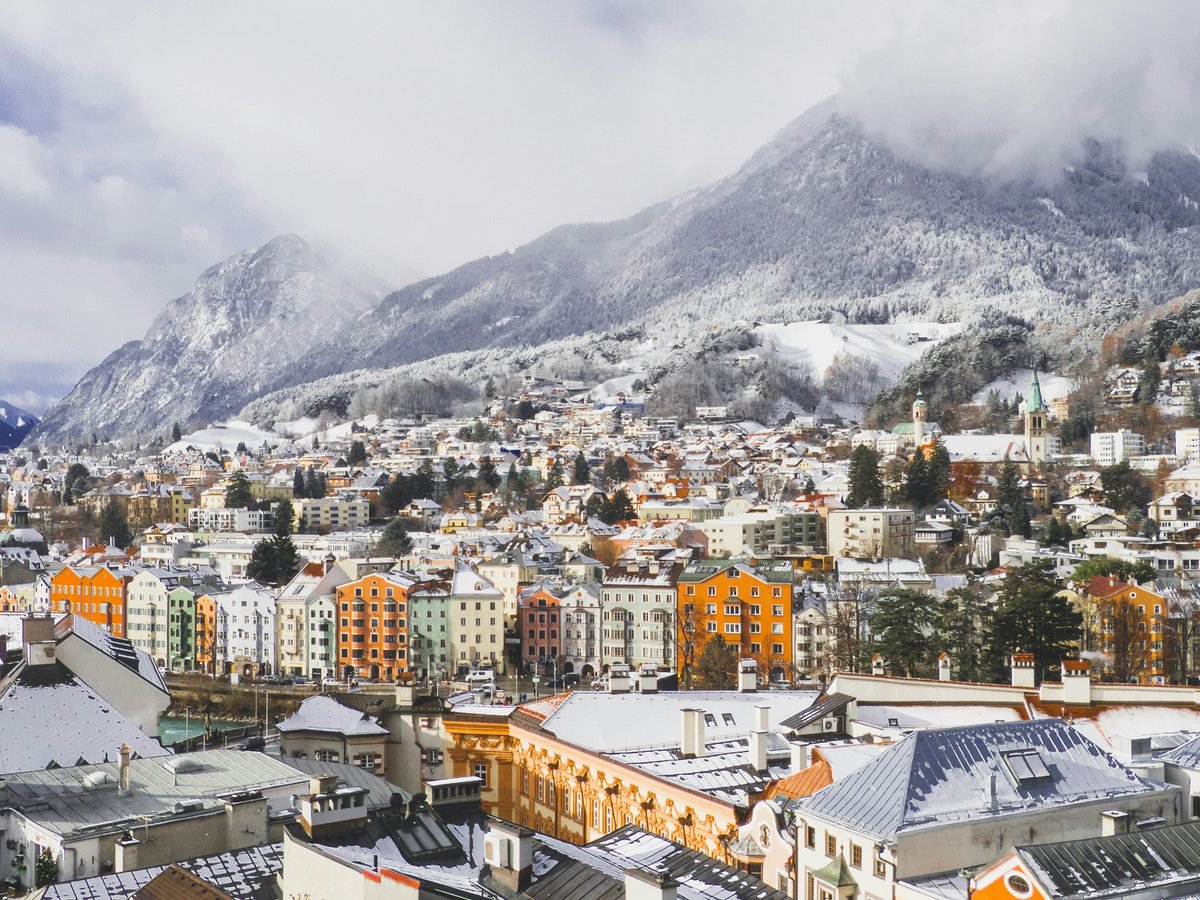
Innsbruck is a university town of roughly 130,000 people wedged between the Nordkette and the Patscherkofel, and that geography shapes everything about its nightlife. Around 30,000 students from the Leopold-Franzens-Universität and the Medizinische Universität keep the bars full on weeknights, which means you'll find a Tuesday in Innsbruck livelier than a Saturday in most Austrian cities outside Vienna. The scene tends to run compact. Most of what matters after dark sits within a 15-minute walk between the Altstadt and the university quarter along Innrain. Things start slow. Locals rarely leave for a bar before 9:30 or 10 PM, and clubs don't fill until well past midnight. The Alpine setting adds something odd to the whole experience. You might step out of a packed bar at 2 AM and see the Nordkette lit by moonlight, snow still visible on the upper ridges in May. The air at 574 metres hits differently after a warm room full of cigarette smoke and spilled beer.
The Bar Scene in Innsbruck
Innsbruck's bar culture leans heavily toward the casual. This is not Vienna or Salzburg. You'll find more wood-panelled Lokale with sticky floors than polished cocktail lounges, and that's a feature. The Altstadt around Herzog-Friedrich-Straße has the densest cluster, with bars packed into medieval buildings where the ceilings sit low and the rooms fill fast after 10 PM. A half-litre of local beer from breweries like Baumgartner or Zillertal Bier typically runs between 4 and 5 euros in these spots. Wine bars do exist, though the culture here tilts toward Grüner Veltliner spritzers and Zweigelt rather than elaborate wine lists. A Spritzer (white wine and soda) is likely the most popular order among locals who aren't drinking beer, and it tends to cost around 3.50 to 4.50 euros. Cocktail bars have grown in number over the past decade, particularly around Maria-Theresien-Straße and the streets branching off it. Expect to pay 10 to 14 euros for a well-made cocktail, which is still below Vienna prices. Rooftop bars are rare, for the practical reason that most Altstadt buildings are heritage-protected and can't easily add terrace levels. That said, a few hotel bars on upper floors offer views of the Nordkette. The Bogenmeile area deserves its own mention. The stone viaduct arches along the Ing.-Etzel-Straße have been converted into a string of bars and small venues over the years. The acoustics inside those curved stone ceilings give everything a particular resonance. On a warm Friday in June, the crowd spills out onto the pavement, and you can walk the length of the arches hearing different music leak from each doorway. Mind you, the Bogenmeile tends to attract a younger crowd, mostly students in their early 20s. If that's not your scene, the Altstadt bars skew a bit older and quieter.
Clubs and Dancing in Innsbruck
The club scene in Innsbruck is modest compared to Berlin or even Graz, but it punches above its weight for a city this size. Electronic music dominates. Techno and house have the strongest following, with bookings that occasionally pull DJs from the wider European circuit. The Weekender Club has been a fixture of the local scene and tends to draw a crowd that cares about the music rather than the dress code. Speaking of dress codes, Innsbruck clubs are generally relaxed on that front. Clean trainers and a decent shirt will get you into nearly anywhere. You won't encounter the Berlin-style door filtering, though bouncers at busier spots might turn away groups that seem too rowdy or too drunk. Cover charges are typically modest, somewhere in the 5 to 10 euro range on a regular night, and sometimes free before a certain hour. Special events or guest DJs might push that to 15 euros. Peak hours fall between 1 and 3 AM. If you arrive at a club before midnight, you'll likely find a half-empty room and wonder what all the fuss is about. Wait an hour and the same space fills to capacity. Closing time varies, but most clubs wind down around 4 or 5 AM. Worth noting that Austria's smoking ban took full effect in November 2019, so indoor smoking is no longer permitted in clubs or bars. You'll still smell it wafting from the crowds gathered outside entrances, though. The student calendar matters enormously here. During semester (October to January and March to June), weeknights can feel busier than weekends. During the summer break and exam periods, the city's nightlife quiets noticeably. Ski season brings a different energy, with a mix of seasonal workers and tourists filling bars that students would normally dominate.
Live Music Venues and the Local Scene
Treibhaus is the name you'll hear most when locals talk about live music in Innsbruck. The venue sits along the Inn river near the Landestheater and has been hosting concerts, theatre, and cultural events for decades. Its programming ranges from jazz and world music to indie rock and occasional hip-hop acts, with ticket prices that typically fall between 10 and 25 euros depending on the artist. The room itself is intimate enough that you're never far from the stage. For larger touring acts, the Olympiahalle and the Dogana handle bigger capacities, though these tend to book pop and mainstream rock rather than the local underground. The Pmk (Platform Mobile Kulturinitiativen) operates as a more grassroots space for punk, noise, and experimental music. It tends to attract a politically engaged crowd and the admission prices stay low, often around 5 to 8 euros. Thursday and Friday nights are generally the best for catching live sets across Innsbruck's smaller venues. Some of the Bogenmeile bars host acoustic acts and DJs on weekends, though the quality varies. The local music scene has a strong lean toward indie, post-punk, and electronic production. Tyrolean folk music (Volksmusik) is alive and well in the region, but you're more likely to encounter it at a Gasthaus in the surrounding villages than in Innsbruck's nightlife circuit. That said, a few bars in the Altstadt still host Volksmusik evenings, particularly during Fasching (carnival season, typically February) and around Christmas market season in December. Jazz has a steady following, with occasional sessions at smaller bars that don't always advertise widely. Ask at your hotel or check the local listings in the Tiroler Tageszeitung for weekly schedules.
Nightlife neighborhoods
-
Altstadt (Old Town)
Narrow medieval lanes packed with small bars, warm light spilling from low doorways, the smell of beer and schnitzel mixing in the cold alpine air. The crowd is a mix of tourists, locals, and the occasional group that wandered down from a Nordkette hike still wearing trail boots.
- Best for
- A relaxed evening of bar-hopping on foot, couples and small groups, any night of the week
- Standouts
- The concentration around Herzog-Friedrich-Straße and the streets behind the Goldenes Dachl is the densest cluster. Several bars sit within 2 minutes of each other.
-
Bogenmeile (Viaduct Arches)
Converted railway arches along Ing.-Etzel-Straße with concrete floors, exposed stone, and sound that bounces off curved ceilings. On busy nights the music bleeds between venues and the crowd flows between doorways like one long party. Louder, younger, and more unpredictable than the Altstadt.
- Best for
- Students and 20-somethings looking for cheap drinks and a messier night out, best on Fridays and Saturdays during semester
- Standouts
- The arches themselves form a continuous row. Each one tends to change tenants every few years, so the specific names shift, but the overall character stays consistent.
-
Maria-Theresien-Straße and Surroundings
Innsbruck's main boulevard has a more polished after-dark feel. Cocktail bars and wine-focused spots sit alongside cafes that transition into evening venues. The Annasäule column stands at one end, lit up at night, and the views south toward the Serles peak give the street a theatrical backdrop. Quieter than Bogenmeile, more curated than the Altstadt.
- Best for
- Date nights, cocktails, and people who prefer a seat to a standing crowd, good Thursday through Saturday
- Standouts
- Several of the better cocktail bars in Innsbruck are on or near this street and the lanes that branch off toward Museumstraße.
-
Innrain and the University Quarter
The stretch along Innrain near the main university campus has a scattered collection of student bars and cafes that stay open late. The feel is functional rather than scenic. Cheap beer, loud conversation, the occasional spontaneous party when exams end. You'll hear German, Italian, and English in roughly equal measure during semester.
- Best for
- Budget drinking and meeting students from the university, liveliest on Tuesday through Thursday during semester
- Standouts
- The bars here tend to cluster near the intersection of Innrain and Blasius-Hueber-Straße, within walking distance of the main university buildings.
-
St. Nikolaus
Across the Inn river from the Altstadt, this quieter neighbourhood has a handful of bars that draw a slightly older, more local crowd. The pace is slower, the music softer, and you might find yourself in a conversation with someone who's been coming to the same Lokal for 15 years. The streets are darker and more residential, which gives the whole area a different mood after 10 PM.
- Best for
- A quieter drink with locals, especially on weeknights when the Altstadt feels too touristy
- Standouts
- The options here are fewer and more spread out. Worth exploring on foot along the streets closest to the river.
Safety after dark
Innsbruck is a genuinely safe city after dark. Violent crime rates are low by European standards, and the compact size of the nightlife area means you're rarely far from other people. That said, the usual awareness applies. Keep your phone and wallet secure in crowded bars, especially in the Altstadt during peak tourist season (December for Christmas markets, January through March for ski season). Drink spiking, while uncommon, is not unheard of in Austrian cities. Don't leave drinks unattended, and look out for friends in your group. Taxi availability can get tight after 2 AM on weekend nights. The IVB (Innsbrucker Verkehrsbetriebe) night bus service, the Nightliner, runs on Friday and Saturday nights with several routes connecting the centre to outlying districts. Lines N1 through N7 depart from the central Marktplatz area, with the last departures typically around 2:30 to 3 AM. A regular taxi from the Altstadt to most residential areas in Innsbruck should cost between 8 and 15 euros. Pre-booking through a local taxi service is advisable on busy nights. Walking home is feasible for many, given the city's compact size, though the streets along the Inn river can get icy in winter. Wear appropriate shoes if you're going out between November and March.
Practical tips
- Tipping at bars
- Tipping in Innsbruck bars follows standard Austrian practice. Round up to the nearest euro on small orders, or leave about 5 to 10 percent on a larger tab. You tell the server or bartender what you want to pay (say 'Stimmt so' if the change is the tip, or name the rounded amount). Leaving coins on the bar is less common than in the US.
- Cover charges
- Most bars in Innsbruck have no cover charge at all. Clubs typically charge between 5 and 10 euros on regular nights, sometimes including one drink. Prices climb for special events or guest DJs. Some venues offer free entry before midnight, especially midweek.
- Drinking age and ID
- The legal drinking age for beer and wine in Tirol is 16. For spirits, it's 18. Bouncers and bartenders do check IDs, particularly at clubs and for anyone who looks under 25. Carry a passport or an official photo ID, as foreign driving licences are sometimes not accepted.
- What locals drink
- Beer dominates. Märzen (a pale lager style) is the standard order, typically served as a Krügerl (half-litre, around 4 to 5 euros) or a Seidel (third-litre). Spritzer (white wine with soda) is the other default, especially in warmer months. Ordering a Hugo (elderflower, prosecco, and mint) marks you as someone who arrived after 2010, but locals drink them too. Schnaps after dinner is a Tyrolean tradition, often homemade from local fruit.
- When to go out
- The rhythm in Innsbruck starts later than you might expect. Bars begin to fill around 9:30 to 10 PM. Clubs don't hit their stride until 1 AM. If you arrive anywhere before 9 PM, you'll likely be sharing the room with the staff and one quiet couple in the corner. Weeknights during university semester (roughly October through January and March through June) can be busier than weekends.
- Language
- German is the primary language, and Innsbruck locals speak a Tyrolean dialect that can sound quite different from standard Hochdeutsch. That said, English is widely spoken in bars and clubs, especially by the younger staff. A few basic German phrases go a long way. 'Zahlen bitte' (bill please) and 'Noch eins bitte' (another one please) will cover most situations.
FAQ
How late do bars and clubs stay open in Innsbruck?
Most bars in Innsbruck close between 1 and 2 AM on weeknights and around 2 to 4 AM on weekends. Clubs typically run until 4 or 5 AM on Friday and Saturday nights. During quieter periods like university holidays, some places close earlier than posted.
Is Innsbruck nightlife expensive compared to other Austrian cities?
Innsbruck sits in the middle of the Austrian price range. A half-litre of beer costs around 4 to 5 euros in most bars, which is slightly below Vienna prices and comparable to Salzburg. Cocktails run 10 to 14 euros. The student population keeps prices in check at many venues, especially around the university quarter.
What is the best night to go out in Innsbruck?
During university semester, Thursday and Friday nights tend to be the busiest. Many students head home or to the ski resorts on weekends, so Saturdays can be quieter than you'd expect. Tuesday is a popular student night at several bars. Outside of semester, Friday and Saturday are the most reliable options.
Can I get around Innsbruck at night without a car?
Yes. The IVB Nightliner buses run on Friday and Saturday nights from the central Marktplatz, with routes N1 through N7 serving most of the city and nearby suburbs. The last departures are typically around 2:30 to 3 AM. Taxis are available but can be scarce after 2 AM on busy nights, so booking ahead is a good idea. The compact city centre is also walkable for most bar-to-bar trips.
Do I need to dress up to get into Innsbruck clubs?
Generally, no. Innsbruck clubs are relaxed about dress codes compared to larger European cities. Clean casual clothing and trainers are fine for most venues. Avoid looking overly dishevelled or wearing flip-flops, but you won't need a collared shirt or dress shoes anywhere in the city.
Is Innsbruck nightlife affected by ski season?
Significantly. From December through March, the city's bars and clubs see an influx of skiers and seasonal workers, which changes the energy noticeably. Bars near the Altstadt get busier and more international. Some venues run après-ski themed nights. Prices at popular spots might edge upward during peak season weeks in February. The mix of languages in any given bar shifts toward more English, Dutch, and Scandinavian during these months.
Last verified by automated review (v1.7.2) on . What is automated review?