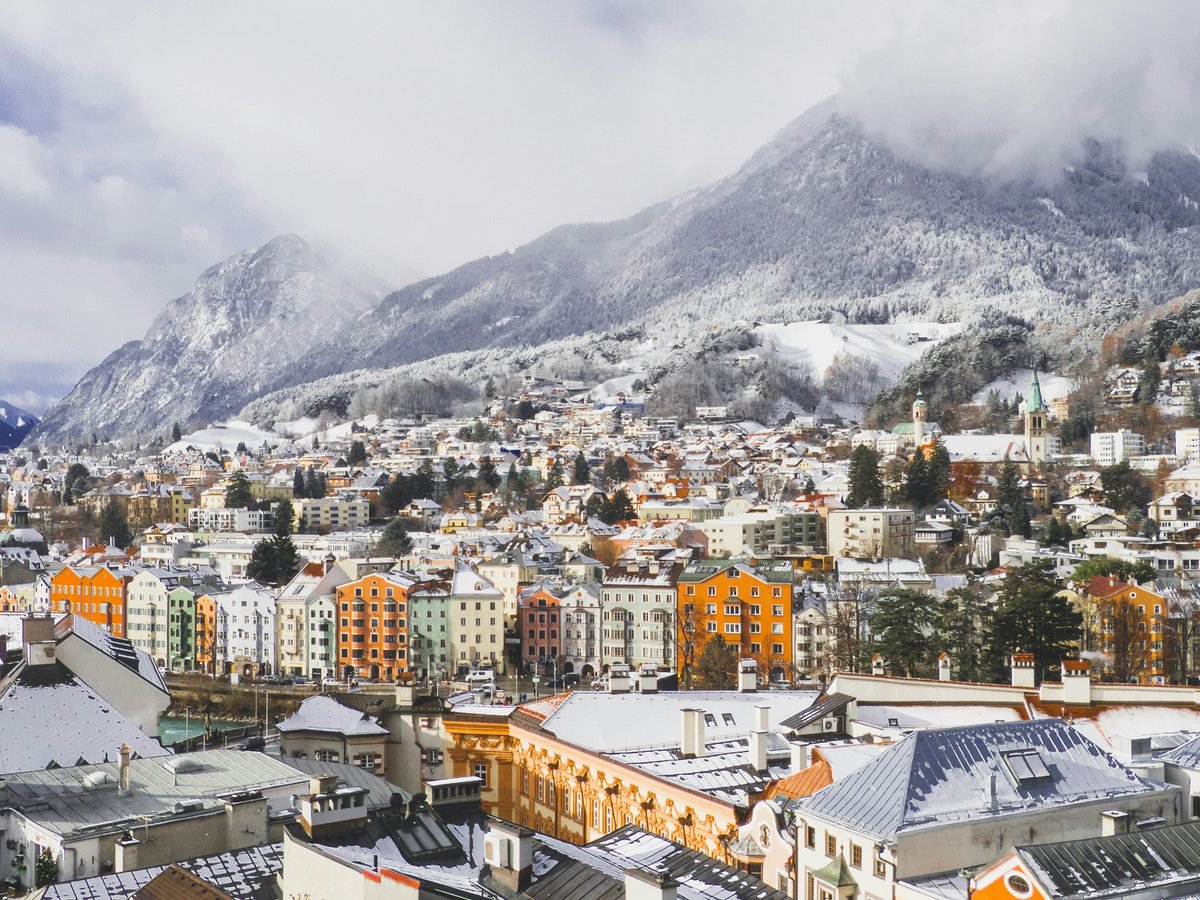
What's the food culture in Innsbruck?
Innsbruck eats Tyrolean mountain food built on cured speck, bread dumplings, and browned butter. The Markthalle on Innrain is the best single stop for regional producers, open weekdays until 6:30pm. Lunch peaks at noon, dinner by 7pm. Skip the tourist menus near the Golden Roof and eat where university students crowd the tables in Wilten and St. Nikolaus.
Innsbruck runs on a strict Austrian clock. Breakfast is bread, cold cuts, and soft-boiled eggs between 7 and 9am. Lunch is the main meal, served from noon to 1:30pm, and most kitchens close by 2. The Jause, a mid-afternoon snack around 3:30pm, fills the gap with a slab of Tiroler Speck on dark rye bread, maybe a Topfenstrudel if you're at a café on Maria-Theresien-Straße. Dinner starts at 6:30pm and most restaurants stop seating by 9. That 2.5-hour dinner window catches visitors off guard. If you show up at a Gasthof at 9:30pm expecting a full menu, you'll get a polite refusal. Theresienbräu on Maria-Theresien-Straße 51 keeps its kitchen open until 11pm, which makes it the default late option. The schedule matters more here than in Vienna or Salzburg because Innsbruck is smaller, roughly 130,000 residents with about 30,000 university students, and most affordable restaurants cluster along Innrain and Universitätsstraße because of it.
The Markthalle on Innrain, a 5-minute walk south of the Golden Roof, is the best food stop in the city. Around 30 vendors fill two floors. Ground-floor stalls sell Tyrolean mountain cheese from the Zillertal and Stubaital valleys, cold-smoked speck from smaller producers, and fresh Bauernbrot baked in wood-fired ovens. You can smell the rye crust from 10 meters out. Upstairs, the prepared-food stands serve Kaspressknödel for €4-5, fried golden and floating in hot beef broth. Schlutzkrapfen go for €8-10. Worth noting, the Vietnamese pho stand on the upper level draws a consistent lunch queue of locals, which tells you what office workers eat versus what the Altstadt restaurants assume tourists want. The Markthalle is open Monday through Friday from 7am to 6:30pm, Saturday until 1pm. Closed Sundays. Saturday morning before noon is the busiest window and the best time to see Tyrolean farmers selling direct.
The 2 blocks around the Golden Roof on Herzog-Friedrich-Straße are Innsbruck's tourist-menu zone. You'll spot it by the laminated photo menus, the €18 Wiener Schnitzel that arrives thin and dry, and waitstaff rotating through 4 languages before you've sat down. To be fair, Goldener Adler at Herzog-Friedrich-Straße 6, operating since the 1390s, still serves a respectable Gröstl. But most of the surrounding restaurants run on foot traffic, not reputation. Walk 10 minutes south to Wilten, the neighborhood below the Bergisel ski jump, and prices drop by a third. Stiftskeller on Stiftgasse serves a Tiroler Gröstl with salad for €12-14. In St. Nikolaus, across the Inn river, Die Wilderin on Seilergasse 5 runs a short, produce-driven menu that changes weekly. Main courses land at €15-20. Reservations on Friday and Saturday fill 2-3 days out. The phone line works in English, which is not always the case in Innsbruck.
Tiroler Gröstl is the dish to measure a kitchen by. Pan-fried potatoes and leftover beef or pork, crisped in butter with onion, topped with a fried egg and a shake of paprika. You hear the cast-iron pan sizzling from across the room before the plate arrives. A good Gröstl has crisp edges and yielding potato centers. Ottoburg, in a tower at Herzog-Friedrich-Straße 1 built in 1494, does the best version in the Altstadt. Kaspressknödel, flat cheese-and-bread dumplings fried golden, are the cold-weather standard from November through March. Schlutzkrapfen, half-moon pasta filled with spinach and Tyrolean grey cheese, come dressed in brown butter with chives. They're closer to Italian mezzelune than German Maultaschen, which makes sense since the Brenner Pass into Italy sits 35 kilometers south. After 10pm, Würstelstände near Landhausplatz sell the Bosna, Innsbruck's own fast food reportedly created by a Bulgarian immigrant in the 1960s. Bratwurst in a white roll with curry powder, raw onion, and mustard for about €3.50.
Beer is the default pairing at dinner in Innsbruck. Theresienbräu brews 4 house beers in copper tanks visible from the dining room, and the unfiltered Kellerbier goes well with anything heavy. For Austrian wine, Lichtblick on the 7th floor of Rathaus Galerien serves Grüner Veltliner from the Wachau at €5-6 per glass. Mind you, Innsbruck is not a wine city. This is beer and schnapps territory, and the local Obstler, a fruit brandy distilled from Tyrolean apples and pears, appears at the end of meals whether you ordered it or not. The Obstler burns sharp and clean, with a faint pear sweetness. One practical note for food-focused visitors. German is the working language at traditional restaurants in Wilten and St. Nikolaus, and menus tend to be German-only. Knödel means dumpling, Speck means cured pork, and Gröstl means pan fry. Those 3 words cover roughly 80% of any Tyrolean menu.
Signature dishes
-
Tiroler Gröstl
Pan-fried potatoes and leftover beef or pork, crisped in butter with onion, topped with a fried egg. The benchmark Tyrolean dish, served at every Gasthof year-round for €10-14.
-
Kaspressknödel
Flat dumplings of stale bread and Tyrolean mountain cheese, fried golden in butter, served floating in hot beef broth. A cold-weather staple from November through March, typically €4-6.
-
Schlutzkrapfen
Half-moon pasta filled with spinach and Tyrolean grey cheese, dressed in brown butter with chives. Closer to Italian mezzelune than German Maultaschen. €8-12 at most Gasthöfe.
-
Kaiserschmarrn
Thick shredded pancake torn into rough pieces, caramelized in butter and sugar, served with Zwetschgenröster (warm plum compote). A standard dessert or afternoon Jause for €8-11.
-
Tiroler Speck
Dry-cured, lightly smoked pork belly or leg, aged 5-6 months in cool mountain air. Sliced thin on dark rye bread with horseradish. Sold at every Markthalle vendor and Metzgerei in Innsbruck.
-
Bosna
Bratwurst in a white roll with curry powder, raw onion, and mustard. Innsbruck's own street food, reportedly created by a Bulgarian immigrant in the 1960s. About €3.50 at stands near the Triumphpforte.
-
Knödel
Dense dumplings of cubed stale bread, eggs, and milk. Speckknödel (with diced smoked pork) and Spinatknödel (with spinach) are the 2 most common variants, served in broth or alongside salad.
-
Kiachl
Deep-fried dough rounds, served sweet with powdered sugar and lingonberry jam or savory with sauerkraut. A farmers' market staple. The smell of hot oil and yeast carries 20 meters from the stand.
Meal times
Breakfast 7-9am, lunch noon to 1:30pm (the main meal), Jause snack around 3:30pm, dinner 6:30-8:30pm. Most kitchens close by 9pm. Late-night options are limited to Würstelstände and Theresienbräu on Maria-Theresien-Straße.
Tipping
Service is included in the bill. Austrians tip 5-10% by rounding up and stating the total when paying. Say 'Stimmt so' to keep the change on smaller bills.
Dietary notes
Traditional Tyrolean cooking leans on pork, butter, and bread. Vegetarian options are limited at Gasthöfe but better near the university on Innrain. Gluten-free is difficult since dumplings and bread dominate most menus. A few halal options exist near the Hauptbahnhof. Dairy is in nearly everything.
Go deeper into Innsbruck
Last verified by automated review (v1.7.2) on . What is automated review?