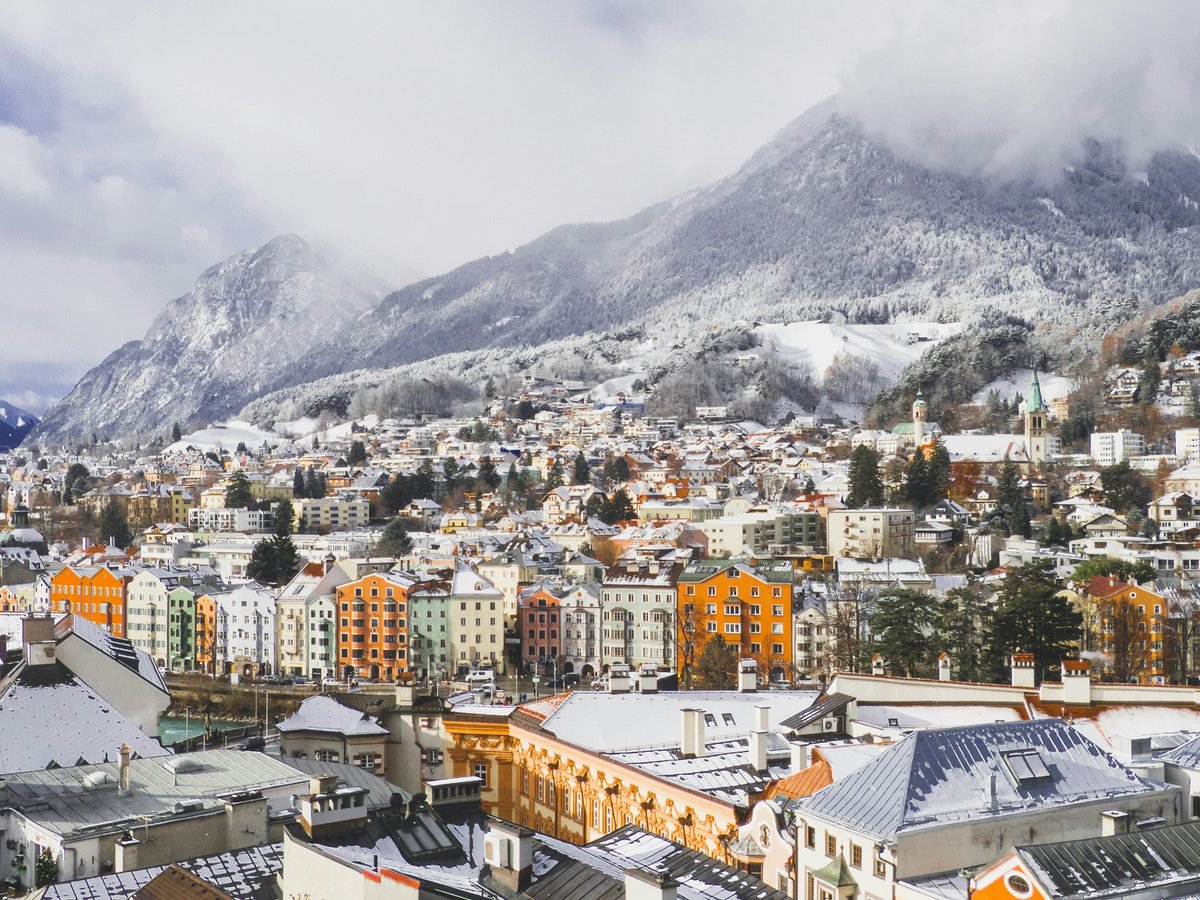
When's the best time to visit Innsbruck in 2026?
June and September. June brings 16 hours of daylight and highs around 23°C, with the Nordkette cable car running full schedule from the Altstadt. September clears the summer crowds and afternoon thunderstorms. Hiking trails above 2,000m are snow-free in both months. Ski visitors should target January through mid-March for reliable snow at Axamer Lizum and Patscherkofel.
June is when Innsbruck works best for a first visit. Daytime temperatures sit around 22-24°C, and the sun stays up past 9pm. The Nordkette Bahnen runs its full summer schedule, carrying you from the Congress station near Maria-Theresien-Strasse to Seegrube at 1,905m in about 20 minutes. At that altitude the air feels 10 degrees cooler and smells like wet limestone and pine resin. Down in the Altstadt, the café tables along Herzog-Friedrich-Strasse fill by noon, and you can hear the Hofkirche bells from across the square. The catch with June is afternoon thunderstorms. They tend to roll in around 3-4pm, hard and fast, then clear by dinner. Carry a packable rain layer and plan indoor stops like the Hofburg or Ambras Castle for mid-afternoon. Hotel rates in June run 15-20% below the July-August peak, and you'll find space at Goldener Adler or Weisses Kreuz without booking three months ahead.
September might be the better month if you can manage it. The summer tour groups from July and August have gone home. Highs still reach 18-20°C in the first three weeks, and the larch forests above Patscherkofel start turning gold by mid-month. The light at Ambras Castle in late September afternoon is the warmest you'll see it. Bergisel ski jump, the one Zaha Hadid completed in 2002, is quiet enough that you won't queue for the viewing platform. The Festival of Early Music wraps up in late August, but the Tiroler Landestheater opens its fall season in September. One honest trade-off. The Nordkette's upper station at Hafelekar (2,256m) can see early snow by late September, which closes some ridge walks.
If skiing is the point, January through mid-March gives the most reliable conditions. Axamer Lizum, about 19km southwest, hosted the 1964 and 1976 Olympic alpine events and still gets 2-3 metres of base by February. Patscherkofel is closer, 15 minutes by bus from the city center. Expect daytime highs of -1 to 3°C in the valley, dropping to -10°C or lower at summit elevations. The Innsbruck Christmas markets run from mid-November through December 23, centered on the Altstadt square below the Golden Roof. The Glühwein there tastes like clove and orange peel, and the smell of roasted Maroni drifts across the whole square. But December is expensive and crowded. If you want the winter mountain experience without the holiday markup, the first two weeks of January after New Year's are 25-30% cheaper at most Altstadt hotels.
Avoid November and the first half of April. November is Innsbruck's gray season. The ski lifts haven't opened, the hiking trails above 1,500m are muddy or snow-patched, and the city sits under low cloud for days at a time. Temperatures hover around 3-7°C with frequent drizzle. The mood is flat. Early April has a similar problem from the other direction. Snow is melting, the Nordkette's upper runs are closing, and the valley trails are still soggy. The Alpenzoo, opened in 1962 at 750m elevation, is one of the few outdoor attractions that works year-round, but it's not enough to carry a trip.
Month-by-month outlook
- Jan Shoulder
- Feb Shoulder
- Mar Avoid
- Apr Avoid
- May Shoulder
- Jun Ideal
- Jul Shoulder
- Aug Shoulder
- Sep Ideal
- Oct Shoulder
- Nov Avoid
- Dec Shoulder
Year-round climate
Averages from the last 5 years.
| Month | Avg high (°C) | Avg low (°C) | Rainfall (mm) |
|---|---|---|---|
| Jan | 6 | -3 | 73 |
| Feb | 9 | -1 | 59 |
| Mar | 12 | 2 | 89 |
| Apr | 15 | 4 | 89 |
| May | 19 | 9 | 176 |
| Jun | 26 | 14 | 146 |
| Jul | 26 | 15 | 162 |
| Aug | 26 | 15 | 143 |
| Sep | 22 | 11 | 142 |
| Oct | 18 | 8 | 78 |
| Nov | 11 | 1 | 100 |
| Dec | 7 | -1 | 78 |
Summers 22-25°C with afternoon thunderstorms. Winters -1 to 3°C in the valley, -10°C at summit. Annual rainfall around 900mm, wettest June through August. Snow cover December to March above 1,500m.
Go deeper into Innsbruck
Last verified by automated review (v1.7.2) on . What is automated review?