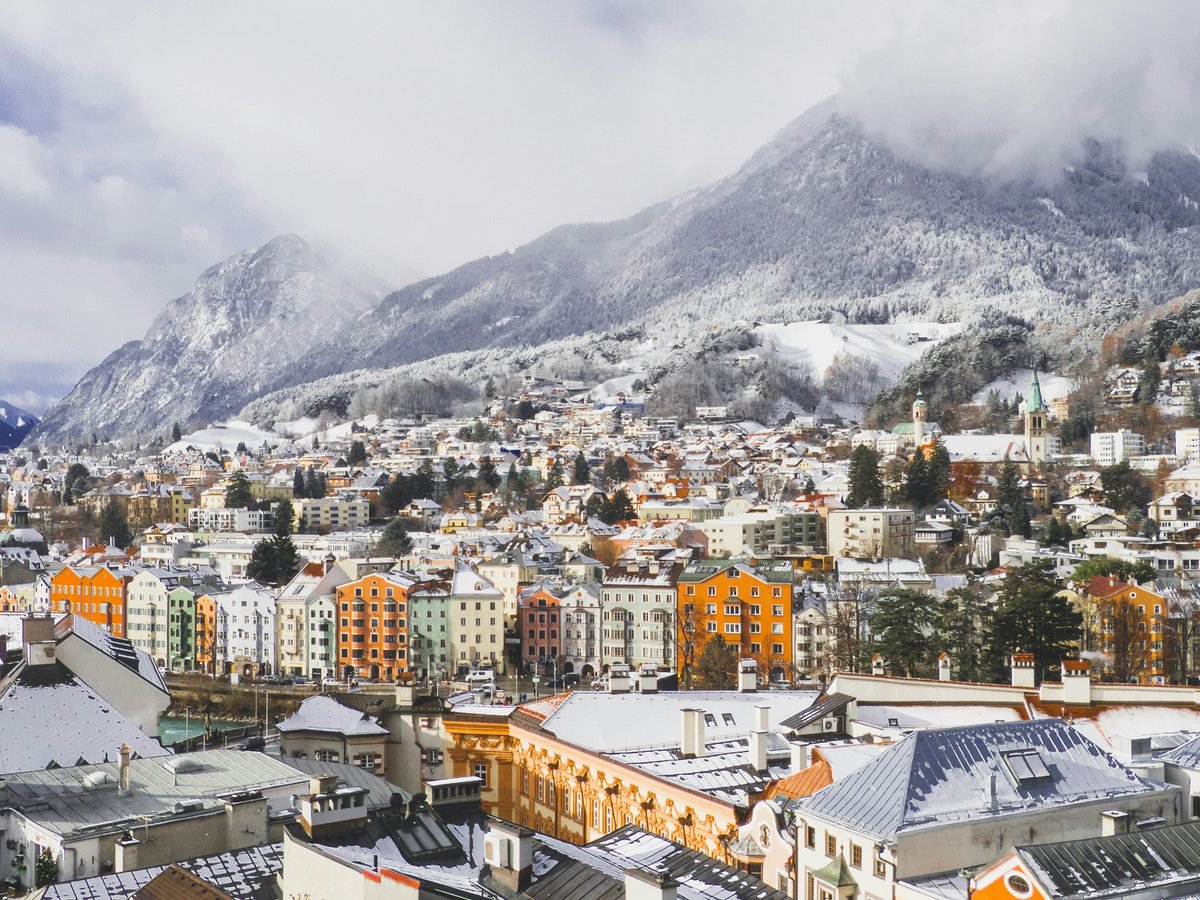
Innsbruck for first-time visitors
Of the 24 places on the 2 lists picked for first-time visitors in Innsbruck, 8 post opening hours, the earliest opening at 09:00 and the latest closing at 04:00. Innsbruck Cathedral, Jesuitenkirche Innsbruck and Hofkirche lead the picks.
Innsbruck for first-timers, in numbers
- Picks on this page
- 24 places across 2 lists, led by Innsbruck Cathedral, Jesuitenkirche Innsbruck, Hofkirche
- Posted hours
- 8 picks post hours earliest 09:00, latest 04:00; 2 open by 09:00, 5 past 21:00
Questions first-timers ask about Innsbruck
-
Must-see
The Hofkirche on Universitätsstraße, built in 1553 for Emperor Maximilian I. Twenty-eight bronze figures, each over 2 metres tall, stand guard around an empty marble sarcophagus in a cold stone nave that smells of beeswax. The visit takes 30 minutes, costs under €10, and needs no reservation. Nothing else in the Alps looks like this.
Read the full answer → -
Best time to visit
June and September. June brings 16 hours of daylight and highs around 23°C, with the Nordkette cable car running full schedule from the Altstadt. September clears the summer crowds and afternoon thunderstorms. Hiking trails above 2,000m are snow-free in both months. Ski visitors should target January through mid-March for reliable snow at Axamer Lizum and Patscherkofel.
Read the full answer → -
Airport to city
Innsbruck Airport (INN) sits 4 km west of the Altstadt. Bus Line F runs every 15 minutes to Hauptbahnhof for €2.40 ($2.70), taking about 18 minutes. A taxi covers the same distance in 10 minutes for €10-15 ($11-17). The airport is small enough that you'll be at the bus stop within 5 minutes of clearing baggage claim.
Read the full answer → -
How to get there
Innsbruck Airport (INN) sits 4 km west of the Altstadt, but most long-haul travelers land at Munich (MUC), 190 km north, and take a 2-hour ÖBB train through the Inn Valley. Direct European flights serve INN from London, Amsterdam, and Vienna in ski season. Round-trip fares from the US run $800-1,400 via one stop. From the UK, £80-350.
Read the full answer → -
Getting around
Walk. Innsbruck's Altstadt is 800 metres end to end, and the IVB tram network fills the gaps beyond it. Buy a 24-hour IVB pass for €5.80 or the Innsbruck Card from €53 for transit plus Nordkettenbahnen cable cars and museum entries. No metro, no reliable ridehail. Taxis run metered at about €4 flagfall.
Read the full answer →
Curated for first-timers
-
Must-see attractions
Innsbruck's must-see roster is not a museum trail: it is a walking inventory of churches, columns, arches and fountains packed into a compact Alpine capital where the Habsburg court left its receipts in stone. The list below is heavy on ecclesiastical architecture because that is what Innsbruck has: a cathedral on Domplatz, a Jesuit hall built from 1627 to 1646, a court church on Rennweg, and a basilica in Wilten. It is bracketed by civic set-pieces on Maria-Theresien-Straße: a victory column and a triumphal arch, and it makes room for the buildings you will walk past in the old town, like Helblinghaus at Herzog-Friedrich-Straße 10. This is a list for visitors who want the city's civic and religious spine before they head for the funicular, and who prefer a short, honest inventory over a long, padded one.
See the picks → -
Best restaurants
Innsbruck eats better than a city of 130,000 has any right to, and the reason is the Inn valley itself: an alpine crossroads where Tyrolean regional cooking sits shoulder to shoulder with the food that migration and the university have brought in. The twelve below are working restaurants, not scenery: they are mapped, they answer the phone, they keep hours you can plan a day around. You will find Nepalese momos on Museumstraße, a halal tandoor under the railway viaduct, Thai kitchens two doors apart on Kaiserjägerstraße, and a diner on Brunecker Straße that stays open until one in the morning on a Friday. The list leans away from the Altstadt's schnitzel-and-strudel routine because the visitors who eat well here are the ones who walk five minutes past it. Every address, phone number, website and opening hour below traces back to OpenStreetMap or the restaurant's own site: cited fact by fact so you can verify before you sit down. Read it as a working reference, not a ranking of taste.
See the picks →