Stay in Innsbruck in November
43 hotels in the Trip.com pool for Innsbruck, from US$91 a night.
Opens Trip.com on Fri 6 Nov to Sun 8 Nov 2026; change the dates there.
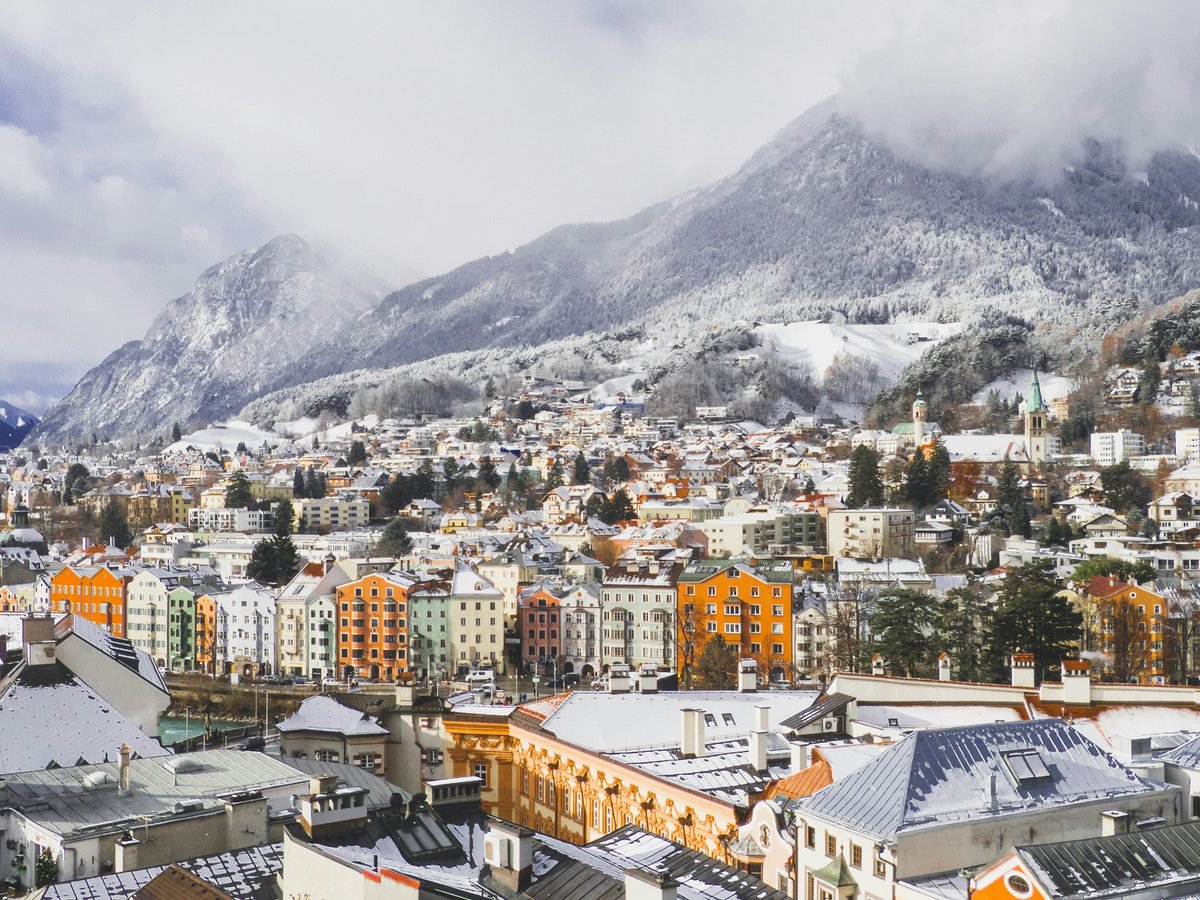
November in Innsbruck is a month of two halves, and the first one is honest-to-goodness quiet. Daytime temperatures average around 10.5°C (51°F), the Nordkette range collects its first serious snow, and the Inn Valley tends to fill with low-hanging cloud that can sit for days. The summer hiking crowds from July and August are long gone. Most trails below 2,000m are muddy or closed. You might walk through the Altstadt on a weekday and have the Goldenes Dachl plaza almost to yourself.
Then, around November 15, the Christkindlmärkte open. Wooden stalls appear in front of the Hofburg and along Maria-Theresien-Straße. The smell of Glühwein and roasting Maroni drifts through the narrow lanes of St. Nikolaus, and Innsbruck shifts gear. It's still cold, with overnight lows dropping to 1°C (34°F) or below, but the city has a reason to draw people outdoors again. Worth noting, the late-November market crowds are a fraction of what December brings.
To be fair, November is not Innsbruck's strongest month. If you want Alpine hiking, June through September is the window. If you want full Christmas atmosphere with guaranteed snow on the valley floor, December is your month. But November offers something neither of those can. Early-season glacier skiing at the Stubaier Gletscher, 40 minutes south by car or the free Stubai ski bus from Hauptbahnhof. Museums like the Tiroler Landesmuseum Ferdinandeum without a queue in sight. Hotel rates well below peak season. And the Christkindlmarkt's opening weeks, when the mulled wine is warm and the cobblestones are still walkable without shoulder-to-shoulder crowds.
Getting into the city is straightforward. Innsbruck Airport sits 4km west of the Altstadt, and the F-Line bus connects them in about 18 minutes. Trains from Munich take under 2 hours via the Brenner route, and the Hauptbahnhof is a 12-minute walk from the old town. Once you're here, the IVB tram and bus network covers the city and surrounding villages on a zone-based ticket system.
Why visit in November
- The Christkindlmärkte open around November 15, and the first two weeks of market season are dramatically quieter than December. You can browse the Altstadt stalls, try the Kiachl, and talk to the vendors.
- November is Innsbruck's deepest low season, with hotel rates dropping well below the December-through-March peak. Flights from European hubs tend to follow the same pattern, since the ski-season rush hasn't started.
- The Stubaier Gletscher, about 40 minutes south of Innsbruck, offers reliable early-season skiing above 3,000m. The free Stubai ski bus runs from Hauptbahnhof, and November lift queues are short compared to January and February.
- World-class museums like the Tiroler Landesmuseum Ferdinandeum and Schloss Ambras are nearly empty. You can spend an hour with the Habsburg portrait collection at Ambras and see perhaps 5 other visitors.
- Foehn wind days can push temperatures to 18-20°C with sharp, crystal-clear mountain views. These surprise warm spells happen a few times each November.
Worth knowing
- Grey skies and low cloud fill the Inn Valley for days at a time. November averages 12 rainy days, and the overcast stretches between them can feel relentless.
- Daylight is limited. Sunrise comes after 7 AM and sunset falls before 4:45 PM by month's end, leaving roughly 8-9 hours of usable light for sightseeing.
- Most mountain huts below the glacier line close for the season in November, and mid-elevation trails between 1,000m and 2,000m tend to be muddy, icy, or both.
- The first two weeks before the Christmas markets open are genuinely dead. Few events, fewer tourists, and some restaurants in tourist-facing areas of the Altstadt operate on reduced hours.
Best for
Think twice if
November in Innsbruck is cold, damp, and grey more often than not. The Inn Valley sits at around 574m elevation and tends to trap low cloud and fog, sometimes for days. Rain falls on roughly 12 days of the month, occasionally mixing with wet snow by the third week. The Foehn wind breaks the pattern a few times each November, clearing the sky completely and raising temperatures by 10-15°C within hours. Mornings are cold. Frost on car windshields and shaded cobblestones is normal by mid-month. The mountains above 1,500m are typically snow-covered, which makes for striking views on clear days but limits trail access.
Seasonal caution
- Overnight temperatures regularly drop below 0°C (32°F), and morning frost on sidewalks and bridge surfaces is common. Watch your footing on shaded cobblestones in the Altstadt and along the Inn River paths.
- Foehn winds can cause rapid temperature swings of 10-15°C within a few hours. Some visitors report headaches and poor sleep during Foehn events, which Tyroleans call being Föhnkrank.
- Early snowfall is possible in the second half of November, particularly above 800m. The Hungerburg neighborhood at 860m may see snow while the valley floor stays wet.
Year-round climate
Averages from the last 5 years.
| Month | Avg high (°C) | Avg low (°C) | Rainfall (mm) |
|---|---|---|---|
| Jan | 6 | -3 | 73 |
| Feb | 9 | -1 | 59 |
| Mar | 12 | 2 | 89 |
| Apr | 15 | 4 | 89 |
| May | 19 | 9 | 176 |
| Jun | 26 | 14 | 146 |
| Jul | 26 | 15 | 162 |
| Aug | 26 | 15 | 143 |
| Sep | 22 | 11 | 142 |
| Oct | 18 | 8 | 78 |
| Nov | 11 | 1 | 100 |
| Dec | 7 | -1 | 78 |
Holidays and festivals in November
Public holidays
- All Saints' Day(Allerheiligen)1 November 2026
- Saint Martin's Day(Martinstag)11 November 2026
- Saint Leopold's Day(Leopolditag)15 November 2026
When is Christmas season in 2026?
27 November to 26 December 2026
Christmas season is a major cultural celebration in Innsbruck. In 2026 it runs from 27 November to 26 December 2026.

Private Christmas Walking Tour of Innsbruck’s Festive Markets
- 2 hr
- Free cancellation
- Private tour
- Easy pace
For a full refund, cancel at least 24 hours before the scheduled departure time.

Innsbruck Christmas Market Tour
- 1.5 hr
- Free cancellation
- Private tour
- Easy pace
For a full refund, cancel at least 24 hours before the scheduled departure time.

Magic Christmas Private Tour in St. Anton am Arlberg
- 2 hr
- Free cancellation
- Private tour
- Easy pace
For a full refund, cancel at least 24 hours before the scheduled departure time.

Hidden Gems Christmas Markets of Tyrol from Innsbruck
- 5–8 hr
- Free cancellation
- Private tour
- Easy pace
For a full refund, cancel at least 24 hours before the scheduled departure time.
Headline events
Innsbruck Christkindlmärkte
Opens around November 15, runs through January 6
Innsbruck's Christmas markets rank among Austria's oldest, with the main Altstadt market in front of the Goldenes Dachl dating back over 500 years. Multiple markets open across the city. The Altstadt market, the Marktplatz market near the Markthalle, and the Maria-Theresien-Straße market each have their own character. The Panorama Christkindlmarkt up on the Hungerburg offers views of the illuminated valley below. Stalls sell handmade ornaments, Tyrolean woodcarvings, Kiachl, Glühwein, and Lebkuchen. The opening days in November are dramatically calmer than December, when tour groups and weekend visitors from Munich and Salzburg fill the streets.
Best things to do in November
Early-season skiing at Stubaier Gletscher
skiingThe Stubaier Gletscher operates 26 runs above 3,000m with snow-sure conditions from mid-October onward. The Eisgrat gondola takes you from the valley station at Mutterberg up to 2,900m in about 20 minutes. November conditions on the glacier are typically packed powder with good visibility in the mornings, though afternoon cloud can roll in. The ski area is compact compared to the mega-resorts that open in December, but that's part of the appeal.
November offers 2-3 weeks of glacier skiing before the bigger Tyrolean resorts like St. Anton and Ischgl open in late November or early December. Lift queues are minimal and the slopes are uncrowded.Booking tipThe free Stubai ski bus runs from Innsbruck Hauptbahnhof to Mutterberg. Check the schedule in advance, as the first morning bus gets you there for first lifts at 8 AM. Buy lift passes online to skip the ticket window.
Christkindlmarkt hopping across 4 market locations
cultureInnsbruck operates 4 distinct Christmas markets, each with a different feel. The Altstadt market in front of the Goldenes Dachl is the most traditional. The Marktplatz market near the Markthalle has a family focus with a children's carousel. Maria-Theresien-Straße runs a long row of stalls under the Annasäule column. The Panorama market on the Hungerburg, reached by the Nordkettenbahn funicular from Congress station, sits at 860m with views over the illuminated valley.
Markets open around November 15. The final two weeks of November are the quietest period of the entire market season, before December's weekend crowds from Munich, Salzburg, and Verona arrive.Booking tipThe Hungerburg funicular runs on a separate ticket from IVB buses. Buy a return trip, and time your visit for after 4 PM when the valley lights come on below.
Nordkettenbahn to Seegrube viewpoint
sightseeingThe Nordkettenbahn runs from Congress station in the city center up to Seegrube at 1,905m in about 20 minutes. On clear November days, the panorama stretches from the Karwendel range to the north down over the Inn Valley and the Brenner pass to the south. The air at Seegrube is typically 8-10°C colder than the valley floor, and there's often a dusting of snow on the observation terrace.
November Foehn wind days deliver the clearest mountain views of the year. Without summer haze, visibility can reach over 100km on a good Foehn day.Booking tipCheck the Nordkette webcam before committing. If the valley is socked in with fog, the summit may be above the cloud line, which creates a dramatic sea-of-clouds view, but it may also be fogged in itself.
Visit Schloss Ambras and the Habsburg collections
cultureSchloss Ambras sits on a hill southeast of the city center, a 20-minute bus ride on line J from Hauptbahnhof. Archduke Ferdinand II built the Renaissance castle in the 1500s to house his collections, including the Kunst- und Wunderkammer (chamber of art and curiosities) and the Spanish Hall, one of the finest freestanding Renaissance halls north of the Alps. The Habsburg portrait gallery covers 200 years of dynastic faces.
November visitor numbers at Ambras drop to a fraction of summer levels. You might have the Wunderkammer to yourself on a weekday morning.Tiroler Landesmuseum Ferdinandeum
cultureThe Ferdinandeum on Museumstraße houses Tyrolean art from the medieval period through the 20th century, with a particularly strong collection of Gothic altarpiece panels. The relief map of the Tyrol on the ground floor, built in the 1800s, is a remarkable piece of pre-photographic geography. Plan at least 2 hours.
November's grey, rainy days make this a natural refuge. The museum rarely feels crowded even in summer, and in November you'll have most galleries to yourself.Thermal bath day trip to Aqua Dome Längenfeld
wellnessThe Aqua Dome in Längenfeld, about 75 minutes southwest of Innsbruck via the Ötztal road, has 3 outdoor floating bowl pools at 34-36°C set against a mountain backdrop. On a cold November day, steam rises off the water while snow sits on the peaks above. The contrast between the warm water and the 5°C air is a physical sensation that's hard to replicate.
November's cold, grey weather is ideal for thermal bathing. Summer visitors fill the pools, but November is consistently one of the quietest months at the Aqua Dome.Booking tipBook a 3-hour or full-day pass online in advance. Weekday mornings are the emptiest. Drive or take the Ötztal Bahnhof train and connect via local bus.
Walk the Inn River path and Hofgarten
outdoorsThe paved path along the Inn River runs from the Alte Innbrücke eastward past the university quarter. The river runs a milky turquoise in November from glacial sediment, flanked by trees shedding the last of their yellow leaves in the first week. The Hofgarten, the old imperial garden north of the Hofburg, is open year-round and has mature chestnut and plane trees. Squirrels are bold here and largely unbothered by humans.
The combination of late autumn color along the river and fresh snow on the Nordkette above creates a layered landscape that's specific to the first two weeks of November. By December, the trees are bare.What to eat in November
On menus now
Tiroler Gröstl
Pan-fried potatoes with onions and leftover roast pork or beef, topped with a fried egg. A hearty Tyrolean farmhouse dish that feels right for November's cold days, served at traditional Gasthäuser like the Stiftskeller and Goldener Adler in the Altstadt.
Kürbiscremesuppe
Pumpkin cream soup appears on menus across Innsbruck through November, often made with Styrian pumpkin seed oil drizzled on top. Late autumn is the tail end of pumpkin season in the Tyrol.
Street food peaks
Kiachl
Deep-fried dough rounds served at Christmas market stalls across the Altstadt, topped with either sauerkraut (savory) or lingonberry jam (sweet). A Tyrolean market staple that peaks during the Christkindlmarkt weeks.
Maroni (roasted chestnuts)
Paper bags of hot roasted chestnuts sold from barrel roasters at the Altstadt and Maria-Theresien-Straße markets. The sweet, smoky smell is one of the first things you'll notice walking into market areas on a cold November evening.
What to drink
Glühwein
Hot mulled wine served in ceramic mugs at every Christkindlmarkt location. The Innsbruck markets tend toward a traditional red wine base with clove, cinnamon, and orange peel. Mug deposits are refundable if you return the cup, though many visitors keep them as souvenirs.
Festival food
Lebkuchen
Spiced honey gingerbread in heart and star shapes, sold at Christkindlmarkt stalls and bakeries like Murauer on Kiebachgasse. November marks the start of Lebkuchen season, and the first batches tend to be softer than the dried-out versions you'll find by late December.
Regular events in November
Bergfilmfestival Innsbruck
A 4-day mountain film festival held at various venues across the city, screening adventure and alpine documentaries from international filmmakers. Innsbruck has hosted mountain film events since the 1960s.
Mid-November, varies by yearLange Nacht der Museen
Austria-wide museum night in early November, when participating Innsbruck venues including the Ferdinandeum, Volkskunstmuseum, and Hofburg stay open until 1 AM on a single ticket. Shuttle buses run between locations.
First Saturday in NovemberMartinsfest (St. Martin's Day)Free
On November 11, children in Innsbruck carry paper lanterns through the streets in evening processions, singing Martinslieder. The Wilten neighborhood and the Saggen area typically organize the largest Laternenumzüge. A traditional Martinsgans (roast goose) dinner appears on restaurant menus throughout the week.
November 11Christkindlmarkt opening ceremoniesFree
Each market location holds a brief opening ceremony with brass music, a lighting of the Christbaum, and the first Glühwein of the season. The Altstadt market opening in front of the Goldenes Dachl is the most attended, though even that draws hundreds rather than thousands.
Around November 15Best places this November
Altstadt (Old Town)
historic districtThe medieval old town between the Inn River and Maria-Theresien-Straße holds the Goldenes Dachl, the Hofburg, the Dom zu St. Jakob, and the Stadtturm. In November, the narrow Hofgasse and Herzog-Friedrich-Straße are walkable without the summer crowd density. The Christkindlmarkt stalls set up directly in front of the Goldenes Dachl.
AltstadtBergisel Ski Jump
landmarkZaha Hadid's 2002 ski jump tower sits on the Bergisel hill south of the city center, reachable by tram line 1 to the Bergisel stop. The observation deck at the top offers a panoramic view north over Innsbruck and the Karwendel range. The jump has hosted 2 Winter Olympics (1964 and 1976) and the annual Four Hills Tournament on January 4.
BergiselMarkthalle Innsbruck
marketThe covered market hall on Innrain, near the Marktplatz, has about 30 stalls selling produce, cheese, meats, flowers, and prepared food. The ground floor is busiest on Saturday mornings. A good place to try Tyrolean Graukäse (grey cheese) or pick up Speck (smoked ham) from local producers.
MarktplatzHofkirche and the Schwarze Mander
museumThe Court Church on Universitätsstraße contains Emperor Maximilian I's cenotaph, flanked by 28 oversized bronze statues known as the Schwarze Mander (Black Men). These 16th-century figures represent Maximilian's real and mythical ancestors, including King Arthur. The church is attached to the Volkskunstmuseum, and a combined ticket covers both.
AltstadtHungerburg and the Panorama Christkindlmarkt
neighborhoodThe Hungerburg plateau at 860m above the city is reached by the Zaha Hadid-designed Nordkettenbahn stations from Congress. The residential neighborhood has a quieter, village-like feel compared to the valley floor. In late November, the Panorama Christkindlmarkt opens here with a handful of stalls and views over the illuminated city below.
HungerburgWiltener Basilika
churchThe Rococo basilica in the Wilten neighborhood, about 15 minutes south of the Altstadt on foot, has one of the most ornate church interiors in the Tyrol. The ceiling frescoes by Matthäus Günther date to the 1750s. The church is free to enter and rarely has more than a handful of visitors, even in high season.
WiltenGrassmayr Bell Foundry and Museum
museumThe Grassmayr family has cast bells in Innsbruck since 1599, making it one of the oldest bell foundries in the world. The small museum on Leopoldstraße shows the casting process and has a room where you can strike bells of different sizes and hear the overtones. It's a 10-minute walk south of the Hauptbahnhof.
Wilten
Your packing checklist
Tick items off as you pack. Your progress saves in this browser.
All packed — have a great trip.
Insider tips
The Nordkette webcam at nordkette.com shows real-time conditions at Seegrube and Hafelekar. On inversion days, the valley fills with fog while the mountaintop sits in bright sunshine above a sea of clouds. Check the webcam before deciding whether to go up or stay down.
The IVB Sightseer bus makes a loop past Bergisel, Schloss Ambras, and the Alpenzoo on a single day ticket. It runs less frequently in November than summer, so check the timetable, but it's the most efficient way to hit the hilltop sights without a car.
Smaller Gasthäuser in the Pradl and Wilten neighborhoods serve the same Tyrolean food as the Altstadt tourist restaurants but at lower prices and with more locals at the tables. Gasthaus Engl on Innstraße and the Stiftskeller near the Bergisel are worth seeking out.
The Innsbruck Card covers the Nordkettenbahn, Sightseer bus, Schloss Ambras, and most museums on a single pass. In November, the 24-hour card usually pays for itself if you ride the Nordkettenbahn and visit 2 museums on the same day.
If you arrive by train, the Hauptbahnhof is a 12-minute walk from the Altstadt along Salurner Straße and Maria-Theresien-Straße. No bus or taxi needed unless you have heavy luggage.
The Panorama Christkindlmarkt on the Hungerburg is the smallest and least crowded of the 4 markets. Visit after dark for the view of the lit-up valley floor, and combine it with a Nordkettenbahn ride if the weather is clear.
Avoid these mistakes
- Arriving in the first week of November expecting Christmas markets. The Christkindlmärkte don't open until around November 15. The first 2 weeks of the month are Innsbruck's quietest period, with limited events and some Altstadt restaurants on reduced schedules.
- Not checking Foehn forecasts. Foehn days are the best weather you'll get in November, with warm temperatures and perfectly clear mountain views. Missing a Foehn day because you scheduled an indoor museum is a real loss. The Zamg.ac.at weather service shows Foehn probability for the Inntal.
- Assuming all skiing is at the Stubaier Gletscher. The Nordkette Skyline Park above Innsbruck opens a small freeride and park area in November when snow permits, and it's reachable by the Nordkettenbahn from the city center in 20 minutes. Check conditions, but it's a closer option for a half-day.
- Skipping the Hungerburg because the Nordkettenbahn seems like a tourist trap. The funicular stations are genuine Zaha Hadid architecture, and the view from Seegrube rivals anything in the Alps. On a Foehn day, this is the single best thing to do in Innsbruck.
- Packing only for cold. Foehn days hit 18-20°C, which is warm enough for a light jacket. If you pack only heavy winter clothing, you'll overheat on the warmest November days.
Practical tips for November
Most Innsbruck shops close by 6 PM on weekdays and 5 PM on Saturdays. Sundays are almost entirely closed except for the Hauptbahnhof convenience shops and some bakeries. The Christmas markets operate on their own schedule, typically from 11 AM to 9 PM daily once open. Public transport runs on the IVB network, and single tickets are valid for 60 minutes with transfers. The Innsbruck Card, available in 24, 48, and 72-hour versions, bundles transport and museum entry and is worth calculating against your planned visits. ATMs are widely available in the Altstadt and at the Hauptbahnhof, and credit cards are accepted at most restaurants and shops, though smaller market stalls and some Gasthäuser remain cash-only. Pharmacies (Apotheke) rotate night and weekend duty, posted on the door of each location. If you're driving to the Stubaier Gletscher or Aqua Dome, winter tires are legally required in Austria from November 1 through April 15. Rental cars should come equipped, but verify when you pick up.
FAQ
Is November a good time to visit Innsbruck?
November is a fair-weather month for Innsbruck, ranking 10th out of 12. The first half is genuinely quiet, with grey skies, limited daylight, and few events. The second half improves significantly once the Christkindlmärkte open around November 15. If you time your visit for the final 2 weeks, you get the Christmas market atmosphere at a fraction of December's crowd levels, plus low-season accommodation rates. It's not Innsbruck at its best, but it has real advantages for the right traveler.
Can you ski near Innsbruck in November?
Yes. The Stubaier Gletscher, about 40 minutes south of Innsbruck, is open for skiing from mid-October with reliable snow above 3,000m. A free ski bus runs from Hauptbahnhof to the Mutterberg valley station. The glacier ski area has 26 runs and is the main early-season option. The Nordkette Skyline Park above the city sometimes opens in November as well, depending on natural snowfall, and is reachable by funicular from the city center.
How cold does Innsbruck get in November?
Average highs sit around 10.5°C (51°F) and average lows around 1.3°C (34°F). Overnight frost is common by mid-month, and temperatures at elevation (the Seegrube viewpoint at 1,905m, for example) run 8-10°C colder than the valley floor. That said, Foehn wind events can push valley temperatures to 18-20°C for a day or two, so November weather is less predictable than the averages suggest.
When do the Innsbruck Christmas markets open?
The Christkindlmärkte typically open around November 15 and run through January 6. Four main markets operate across the city, with the Altstadt market in front of the Goldenes Dachl being the largest and oldest. Not all stalls may be fully operational on opening day, but by the third week of November the markets are in full swing.
How do I get from Innsbruck Airport to the city center?
Innsbruck Airport is 4km west of the Altstadt. The F-Line bus connects the airport to the city center in about 18 minutes, with stops near the Hauptbahnhof and Marktplatz. Taxis to the Altstadt take about 10 minutes. If arriving by train, the Hauptbahnhof is a 12-minute walk from the old town along Salurner Straße.
Is the Innsbruck Card worth it in November?
It depends on your plans. The card bundles the Nordkettenbahn, Sightseer bus, Schloss Ambras, the Ferdinandeum, and several other museums on a single pass. A 24-hour card typically pays for itself if you ride the Nordkettenbahn to Seegrube and visit 2 or more museums on the same day. In November, when you're likely spending more time indoors at museums, the card can represent good value. Check the current pricing on the Innsbruck tourism website before purchasing.
Find a flight to Innsbruck
Live fares to Innsbruck appear here once cookies are accepted.
Last verified by automated review (v1.7.2) on . What is automated review?