Stay in Innsbruck in October
43 hotels in the Trip.com pool for Innsbruck, from US$91 a night.
Opens Trip.com on Fri 2 Oct to Sun 4 Oct 2026; change the dates there.
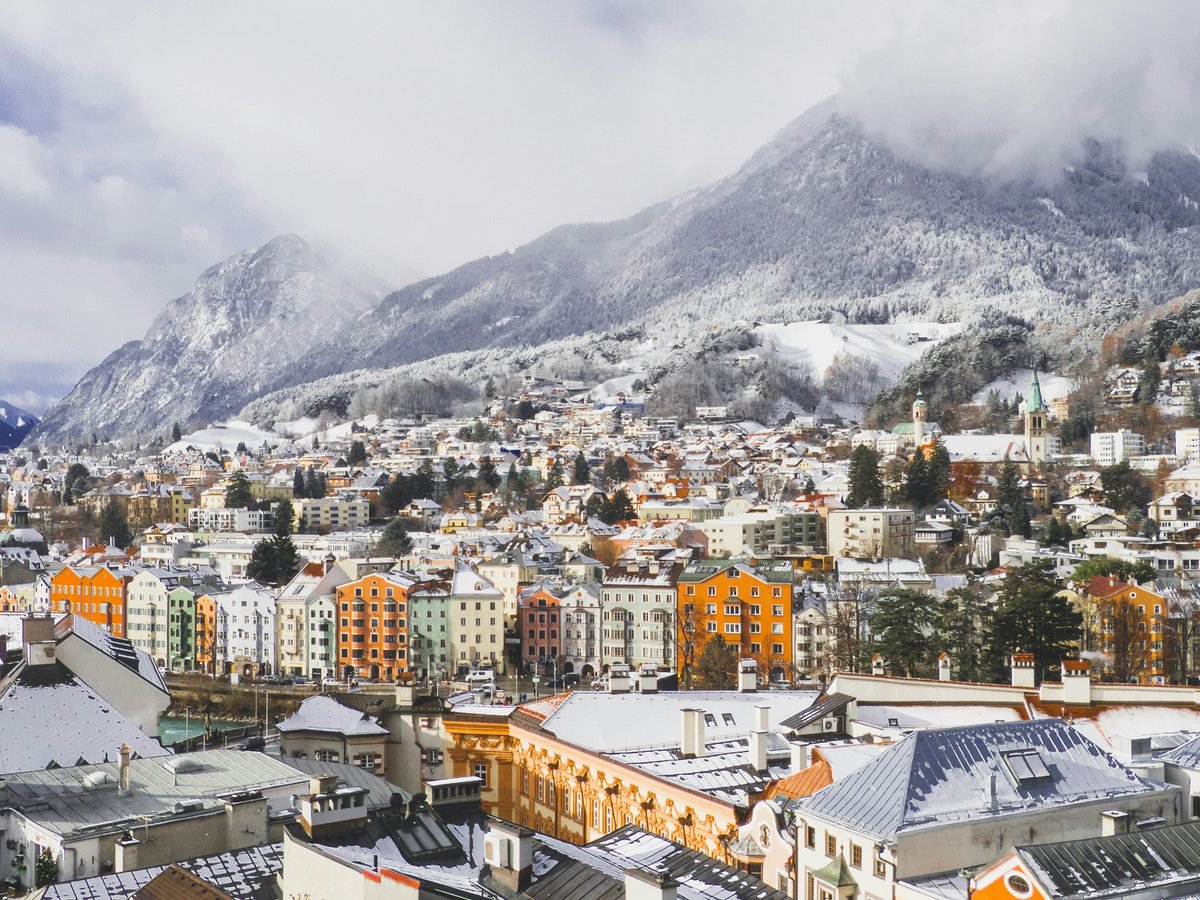
October in Innsbruck is the month the mountains change color. The larch forests across the Nordkette, Patscherkofel, and the ridgelines above Hötting turn a deep amber gold that typically peaks in the first two weeks of the month. On a clear afternoon, the whole Inn Valley seems to glow from Saggen to Pradl. Daytime highs average 18.2°C (65°F), warm enough for a full day on the trails in a light jacket, though mornings at 7.9°C (46°F) carry a genuine chill. This is shoulder season in the best sense, sitting in the quiet gap between summer's hiking crowds and December's Christmas market rush.
That said, October is a transitional month, and it feels like one. The Hafelekar summit at 2,334 meters might already have its first dusting of snow by mid-month. Many alpine huts above 2,000 meters close their shutters around October 10-15, and some tour operators scale back their schedules. Rainfall averages 78mm over about 11 days, which is lower than any month from May through September. But temperature inversions can settle fog into the valley floor for 2-3 days running, turning the city damp and grey while the peaks above bask in full sun.
The calendar brings a few notable dates. Austrian National Day on October 26 means free entry at the Tiroler Landesmuseum Ferdinandeum and most state museums across Tyrol. The Lange Nacht der Museen usually falls on the first Saturday, opening venues city-wide until 1am on a single ticket. And if you time it right, you might still catch the tail end of the Almabtrieb season, when decorated cattle are driven down from alpine pastures through villages in the Stubai and Wipp valleys.
Why visit in October
- The larch forests across the Nordkette and Patscherkofel turn gold in the first two weeks of October, creating some of the most photogenic alpine scenery of the year.
- Hotel rates typically drop 30-40% from July and August peaks, with central Altstadt properties that need months of advance booking in summer now available on shorter notice.
- Rainfall averages 78mm, less than half of May's 176mm and well below the summer months' 140-160mm range.
- Hiking trails between 1,000 and 1,800 meters remain open and comfortable, with cooler temperatures that make sustained uphill effort more pleasant than in July's 26°C heat.
Worth knowing
- Most alpine huts (Alpenvereinshütten) above 2,000 meters close by mid-October, cutting off popular high-altitude routes and summit overnights.
- Daylight shrinks to about 10.5 hours by month's end, with sunset around 6:15pm compared to nearly 16 hours in late June.
- Temperature inversions can trap fog in the Inn Valley for 2-3 consecutive days, leaving the city cold and overcast while peaks above sit in sunshine. There's no reliable way to predict when these will hit.
Best for
Think twice if
October brings crisp, clear mornings that warm into mild afternoons, though the pattern can break with multi-day fog when temperature inversions settle into the Inn Valley. Early October still feels like late summer on sunny days. By month's end, the air has a winter edge, especially after dark. Expect about 11 days with some rain, though October showers tend to be shorter and lighter than the dramatic summer thunderstorms that roll off the Nordkette in July and August. Humidity sits at around 77%, which you'll notice mostly in the morning dampness on the riverside paths along the Inn.
Seasonal caution
- First frost is possible at valley level (574 meters) by late October, with overnight temperatures occasionally dropping to 2-3°C. At the Hafelekar summit (2,334 meters), snow can fall any time from early October onward.
- Temperature inversions trap cold, damp fog in the Inn Valley for 2-3 day stretches. When this happens, take the Nordkettenbahn cable car above the inversion layer for sunshine at Seegrube (1,905 meters).
Year-round climate
Averages from the last 5 years.
| Month | Avg high (°C) | Avg low (°C) | Rainfall (mm) |
|---|---|---|---|
| Jan | 6 | -3 | 73 |
| Feb | 9 | -1 | 59 |
| Mar | 12 | 2 | 89 |
| Apr | 15 | 4 | 89 |
| May | 19 | 9 | 176 |
| Jun | 26 | 14 | 146 |
| Jul | 26 | 15 | 162 |
| Aug | 26 | 15 | 143 |
| Sep | 22 | 11 | 142 |
| Oct | 18 | 8 | 78 |
| Nov | 11 | 1 | 100 |
| Dec | 7 | -1 | 78 |
Holidays and festivals in October
Public holidays
- National Holiday(Nationalfeiertag)26 October 2026
Best things to do in October
Autumn hiking on the Zirbenweg
hikingThis 6-kilometer trail at roughly 2,000 meters connects the Patscherkofel and Glungezer ski areas through one of Europe's oldest stone pine forests. In early October the larch trees lining the lower sections have turned gold, while the dark green stone pines hold their color. The contrast is striking. You'll likely have the trail nearly to yourself on a weekday.
The larch-gold window typically peaks in the first two weeks of October, and the trail sits right at the altitude where the color is most intense. Summer crowds have cleared out.Booking tipTake the Patscherkofel cable car from Igls to the top station and walk west. Check the cable car operator's website for October hours, as the schedule shifts from summer timetables around mid-month.
Nordkettenbahn to Seegrube and Hafelekar
sightseeingThe cable car rises directly from the Congress station in the city center to Seegrube at 1,905 meters in about 20 minutes. From there, a second stage climbs to Hafelekar at 2,334 meters. On an October morning above the fog layer, you can see from the Zillertal Alps to the Wetterstein range. The air is thin and cold up top, often near freezing.
October's temperature inversions push fog into the valley, but Seegrube and Hafelekar sit above it. You get the rare experience of looking down at a sea of cloud while standing in full sun.Booking tipBuy tickets at the Congress station or online through the Nordkettenbahnen website. Check current operating status before heading up, as high winds can suspend the Hafelekar stage.
Goetheweg ridge hike
hikingA 4.3-kilometer trail that traces the ridgeline west from the Hafelekar summit station at 2,334 meters toward the Pfeishütte at 2,036 meters. The path is narrow in places with steep drop-offs on the south side. Views into the Karwendel Nature Park and across the Inn Valley stretch for 50 kilometers on clear days. Mind you, a clear start can shift fast at this altitude.
October typically brings more stable high-pressure days than summer, which means fewer afternoon thunderstorms at ridge level. The trail is quieter, and visibility on a good day tends to be better than in July's haze.Booking tipThe Pfeishütte typically closes for the season around October 10-15. Check the hut's website or call ahead if you're planning to stop there for food.
Explore the Altstadt (Old Town)
cultureInnsbruck's medieval center runs from the Goldenes Dachl on Herzog-Friedrich-Straße to the Hofburg and Hofkirche. October thins the crowds enough that you can stand in front of the Goldenes Dachl without a wall of selfie sticks. The Hofkirche houses Emperor Maximilian I's cenotaph, flanked by 28 larger-than-life bronze statues from the early 1500s. The scale is genuinely surprising.
Summer tour groups have moved on, and the Christmas market infrastructure hasn't gone up yet. You get the clearest, least obstructed views of the medieval facades along Herzog-Friedrich-Straße.Booking tipThe Innsbruck Card covers the Hofkirche, Ferdinandeum, and cable cars. Check the tourist office for current bundling options and validity periods.
Stift Wilten and the Wiltener Basilika
cultureThe Premonstratensian abbey Stift Wilten, founded in the 12th century, sits at the southern edge of the city in the Wilten neighborhood. The adjacent Wiltener Basilika is a Rococo church from the 1750s with an interior that's almost dizzyingly ornate. Pink marble columns, ceiling frescoes by Matthäus Günther, gold leaf on nearly every surface. It's still an active parish church, so you might walk into a weekday service.
Fewer visitors in October means you can linger in the basilica without navigating around tour groups. The slanting autumn light through the south-facing windows hits the gold leaf in a way the flat summer sun doesn't.Booking tipThe basilica is free to enter. Stift Wilten occasionally offers guided tours. Check locally for schedules, as they're not always listed online.
Cycle the Inn Valley path toward Hall in Tirol
cyclingA flat, paved cycling path follows the Inn River east from Innsbruck to the medieval salt-trading town of Hall in Tirol, about 10 kilometers away. The path passes through meadows turning brown and gold in October, with views of the Nordkette to the north and the Tux Alps to the southeast. Hall's well-preserved Altstadt has the Münze Hall, where Tyrolean silver thalers were minted starting in 1567.
Cooler mornings around 8°C make for comfortable cycling. The path is nearly empty compared to the summer bicycle traffic between the two towns.Booking tipRental bikes are available from several shops near Innsbruck Hauptbahnhof. Check with individual rental operators for late-season availability, as some close by mid-October.
Visit the Tiroler Landesmuseum Ferdinandeum
cultureTyrol's state museum on Museumstraße covers everything from Roman-era Veldidena artifacts to Gothic altarpieces to 20th-century Tyrolean art. The collection of late-Gothic panel paintings from churches across Tyrol is one of the strongest in the Alps. Worth noting, the building itself dates to the 1840s and sits in the Universitätsviertel.
Austrian National Day on October 26 opens the Ferdinandeum and other state museums for free. The Lange Nacht der Museen on the first Saturday keeps the doors open until 1am.Booking tipCheck the museum website for current opening times. The National Day free-entry policy covers all Tiroler Landesmuseen sites, including the Volkskunstmuseum next door.
Day trip to Stubai Valley for Almabtrieb
cultural_eventThe Almabtrieb is the ceremonial driving of cattle down from high alpine pastures to their winter barns in the valley. In the Stubaital, villages like Neustift and Mieders celebrate with decorated cows wearing elaborate floral headpieces, brass bells, and ribbons. Local bands play, and the village squares fill with the smell of grilled Bratwürste and warm Glühwein.
Almabtrieb typically happens in late September through early October, depending on weather and pasture conditions. The first week of October is usually your last chance to catch one in the Stubai Valley.Booking tipExact dates are announced only 1-2 weeks in advance, since they depend on weather. Check the Stubai Valley tourism office website in late September for confirmed schedules. The Stubai Valley bus runs from Innsbruck Hauptbahnhof.
What to eat in October
In season: fruit
Tiroler Äpfel (Tyrolean apples)
Apple orchards in the Inn Valley between Hall in Tirol and Schwaz reach peak harvest in October. Look for local varieties at farmers' stalls inside Markthalle Innsbruck, where they tend to cost roughly half the supermarket price.
On menus now
Wildgulasch (game goulash)
Hunting season opens across Tyrol in autumn, and restaurant menus shift to feature venison and chamois. You'll find game goulash at traditional Gasthäuser across Wilten and the Altstadt, typically served with Semmelknödel (bread dumplings) and Preiselbeeren (lingonberry jam).
Zwetschgenknödel (plum dumplings)
Tyrolean plums reach peak ripeness in late September and early October. These sweet dumplings, rolled in buttered breadcrumbs and cinnamon, appear on dessert menus for a few weeks before the fruit supply runs out.
Kürbiscremesuppe (pumpkin cream soup)
Pumpkin harvest peaks in October across Inn Valley farms. The soup often comes finished with Steirisches Kürbiskernöl (Styrian pumpkin seed oil), which has a dark green, nutty flavor you likely won't find outside Austria.
Street food peaks
Maroni (roasted chestnuts)
Street vendors set up roasting stations at Markthalle Innsbruck and along Maria-Theresien-Straße from early October. The smell of charring chestnuts in paper cones is one of the first signs autumn has arrived in the Inn Valley.
What to drink
Sturm (young fermenting wine)
The Austrian answer to Federweißer. This cloudy, still-fermenting young wine appears in Gasthäuser and wine bars for a few weeks in October. Mildly sweet, slightly fizzy, and deceptively strong at around 4-5% alcohol.
Regular events in October
Lange Nacht der Museen
A nationwide event that opens museums, galleries, and cultural venues across Innsbruck until 1am on a single combined ticket. Participating venues in 2024 included the Ferdinandeum, Hofburg, Volkskunstmuseum, and Audioversum. Shuttle buses connect the scattered sites.
First Saturday of OctoberAustrian National Day (Nationalfeiertag)Free
October 26 is a public holiday. State-run museums across Tyrol, including the Ferdinandeum and Volkskunstmuseum, open their doors for free. Expect a busier-than-usual day at these venues. Many shops close, but restaurants and cafes in the Altstadt stay open.
October 26Almabtrieb processions in surrounding valleysFree
Decorated cattle return from alpine pastures in the Stubai, Wipp, and Sellrain valleys. Each village runs its own schedule depending on weather. The processions draw locals and visitors to village squares for food, music, and the spectacle of flower-crowned cows filing through narrow streets.
Late September through first week of OctoberBest places this October
Nordkette (Seegrube and Hafelekar stations)
mountainThe cable car from the city center climbs to Seegrube at 1,905 meters and Hafelekar at 2,334 meters. In October, this is where you go to escape valley fog and stand above the clouds. The Karwendel Nature Park stretches north from the summit ridge.
HungerburgMarkthalle Innsbruck
marketThe indoor market hall near the Inn River houses vendors selling Tyrolean produce, meats, cheeses, and baked goods. In October, stalls fill with pumpkins from Inn Valley farms, fresh apples from orchards near Hall, and the first batches of roasted Maroni. The ground floor has a few small restaurants.
MarktgrabenHofburg Innsbruck
historic_siteThe Imperial Palace on Rennweg was expanded by Empress Maria Theresa in the 1750s. The Giant's Hall (Riesensaal) has ceiling frescoes and portraits of Maria Theresa's 16 children. October's lower visitor numbers mean you can walk the state rooms without being herded through.
AltstadtBergisel Ski Jump
landmarkZaha Hadid's 2002 ski jump tower rises 50 meters above the Bergisel hill south of the city center. The viewing platform offers a panoramic view of Innsbruck, the Inn Valley, and the Nordkette. In October, the surrounding forests are in full autumn color. The venue hosted Olympic ski jumping in 1964 and 1976.
BergiselStift Wilten and Wiltener Basilika
religious_siteThe 12th-century Premonstratensian abbey and its adjacent Rococo basilica sit in the Wilten neighborhood. The basilica's interior, completed in the 1750s, is a riot of gold leaf, pastel frescoes, and pink marble. Free to enter.
WiltenHall in Tirol
day_tripA 10-kilometer bike ride or short train journey east of Innsbruck. Hall's medieval Altstadt is better preserved than Innsbruck's own, with the Münze Hall minting museum and the Burg Hasegg tower. The town made its fortune from salt mining, and the old salt depot still stands near the center.
Alpenzoo Innsbruck
zooEurope's highest-elevation zoo at 727 meters sits on the Hungerburg slope above the city. The collection focuses on Alpine species, including ibex, chamois, brown bears, wolves, and bearded vultures. October's cooler temperatures tend to make the animals more active than in the heat of summer.
Hungerburg
Your packing checklist
Tick items off as you pack. Your progress saves in this browser.
All packed — have a great trip.
Insider tips
When valley fog locks in, take the Nordkettenbahn up to Seegrube at 1,905 meters. You'll likely break through the cloud layer around 1,200 meters and find yourself in warm sunshine looking down at a white blanket. Most visitors don't think to do this on grey days, so you'll have the terrace nearly to yourself.
The Innsbruck Card bundles cable cars, museums, and public transport into one purchase. In October's shoulder season it can represent solid value if you plan to hit 2-3 attractions a day, since the individual admissions add up. Check the tourist office for current inclusions and pricing.
For Almabtrieb dates, don't rely on tourism websites. Call the Stubai Valley tourism office directly in late September. Dates shift based on weather and pasture conditions, and the English-language sites sometimes lag behind the German ones by a week.
The Markthalle is best visited before 10am on Saturday mornings, when local farmers bring produce that sells out by noon. The weekday crowd is lighter, but the selection of seasonal items like fresh Tyrolean apples and pumpkins peaks on Saturdays.
If you're hiking the Goetheweg, start early. The ridge is exposed, and October afternoons can bring sudden wind shifts even on days that start calm. Most mountain rescue callouts on that trail happen in the afternoon hours.
Austrian trains (ÖBB) from Innsbruck reach Hall in Tirol in about 10 minutes. The train station sits a short walk from Hall's Altstadt. This is often faster and simpler than the bike path if weather turns.
Avoid these mistakes
- Assuming all alpine huts are still open. Most Alpenvereinshütten above 2,000 meters shut down between October 10-15. The Pfeishütte on the Goetheweg route is one of the first to close. Check hut status on the Austrian Alpine Club website before planning a route that depends on a mid-trail stop.
- Packing only for mild autumn weather. Valley temperatures might reach 18°C, but the Hafelekar summit can sit below freezing on the same day. A 20°C temperature swing between the city center and the top cable car station catches people off guard.
- Skipping a day because of valley fog and assuming the weather is bad everywhere. October inversions can mean grey drizzle at 574 meters and clear skies at 1,500 meters. Check a webcam at Seegrube before writing the day off.
- Trying to drive to Almabtrieb events. Village roads in the Stubai Valley close for the cattle processions, and parking fills early. The bus from Innsbruck Hauptbahnhof avoids both problems.
- Planning outdoor dining in the evenings. Most restaurant terraces in the Altstadt close for the season by early October. Evenings drop below 10°C, and even heated terraces tend to feel uncomfortable by 7pm.
Practical tips for October
Book cable car tickets online where possible to confirm operating schedules, as October brings reduced hours on the Nordkettenbahn and Patscherkofel lifts. Hut closures above 2,000 meters mean carrying your own food and water on high-altitude trails. Austrian National Day on October 26 closes most shops but opens state museums for free. Pack layers that handle a 20°C swing between valley floor and summit. The Innsbruck Card can bundle transport and admissions. Check the ÖBB app for train times to Hall in Tirol and the Stubai Valley bus schedule for Almabtrieb processions.
FAQ
Is October a good time to visit Innsbruck for hiking?
October is strong for mid-altitude hiking between 1,000 and 1,800 meters, where trails like the Zirbenweg at 2,000 meters still have reliable access via cable car. The larch forests turn gold in the first two weeks, and trail traffic drops significantly from summer levels. That said, most alpine huts above 2,000 meters close around October 10-15, so hut-to-hut routes at higher elevations are largely off the table.
How cold does Innsbruck get in October?
Valley-level daytime highs average 18.2°C (65°F) in early October, dropping toward 12-13°C by month's end. Mornings average 7.9°C (46°F), and late October nights can dip to 2-3°C. At the Hafelekar summit (2,334 meters), temperatures regularly sit near or below freezing. The gap between the valley floor and the mountaintops is one of the biggest adjustments to prepare for.
Can I still take the Nordkettenbahn cable car in October?
The Nordkettenbahn typically operates through October on a reduced schedule compared to summer. The first two stages to Hungerburg and Seegrube run most days. The final stage to Hafelekar may close on days with high winds. Check the operator's website for current schedules and any weather-related suspensions before heading to the Congress station.
What is the Almabtrieb and when does it happen?
The Almabtrieb is the traditional autumn cattle drive from high alpine pastures down to valley barns for winter. Cows are decorated with flower crowns, bells, and ribbons, and villages celebrate with food and music. In the Stubai Valley near Innsbruck, Almabtrieb events typically happen in late September through the first week of October. Exact dates depend on weather and are announced only 1-2 weeks ahead.
Are Innsbruck's Christmas markets open in October?
No. Innsbruck's Christmas markets typically open in mid to late November. In October, the Altstadt and Maria-Theresien-Straße are free of market stalls, which makes it easier to appreciate the medieval architecture and the mountain backdrop without visual clutter.
Is the Innsbruck Card worth buying in October?
The card bundles cable car rides, museum entries, and public transport. In October, with reduced cable car schedules and fewer seasonal attractions open, it tends to pay off if you plan at least 2-3 activities per day that are covered. Check the current inclusions on the Innsbruck tourism website, as the bundled attractions can change by season.
Find a flight to Innsbruck
Live fares to Innsbruck appear here once cookies are accepted.
Last verified by automated review (v1.7.2) on . What is automated review?