Stay in Innsbruck in April
43 hotels in the Trip.com pool for Innsbruck, from US$91 a night.
Opens Trip.com on Fri 2 Apr to Sun 4 Apr 2027; change the dates there.
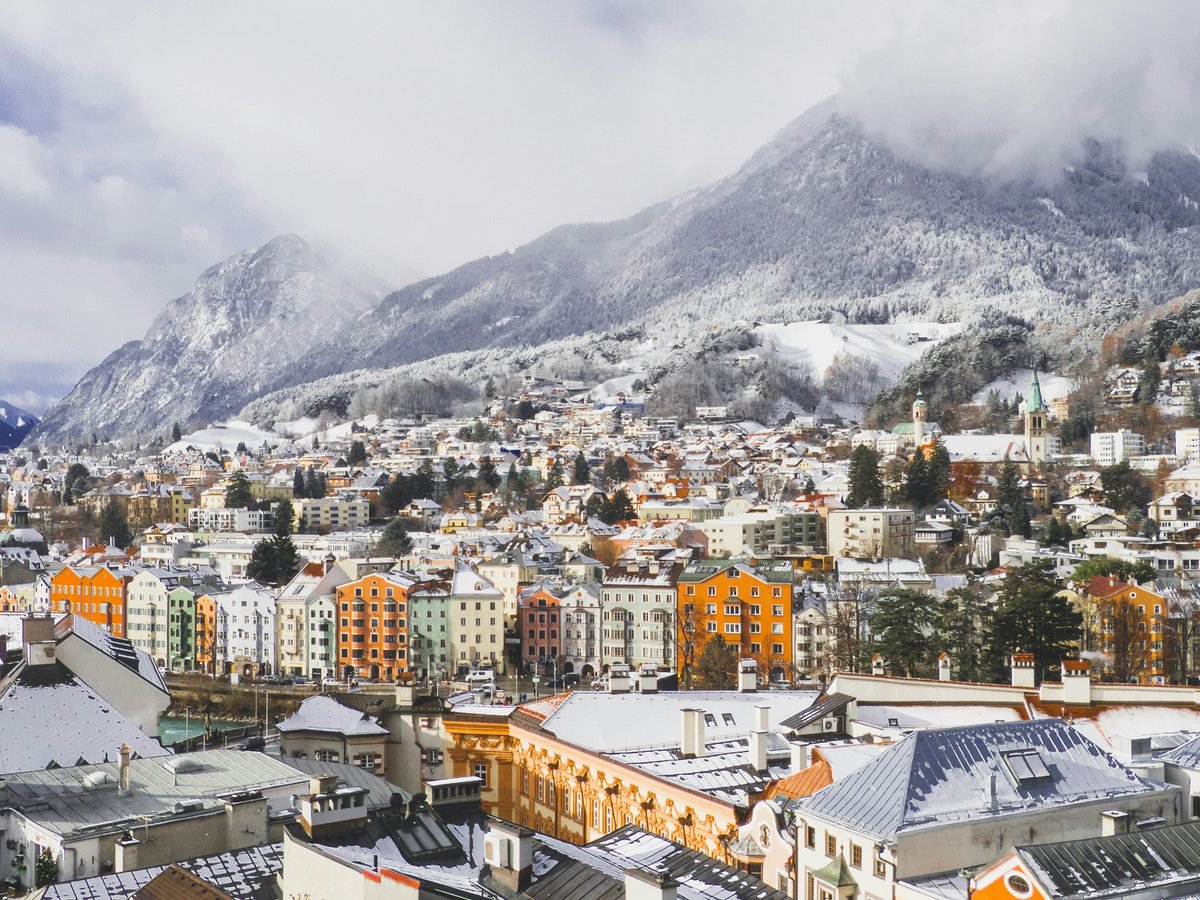
April in Innsbruck is a month caught between seasons, and you should know that going in. The ski resorts on Axamer Lizum and Stubai Glacier are winding down or already closed, the high-altitude hiking trails above 2,000 metres (6,560 feet) remain buried under snowpack, and the summer concert and festival calendar has not kicked in yet. Daytime temperatures sit around 14.8°C (59°F) on average, which sounds mild until a cloud rolls in off the Nordkette and the wind picks up. Mornings tend to hover near 4.2°C (40°F), cold enough that you'll want a proper jacket for any early start. That said, there's a real charm to the city in this in-between period. The Altstadt is noticeably quieter than it will be by July, the Easter markets run through early April, and on a clear Föhn day the views of the Karwendel range from the Inn bridges are sharper than at any other time of year.
To be fair, April is probably not the month most people would choose for a first visit. You're likely to get rained on at least half the days you're here, with 89mm of rainfall spread across roughly 15 wet days. Snow in the city at lower elevations is still possible in the first week or two. But if you've already seen Innsbruck in summer or winter and want a different feel, or if you happen to be passing through the Brenner corridor, April rewards patience. The Hofgarten starts greening up by mid-month, wild garlic carpets the riverbanks along the Inn in St. Nikolaus, and restaurant tables start appearing on the Maria-Theresien-Strasse sidewalks for the first time since October. Hotel rates sit well below both the ski-season and summer peaks, which means you might find a room in Wilten or Saggen for 30-40% less than you'd pay in August.
Why visit in April
- Hotel rates drop 30-40% compared to the December-February ski peak and the July-August summer peak, making good-quality accommodation in Altstadt and Wilten genuinely affordable.
- The Nordkette and surrounding peaks still carry heavy snow cover, which makes the alpine backdrop more dramatic than in late summer, and Föhn wind days produce extraordinary clarity for photography.
- Crowds at major sites like Goldenes Dachl, Hofburg, and Bergisel Schanze are noticeably thinner than summer, with wait times at the Nordkettenbahnen often under 10 minutes.
- Bärlauch (wild garlic) season peaks along the Inn River trails, and Tyrolean restaurants put seasonal herb dishes on menus that disappear by June.
- Easter markets in the Altstadt offer handmade Tyrolean crafts without the density and queueing of the December Christkindlmärkte.
Worth knowing
- Roughly 15 days of the month see measurable rainfall (89mm total), and April showers in the Inn valley tend to arrive without much warning. You will get wet at some point.
- Most high-altitude hiking routes above the treeline (roughly 1,800-2,000 metres) remain snow-covered and impassable without proper alpine gear, which rules out the Goetheweg, Pfeishütte, and other signature Nordkette trails.
- The shoulder-season gap means some mountain huts, cable cars, and seasonal restaurants operate on reduced hours or remain closed until late May.
- Temperature swings within a single day can reach 15°C when Föhn winds blow. You might leave your hotel in a t-shirt at 22°C and need a fleece by 5pm.
Best for
Think twice if
April in Innsbruck feels like the valley can't quite decide whether it's still winter or finally spring. The average high reaches 14.8°C (59°F) and the average low sits at 4.2°C (40°F), but these numbers mask considerable day-to-day variability. A Föhn wind event can push a Tuesday afternoon to 22°C, while Wednesday might bring rain and drop back to 8°C. The 89mm of rainfall across roughly 15 wet days means you should expect some form of precipitation on roughly every other day. Humidity averages around 70%, which feels damp when it's overcast but not oppressive. Early April mornings carry a real bite, the kind of cold that stings your ears on the walk from Saggen down to the Inn. By late April the afternoons warm enough that locals start sitting outside at the Markthalle terrace, though they still bring a scarf.
Seasonal caution
- Nighttime temperatures regularly drop below 0°C (32°F) in early April, and late-season snowfall at valley level (574 metres elevation) still occurs, typically in the first two weeks.
- Föhn winds can arrive without much notice and cause rapid pressure changes. Some visitors experience headaches or fatigue during Föhn events, a phenomenon Tyrolean locals call Föhnkrankheit. The winds also dramatically increase avalanche risk on upper slopes.
- River levels on the Inn and Sill rise through April as snowmelt accelerates. The riverside paths near Mariahilf and along the Sillschlucht can flood briefly during heavy rain combined with warm spells.
Year-round climate
Averages from the last 5 years.
| Month | Avg high (°C) | Avg low (°C) | Rainfall (mm) |
|---|---|---|---|
| Jan | 6 | -3 | 73 |
| Feb | 9 | -1 | 59 |
| Mar | 12 | 2 | 89 |
| Apr | 15 | 4 | 89 |
| May | 19 | 9 | 176 |
| Jun | 26 | 14 | 146 |
| Jul | 26 | 15 | 162 |
| Aug | 26 | 15 | 143 |
| Sep | 22 | 11 | 142 |
| Oct | 18 | 8 | 78 |
| Nov | 11 | 1 | 100 |
| Dec | 7 | -1 | 78 |
Best things to do in April
Nordkettenbahnen to Seegrube station
sightseeingThe Hungerburgbahn funicular and Nordkettenbahn cable car run year-round, and the ride from the Congress station in the city centre up to Seegrube at 1,905 metres takes about 20 minutes. At Seegrube you step out onto a sun terrace with panoramic views across the Inn valley and south toward the Stubai Alps. The summit station at Hafelekar (2,334 metres) may still be accessible, though the surrounding terrain is under snow.
April's snow coverage at altitude means the views from Seegrube include a fully white Karwendel massif, which you won't see in summer. Föhn days produce visibility that can exceed 100 kilometres. Crowds are a fraction of summer levels.Booking tipNo advance booking needed in April. Queues rarely exceed 5 minutes on weekdays. A return ticket to Seegrube costs roughly 40 EUR for adults.
Walk the Innpromenade from Mariahilf to St. Nikolaus
walkingThe flat riverside path along the Inn's south bank runs roughly 3 kilometres (1.9 miles) from the colourful Mariahilf houses through to the quieter neighbourhood of St. Nikolaus. You pass the Ottoburg restaurant, cross under the Innbrücke, and wind through stretches where Bärlauch grows thick enough to smell from 20 metres away. The path is paved and stroller-friendly.
Peak wild garlic season makes this walk a sensory experience unique to April. The riverbank vegetation is greening up fast, and the contrast between the green valley floor and snow-capped peaks on the Nordkette ridge above is at its most striking.Visit the Tiroler Landesmuseum Ferdinandeum
cultureTyrol's main state museum on Museumstrasse houses collections spanning 30,000 years, from Bronze Age artefacts found in the Ötztal to 20th-century Tyrolean painting. The Gothic altarpiece collection on the upper floors is one of the strongest in the Alps. Plan 2-3 hours.
April's unpredictable rain makes indoor cultural sites more valuable than in settled summer weather. The museum is rarely crowded in April, and spring temporary exhibitions typically open around this time.Late-season skiing on Stubai Glacier
sportStubai Glacier, about 45 minutes by car or shuttle from Innsbruck, typically operates into late April or early May. At 3,210 metres, snow conditions are usually still reliable. The vibe is relaxed compared to February. Spring skiing on the Stubai means warmer temperatures at base camp, softer snow by late morning, and a sun terrace at Jochdohle (3,150 metres) that feels more like a Mediterranean café than an Alpine ski hut.
This is your last window for skiing near Innsbruck before summer closures. The combination of spring warmth at valley level and genuine winter conditions at glacier altitude creates a unique two-season day.Booking tipThe Stubai shuttle (Stubaitalbus) runs from Innsbruck Hauptbahnhof. Check the glacier operator's website for confirmed closing dates, which vary year to year depending on snowpack.
Alpenzoo spring visit
natureInnsbruck's Alpine Zoo at 727 metres elevation on the Hungerburgbahn route holds roughly 2,000 animals from 150 species, all native to the Alps. The collection includes brown bears, lynx, wolves, ibex, and golden eagles. The zoo sits on a steep hillside with views across the city. In April, several species emerge from winter dormancy and breeding season produces visible activity among the ibex and chamois.
Spring breeding behaviour makes the ibex and chamois enclosures more active than during winter torpor. Bear activity increases noticeably. The walk-through is less crowded than summer weekends.Booking tipCombine with the Nordkettenbahnen. A combo ticket covers both and saves roughly 8-10 EUR over buying separately.
Bergisel Schanze visit and tower climb
sightseeingZaha Hadid's ski jump tower in the Wilten neighbourhood is both a working Olympic venue (1964 and 1976 games) and a viewpoint. An elevator and staircase take you to the top of the jump, where a café at 50 metres above the in-run offers a panoramic view north across the entire city to the Nordkette. On a clear April day, the perspective is striking.
April's clearer Föhn-wind days and the remaining snow on the surrounding peaks make the panorama from the top more photogenic than in the hazy summer months. No competition events run in April, so access is unrestricted.Explore the Markthalle Innsbruck
foodThe indoor market hall near the Inn bridge on Herzog-Siegmund-Ufer houses about 10 food stalls and small restaurants selling everything from Tyrolean cheese and cured Speck to Turkish flatbreads and Vietnamese pho. It's where locals shop, not a tourist market. The building is modern, bright, and warm, which matters on a 7°C April morning.
April is when the first seasonal produce starts appearing at the Markthalle stalls. Bärlauch, early radishes, and fresh herbs from the Inn valley farms arrive mid-month. The space also functions as a reliable wet-weather retreat.Hike the Sillschlucht gorge trail
hikingThe Sill gorge trail runs about 3 kilometres (1.9 miles) from the Bergisel area south along the Sill river through a narrow, forested ravine. The path is paved or gravel and stays at valley elevation, so it's passable in April even when higher trails are still snow-covered. The gorge walls rise 50-80 metres above the river in places, and the sound of rushing water from the spring snowmelt fills the whole corridor.
April snowmelt swells the Sill river to its most dramatic flow of the year, making the gorge noticeably louder and more visually striking than in late summer when water levels drop. The trail remains below the snowline.What to eat in April
On menus now
Spinatknödel with spring herbs
The classic Tyrolean bread dumpling gets a seasonal twist in April when cooks swap in fresh-picked spinach and wild herbs from the valley meadows. Tiroler Gasthaus menus in Wilten and Hötting typically list these from mid-April, served swimming in browned butter with grated Bergkäse.
Osterlamm (Easter lamb)
Roasted lamb appears on Innsbruck restaurant menus throughout Easter week and lingers into mid-April. Tyrolean preparations tend toward slow-roasted shoulder with rosemary and root vegetables, served with Erdäpfelsalat (warm potato salad).
What to drink
Märzenbier
Tyrolean breweries, including Bier der Brauerei Frastanzer and smaller craft operations, release their Märzen lagers in spring. Slightly stronger than a standard Helles at around 5.5-6% ABV, with a malty sweetness that suits cool April evenings. The Markthalle is a good place to try a pour.
In markets
Bärlauch (wild garlic)
April is peak Bärlauch season in the Inn valley. The pungent leaves carpet the shaded riverbanks in St. Nikolaus and along the Sill, and Tyrolean cooks fold them into everything from Knödel to Bärlauchsuppe (wild garlic cream soup). You'll smell it before you see it on a riverside walk.
Spargel (white asparagus)
Austrian Spargel season typically starts in the second half of April. While Tyrol isn't the growing region (that's the Marchfeld near Vienna), Innsbruck restaurants source it eagerly. Expect it served with Hollandaise, cured ham, and new potatoes at sit-down restaurants around Maria-Theresien-Strasse.
Regular events in April
Ostermarkt in der Altstadt (Easter Market)Free
A modest open-air market fills the square near Goldenes Dachl with stalls selling hand-painted eggs, Tyrolean wood carvings, beeswax candles, and seasonal foods. Smaller and less crowded than the December Christmas markets, with a more local feel. Live folk music on weekends.
Late March through Easter Monday (April 6 in 2026)Schloss Ambras Easter Exhibition
Schloss Ambras, the Renaissance castle on the southeastern edge of Innsbruck, typically opens its seasonal exhibition calendar around Easter. The Kunst- und Wunderkammer (chamber of art and curiosities) and the Spanish Hall are the highlights. The castle grounds begin their spring bloom in the second half of April.
Opens around Easter, continues through OctoberInnsbruck Frühlingsfest (Spring Fair)Free
A small funfair with rides, food stalls, and beer tents sets up near the Olympiaworld complex in the weeks after Easter. Primarily attended by local families. Bratwurst, Langos, and Tiroler Kiachl (fried dough with sauerkraut) are the standard fare.
Mid to late April, typically 10-14 daysBest places this April
Hofgarten
parkThe Imperial Gardens north of the Hofburg start showing their first real colour in April. Crocuses and early daffodils appear on the lawns, and the old-growth trees begin leafing out by mid-month. The Pavillon café opens for outdoor seating on warmer days. Worth a 30-minute stroll even in light rain, when the garden empties out and the gravel paths have a pleasant crunch underfoot.
AltstadtMaria-Theresien-Strasse
streetInnsbruck's main pedestrian boulevard runs south from the Altstadt toward the Triumphpforte (triumphal arch). The view north up the street with the Nordkette towering behind the Baroque facades is the defining Innsbruck vista. In April, the first outdoor café tables reappear along the eastern side, and you'll find locals tilting their faces toward any patch of sun.
AltstadtStadtteil St. Nikolaus riverside
neighborhoodThe neighbourhood west of the Altstadt along the Inn's south bank is one of the least touristed parts of central Innsbruck. Narrow lanes, painted facades, and small workshops. In April the Bärlauch patches along the riverbank here are thick enough to forage from, though you'll want to know what you're picking.
St. NikolausHungerburg plateau
viewpointReachable by the Hungerburgbahn funicular (Zaha Hadid's swooping glass stations) or by a steep 30-minute walk from Hötting. The plateau at about 860 metres sits above the city's weather inversions, so on overcast April days the Hungerburg can be in full sun while the valley sits under cloud. Several Gasthäuser serve lunch with valley views.
HöttingWiltener Basilika
churchThe Rococo basilica in the Wilten neighbourhood, about a 15-minute walk south of the Altstadt, is one of the most ornate church interiors in Tyrol. Gold stucco, ceiling frescoes by Matthäus Günther from the 1750s, and a quiet atmosphere that the Hofkirche in the centre rarely has. Free entry. The adjacent Stift Wilten (Wilten Abbey) has been a Premonstratensian monastery since 1138.
WiltenNordkette Seegrube terrace
viewpointAt 1,905 metres, the Seegrube cable car station has a south-facing sun terrace that functions as one of the highest restaurant terraces accessible from any European city centre. In April, you're sitting above the snowline with a drink, looking down at the green valley floor 1,300 metres below. The temperature up here will be 8-10°C colder than in town.
NordketteZeughaus (Arsenal Museum)
museumThe former imperial arsenal in the Altstadt houses a branch of the Tiroler Landesmuseen with permanent exhibitions on Tyrolean history. The building itself dates to the 1500s and Emperor Maximilian I. A solid rainy-afternoon option that most tourists skip in favour of the Goldenes Dachl next door.
Altstadt
Your packing checklist
Tick items off as you pack. Your progress saves in this browser.
All packed — have a great trip.
Insider tips
The Föhn wind is your best friend and worst enemy. When locals say 'es föhnt' (it's Föhning), expect crystal-clear mountain views and temperatures 8-10°C above the forecast. It's the single best day to go up the Nordkettenbahnen. Mind you, some people get headaches from the pressure change. Pharmacies in the Altstadt sell Föhn-Tabletten (basically aspirin) and nobody will look at you strangely for asking.
The Markthalle opens at 7am on weekdays and that first hour is when locals shop before work. By 10am the tourist ratio shifts. The stall selling Tiroler Graukäse (grey cheese) at the far end is worth finding. It's an acquired taste, pungent and crumbly, but it's one of the few cheeses genuinely unique to Tyrol.
If you're visiting the Nordkette, check the webcam on the Nordkettenbahnen website before buying your ticket. April cloud inversions are common. The valley can be socked in with grey clouds while Seegrube sits in blazing sunshine above the cloud layer. The reverse also happens, so check before committing 40 EUR to a grey-out.
The path from Hötting up to the Hungerburg plateau (follow the signs from Höttinger Gasse) takes about 30 minutes on foot and saves you the funicular fare. The walk passes through the old Hötting village centre, which still has working farmhouses within the city limits. You can ride the funicular one way and walk the other.
Avoid these mistakes
- Packing only for spring weather and getting caught at altitude in winter conditions. The city centre at 574 metres might be 14°C, but Seegrube at 1,905 metres will be near freezing. Visitors who ride the cable car in a light jacket and trainers end up miserable on the terrace.
- Assuming all hiking trails are open because the valley floor looks green. Trails above roughly 1,800 metres are snow-covered into May or June depending on the year. The tourist office on Burggraben can give you current trail status, but checking the Alpenverein (Alpine Club) condition reports online before heading out is more reliable.
- Planning a ski trip for late April without confirming resort dates. Stubai Glacier usually operates, but the lower resorts like Axamer Lizum and Patscherkofel close by late March or early April. Arriving to find your chosen resort shuttered is a real possibility.
- Booking outdoor activities for every day without building in rain flexibility. With 15 wet days in the average April, scheduling at least 2-3 indoor alternatives (Ferdinandeum, Hofburg, Zeughaus) prevents a rained-out itinerary from feeling wasted.
Practical tips for April
Easter week (around April 5-6 in 2026) brings a short spike in domestic visitors from Bavaria and western Austria, so book Altstadt accommodation 3-4 weeks ahead if your trip overlaps. Most shops close on Easter Sunday and Easter Monday, including supermarkets. The Innsbruck Card (24/48/72 hour versions) covers the Nordkettenbahnen, Alpenzoo, Bergisel, most museums, and local bus and tram rides. In April, with lower crowds, the 48-hour card tends to offer the best value since you can fit more into each day without queuing. Dress code is casual everywhere except formal restaurants. Tipping convention in Tyrol is rounding up by 5-10%, not the 15-20% North American visitors might expect. The IVB buses and tram (Linie 1 and 3) run a regular schedule in April with no seasonal reductions, and the Stubai valley shuttle to the glacier operates daily through the ski season closure date. Check the closing date before planning a late-April ski day.
FAQ
Is April a good time to visit Innsbruck?
April is a fair time to visit, not the best. It's a shoulder month between the ski season (December to March) and the summer hiking season (June to September). The main trade-off is lower prices and fewer crowds in exchange for unpredictable weather (89mm of rain, 15 wet days) and limited access to high-altitude trails. If your priority is hiking or skiing, June through September or December through February would serve you better. If you want to explore the city's museums, architecture, and food scene without summer tourist density, April works well.
What is the weather like in Innsbruck in April?
Expect average highs around 14.8°C (59°F) and lows around 4.2°C (40°F), with 89mm of rainfall across about 15 days. Humidity sits around 70%. The weather is genuinely variable, though. A Föhn wind event can push a single afternoon to 22°C, while the next day might bring rain and drop to 8°C. Early April can still see overnight frost and occasional snow at valley level (574 metres). Late April starts to feel more reliably spring-like, with afternoon temperatures reaching 16-18°C on sunny days.
Is Innsbruck crowded in April?
No. April is one of the quieter months. The ski tourists have left, the summer hikers and tour groups have not yet arrived, and the city feels noticeably calmer than it will by July. The one exception is Easter week, when domestic visitors from Austria and southern Germany come for the long weekend. Even then, it's nothing like the density of the December Christmas markets or August hiking season. You can walk into most restaurants without a reservation on a weekday.
Can you still ski near Innsbruck in April?
Likely yes, but only at the Stubai Glacier, which typically operates until late April or early May depending on snowpack. It's about 45 minutes from Innsbruck by car or shuttle bus. The lower-elevation resorts like Axamer Lizum (closed by early April), Patscherkofel, and Muttereralm will almost certainly be finished for the season. Confirm exact closing dates on the Stubai Glacier website before booking.
What should I wear in Innsbruck in April?
Layers. The 10°C temperature swing between morning and afternoon means you'll be adjusting throughout the day. A waterproof jacket is essential given the 15 rainy days. Waterproof shoes with some grip handle the wet cobblestones and muddy riverside paths. If you plan to take the cable car to Seegrube (1,905 metres), bring a warm hat and gloves. Temperatures at altitude will be 8-10°C colder than in the city and snow underfoot is guaranteed.
Find a flight to Innsbruck
Live fares to Innsbruck appear here once cookies are accepted.
Last verified by automated review (v1.7.2) on . What is automated review?