Stay in Innsbruck in December
43 hotels in the Trip.com pool for Innsbruck, from US$91 a night.
Opens Trip.com on Fri 4 Dec to Sun 6 Dec 2026; change the dates there.
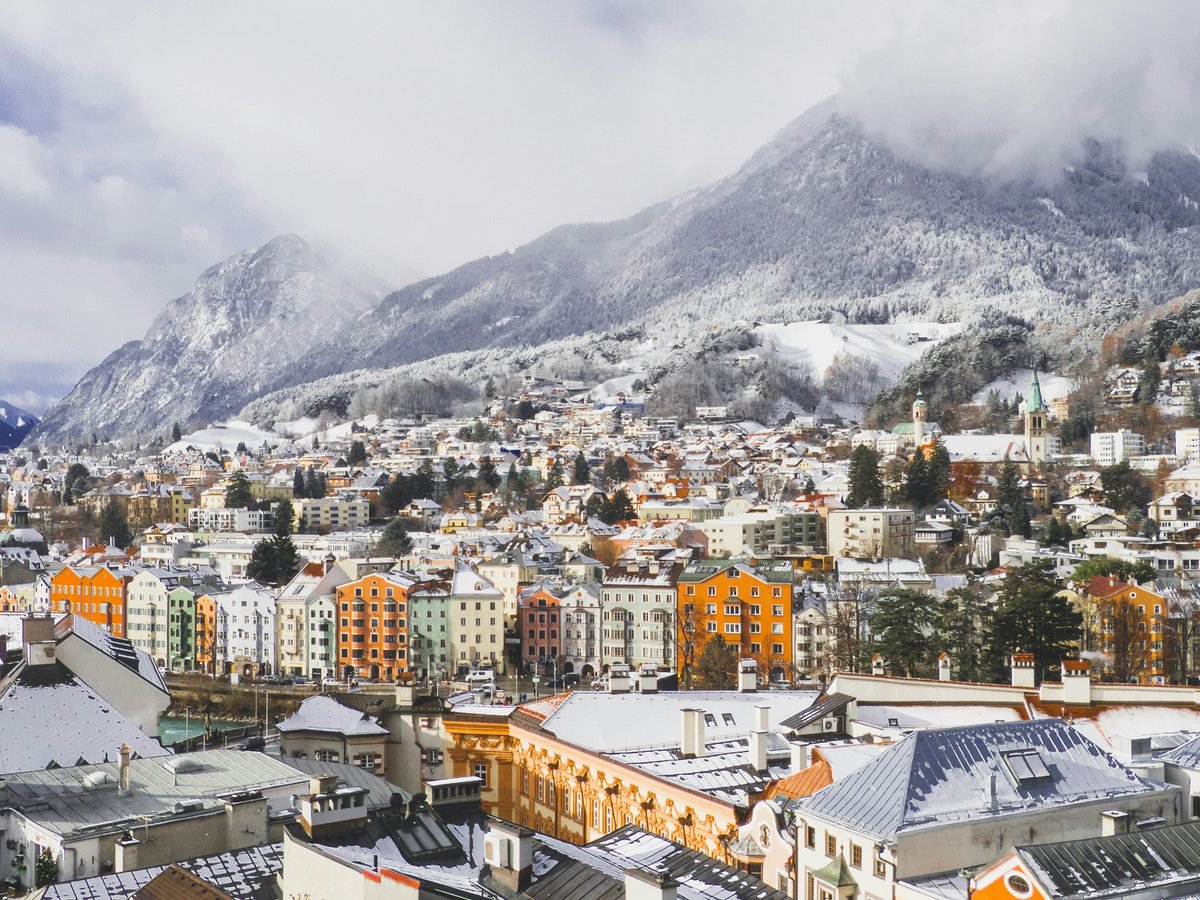
December in Innsbruck is, first and foremost, about the Christkindlmärkte. The city runs several Christmas markets simultaneously, and they set the rhythm for the entire month. Expect daytime temperatures around 6.9°C (44°F) that drop to -1.4°C (29°F) after dark, with the Nordkette range above the Altstadt often frosted white by early morning. The cold is real, the kind that stiffens your fingers around a cup of Glühwein within minutes, but it tends to feel appropriate rather than punishing. This is Alpine winter doing what Alpine winter does.
Innsbruck in December is also the start of proper ski season. The Stubai Glacier has likely been open since October, but the lower resorts around the city, places like Axamer Lizum and the Nordkette's Seegrube runs, typically have enough base by mid-December to operate reliably. That dual appeal, Christmas markets in the valley and skiing 20 minutes away, is what makes December in Innsbruck different from December in Vienna or Salzburg. You get both in a city of roughly 130,000 people, small enough that the walk from your hotel to the nearest market might take 8 minutes.
To be fair, you'll pay for the privilege. December is peak season here, alongside January and February. Hotel rates in the Altstadt can run 50-70% above the annual average, and the Christmas markets draw serious crowds, particularly on weekends. If you're looking for a quiet, cheap Alpine escape, this is not the month. But if you want Innsbruck at its most atmospheric, with the smell of roasted Maroni drifting through the Altstadt and the Nordkette lit pale blue behind the Goldenes Dachl, December is hard to beat.
Why visit in December
- Innsbruck's Christkindlmärkte rank among Austria's finest, with 4 distinct markets spread across the Altstadt, Maria-Theresien-Straße, Marktplatz, and the Hungerburg plateau
- Ski season is well underway at Nordkette, Axamer Lizum, Patscherkofel, and the Stubai Glacier, all reachable within 20-40 minutes of the city center
- The short daylight hours (sunrise around 7:50, sunset near 16:20) create long evenings where the city's Christmas lighting reflects off fresh snow on the surrounding peaks
- December rainfall sits at 78mm, one of the drier months alongside October. Much of the precipitation falls as snow at city elevation (574m), which adds to the atmosphere rather than ruining plans
Worth knowing
- Peak pricing across the board. Mid-range accommodation in the Altstadt can cost 50-70% more than shoulder-season rates, especially on weekends before Christmas
- Weekend crowds at the Christmas markets, particularly along Maria-Theresien-Straße and around the Goldenes Dachl, can make the narrow medieval streets feel congested between 16:00 and 20:00
- Daylight is limited to about 8.5 hours per day, which compresses sightseeing time and means any mountain excursion needs an early start
- The Inn Valley's geography creates occasional temperature inversions that trap fog and cold air in the valley floor. On those days, the city sits under a grey lid while the mountains above bask in sun. You might spend 3 days in fog before it clears.
Best for
Think twice if
December in Innsbruck is cold and dry by Alpine standards. The average high of 6.9°C (44°F) feels deceptive because the valley floor stays shaded for much of the short day, so the perceived temperature often sits lower. Nights regularly drop below freezing at -1.4°C (29°F), and the 78mm of precipitation falls mostly as snow at city elevation. Humidity hovers around 75%, which adds a damp bite to the cold. You'll notice the Inn River steaming in early morning as the air temperature sits below the water temperature. That said, when the sun clears the southern ridgeline around 10:00, the direct warmth on south-facing terraces in Wilten or along the Innpromenade can feel surprisingly pleasant for an hour or two.
Seasonal caution
- Overnight temperatures regularly drop below 0°C (32°F), and wind chill on the Nordkette summit station at 2,334m can push perceived temperatures to -15°C (5°F) or colder
- Temperature inversions trap cold, foggy air in the Inn Valley for 2-5 consecutive days. The fog typically sits between 500m and 800m elevation. Taking the Hungerburgbahn funicular above the inversion layer is the local antidote, but plan accordingly
- Icy cobblestones in the Altstadt and along the Inn bridges are common after overnight freezing. Footwear with grip matters more than it might seem
Year-round climate
Averages from the last 5 years.
| Month | Avg high (°C) | Avg low (°C) | Rainfall (mm) |
|---|---|---|---|
| Jan | 6 | -3 | 73 |
| Feb | 9 | -1 | 59 |
| Mar | 12 | 2 | 89 |
| Apr | 15 | 4 | 89 |
| May | 19 | 9 | 176 |
| Jun | 26 | 14 | 146 |
| Jul | 26 | 15 | 162 |
| Aug | 26 | 15 | 143 |
| Sep | 22 | 11 | 142 |
| Oct | 18 | 8 | 78 |
| Nov | 11 | 1 | 100 |
| Dec | 7 | -1 | 78 |
Holidays and festivals in December
Public holidays
- Immaculate Conception(Mariä Empfängnis)8 December 2026
- Christmas Day(Weihnachten)25 December 2026
- St. Stephen's Day(Stefanitag)26 December 2026
When is Christmas season in 2026?
27 November to 26 December 2026
Christmas season is a major cultural celebration in Innsbruck. In 2026 it runs from 27 November to 26 December 2026.

Private Christmas Walking Tour of Innsbruck’s Festive Markets
- 2 hr
- Free cancellation
- Private tour
- Easy pace
For a full refund, cancel at least 24 hours before the scheduled departure time.

Innsbruck Christmas Market Tour
- 1.5 hr
- Free cancellation
- Private tour
- Easy pace
For a full refund, cancel at least 24 hours before the scheduled departure time.

Magic Christmas Private Tour in St. Anton am Arlberg
- 2 hr
- Free cancellation
- Private tour
- Easy pace
For a full refund, cancel at least 24 hours before the scheduled departure time.

Hidden Gems Christmas Markets of Tyrol from Innsbruck
- 5–8 hr
- Free cancellation
- Private tour
- Easy pace
For a full refund, cancel at least 24 hours before the scheduled departure time.
Headline events
Innsbrucker Christkindlmärkte
Mid-November through December 23
Innsbruck runs 4 Christmas markets simultaneously across the city. The largest fills the Altstadt around the Goldenes Dachl, with roughly 70 stalls selling Tyrolean woodwork, hand-blown glass ornaments, Lebkuchen, and Glühwein. A second market lines Maria-Theresien-Straße beneath the Annasäule column. A third occupies Marktplatz in the St. Nikolaus quarter. A fourth sits up at the Hungerburg plateau, reachable by the Zaha Hadid-designed funicular, offering market stalls at 860m with valley views. The markets draw visitors from across Europe, and the Altstadt market alone typically sees over 500,000 visitors across its run.
Best things to do in December
Skiing at Nordkette above the city
skiingThe Nordkettenbahnen cable car runs directly from Innsbruck's Congress station to the Seegrube at 1,905m and the Hafelekar summit at 2,334m. The Seegrube has a handful of steep, north-facing runs that hold snow well into spring. The whole journey from the Altstadt to the slopes takes about 20 minutes, which is hard to match from any other European city center.
Mid-December typically brings enough natural snow to supplement the Seegrube's snowmaking, opening the full run set. Earlier in autumn, coverage can be patchy.Booking tipThe Nordkettenbahnen cable car can queue on weekend mornings. Going up before 9:00 or after 13:00 tends to cut wait times significantly.
Walking the Christkindlmärkte at night
culturalThe 4 markets are compact enough that you could, in theory, visit all of them in a single evening. Start at the Altstadt market around the Goldenes Dachl, then walk south along Maria-Theresien-Straße to the second market near the Annasäule. Marktplatz across the Inn River is a 10-minute walk. The Hungerburg market requires the funicular but rewards with valley views and fewer crowds. After dark, the wooden stalls glow amber against the snow and the Nordkette silhouette.
The markets run from mid-November through December 23. The final week before Christmas has the most vendors and the densest atmosphere, though also the largest crowds.Stubai Glacier skiing
skiingThe Stubai Glacier (Stubaier Gletscher) sits about 45 minutes southwest of Innsbruck by car or ski bus. Its summit reaches 3,210m, and the 35+ kilometers of runs at that altitude mean reliable snow from October through June. The glacier terrain includes wide, intermediate-friendly pistes above the cloud line, so even on days when the Inn Valley is fogged in, the Stubai is likely in sun.
By December, the glacier's full run count is typically open, and the lower Stubai valley lifts often have enough base to connect the ski area down to Mutterberg at 1,750m.Booking tipThe ski bus from Innsbruck Hauptbahnhof to Stubaier Gletscher runs multiple times daily in December. It tends to fill on weekends, so weekday trips are smoother.
Bergisel Ski Jump tower visit
sightseeingThe Bergisel ski jump, redesigned by Zaha Hadid and completed in 2003, sits on the southern edge of Innsbruck at 746m elevation. The observation platform at the top of the tower offers a panoramic view down the Inn Valley and across to the Nordkette. Innsbruck hosted the Winter Olympics here twice, in 1964 and 1976, and the jump is still used for Four Hills Tournament competition.
The Four Hills Tournament (Vierschanzentournee) stage at Bergisel typically falls on January 3-4, but the jump is open for visits throughout December, and the pre-tournament atmosphere builds in the final week.Hungerburgbahn funicular to the Hungerburg plateau
sightseeingThe Zaha Hadid-designed funicular stations (opened 2007) climb from the Congress station in the city center to the Hungerburg plateau at 860m in about 8 minutes. In December, the plateau hosts a smaller, less crowded Christmas market with views across the valley. The funicular itself, with its curved glass-and-steel stations, is worth the ride for the architecture alone.
December's Christmas market at Hungerburg runs alongside the Altstadt markets but draws a fraction of the foot traffic. On clear evenings, the city lights spread below and the Patscherkofel ridge across the valley catches the last light.Day trip to Swarovski Kristallwelten in Wattens
culturalThe Swarovski Crystal Worlds attraction sits in Wattens, about 15 kilometers east of Innsbruck. The underground Chambers of Wonder house 18 installations by artists including Brian Eno and Yayoi Kusama. In December, the outdoor garden and the Giant (the green grass-covered face with a waterfall mouth) get holiday lighting installations that change the character of the place after dark.
The December holiday lighting program at Kristallwelten runs from late November through early January. The installations in the garden use the early darkness (sunset by 16:20) to full effect.Booking tipA shuttle bus connects Innsbruck Hauptbahnhof with Kristallwelten multiple times daily. Weekday afternoons tend to have shorter entry queues than weekends.
Thermal bathing at Aqua Dome in Längenfeld
wellnessThe Aqua Dome thermal spa sits in Längenfeld in the Ötztal valley, about 70 minutes west of Innsbruck by car. Three elevated outdoor thermal bowls (heated to 34-36°C) face the Ötztal Alps, and in December the contrast between the warm water and the sub-zero air creates thick steam that drifts across the pools. The sensation of floating in hot water while snow falls on your face is genuinely difficult to replicate.
December's cold temperatures and frequent snowfall maximize the hot-cold contrast that makes outdoor thermal bathing visceral. The pools stay warm, the air bites, and the mountains behind are white.Booking tipWeekend evenings at Aqua Dome fill quickly in December. Weekday visits, especially Tuesday through Thursday, tend to be noticeably calmer.
What to eat in December
On menus now
Tiroler Gröstl
Pan-fried potatoes with leftover roast pork or beef, onions, and a fried egg on top. This is a Tyrolean farmhouse dish that appears on nearly every Gasthaus menu in December, when you want something heavy and warm after a cold day on the slopes or at the markets. The potatoes get a proper crust from the cast-iron pan. Restaurants in Hötting and Pradl tend to serve the most traditional versions.
Speckknödel
Bread dumplings studded with smoked Tyrolean Speck ham, served either in a clear beef broth or with sauerkraut and brown butter. The Speck gives them a smoky, salty depth. They appear on most Gasthof menus year-round, but in December they seem to show up more often as a starter before heavier mains. The broth version is the one you want after a cold afternoon.
Street food peaks
Tiroler Maroni
Roasted chestnuts sold from metal drum roasters at street corners and market entrances across the Altstadt. The shells crack in the heat and the soft, slightly sweet flesh inside warms your hands as much as your stomach. You'll smell them before you see the vendor, a sweet, smoky scent that carries through the cold air. December is the tail end of chestnut season, so they tend to be at their driest and most intensely flavored.
Kiachln
Deep-fried Tyrolean pastry rounds, slightly thicker than a doughnut, served dusted with powdered sugar or topped with sauerkraut. They're a fixture at the Christkindlmärkte and at traditional Gasthäuser across Innsbruck in winter. The dough has a faintly yeasty pull. Worth noting, the savory sauerkraut version is more traditional than the sweet one, though both appear at the markets.
What to drink
Glühwein
Mulled red wine served steaming at every Christkindlmarkt stall. Each market tends to have its own ceramic mug design that changes yearly, and collectors trade them. The smell of cinnamon, cloves, and warm wine follows you through every lane of the Altstadt. Some stalls serve a white wine variant (Weißer Glühwein) or a stronger Punsch with rum.
Punsch
A stronger, spirit-fortified alternative to Glühwein, typically built on rum, orange juice, and spices. The Hungerburg market at 860m tends to pour a particularly warming version, fitting given the elevation. It hits harder than Glühwein, so pacing matters. The orange-peel aroma is the giveaway from 3 stalls away.
Regular events in December
Krampuslauf (Krampus Run)Free
Costumed Krampus figures (carved wooden masks, fur suits, cowbells) run through the streets of Innsbruck and surrounding Tyrolean villages on the evenings around December 5-6, the eve and feast of St. Nikolaus. The tradition is centuries old in Tyrol. The figures chase, swat with birch switches, and generally create controlled chaos. The noise of the cowbells echoing off the Altstadt walls is something you feel in your chest. Not suited for very young children.
December 5-6, with additional runs on surrounding weekendsSilvester (New Year's Eve) in the AltstadtFree
Innsbruck's Silvester celebrations center on the Altstadt and Maria-Theresien-Straße, where a stage and outdoor bars typically set up for the evening. Fireworks at midnight reflect off the Nordkette snowfields above the city. The crowd is smaller and more local than Vienna's or Salzburg's, though the Altstadt's narrow streets still fill. Temperatures typically sit around -3°C to -5°C by midnight.
December 31Vierschanzentournee (Four Hills Tournament) buildup
The Bergisel ski jump hosts the third leg of the prestigious Four Hills Tournament in early January. In the final days of December, trial jumps and qualification rounds bring international ski jumping teams to the hill. The atmosphere around Bergisel shifts from tourist attraction to sporting venue. Even if you're not a ski jumping fan, watching jumpers launch off the ramp with the city 100 meters below is a striking sight.
Late December (qualification), early January (competition)Advent concerts in the Hofkirche
The Hofkirche (Court Church), home to the oversized bronze statues guarding Emperor Maximilian I's cenotaph, hosts Advent choral and organ concerts on select December evenings. The acoustics inside the narrow Gothic nave are surprisingly warm. The Silberne Kapelle (Silver Chapel) adjacent to the church occasionally hosts smaller chamber performances as well.
Select evenings throughout DecemberBest places this December
Altstadt (Old Town)
historicThe medieval core between the Inn River and Maria-Theresien-Straße, anchored by the Goldenes Dachl (Golden Roof, completed 1500 under Maximilian I). In December, the narrow Herzog-Friedrich-Straße fills with Christmas market stalls, and the pastel-colored medieval facades glow under string lights. The Stadtturm (City Tower, 51m) offers a vantage point over the market rooftops toward the Nordkette.
AltstadtNordkette (Hafelekar summit, 2,334m)
natureThe mountain range directly north of Innsbruck, accessible by the Nordkettenbahnen cable car from the city center. In December, the summit observation deck offers views across the Karwendel Nature Park, and the north-facing slopes below Seegrube hold reliable snow cover. On clear days, visibility extends to the Zillertal Alps. On inversion days, you ride above the valley fog into brilliant sunshine.
NordketteHofburg Innsbruck (Imperial Palace)
historicThe Habsburg imperial residence in the center of Innsbruck, rebuilt in Rococo style under Maria Theresa in the 1770s. The Riesensaal (Giant's Hall) has ceiling frescoes and crystal chandeliers. In December, the palace occasionally hosts special Advent exhibitions. The palace grounds face the Hofgarten park, which is quiet and frost-covered in winter.
AltstadtBergisel Ski Jump
sightseeingZaha Hadid's 2003 redesign of the 1964/1976 Olympic ski jump sits at 746m on Innsbruck's southern rim. The observation deck at the top of the tower gives a panoramic view north across the city to the Nordkette. The adjacent Bergisel Museum covers Tyrolean history, including Andreas Hofer's 1809 battles fought on this hill.
WiltenHofkirche (Court Church)
historicBuilt 1553-1563 to house Emperor Maximilian I's memorial tomb, the Hofkirche contains 28 larger-than-life bronze statues (the 'Schwarze Mander') flanking the cenotaph. The figures represent Maximilian's real and legendary ancestors, including King Arthur and Theodoric the Great. In December, the church hosts Advent concerts that use the Gothic acoustics to full effect.
AltstadtHungerburg plateau
sightseeingA residential plateau at 860m above the city, reached via the Hungerburgbahn funicular (8-minute ride from Congress station). In December, the plateau hosts a smaller Christmas market with fewer crowds than the Altstadt. The viewpoint near the Alpenzoo offers a wide panorama of the Inn Valley, and on clear winter nights the city lights spread below like a circuit board.
HungerburgMarktplatz in St. Nikolaus
culturalThe Marktplatz across the Inn River in the St. Nikolaus quarter hosts one of the 4 Christkindlmärkte. The neighborhood itself is quieter than the Altstadt, with narrow streets and older residential architecture. The market here tends to draw more locals than tourists, and the food stalls lean toward traditional Tyrolean fare over tourist-oriented goods.
St. NikolausTirol Panorama museum at Bergisel
museumAdjacent to the ski jump, this cylindrical museum houses the massive Riesenrundgemälde, a 1,000-square-meter panoramic painting depicting the 1809 Battle of Bergisel. The painting wraps 360° around the viewer. Completed in 1896, it remains one of the largest cycloramic paintings in Europe. The museum also covers Tyrolean identity and resistance history.
Wilten
Your packing checklist
Tick items off as you pack. Your progress saves in this browser.
All packed — have a great trip.
Insider tips
The Hungerburg Christmas market gets a fraction of the Altstadt crowds but has better valley views and a more local feel. Take the Hungerburgbahn up after 17:00 when the city lights appear below.
On inversion days, when the valley is grey and cold, ride the Nordkettenbahnen above 800m. The temperature can be warmer at 2,000m than on the valley floor, and the sun is unobstructed. Locals call this 'escaping the soup.'
The Altstadt Christkindlmarkt is quietest on weekday mornings before 11:00 and on the days immediately after it closes (December 24 onward, when the city empties noticeably).
The St. Nikolaus quarter across the Inn River has a cluster of less-touristy restaurants and bars. The walk from the Altstadt over the Innbrücke takes 5 minutes, but the crowd density drops immediately.
If you're skiing Nordkette, the Seegrube restaurant at 1,905m often has clearer views and better sun than the city below. It's also a legitimate lunch spot, not a snack bar.
Avoid these mistakes
- Underestimating the Inn Valley cold. The valley's 75% humidity makes -1°C feel considerably colder than -1°C in dry mountain air at higher altitude. Dress for at least 5 degrees colder than the forecast.
- Trying to visit all 4 Christmas markets plus a ski day on the same day. The markets are best after dark (from about 16:00), and a ski day at Stubai or Axamer Lizum takes most of the daylight hours. Split them across separate days.
- Skipping the Nordkette on foggy days. The fog usually sits below 800m, so riding the cable car above it often puts you in full sunshine with a sea of clouds below. Some of the best December photos come from inversion days.
- Arriving without booking accommodation. December is peak season and the Altstadt has limited hotel capacity. Rooms at well-located properties often sell out weeks in advance, especially for the weekends before Christmas and Silvester week.
- Wearing smooth-soled shoes. The Altstadt cobblestones freeze overnight and stay icy until mid-morning. Slips are common, and the medieval streets are uneven enough that a fall can mean a twisted ankle.
Practical tips for December
December daylight in Innsbruck runs from roughly 7:50 to 16:20, giving you about 8.5 hours of light. Plan outdoor sightseeing and mountain excursions for the morning, and shift to Christmas markets and indoor activities (Hofburg, Hofkirche, Tirol Panorama) after 15:30 when the light fades. The Innsbruck Card covers the Nordkettenbahnen, Hungerburgbahn, Bergisel tower, and most museums, and it's typically worth it if you plan to use the cable car plus 2 or more museums. Public transport within the city runs frequently on trams and buses, and the IVB network covers the routes to Igls and the southern neighborhoods. Ski buses to Stubai, Axamer Lizum, and other resorts run from the Hauptbahnhof; schedules shift in December as the full winter timetable activates, so check departure times the evening before. Shops in the Altstadt generally close by 18:00 on weekdays and earlier on Saturdays, with most closed on Sundays except during designated Advent shopping Sundays. Restaurants in the Altstadt and Hötting fill quickly on December evenings, especially Friday and Saturday. Reservations are worth making for sit-down dinners.
FAQ
Is Innsbruck worth visiting in December if I don't ski?
Absolutely. The 4 Christmas markets, the Hofburg, Hofkirche, Tirol Panorama museum, Swarovski Kristallwelten, and the Nordkette cable car ride provide a full itinerary without touching a ski slope. The city's appeal in December splits roughly evenly between slopes and culture. Many visitors come solely for the Christkindlmärkte.
How cold does Innsbruck get in December?
The average high is 6.9°C (44°F) and the average low is -1.4°C (29°F), but the valley's 75% humidity and limited winter sunshine make it feel colder than those numbers suggest. The valley floor stays shaded until mid-morning, so the real warmth only arrives when direct sun clears the southern ridgeline around 10:00. At the Nordkette summit (2,334m), wind chill can push perceived temperatures to -15°C or lower.
When do the Christmas markets close in December?
The main Christkindlmärkte (Altstadt, Maria-Theresien-Straße, Marktplatz, Hungerburg) typically run from mid-November through December 23. They close on Christmas Eve. The city feels noticeably quieter from December 24 through 26, before picking up again for the Silvester (New Year's Eve) period.
Can I get to ski resorts from Innsbruck without a car?
Yes. The Nordkette cable car runs from the city center directly to the slopes. Ski buses serve the Stubai Glacier, Axamer Lizum, Patscherkofel, and Muttereralm from Innsbruck Hauptbahnhof, with multiple departures daily on the winter timetable. The Olympia SkiWorld Innsbruck pass covers 9 resorts and includes bus transport to some of them.
Is the week between Christmas and New Year's a good time to visit Innsbruck?
It depends on what you want. The Christmas markets are closed, but the ski resorts are in full operation and the Silvester (New Year's Eve) celebrations in the Altstadt draw a lively crowd. This is also the most expensive accommodation week of the year, and restaurants and attractions can be crowded with holiday visitors. The city has a different energy, less market-focused and more winter-sport oriented.
Find a flight to Innsbruck
Live fares to Innsbruck appear here once cookies are accepted.
Last verified by automated review (v1.7.2) on . What is automated review?