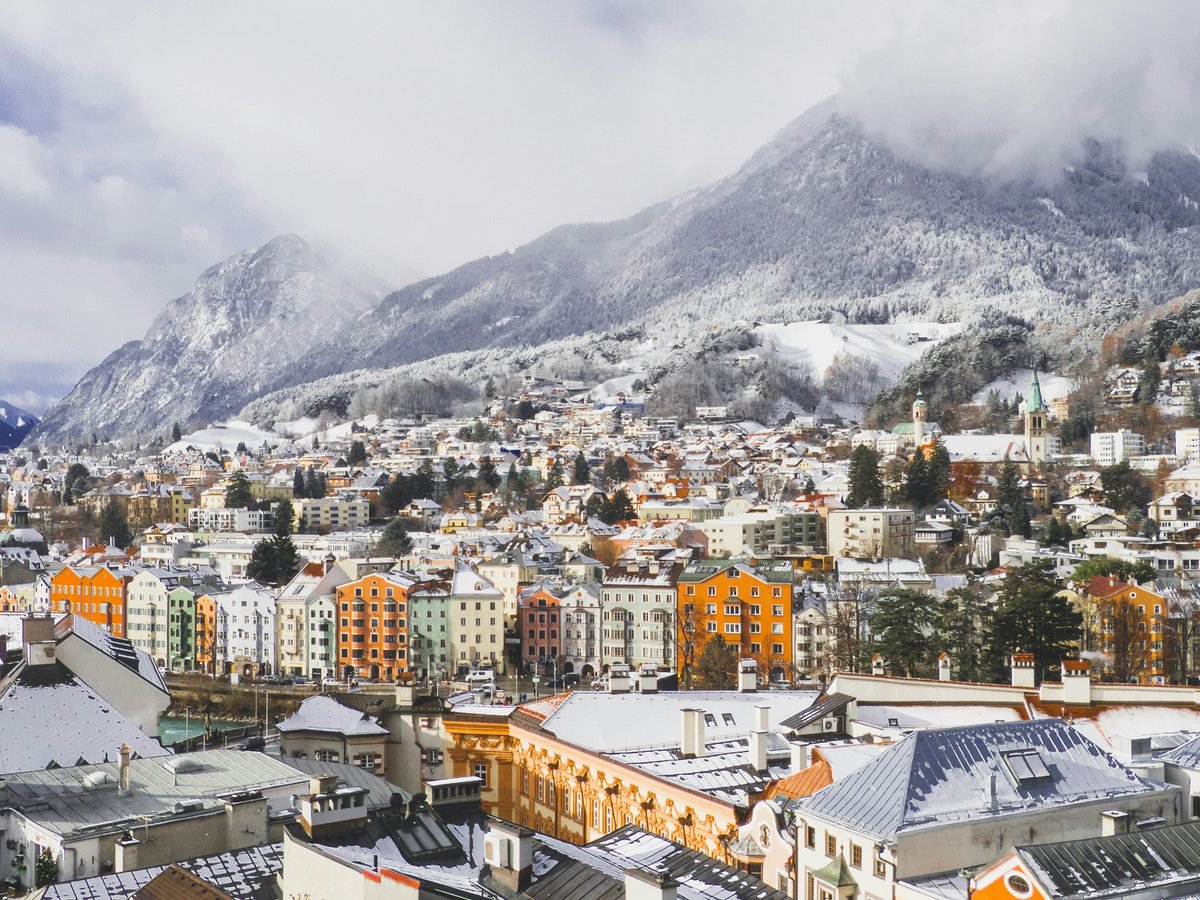
Stay in Innsbruck in July
43 hotels in the Trip.com pool for Innsbruck, from US$91 a night.
Opens Trip.com on Fri 2 Jul to Sun 4 Jul 2027; change the dates there.
July in Innsbruck is defined by afternoon thunderstorms. That might sound discouraging, but hear me out. Mornings typically dawn clear over the Nordkette, with temperatures climbing toward 25.6°C (78°F) by early afternoon, and the alpine meadows above 1,500 metres are thick with wildflowers from late June through mid-August. Then, around 2 or 3 p.m., clouds pile up against the Karwendel range and a sharp storm rolls through, often with dramatic lightning over the Inn Valley. It tends to clear within 40 minutes. Locals plan around it without thinking twice.
This is peak season for Innsbruck, and it feels like it. The Altstadt fills with tour groups by 10 a.m., hotel rates climb 30-50% above the annual average, and the Nordkettenbahnen gondola queues can stretch past 20 minutes on sunny weekend mornings. That said, the city earns the crowds. The Innsbrucker Festwochen der Alten Musik, one of Europe's most respected early-music festivals, opens in mid-July and draws serious classical audiences from across the continent. The New Orleans Festival transforms the Altstadt into an open-air stage for jazz, blues, and soul during the first weekend of the month.
Nights cool to around 14.8°C (59°F), comfortable enough to sleep without air conditioning in most hotels. Worth noting, many older Gasthöfe and budget pensions in Wilten and Pradl still don't have it, and on the occasional 30°C day you'll notice. The Inn River runs high and fast with snowmelt through mid-July, the Hofgarten is lush and shaded, and the whole city has a loose, outdoor energy that disappears entirely by November.
Why visit in July
- All alpine cable cars and high-altitude hiking trails above 2,000 metres are fully open, with the Nordkette, Patscherkofel, and Stubai Glacier lifts running daily schedules from early June through late September
- The Innsbrucker Festwochen der Alten Musik brings world-class baroque and Renaissance performances to venues like the Spanischer Saal in Schloss Ambras and the Tiroler Landestheater, typically mid-July through late August
- Daylight lasts until nearly 21:15, giving you 15+ hours of usable light for hiking, cycling along the Inn-Radweg, or lingering at outdoor tables in the Altstadt
- Alpine wildflower season peaks in the meadows above Seegrube at 1,905 metres, with gentian, alpine roses, and edelweiss visible along the Goetheweg trail
Worth knowing
- Rainfall reaches 162mm across roughly 19 days in July, the second-wettest month after May's 176mm. Most falls as intense afternoon thunderstorms that can strand you above the treeline if you started a hike too late.
- Peak-season pricing hits hard. Expect to pay 30-50% more than shoulder months like May or October for the same hotel room in Saggen or the Altstadt.
- The Altstadt corridor between the Goldenes Dachl and the Annasäule gets genuinely congested between 10 a.m. and 4 p.m., with large tour groups from bus excursions clogging the narrow Herzog-Friedrich-Strasse.
Best for
Think twice if
Warm days with cool alpine nights and frequent afternoon thunderstorms. Mornings are often clear and sunny across the Inn Valley, with cumulus clouds building against the Nordkette by early afternoon. Storms typically break between 14:00 and 16:00, drop heavy rain for 20-40 minutes, then clear. Humidity sits around 75%, which feels noticeable in the valley floor but drops quickly with altitude. The occasional heatwave pushes the Altstadt past 30°C (86°F) for 2-3 consecutive days, though this is not the norm.
Seasonal caution
- Afternoon thunderstorms in the Northern Limestone Alps can develop rapidly and produce dangerous lightning above the treeline. The Goetheweg and Hafelekar summit are particularly exposed. Check the Zamg.at forecast before any hike above 1,800 metres, and plan to be below the treeline by 13:00.
- Flash flooding along smaller tributary streams south of the Inn is possible after heavy storms. The Sill river through Wilten can rise noticeably within an hour of a major downpour.
Year-round climate
Averages from the last 5 years.
| Month | Avg high (°C) | Avg low (°C) | Rainfall (mm) |
|---|---|---|---|
| Jan | 6 | -3 | 73 |
| Feb | 9 | -1 | 59 |
| Mar | 12 | 2 | 89 |
| Apr | 15 | 4 | 89 |
| May | 19 | 9 | 176 |
| Jun | 26 | 14 | 146 |
| Jul | 26 | 15 | 162 |
| Aug | 26 | 15 | 143 |
| Sep | 22 | 11 | 142 |
| Oct | 18 | 8 | 78 |
| Nov | 11 | 1 | 100 |
| Dec | 7 | -1 | 78 |
Headline events
Innsbrucker Festwochen der Alten Musik
Mid-July through late August (opening night typically falls in the second or third week of July)
One of Europe's premier early-music festivals, running since 1976. Performances of baroque opera, Renaissance vocal music, and period-instrument orchestral works take place in historically resonant venues including the Spanischer Saal at Schloss Ambras, the Tiroler Landestheater, and the Stiftskirche Wilten. The festival draws specialist audiences from across Europe, and the best seats sell out months in advance.
Best things to do in July
Hike the Goetheweg from Hafelekar to Pfeishütte
hikingThis high-alpine traverse at 2,300 metres runs along the ridge of the Nordkette with views north into the Karwendel wilderness and south across the Inn Valley to the Stubai Alps. The trail is narrow in places with exposure, running about 7 kilometres one way. Snow patches linger into June on the north-facing sections, but by July the route is typically clear.
The trail is reliably snow-free from early July, and the alpine wildflower display along the ridge peaks in the first three weeks of the month.Booking tipTake the first Nordkettenbahnen gondola at 8:30 to beat the afternoon storms and the crowds. Buy your cable car ticket online the evening before to skip the Congress station queue.
Swim in the Baggersee or Lanser See
outdoorThe Baggersee in Rossau, about 4 kilometres east of the Altstadt, is Innsbruck's main public swimming lake with a sandy beach, diving platforms, and water that warms to around 22-24°C by mid-July. Lanser See, higher up on the Mittelgebirge terrace above Igls, is smaller, quieter, and a few degrees cooler. Both have entry fees of a few euros.
Lake temperatures reach their annual peak in late July. In June the water is still bracingly cold, and by September it's already dropping.Booking tipArrive at Baggersee before 10 a.m. on weekends. By noon the grassy areas fill up and you'll be laying your towel at the far edges.
Attend the New Orleans Festival in the Altstadt
festivalInnsbruck's New Orleans Festival fills the streets and squares of the Altstadt with live jazz, blues, gospel, and funk over 3-4 days, typically the first weekend in July. Multiple outdoor stages set up around the Goldenes Dachl and along Herzog-Friedrich-Strasse. Many performances are free. The sound of a brass band echoing off the medieval facades at dusk is hard to forget.
This is a strictly July event, typically the first weekend, with no equivalent at any other time of year.Booking tipThe ticketed headline concerts sell out. Free street performances run all day, though, and many locals consider these the highlight.
Cycle the Inn-Radweg from Innsbruck toward Hall in Tirol
cyclingThe Inn River cycle path runs flat and paved along the valley floor, and the 10-kilometre stretch east from Innsbruck to the medieval old town of Hall in Tirol is one of the most pleasant sections. Hall has its own Altstadt, a salt-mining history, and a Münzerturm with views. Rent a bike from one of several shops near the Hauptbahnhof.
July's long daylight hours (sunrise before 5:30, sunset after 21:00) give you the flexibility to ride in the cool of the early morning or early evening, avoiding the midday heat in the valley.Visit Schloss Ambras for the Festwochen concerts and the Kunstkammer
cultureSchloss Ambras, the Renaissance castle of Archduke Ferdinand II, sits above the city in the Amras neighbourhood and houses one of Europe's oldest curiosity cabinets (Kunst- und Wunderkammer). The castle gardens are at their peak in July, with formal plantings in full bloom. During the Festwochen, the Spanischer Saal hosts concerts in a room with 27 life-size Habsburg portraits and extraordinary acoustics.
The Festwochen concerts in the Spanischer Saal run from mid-July, and the castle gardens peak in July. The outdoor Innenhof performances with the castle as backdrop are a July-August exclusive.Booking tipFestwochen concerts at Schloss Ambras sell out well in advance. Book through the festival's official site 6-8 weeks before your travel dates.
Take the Patscherkofel cable car to the Botanical Alpine Garden
natureThe Alpengarten on the Patscherkofel at around 2,000 metres is one of the highest botanical gardens in Europe, with over 400 species of alpine plants. In July, the garden is at peak bloom. The views south toward the Stubai and Brenner are wide open, and the gentle trails around the garden are accessible for families.
The Alpengarten's growing season is compressed into roughly 10 weeks. July sits right in the middle of peak bloom, with gentian, edelweiss, and alpine poppies all flowering simultaneously.Evening stroll and dinner along the Innufer in Mariahilf and St. Nikolaus
diningThe north bank of the Inn between the Innbrücke and the Universitätsbrücke is lined with the colourful facades of Mariahilf, and behind them, the narrow lanes of St. Nikolaus climb the slope toward Hungerburg. Several restaurants set up riverside terraces in summer, and the light on the Nordkette at around 20:00 in July turns the rock face pink and gold. The air cools noticeably once the sun drops behind the mountains to the west.
The 21:00+ sunset and warm evening temperatures (typically still 18-20°C at 20:00) make lingering outdoors comfortable in a way that's not possible from October through April.Day trip to the Stubai Valley for waterfall hikes
day tripThe Stubaital, about 20 minutes by bus from Innsbruck's Hauptbahnhof, has several waterfall trails that peak in July when snowmelt is still feeding the upper cascades. The Grawa Wasserfall, a 180-metre wide curtain waterfall, is the most dramatic. The WildeWasserWeg trail links multiple waterfalls in a single half-day walk.
Snowmelt from the Stubai Glacier feeds the waterfalls through July, giving them significantly more volume than in August or September when the melt slows.Booking tipTake the Stubai Valley bus (line ST) from Innsbruck Hauptbahnhof. Runs every 20-30 minutes in summer. A day pass covers unlimited rides.
What to eat in July
In season: fruit
Heidelbeeren (wild blueberries)
Wild alpine blueberries ripen from mid-July in the forests above Hungerburg and along trails near Mutters. They're smaller and more intensely flavoured than cultivated varieties. The Saturday Bauernmarkt at Markthalle Innsbruck sells them by the punnet when local pickers bring them down.
On menus now
Marillenknödel
Tyrolean apricot dumplings made with fresh Wachau apricots (Marillen), which hit their short peak season from late June through mid-August. The dumplings are rolled in buttered breadcrumbs and dusted with powdered sugar. You'll find them on nearly every Gasthaus menu in July, and the difference between a version made with peak-season fruit versus the off-season frozen alternative is stark.
Kaiserschmarrn at alpine huts
This torn pancake with stewed plums is available year-round in the valley, but eating it at 2,000 metres after a morning hike on the Nordkette is a different experience entirely. The Seegrube restaurant and the Arzler Alm both serve it fresh from the pan. July's warm mornings make the hike-then-eat rhythm feel natural.
Tiroler Gröstl
Pan-fried potatoes with onions, speck (Tyrolean smoked bacon), and a fried egg on top. It's a year-round staple, but in July you'll find versions at alpine huts using locally cured speck from spring slaughter, paired with a side salad of whatever the kitchen garden produced that morning.
What to drink
Radler
A 50/50 mix of lager and lemon soda, consumed in large quantities across every Gastgarten in Innsbruck from June through August. After a warm afternoon hike, a cold Radler at the Bierstindl or the Stiftskeller is close to a local ritual. Typically costs between 3-4 euros for a half-litre.
In markets
Almkäse (alpine cheese)
Summer-pasture cheese from cows grazing above 1,500 metres has been aging since June and appears at the Markthalle and farm stands around Innsbruck from mid-July. The flavour is noticeably grassier and more complex than winter-milk cheese from the same dairies.
Regular events in July
New Orleans Festival InnsbruckFree
A multi-day open-air jazz, blues, and soul festival in the Altstadt, with stages around the Goldenes Dachl and Dom zu St. Jakob. Running since 1993, it draws around 30,000 visitors over 3-4 days. Mix of free street performances and ticketed headline shows.
First weekend in July (Thursday through Sunday)Promenadenkonzerte im HofgartenFree
Free outdoor concerts in the Hofgarten pavilion, a tradition going back to the 19th century. The program mixes military bands, folk ensembles, and light classical. Locals bring blankets and sit on the grass. Performances run in the early evening, typically starting around 19:30.
Multiple dates throughout July and August, usually Wednesday or Sunday eveningsInnsbrucker Tanzsommer
An international dance festival held at the Tiroler Landestheater and various outdoor stages, featuring contemporary dance, ballet, and physical theatre companies from across Europe. The festival typically opens in late June and runs through mid-July.
Late June through mid-JulyMarkttage in Hall in TirolFree
The medieval old town of Hall, 10 kilometres east of Innsbruck, hosts regular summer market days with regional produce, craft vendors, and street food in the Oberer Stadtplatz. Hall's Altstadt is arguably better preserved than Innsbruck's own.
Saturdays throughout JulyBest places this July
Hofgarten
parkInnsbruck's central park, originally an imperial garden, sits directly north of the Hofburg. In July the mature trees provide dense shade when the valley heats up, and the Musikpavillon hosts the Promenadenkonzerte. The lawns fill with students, families, and locals reading in the long evening light. Free entry, open until dusk.
AltstadtNordkettenbahnen and Seegrube terrace
viewpointThe Nordkette cable car departs from the Congress station in the city centre and reaches 1,905 metres at the Seegrube middle station in about 20 minutes. The terrace restaurant at Seegrube offers coffee with a view straight down into the Inn Valley. In July, the temperature at Seegrube is typically 8-10°C cooler than the valley floor, which feels like relief on hot afternoons.
HungerburgAlpenzoo
zooEurope's highest-elevation zoo at 750 metres, perched on the slope between Hungerburg and the city. Specialises in Alpine species: ibex, brown bears, wolves, bearded vultures, and alpine salamanders. The outdoor enclosures are at their most active in summer, and many of the animals have young born in spring that are visible by July.
HungerburgMarkthalle Innsbruck
marketThe covered market hall on the south bank of the Inn, near the Innrain. In July, the stalls fill with seasonal Tyrolean produce: Marillen from the Vinschgau, wild berries from the Mittelgebirge, Almkäse, fresh herbs. The food stalls inside serve everything from Tyrolean Knödel to Vietnamese pho. Best visited on Saturday mornings when the Bauernmarkt (farmer's market) sets up outside.
DreiheiligenBergisel Ski Jump and viewing platform
viewpointZaha Hadid's 2002 ski jump sits on the Bergisel hill south of the city in Wilten. The café at the top of the tower, at about 50 metres above the hill, gives a 360-degree view of the Inn Valley and the surrounding ranges. In July, with no snow on the jump, the concrete and glass structure has a stark quality against the green hills. The panorama from up there on a clear morning, before the afternoon clouds build, is one of Innsbruck's best.
WiltenStiftskirche Wilten (Wilten Basilica)
churchA rococo parish church in Wilten with an extravagantly decorated interior of pink, gold, and white stucco. Cooler inside than the July streets, and rarely crowded compared to the Dom zu St. Jakob in the Altstadt. The Wiltener Sängerknaben (Wilten Boys' Choir), one of the oldest boys' choirs in Austria, sometimes perform here during July services.
WiltenMühlauer Klamm
natureA narrow gorge on the north side of the Inn Valley, accessible from the Mühlau neighbourhood east of Hungerburg. The short trail through the gorge runs alongside a stream and stays shaded even in the middle of the day. In July, the cool air rising from the water feels 5-6°C cooler than the open valley. Not well known to tourists.
Mühlau
Your packing checklist
Tick items off as you pack. Your progress saves in this browser.
All packed — have a great trip.
Insider tips
The Hungerburg funicular (designed by Zaha Hadid, opened in 2007) is cheaper if you buy a combined ticket with the Nordkettenbahnen at the Congress station rather than purchasing each segment separately. The price difference is around 5-8 euros, and it's easy to miss if you buy at the Hungerburg intermediate station.
Skip the Altstadt restaurants between the Goldenes Dachl and the Dom for dinner. Walk 10 minutes south into Wilten or east into Pradl, where locals eat. Prices drop noticeably and the food is often better. The Gasthaus clusters along Leopoldstrasse in Wilten tend to be solid.
The Bauernmarkt at the Markthalle runs Saturday mornings, and the best produce goes early. By 10:30 the popular cheese and berry stalls are picked over. If you want Almkäse from the small-batch producers, arrive by 8:30.
For a quiet swim without the weekend crowds at Baggersee, try the Natterer See, about 8 kilometres southwest toward Natters. It's smaller, has fewer facilities, and the water is cooler, but on a hot July afternoon the trade-off is worth it.
Avoid these mistakes
- Starting a high-altitude hike after 11:00. Afternoon thunderstorms build fast in the Northern Limestone Alps, and being exposed on a ridge at 2,300 metres during an electrical storm is genuinely dangerous. Experienced locals aim to be back below the treeline by 13:00 in July.
- Packing only summer clothes. The valley floor might be 26°C, but the Hafelekar summit station sits at 2,334 metres and regularly dips below 10°C even in July. Tourists in shorts and sandals at Seegrube, shivering and trying to enjoy the view, are a daily sight.
- Assuming the Altstadt restaurant terraces are representative of Innsbruck dining. They cater to day-trippers, and the prices reflect it. The best Tyrolean cooking happens in the neighbourhoods, not on Herzog-Friedrich-Strasse.
Practical tips for July
Book Festwochen der Alten Musik tickets by May if you want specific performances. The Spanischer Saal concerts at Schloss Ambras sell out first. The Innsbruck Card (24, 48, or 72 hours) covers the Nordkettenbahnen, Alpenzoo, Schloss Ambras, the Bergisel tower, and city buses, and typically pays for itself within 2 major attractions. Buy it at the tourist office on Burggraben in the Altstadt. For hiking, download the Zamg.at weather app rather than relying on general forecasts. It gives valley-by-valley alpine weather with thunderstorm probability by time of day, which is critical for planning July hikes in the Northern Limestone Alps. Most restaurants in the Altstadt and Saggen don't require reservations for lunch, but dinner terraces along the Innufer fill by 18:30 on warm evenings. Walk-ins after 19:00 on Fridays and Saturdays are difficult at popular spots. Tipping in Innsbruck follows Austrian convention: round up 5-10%, handed to the server directly rather than left on the table. Sunday closures are still real. Most shops outside the Hauptbahnhof and the Altstadt tourist strip are closed on Sundays, and some smaller Gasthäuser in the residential neighbourhoods close for Ruhetag (rest day) on Monday or Tuesday.
FAQ
Is July a good time to visit Innsbruck?
July is one of Innsbruck's 3 best months for visitors, along with June and September. All alpine lifts and high-altitude trails are open, the Festwochen der Alten Musik starts mid-month, and daylight runs past 21:00. The trade-offs are real though. Expect afternoon thunderstorms on roughly 19 of 31 days (162mm total rainfall), peak-season hotel prices 30-50% above average, and congested streets in the Altstadt. If you can tolerate brief daily rain and higher costs, July delivers Innsbruck at its most alive.
What is the weather like in Innsbruck in July?
Average highs reach 25.6°C (78°F) and lows sit around 14.8°C (59°F), with humidity around 75%. Mornings are typically sunny and warm, with clouds building against the Nordkette by early afternoon and thunderstorms breaking between 14:00 and 16:00 most days. The storms are usually brief but intense, with heavy rain and occasional hail. At altitude, temperatures drop roughly 6°C per 1,000 metres. So the Hafelekar at 2,334 metres might be 12°C when the city is 26°C.
Is Innsbruck crowded in July?
Yes. July is one of the two peak tourist months alongside August. The Altstadt, the Nordkettenbahnen, and Schloss Ambras all see their highest visitor numbers. Day-trip buses from Munich (90 minutes away) add to the midday congestion around the Goldenes Dachl. That said, the crowds thin noticeably once you step 10 minutes outside the Altstadt into Wilten, St. Nikolaus, or Hötting. The mountains absorb people quickly too. Beyond the Seegrube terrace, the trails themselves rarely feel crowded.
Is it safe to hike in Innsbruck in July?
Valley and forest trails are safe with normal precautions. High-alpine routes above 2,000 metres require awareness of afternoon thunderstorms, which can develop within 30-45 minutes in the Northern Limestone Alps. Lightning above the treeline is a genuine hazard. Check Zamg.at for the daily thunderstorm forecast, start early (by 7:00-8:00 for longer routes), and aim to descend below exposed ridgelines by 13:00. The Goetheweg and the Hafelekar summit area are particularly exposed.
What should I book in advance for Innsbruck in July?
Festwochen der Alten Musik tickets should be booked by May for popular performances, especially anything at the Spanischer Saal in Schloss Ambras. Hotels within walking distance of the Altstadt fill up 4-6 weeks ahead. Cable car tickets for the Nordkettenbahnen can be purchased online the day before, which saves 10-15 minutes of queue time at the Congress station. Restaurants rarely require advance booking for lunch, but dinner reservations for terrace tables on Friday and Saturday evenings are worth making.
Find a flight to Innsbruck
Live fares to Innsbruck appear here once cookies are accepted.
Last verified by automated review (v1.7.2) on . What is automated review?