Stay in Innsbruck in February
43 hotels in the Trip.com pool for Innsbruck, from US$91 a night.
Opens Trip.com on Fri 5 Feb to Sun 7 Feb 2027; change the dates there.
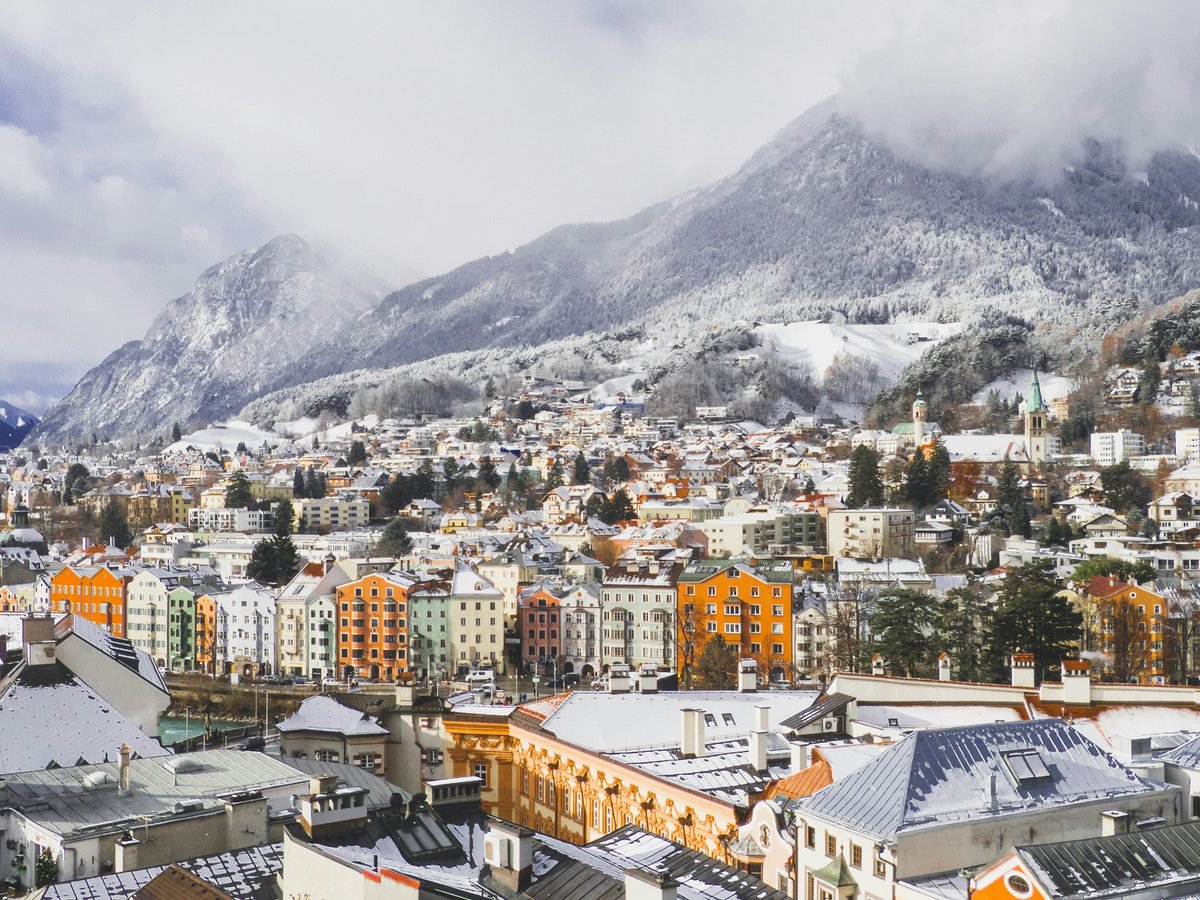
February in Innsbruck is peak ski season, full stop. The Nordkette range rises straight out of the Altstadt, and on a clear morning the sight of skiers carving turns above Herzog-Friedrich-Strasse while you nurse a Melange at street level is the kind of thing that only a handful of cities on earth can offer. Average highs sit around 5°C (41°F) at city elevation, but nights drop to around -4°C (25°F), and at the top of the Nordkettenbahnen, at 2,300m, expect temperatures 10-15 degrees colder than the valley floor. The snow in surrounding resorts, from Axamer Lizum to Patscherkofel and the Stubai Valley, tends to be at its most reliable. That said, this is also the month when Austrian school holidays (Semesterferien) fall, typically in mid-February, and accommodation prices reflect it.
If you are not here to ski, February still has genuine pull. Tyrolean Fasnacht, the region's centuries-old carnival tradition, brings masked processions and elaborately carved wooden figures through villages around Innsbruck throughout the month. The Wampelerreiten in Axams, about 15km southwest, is one of the strangest spectacles in the Alps. Inside the city, the Tiroler Landesmuseum Ferdinandeum and the Hofburg are quiet enough to linger in without jostling. The winter light in the Inn Valley, when it breaks through the clouds, turns the Karwendel peaks a cold shade of pink that photographs poorly but stays with you.
Mind you, there will be grey days. Expect about 10 rainy or snowy days across the month and 59mm of precipitation, which at city elevation often arrives as wet snow or cold drizzle. The air smells of woodsmoke from Hötting and St. Nikolaus in the evenings, and the cobblestones in the Altstadt get slick enough to demand real caution. February rewards the prepared visitor, not the optimistic one.
Why visit in February
- Nordkette, Axamer Lizum, Patscherkofel, and Stubai Valley all have reliable snow cover, and the Nordkettenbahnen cable car connects the Altstadt to 2,300m of skiable terrain in 20 minutes
- Tyrolean Fasnacht brings distinctive masked processions to villages within 15-30km of the city, including the Wampelerreiten in Axams and the Mullerlaufen in Thaur
- Museums and indoor attractions like the Ferdinandeum and Hofkirche are genuinely uncrowded compared to summer months, when 3-4x as many tourists pass through
- Precipitation tends to be relatively low in February at around 59mm, and at altitude nearly all of it falls as snow, maintaining solid base depth across the surrounding ski areas
Worth knowing
- Accommodation prices run 30-50% above the annual average, and during Semesterferien week in mid-February they reach near-December peaks
- Daylight hours are still short. Sunrise is around 7:15 and sunset around 17:30, which limits afternoon skiing and outdoor sightseeing after about 16:00
- Nights regularly drop below freezing, and icy sidewalks in the Altstadt and along the Inn river require genuine care, particularly after dark
- The Inn Valley's geography traps low cloud and fog. You might get 2-3 consecutive days where the mountains vanish entirely behind grey, and the city feels damp and enclosed
Best for
Think twice if
February sits in the heart of Innsbruck's winter. The valley floor drops well below freezing at night, and daytime highs of around 5°C (41°F) feel colder than the number suggests when wind funnels down the Inn Valley. Precipitation is relatively low at 59mm across about 10 wet days, but at higher elevations nearly all of it falls as snow. Humidity averages 70%. Clear days bring sharp, clean air and startlingly good visibility of the Nordkette. Grey days feel damp and enclosed, with low cloud sitting in the valley like a lid.
Seasonal caution
- Nights regularly drop below 0°C (32°F) at city elevation, and at ski-area altitude (1,800-2,300m) temperatures of -10°C to -15°C (5°F to 14°F) are common
- Icy sidewalks and cobblestones are a genuine slip hazard, especially in the Altstadt after dark. The city salts major paths but side streets and the Inn river promenade freeze over regularly
- Foehn winds can arrive without much warning, bringing rapid temperature swings of 10-15°C in a few hours and strong gusts through the valley. These are disorienting and can cause headaches
- Avalanche risk in backcountry areas is real in February. If you venture off-piste beyond the groomed resort boundaries, check the Lawinenwarndienst Tirol bulletin daily
Year-round climate
Averages from the last 5 years.
| Month | Avg high (°C) | Avg low (°C) | Rainfall (mm) |
|---|---|---|---|
| Jan | 6 | -3 | 73 |
| Feb | 9 | -1 | 59 |
| Mar | 12 | 2 | 89 |
| Apr | 15 | 4 | 89 |
| May | 19 | 9 | 176 |
| Jun | 26 | 14 | 146 |
| Jul | 26 | 15 | 162 |
| Aug | 26 | 15 | 143 |
| Sep | 22 | 11 | 142 |
| Oct | 18 | 8 | 78 |
| Nov | 11 | 1 | 100 |
| Dec | 7 | -1 | 78 |
Headline events
Tyrolean Fasnacht
Throughout February, with major processions on weekends and climaxing on Faschingsdienstag (Shrove Tuesday, typically late February or early March depending on Easter)
Centuries-old carnival tradition across Tyrol, with masked processions featuring carved wooden Larven (masks), whip-cracking Schleicher, and wild figures like the Wampeler. The processions in villages surrounding Innsbruck, particularly the Wampelerreiten in Axams and Mullerlaufen in Thaur, draw visitors from across the German-speaking world. Each village has its own distinct characters and rituals dating back to pre-Christian traditions.
Best things to do in February
Skiing the Nordkette directly from the city center
winter_sportsThe Nordkettenbahnen cable car departs from Congress station and reaches the Seegrube mid-station at 1,905m in about 20 minutes. From there, the Hafelekar summit station sits at 2,256m. The off-piste terrain on the Nordkette is steep and demanding, with gradients up to 70% on the Karrinne run. Even non-skiers ride up for views across the Inn Valley and the Stubai Alps to the south.
February's reliable snowpack covers the steep Nordkette terrain that needs deep snow to be safely skiable, and conditions tend to be more stable than in late-season MarchBooking tipBuy your cable car ticket online the evening before to skip the ticket-window queue, which backs up after 09:00 on clear mornings
Attending a Tyrolean Fasnacht procession
culturalVillages within 15-30km of Innsbruck hold distinct carnival processions throughout February. The Wampelerreiten in Axams features padded straw figures (Wampeler) being knocked down by whip-cracking Roller. The Mullerlaufen in Thaur runs on a 5-year cycle. Each village's Larven (hand-carved wooden masks) are passed down through families, some dating back over 200 years.
Fasnacht processions are concentrated in February, building toward Faschingsdienstag (Shrove Tuesday), and most of the major village events happen on February weekendsBooking tipCheck the Tirol tourism website for the exact procession schedule, which is published each December. Arrive 30-45 minutes early to get a spot along the route in smaller villages like Axams
Visiting the Bergisel Ski Jump
sightseeingThe Bergisel ski jump, redesigned by Zaha Hadid in 2002, stands 47m tall at the southern edge of Innsbruck. The observation platform at the top offers 360-degree views of the city, the Nordkette, and the Wipp Valley stretching toward the Brenner Pass. The jump hosted Olympic ski jumping in 1964 and 1976. A cafe at the summit level serves coffee at 746m elevation.
The snow-covered Nordkette backdrop is at its most photogenic in February, and the jump is quieter than in January when the Four Hills Tournament crowds are still aroundWinter hiking to Lanser Alm
outdoorThe Lanser Alm sits at roughly 1,000m above the village of Lans, about 7km south of the city center. The winter trail from Lans takes around 45 minutes and is typically groomed. The hut serves Kaiserschmarrn and Tiroler Gröstl, and its south-facing terrace catches the midday sun. The smell of woodsmoke from the kitchen hits you 5 minutes before you see the hut.
February's gradually lengthening days give enough light for an afternoon hike, and the trail's snowpack is usually firm and well-trodden by this point in winterExploring the Hofkirche and its 28 bronze statues
culturalThe Hofkirche on Universitätsstrasse houses Emperor Maximilian I's cenotaph, flanked by 28 larger-than-life bronze statues known locally as the Schwarze Mander (Black Men). The figures, cast between 1502 and 1555, include King Arthur and Theodoric the Great. The Silver Chapel, built in 1578 for Archduke Ferdinand II, connects via a side passage.
February visitor numbers are a fraction of summer's, so you can stand with the Schwarze Mander without a tour group blocking your line of sightSoaking at Aqua Dome in Längenfeld
wellnessThe Aqua Dome thermal spa in Längenfeld lies about 55km southwest of Innsbruck in the Ötztal valley. Three elevated outdoor bowl-shaped pools sit at around 1,865m, with water temperatures of 34-36°C. The views from the pools take in the snow-covered Ötztal peaks. A half-day visit typically runs 4-5 hours.
Sitting in 36°C water while the air temperature hovers near -5°C at altitude and snow falls around you is a February-specific contrast the warmer months cannot matchBooking tipBook a weekday morning slot to avoid the weekend crowds, especially during Semesterferien when families from across Austria descend on the Ötztal
What to eat in February
On menus now
Tiroler Gröstl
Pan-fried potatoes with sliced beef or pork, onions, and a fried egg on top. It started as a way to use leftover Sunday roast, and it's the kind of heavy, salt-and-fat fuel that makes sense after a day at -10°C on the Nordkette. Most huts on the ski areas serve their own version. The potatoes should be crispy, not soft.
Kaiserschmarrn
Shredded thick pancake dusted with powdered sugar, served with Zwetschgenröster (plum compote) on the side. The version at Lanser Alm, about 7km south of Innsbruck at 1,000m, is made in a cast-iron pan over a wood fire. The texture should be torn and slightly caramelized, not uniform.
Speckknödel
Dense bread dumplings studded with Tyrolean Speck (dry-cured, lightly smoked ham), served either in a clear beef broth or with sauerkraut. The Speck is typically from the Ötztal or Stubai Valley, cured for 22 weeks or longer. On a cold February evening in the Altstadt, a bowl of Knödelsuppe warms from the inside out.
What to drink
Glühwein and Punsch
Hot mulled wine and fruit punch sold from stands in the Altstadt and at ski-area base stations through February. The better versions use Austrian red from Burgenland rather than bulk wine, and you'll notice the difference. The Punsch (often made with rum and orange juice) tends to be sweeter and stronger than the Glühwein.
Festival food
Faschingskrapfen
Tyrolean carnival doughnuts filled with apricot jam (Marillenmarmelade), dusted with powdered sugar, and fried until the pale ring around the middle stays visible. Bakeries across Innsbruck compete on their Krapfen from mid-January through Faschingsdienstag, and the scent of hot oil and sugar drifts out of places like Bäckerei Ruetz starting around 06:00.
Regular events in February
Tiroler Landestheater winter program
The Tiroler Landestheater on Rennweg runs opera, ballet, and drama performances throughout February. The 1967 building seats about 800 and the repertoire typically includes at least one Mozart opera during the winter season.
Multiple performances weekly, schedules published at the start of each seasonInnsbruck Ice Skating at Olympiaworld
The open-air rink at the 1976 Olympic complex on Olympiastrasse is open for public skating sessions through February. Skate rental is available on-site for a few euros. The rink sits below the Bergisel ski jump, which is visible from the ice.
Daily sessions throughout February, typically 10:00-12:00 and 14:00-17:00Wampelerreiten in AxamsFree
The headline Fasnacht event in Axams, about 15km southwest of Innsbruck. Straw-padded Wampeler figures lumber through the village while Roller crack whips and try to knock them over. The event draws several thousand spectators to a village of 5,800 people. Free to watch from the roadside.
One Saturday in February, exact date varies by yearBest places this February
Nordkettenbahnen (Congress station to Hafelekar)
cable car and viewpointCable car from the city center to 2,256m in about 20 minutes. The Seegrube mid-station at 1,905m has a panorama restaurant and the start of ski runs. On clear February days the visibility from Hafelekar extends to the Zugspitze, 35km north.
Innsbruck Center to NordketteAltstadt and Herzog-Friedrich-Strasse
historic districtThe medieval old town centers on Herzog-Friedrich-Strasse, anchored by the Goldenes Dachl (Golden Roof), a 2,657-tile gilded copper balcony built in 1500 for Emperor Maximilian I. In February the cobblestone streets are quieter than summer, though the ice underfoot demands attention. The Stadtturm (city tower) at 51m offers rooftop views.
Old TownBergisel Ski Jump
landmarkZaha Hadid's 2002 redesign of the Olympic jump at 746m, with a panoramic cafe and observation deck. The Four Hills Tournament takes place here each January 4, but in February the venue is open for regular visits without the tournament crowds.
BergiselTiroler Landesmuseum Ferdinandeum
museumThe Ferdinandeum on Museumstrasse houses Tyrolean art from the Gothic period onward, plus archaeological and natural history collections. The highlight is the collection of late-Gothic altarpieces from churches across Tyrol. February crowds are thin enough to linger.
InnrainHofburg Innsbruck
palace and museumThe Imperial Palace on Rennweg, expanded by Maria Theresa in the 1750s, contains the Giant's Hall (Riesensaal) with its ceiling frescoes and 18th-century portraits. The state rooms are smaller and more personal in scale than Vienna's Hofburg.
Old TownHofkirche
church and museumThe Court Church on Universitätsstrasse, built 1553-1563, holds the cenotaph of Maximilian I and the 28 oversized bronze statues (Schwarze Mander). The Silver Chapel, accessed via a side passage, contains the tomb of Archduke Ferdinand II and his wife Philippine Welser.
Old TownAxams village
villageA village of about 5,800 people, 15km southwest of Innsbruck at 874m. It is home to the Axamer Lizum ski area (host of the 1964 and 1976 Olympic alpine events) and the February Wampelerreiten Fasnacht procession. The village has a handful of traditional Gasthäuser.
15km southwest of Innsbruck
Your packing checklist
Tick items off as you pack. Your progress saves in this browser.
All packed — have a great trip.
Insider tips
The Seegrube Panorama restaurant at 1,905m on the Nordkette serves better food than most mountain restaurants in Tyrol, and the sunset from the terrace, when the Stubai Alps turn orange, is worth timing your last cable car ride around. The last car down runs at 17:30 on most February days.
If you're here during Fasnacht, the smaller village processions in Kematen, Völs, and Götzens are often more intimate and less crowded than the well-known Axams events. The carved masks are equally extraordinary, and the Schnapps flows more freely when there are fewer outsiders.
The IVB Tageskarte (day ticket) covers all city buses and trams, including the line to Igls at the base of Patscherkofel. The Nordkettenbahnen requires a separate ticket, but combined passes exist and tend to save about 15% over buying individually.
Café Central on Gilmstrasse has been operating since 1878 and still pulls a proper Melange. The dark-paneled interior feels like a Viennese Kaffeehaus transplanted to the Inn Valley. It fills up after 15:00 on weekends.
The Galerie im Taxispalais on Maria-Theresien-Strasse hosts rotating contemporary art exhibitions with free admission and is overlooked by nearly every tourist in the city. Worth 30-45 minutes on a grey afternoon.
Avoid these mistakes
- Assuming city-elevation conditions tell you anything about conditions at 2,000m. Innsbruck's streets might be wet and grey with 5°C drizzle while the Nordkette has 2 meters of packed powder and blue sky. Always check the resort webcams before deciding to skip skiing.
- Booking accommodation without checking the exact dates of Semesterferien. The school holiday week shifts each year and varies by Austrian province (Bundesland). Rates during that single week can reach double the weeks on either side.
- Wearing smooth-soled shoes in the Altstadt. The cobblestones on Herzog-Friedrich-Strasse and around the Goldenes Dachl freeze overnight and stay icy until mid-morning, even when the city has salted the main roads.
- Trying to drive to ski resorts during Semesterferien Saturday changeover. The A13 Brenner motorway and the road to Stubai Valley can gridlock from 08:00 to 11:00 as weekly rental guests arrive and depart simultaneously. Take the train or leave before 07:00.
Practical tips for February
Book ski passes for the Olympia SkiWorld Innsbruck online at least 2 days in advance during Semesterferien for a small discount, and check whether your hotel is a partner property that bundles lift access into the room rate. The Innsbruck Card (24/48/72-hour versions starting around EUR 53) covers the Nordkettenbahnen, Bergisel, Ferdinandeum, and most museums, plus city transport, and it typically pays for itself within 2 days if you're mixing skiing with culture. The IVB bus network connects the city to Igls, Mutters, and Natters, but for Stubai Valley or Axamer Lizum you'll need the regional Stubai shuttle or a car. Carry cash for smaller mountain huts above 1,500m, as most Almhütten remain cash-only even as Altstadt restaurants take cards. The Hauptbahnhof has lockers if you want to ski the morning and explore the city in the afternoon without dragging gear through the Altstadt.
FAQ
Is February a good month to ski in Innsbruck?
February is typically the most reliable month for snow cover across the Innsbruck-area resorts. Axamer Lizum, Patscherkofel, and the Stubai Glacier all tend to have full coverage, and the Nordkette's steep terrain usually carries enough base depth for its demanding off-piste runs. The trade-off is Semesterferien, which brings noticeably busier slopes for about a week in mid-February.
How cold does it get in Innsbruck in February?
At city elevation (574m), average highs sit around 5°C (41°F) and overnight lows drop to about -4°C (25°F). At ski-area altitude above 2,000m, temperatures of -10°C to -15°C are common. Wind chill on exposed ridgelines like the Hafelekar can make it feel significantly colder, especially when Foehn gusts push through the valley.
What is Tyrolean Fasnacht and where can I see it?
Fasnacht is the Tyrolean carnival tradition, with roots likely stretching back to pre-Christian winter rituals. Villages around Innsbruck hold their own processions featuring hand-carved wooden masks (Larven), whip-cracking figures, and characters like the straw-padded Wampeler in Axams. The major events fall on February weekends, building toward Faschingsdienstag (Shrove Tuesday). Axams (15km), Thaur (8km), and Götzens (10km) are the most accessible from Innsbruck.
Do I need a car to reach ski areas from Innsbruck?
Not for the Nordkette, which connects from the city center by cable car in 20 minutes. For Patscherkofel, the IVB bus to Igls takes about 20 minutes from the center. Axamer Lizum and the Stubai Valley are easier with a car, though shuttle buses run during ski season from Innsbruck Hauptbahnhof. If you're visiting during Semesterferien Saturday changeover, the shuttle is genuinely faster than driving.
Find a flight to Innsbruck
Live fares to Innsbruck appear here once cookies are accepted.
Last verified by automated review (v1.7.2) on . What is automated review?