Best Time to Visit Innsbruck, by Season
Innsbruck's average highs swing from 5.9°C in January to 25.7°C in June, a 29-degree gap that makes the calendar your most consequential travel decision. This guide walks every month's trade-off between weather, crowds, and price, naming the single best window for five kinds of traveller.
Published
1 Innsbruck Swings 29 Degrees Between January and June, and Most Visitors Pick the Wrong End
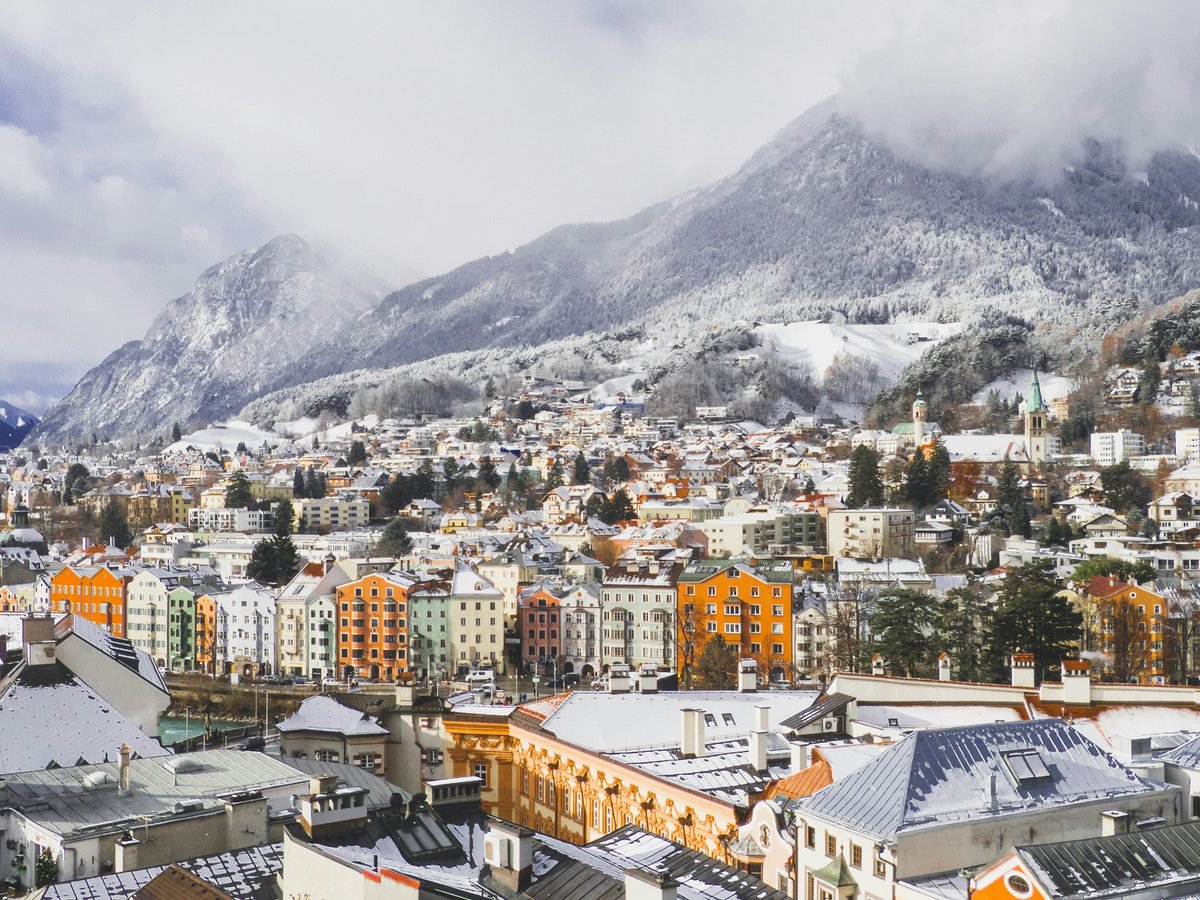
January in Innsbruck bites at 5.9°C average highs and -3.5°C lows that numb your fingers on the walk from the Hauptbahnhof. The Altstadt cobblestones carry a film of frost, and the Nordkette above the city is a wall of white that seems close enough to touch from the Maria-Theresien-Straße. Come back in June. The same Altstadt sits under 25.7°C highs, the Inn runs opaque glacial green, and cafe tables spill across every square.
That spread, 29 degrees from January's -3.5°C average low to June's 25.7°C average high, makes Innsbruck one of the most calendar-sensitive cities in the Alps. February warms to 9.3°C highs but still drops to -1.0°C overnight. By May, highs reach 19.0°C with lows of 8.7°C. Three temperature bands emerge from the five-year daily-observation averages. Summer holds flat from June through August at 25.7°C, 25.6°C, and 25.6°C. Winter clusters December through February at 6.9°C, 5.9°C, and 9.3°C. The shoulder months of May and September through October sit in their own corridor between 18.2°C and 22.0°C.
Most Alpine guides flatten Innsbruck into "ski or summer." That framing hides the shoulder months, which likely deliver the strongest value for three of the five traveller types this guide covers. Worth noting is the gap between October's 18.2°C and November's 10.5°C, nearly 8 degrees and the steepest month-on-month drop in the calendar. December's 6.9°C high and March's 12.2°C sit closer to each other than either sits to May's 19.0°C, which tells you how fast spring arrives in the Inn valley once it finally starts.
This guide walks through all twelve months against those averages, then delivers a specific verdict for skiers, hikers, budget travellers, families, and visitors who want Innsbruck to themselves. September's 22.0°C, October's 18.2°C, and May's 19.0°C cluster inside a 3.8-degree band that determines three of the five verdicts.
That spread, 29 degrees from January's -3.5°C to June's 25.7°C, makes Innsbruck one of the most calendar-sensitive cities in the Alps.
2 December Through February Belongs to Skiers, and January's -3.5°C Lows Are the Price of Entry
Frost coats the wrought-iron railings along the Altstadt before sunrise in December, and the smell of Glühwein from the Christkindlmarkt hangs in 6.9°C air thick enough to hold it. December's average low of -1.4°C sounds moderate for an Alpine winter, and for the valley floor it is. The mountains surrounding Innsbruck receive far heavier snowfall, which makes the city itself walkable even in deep winter if you accept short days and cold hands.
January is the cold core. Average highs reach only 5.9°C, and the overnight low of -3.5°C is the lowest monthly figure in Innsbruck's calendar. For skiers, that is the point. The Nordkette cable car runs from the city centre to above the treeline, a proximity that no other major Alpine city matches. Innsbruck hosted the Winter Olympics in 1964 and again in 1976, and the ski infrastructure around the city still reflects that legacy.
February brings a shift you can feel. Highs climb to 9.3°C, a 3.4-degree gain over January's 5.9°C. Lows rise to -1.0°C. Still cold, but the lengthening daylight changes the character of the city. February tends to offer better value than January for visitors who tolerate marginally softer snow conditions at lower elevations.
That said, February's -1.0°C overnight lows still mean frozen puddles on the Rennweg at dawn and visible breath in the Altstadt past sunset. The trade-off across the three winter months is clear. Accommodation in late December commands the highest rates of the year, driven by Christmas and New Year. January through mid-February delivers the coldest conditions and the most reliable snow. Late February's 9.3°C highs begin the thaw that erodes lower-elevation conditions. If you are not skiing, December gives you the Christkindlmarkt at -1.4°C lows, and January and February give you the lowest average highs of any season at 5.9°C and 9.3°C.
3 March and April Are the Months Innsbruck Would Rather You Forgot
Dirty snow sits in grey ridges along the Maria-Theresien-Straße in March, and the mountains above Innsbruck show that ragged look of white above the treeline and brown below. March averages 12.2°C highs and 2.0°C lows. Too warm for reliable ski conditions in the valley, too cold for anything resembling outdoor comfort.
April improves the numbers without solving the problem. Highs reach 14.8°C, lows sit at 4.2°C. That is warm enough for a jacket-free afternoon when the sun holds, but the Inn valley's spring weather is famously changeable. You might get three perfect April days at 14.8°C and then two that feel closer to November's 10.5°C. The mountains still carry heavy snow above the treeline while the valley floor alternates between sun and cold rain.
The sound of meltwater runs through every gutter in March and April across Innsbruck. March at 12.2°C and April at 14.8°C sit in the gap between December's 6.9°C winter and May's 19.0°C spring, and neither month resolves the tension between those two seasons.
To be fair, April's 14.8°C beats March's 12.2°C by 2.6 degrees, and that margin matters for walking comfort. April's overnight low of 4.2°C stays safely above freezing, while March's 2.0°C still flirts with frost. But neither month comes close to May at 19.0°C highs and 8.7°C lows. May sits in a different thermal band entirely.
The honest take on March and April is that they suit Innsbruck residents and return visitors who know the city well enough to fill a trip around indoor attractions and early-season valley walks. November at 10.5°C highs and 1.3°C lows is the only month that competes for the weakest-window title. March at 12.2°C and April at 14.8°C beat November's 10.5°C by margins of 1.7 and 4.3 degrees.
4 May Averages 19°C and Nobody Is There Yet
The outdoor tables reappear along the Rennweg in May. The smell of espresso mixes with cut grass from the Hofgarten, and for the first time since September you can sit outside at noon without watching the clock. May's average high of 19.0°C and low of 8.7°C place it in a different category from the months on either side. April's 14.8°C feels like waiting. June's 25.7°C brings full summer. May is the hinge.
What makes May the strongest shoulder month is the spacing. The 4.2-degree jump from April's 14.8°C to May's 19.0°C is the second-largest month-on-month gain in the calendar, behind only the 6.7-degree leap from May's 19.0°C to June's 25.7°C. You notice it. Morning lows of 8.7°C mean a light layer at breakfast, shed by mid-morning. The hiking trails above Innsbruck open steadily through May as the snowline retreats upward.
The crowd calculus reinforces the temperature case. Innsbruck's summer tourist peak runs from late June through August, when highs hold between 25.6°C and 25.7°C and the Altstadt fills with guided groups. May sits before that wave arrives. Hotels tend to price below peak, cable cars operate at lower volume, and the mountain restaurants above the city have tables free.
Mind you, May comes with a trade-off. The 19.0°C average hides wider day-to-day swings than summer's plateau. A cold front can drag an afternoon well below the mean, and you might lose a full day to rain that July at 25.6°C would rarely deliver. June's 25.7°C comes with less variance and longer daylight. If you need guaranteed heat for outdoor plans, June is safer. If you accept the occasional cool day in exchange for lower prices and thinner crowds, May at 19.0°C is the stronger move. September at 22.0°C highs and 11.3°C lows is May's only real competitor, running 3.0 degrees warmer.
May's 19.0°C sits above the comfort threshold for full-day sightseeing, and the summer crowds have not yet arrived.
5 June Through August Lock In at 25.6°C, and So Does Your Bargaining Power
Heat builds through the morning in Innsbruck in July. By noon the stone facades of the Altstadt radiate warmth back into the narrow lanes, and you can feel the glacial chill of the Inn from the bridge without touching the water. June, July, and August post average highs of 25.7°C, 25.6°C, and 25.6°C, a plateau so flat that picking between the three on temperature alone is pointless.
The differences live in the lows. June drops to 13.7°C overnight. July reaches 14.8°C. August is the warmest at night, 14.9°C, which makes outdoor evenings slightly more comfortable in late summer. In practice, the gap between June's 13.7°C and August's 14.9°C is 1.2 degrees. Not a meaningful planning variable.
What separates the summer months is everything except temperature. Late June marks the start of Innsbruck's highest-demand period. The Altstadt fills with groups following the Golden Roof route. The Nordkette cable car builds queues through the morning. Restaurant tables that sat empty in May at 19.0°C now need booking at 25.7°C. This pattern holds through July and into mid-August before tapering as European school holidays end.
Early June opens a brief window where summer temperatures have already arrived but peak-season density has not quite followed. Highs sit at 25.7°C and lows at 13.7°C. Late August offers a mirror on the far side, 25.6°C highs and the year's warmest lows at 14.9°C as crowds thin. That said, both margins are narrow, perhaps ten days each.
The core summer trade-off is simple. Innsbruck gives you its best temperatures from June through August, 25.6°C to 25.7°C highs with lows that never drop below 13.7°C. You pay peak rates and share the city with the year's largest crowds. Early June and late August bracket the peak at the same 25.6°C to 25.7°C highs, with overnight lows of 13.7°C and 14.9°C.
6 September Holds at 22°C While October Drops to 18.2°C, Then the Floor Falls Out
The light shifts first. September mornings in the Inn valley arrive with a gold quality that July's high noon never matches, and the ridges above Innsbruck carry their first dusting of fresh snow on the peaks while the city below holds at 22.0°C average highs. September is the second-best shoulder month after May, and you could argue it is the better of the two.
The numbers support the case. September's average low of 11.3°C runs 2.6 degrees warmer than May's 8.7°C, which means more comfortable mornings and warmer evenings. Highs of 22.0°C sit 3.0 degrees above May's 19.0°C. You get near-summer warmth with post-summer pricing. The hiking trails above Innsbruck still tend to be fully open, and they carry a fraction of their July foot traffic.
October drops noticeably. Average highs fall to 18.2°C, a 3.8-degree decline from September's 22.0°C. Lows reach 7.9°C, cold enough that morning walks along the Inn call for layers. But 18.2°C is still a functional sightseeing temperature, well above April's 14.8°C and far above November's 10.5°C. October is likely the last month in the calendar where you can comfortably spend a full day outdoors in Innsbruck without cold becoming a factor.
November is where the floor falls out. Highs drop to 10.5°C, lows to 1.3°C. That is a 7.7-degree collapse in highs from October's 18.2°C. The Christkindlmarkt stalls do not typically open until late November, so the first three weeks of the month offer neither autumn warmth nor winter atmosphere. November at 10.5°C highs and 1.3°C lows is the weakest month for a leisure visit to Innsbruck. December at 6.9°C is colder, but the Christmas markets give it purpose.
From September's 22.0°C to November's 10.5°C, Innsbruck sheds 11.5 degrees of average high temperature in eight weeks.
From September's 22.0°C to November's 10.5°C, Innsbruck sheds 11.5 degrees of average high temperature in eight weeks.
7 The Verdict: One Best Window for Five Kinds of Innsbruck Traveller
Woodsmoke in the December Altstadt at 6.9°C. Cowbells above the treeline in June at 25.7°C. An empty Maria-Theresien-Straße on a Tuesday in November at 10.5°C. Each version of Innsbruck is real. Not all of them merit a flight.
For skiers, January is the answer. Average highs of 5.9°C and lows of -3.5°C deliver the coldest month and the most reliable snow conditions around Innsbruck. February at 9.3°C highs and -1.0°C lows offers a slightly milder alternative with marginally less predictable conditions at lower elevations. December's 6.9°C highs and -1.4°C lows compete on cold, but Christmas-week pricing dilutes the value. The first two weeks of January are the core ski window.
For hikers and outdoor visitors, September at 22.0°C highs and 11.3°C lows is the pick over May. September runs 3.0 degrees warmer in the highs and 2.6 degrees warmer in the lows than May at 19.0°C and 8.7°C. Trails tend to be fully open and drier than in spring. May is the runner-up, and the stronger choice if your schedule cannot stretch to September. Both outperform the summer plateau of 25.6°C to 25.7°C by trading a few degrees of warmth for far fewer people on the trails.
For budget travellers, the first two weeks of May hit the intersection. Highs of 19.0°C sit above the comfort threshold for full-day sightseeing, while pre-season pricing likely still holds across Innsbruck. The alternative is the last week of September into early October, where 22.0°C to 18.2°C highs tend to coincide with post-summer rates.
For families on school holidays, early June beats mid-July. June's 25.7°C highs match July's 25.6°C with noticeably thinner crowds in the Altstadt. August at 25.6°C highs and 14.9°C lows delivers the warmest evenings of the year, worth considering with younger children outdoors after dinner.
For travellers who want Innsbruck largely to themselves, November at 10.5°C is too cold and too bare. Late October at 18.2°C highs and 7.9°C lows is the real answer, warm enough for all-day walking, empty enough to feel like a city you've claimed for yourself. The single best all-purpose window for Innsbruck runs from the last week of May through the first week of June. May's 19.0°C and June's 25.7°C sit 6.7 degrees apart, the largest month-on-month jump in the calendar.
The single best all-purpose window runs from the last week of May through the first week of June, where 19.0°C gives way to 25.7°C.
Last verified by automated review (v1.7.0_onboard-innsbruck-flagship-2026-07-25) on . What is automated review?