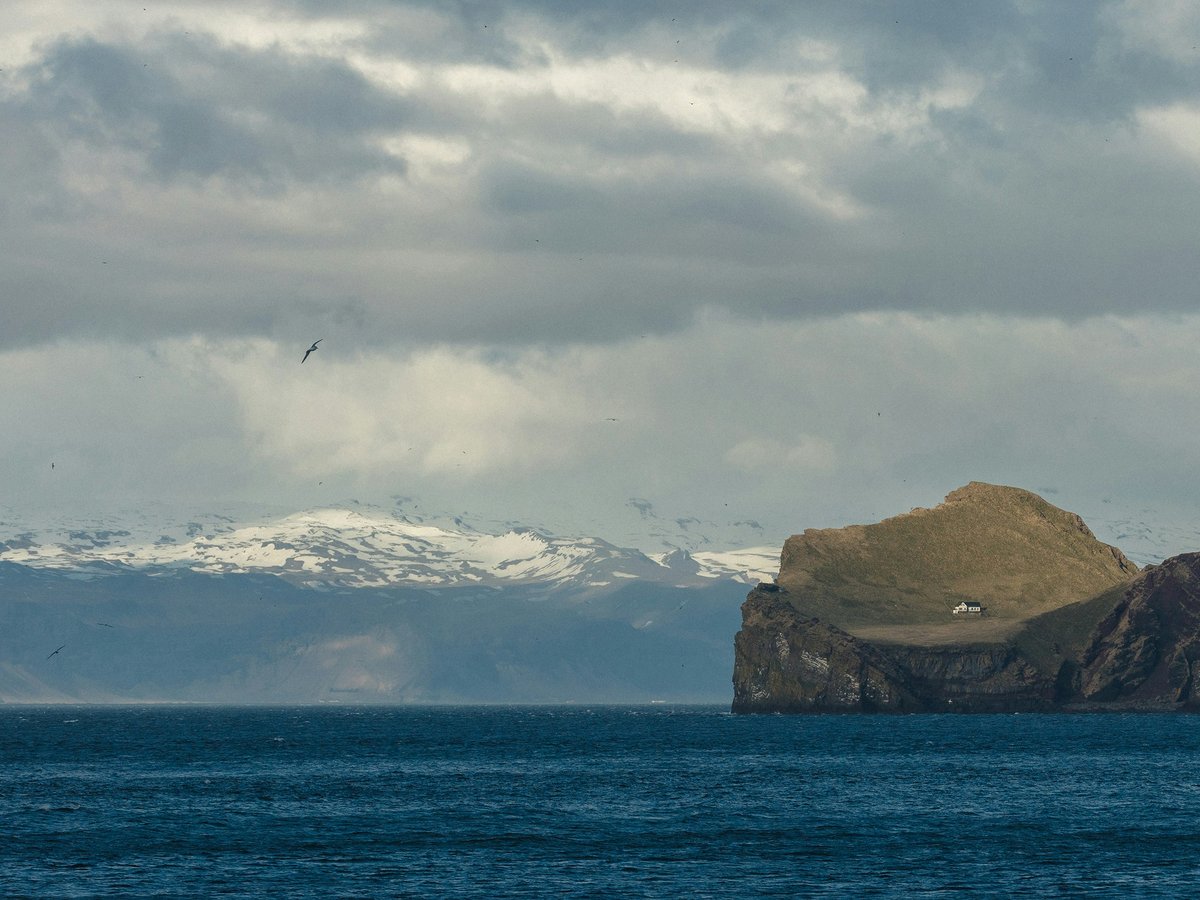
Stay in Vestmannaeyjar in March
7 hotels in the Trip.com pool for Vestmannaeyjar, from US$70 a night.
Opens Trip.com on Fri 5 Mar to Sun 7 Mar 2027; change the dates there.
March in Vestmannaeyjar is defined by wind. Not a pleasant sea breeze, but raw, horizontal gusts that regularly exceed 80 km/h (50 mph) at the Stórhöfði headland, one of the windiest measured points in all of Europe. Average highs sit at 5.3°C (42°F) with lows near 2.5°C (36°F), and the wind chill on exposed ground makes those numbers feel closer to -5°C (23°F). The Herjólfur ferry from Landeyjahöfn gets cancelled several times each March when North Atlantic swells build too high, which means your arrival and departure dates might not be entirely up to you. That single fact shapes everything about visiting this month.
To be fair, there's a genuine appeal here if you know what you're walking into. Daylight expands rapidly through March, from roughly 10 hours on the 1st to nearly 13 by the 31st, with the spring equinox on March 20 marking the psychological turn toward summer. The puffins won't return to Heimaey's sea cliffs for another 6 to 8 weeks, and the famous Þjóðhátíð festival grounds in Herjólfsdalur sit empty and quiet. You'll share the island with about 4,500 permanent residents and very few other visitors. Eldheimar museum, the Sæheimar aquarium, and the hike up Eldfell volcano don't need crowds to be worthwhile. Mind you, at least 18 of March's 31 days will bring measurable rain, so waterproofing isn't optional.
If solitude on a wind-stripped North Atlantic volcanic island appeals to you more than puffin selfies and festival campfires, March delivers that honestly. If you're imagining the Vestmannaeyjar you've seen in summer tourism photos, you will be disappointed.
Why visit in March
- Accommodation rates on Heimaey drop 30-50% compared to June through August, with guesthouses regularly available under 15,000 ISK per night
- Daylight increases by nearly 3 hours over the course of March, from roughly 10 hours at the start to about 13 by month's end
- Northern Lights remain visible on clear evenings through mid-March, and Heimaey's low light pollution makes the island one of Iceland's better viewing locations outside the capital region
- Tourist crowds at Eldheimar, Sæheimar, and on the Eldfell trail are essentially zero, so you'll have the island's main attractions to yourself
Worth knowing
- Wind dominates everything. Gusts regularly exceed 80 km/h (50 mph) at Stórhöfði, and even the sheltered town center sees sustained winds above 40 km/h (25 mph) on most March days
- The Herjólfur ferry from Landeyjahöfn faces cancellations multiple times per month due to rough seas, with no alternative route besides a 30-minute domestic flight from Reykjavik that books up fast
- Puffins, the island's signature wildlife attraction, don't return to the breeding cliffs until mid to late April at the earliest
- 139mm of rainfall spread across 18 days means you'll see more wet days than dry ones, often arriving as cold, sideways drizzle
Best for
Think twice if
March on Heimaey is cold, wet, and relentlessly windy. Temperatures hover between 2°C and 5°C (36-42°F) most days, rarely dipping far below freezing but never feeling warm thanks to the wind chill. Precipitation arrives as rain or sleet on roughly 18 of 31 days, totaling about 139mm for the month. The air holds a damp, salt-heavy quality that cuts through layers. Humidity sits around 74%. Fog can roll in without warning, reducing visibility along the cliff paths. By late March, longer daylight hours and the occasional break in cloud cover offer pale, angled sunlight that photographers tend to love. Wind is the constant. It shapes every outdoor plan you make.
Seasonal caution
- Wind speeds at Stórhöfði and along exposed cliff edges regularly exceed 80 km/h (50 mph), which is strong enough to knock an adult off balance. Avoid cliff-edge walking trails during storm warnings and check vedur.is (the Icelandic Meteorological Office) each morning before heading out
- Occasional sub-zero nights can leave ice on steep volcanic trails, particularly the upper slopes of Eldfell and the path down into Herjólfsdalur. Microspikes or crampon attachments are worth carrying in your daypack
- The Herjólfur ferry service between Landeyjahöfn and Vestmannaeyjar faces weather-related cancellations several times each March. Always have a backup plan, either a domestic flight booking with Ernir or flexibility to stay an extra night
Year-round climate
Averages from the last 5 years.
| Month | Avg high (°C) | Avg low (°C) | Rainfall (mm) |
|---|---|---|---|
| Jan | 5 | 1 | 154 |
| Feb | 6 | 3 | 185 |
| Mar | 5 | 3 | 139 |
| Apr | 7 | 4 | 110 |
| May | 8 | 7 | 109 |
| Jun | 10 | 8 | 97 |
| Jul | 12 | 11 | 90 |
| Aug | 12 | 11 | 120 |
| Sep | 11 | 9 | 163 |
| Oct | 8 | 6 | 146 |
| Nov | 7 | 4 | 163 |
| Dec | 5 | 2 | 154 |
Holidays and festivals in March
Public holidays
- Maundy Thursday(Skírdagur)25 March 2027
- Good Friday(Föstudagurinn langi)26 March 2027
- Easter Sunday(Páskadagur)28 March 2027
- Easter Monday(Annar í páskum)29 March 2027
Best things to do in March
Hike Eldfell volcano
hikingThe 200m (660 ft) climb up Eldfell takes about 45 minutes from the trailhead at the edge of the 1973 lava field. The cinder slopes still release warmth in places, nearly 50 years after the eruption. From the summit on a clear day, you can see across the entire Vestmannaeyjar archipelago and south toward Surtsey. In March, the low-angle light and snow-dusted ridgelines give the crater rim a stark, monochrome beauty that summer photos rarely capture.
The absence of summer crowds means you'll likely have the summit entirely to yourself. Snow and frost on the dark cinder create strong visual contrast that's particularly striking for photography. Cooler air also means less haze over the ocean views toward Surtsey.Booking tipNo booking needed. Free access year-round. Check vedur.is for wind warnings before heading up, as the exposed summit ridge gets dangerous above 60 km/h gusts.
Explore Eldheimar volcano museum
museumEldheimar was built around an actual house excavated from the 1973 lava flow that buried 400 homes on Heimaey's eastern side. The exhibit walks you through the eruption timeline, the evacuation of the entire population in a single night, and the months-long effort to cool the lava with seawater to save the harbor. Standing next to a partially buried house with ash still on the kitchen table is a genuinely eerie sensory experience. The smell of volcanic dust lingers in the excavation hall.
March visitor numbers at Eldheimar are minimal, so you can spend an unhurried hour in the excavation hall without competing for viewing angles. The museum also serves as a warm refuge on particularly raw days.Booking tipOpen daily in March, though hours may be shorter than summer (typically 11:00-17:00). Admission around 2,500 ISK for adults. No advance booking needed.
Northern Lights viewing from Stórhöfði
natureThe southern headland of Stórhöfði, about 15 minutes' drive from the town center, offers an unobstructed view to the north across Heimaey with almost zero light pollution. On clear March evenings, the aurora borealis can be visible between roughly 21:00 and midnight. The experience of watching the lights while hearing nothing but wind and surf is distinctly different from the organized bus tours near Reykjavik.
Early March still has enough dark sky hours for aurora viewing before the lengthening twilight of late March washes out fainter displays. By April, the window is effectively closed until September.Booking tipNo booking required. Drive or walk, but bring a headlamp. Check the Icelandic Met Office aurora forecast (vedur.is) for KP index before heading out. Nights with KP 3 or above are worth the cold.
Walk the 1973 lava field
walkingThe lava field that swallowed Heimaey's eastern neighborhoods in 1973 is now a surreal landscape of frozen black rock, mossy crevices, and half-buried street signs. A marked walking path runs through sections of the field from near Eldheimar toward the eastern coast. The rock formations still hold residual geothermal warmth in spots, and in March you might see steam rising from cracks when rain hits the warmer ground beneath. The texture underfoot shifts between sharp clinker and smooth ropy pahoehoe.
Snow and frost collecting in the crevices of black lava creates striking contrast. March's low visitor numbers mean you'll walk the path alone, which adds to the slightly unsettling atmosphere of walking over a buried neighborhood.Booking tipFree and always accessible. Wear sturdy boots with thick soles, as the lava surface is abrasive and uneven.
Visit Sæheimar aquarium and natural history museum
museumSæheimar on Heiðarvegur is small, more community science center than major aquarium, but it houses local marine species and has historically been known for rehabilitating injured puffins and other seabirds. The collection of taxidermied Icelandic bird species is useful context before the breeding colonies return in April and May. The building itself has a slightly dated, endearing quality, the kind of place where a staff member might give you a personal tour if you're the only visitor.
With puffins still absent from the wild cliffs, Sæheimar is the closest you'll get to the birds in March. Visitor numbers are low enough that the experience tends to be more personal and conversational than in summer.Booking tipCheck locally for March opening hours, as winter schedules can vary. Admission is around 1,500 ISK.
Soak at Sundlaug Vestmannaeyja (the local swimming pool)
wellnessIceland's geothermal swimming pools are a cultural institution, and the one on Heimaey at Illugagata has a 25m pool plus several hot pots ranging from 38-42°C (100-108°F). Sitting in a 40°C outdoor hot pot with cold rain hitting your face and wind whipping overhead is one of those sensory contrasts that makes Iceland in winter feel like nowhere else. The smell of sulfur, the steam rising into grey sky, the warmth seeping into cold-stiffened muscles after a day of hiking. Worth it.
March weather makes the hot pots feel particularly restorative. A windy, 3°C afternoon is the ideal setup for the thermal contrast. The pool is also a social hub where you might end up in conversation with Heimaey locals.Booking tipOpen daily. Admission around 1,000 ISK. Bring your own towel or rent one. Follow Icelandic pool etiquette and shower thoroughly without a swimsuit before entering.
Storm watching from Stórhöfði headland
natureStórhöfði sits at the southern tip of Heimaey and records some of the highest wind speeds in Iceland. In March, major Atlantic storms drive waves against the 100m (330 ft) sea cliffs with enough force that you can feel the spray from 50m back. The sound is enormous. On a calm day (relatively speaking), the headland also serves as a birdwatching point, with fulmars and kittiwakes already nesting on the cliff ledges before the puffins return.
March storms at Stórhöfði are at their most dramatic before spring calms the North Atlantic. The headland is also one of the first places to see returning seabird species in late March, including fulmars staking out nesting sites.Booking tipFree access. Do not approach cliff edges in high wind. If the Met Office issues a storm warning for the Vestmannaeyjar area, stay in town.
What to eat in March
On menus now
Plokkfiskur
Traditional Icelandic mashed fish stew made with cod or haddock, potatoes, onions, and béchamel. Vestmannaeyjar's fishing fleet brings fresh catch daily even in March, and this dish is comfort food at its best on a wind-chilled evening. The texture is somewhere between a thick chowder and a gratin. You'll find it at most restaurants on Heimaey through the winter months.
Þorskur (fresh cod)
March falls within peak cod fishing season in the waters around the Vestmannaeyjar archipelago. The local boats land fresh Atlantic cod daily at the Heimaey harbor. Pan-fried with butter and served with rye bread, it tastes noticeably different from anything you'd get inland. The flesh is firm and almost sweet, with none of the fishiness that comes from sitting in a supply chain for days.
Kjötsúpa
Hearty lamb and root vegetable soup that appears on nearly every Icelandic table during cold months. March on Heimaey still calls for this kind of meal after a wet, windy hike up Eldfell. The soup uses Icelandic lamb, which has a distinctive, slightly gamy sweetness from the sheep grazing on wild herbs and grasses.
Rúgbrauð
Dense, dark Icelandic rye bread traditionally slow-baked for up to 24 hours, giving it a slightly sweet, almost caramelized flavor. Served with butter alongside soup or fish, it's a staple on Heimaey through the winter months. The crumb is moist and heavy, nothing like conventional bread.
In markets
Harðfiskur
Wind-dried fish, typically haddock or cod, that Icelanders eat as a protein-dense snack with butter. March wind conditions on Heimaey are ideal for the traditional outdoor drying process, and you'll sometimes see racks of fish drying near the harbor. The texture is leathery and chewy, with a concentrated, salty ocean flavor. Sold in bags at the Krónan supermarket on Strandvegur.
Regular events in March
Bjórdagurinn (Icelandic Beer Day)Free
March 1 marks the anniversary of the end of Iceland's 74-year beer prohibition in 1989. Bars and restaurants across Iceland, including those on Heimaey, typically offer specials on local craft beers. The Brothers Brewery (Bræðraborg) on the mainland contributes seasonal releases, and the few bars on Heimaey will likely have something going on by evening. It's a low-key, social holiday rather than a rowdy festival, but for a town of 4,500 people it brings noticeable energy.
March 1Alþjóðlegur baráttudagur kvenna (International Women's Day)Free
Iceland takes March 8 seriously. The country has led global gender equality rankings for over a decade, and Women's Day events range from lectures and concerts to community gatherings. On Heimaey, the community center Þórshamar typically hosts some form of event. The day has genuine cultural weight here in a way that differs from many other countries.
March 8DesignMarch
Iceland's largest annual design festival runs for 4-5 days in Reykjavik, typically in mid to late March, featuring exhibitions, studio tours, and talks across architecture, fashion, and product design. While the festival is in the capital, it's worth knowing about if you're combining a Vestmannaeyjar trip with time in Reykjavik. The 35-minute Ernir flight connects the two easily.
Mid to late March (varies yearly)Best places this March
Eldheimar
museumThe volcano museum built around an excavated house from the 1973 eruption. The centerpiece is a real family home, partially crushed under tephra, with household objects still visible inside. The multimedia exhibit covers the evacuation, the lava-cooling operation, and the slow return of residents. One of the best small museums in Iceland. In March, you might have the entire place to yourself for an hour.
Eastern Heimaey, edge of the 1973 lava fieldEldfell and Helgafell
natural landmarkThe twin volcanic peaks that define Heimaey's skyline. Eldfell (200m) erupted in 1973. Helgafell (226m) last erupted roughly 5,000 years ago. Both are walkable in a half-day, though March conditions mean you should check wind reports first. The cinder slopes of Eldfell still hold residual warmth, and you can dig into the ground near the summit to feel it. The view from Helgafell stretches across the entire archipelago.
Eastern HeimaeySkansinn
historic siteThe historic fort area on the eastern shore, with a 15th-century fortification site and the Stafkirkjan, a Norwegian-style stave church gifted to Vestmannaeyjar by Norway in 2000 to mark 1,000 years of Christianity in Iceland. The church is a small, dark timber structure with a turf roof. In March, the surrounding grass is still winter-brown and the wind off the sea hits this spot directly, but the stave church against a grey sky is one of the most photographed scenes on the island.
SkansinnStórhöfði
viewpointThe southern headland of Heimaey, accessible by a gravel road from town (about 15 minutes by car). One of Europe's windiest spots by measured average. The 100m sea cliffs host nesting fulmars and kittiwakes by late March, ahead of the puffin return. A small weather station and lighthouse sit at the point. In stormy conditions, the wave impacts against the base of the cliffs are visible and audible from the viewpoint above. Not a place for casual strolling in a gale.
StórhöfðiHerjólfsdalur
natural landmarkA U-shaped valley on the southwest side of Heimaey, formed by an ancient volcanic crater. This is where Þjóðhátíð, Iceland's largest outdoor festival, takes place every August. In March the valley is empty and windswept, but the natural amphitheater shape is impressive. The Vestmannaeyja Golfklúbbur operates one of Iceland's more scenic courses on the valley floor, though it's typically closed in March. Walking the valley perimeter takes about 40 minutes.
HerjólfsdalurHeimaey harbor and Hafnargata
harborThe working fishing harbor is the economic heart of the island, and in March the commercial fleet is active with cod season. Walking along Hafnargata (the main harbor street) in the early morning, you can watch boats unloading catch while gulls circle overhead. The smell of salt and diesel and fish is thick in the cold air. Several of the town's restaurants and the Krónan supermarket sit along or near this street. The harbor itself was famously saved during the 1973 eruption when the lava flow nearly sealed the entrance.
Town centerSundlaug Vestmannaeyja
swimming poolThe municipal swimming pool on Illugagata has a 25m indoor pool and several outdoor hot pots at 38-42°C (100-108°F). In March, the outdoor pots are the draw, sitting in geothermally heated water while cold rain and wind pass overhead. It's where Heimaey residents socialize, and spending an hour here after a wet hike up Eldfell is one of the best experiences available in the off-season.
Town centerThe 1973 lava field
geological siteA 3 km² (1.2 sq mi) expanse of frozen basaltic lava that buried the eastern third of Heimaey during the eruption. Walking paths wind through the field, passing partially buried walls and street remnants. Moss is slowly colonizing the rock surface, creating patches of bright green against black. In March, ice and frost settle into the crevices. The eastern end of the field meets the sea where the new coastline formed.
Eastern Heimaey
Your packing checklist
Tick items off as you pack. Your progress saves in this browser.
All packed — have a great trip.
Insider tips
The Herjólfur ferry from Landeyjahöfn is cheaper and more scenic than flying, but in March, always have a backup flight booked with Ernir from Reykjavik domestic airport. Ferry cancellations sometimes last 2 consecutive days in bad weather, and Ernir's small planes fill up fast when that happens. Booking both and cancelling the one you don't use costs less than being stranded.
Dig your hand into the ground near the summit of Eldfell. About 15-20 cm down, the cinder is still noticeably warm, more than 50 years after the eruption. The rangers don't advertise this, but locals will tell you. It's one of those small, strange sensory details that sticks with you.
The hot pots at Sundlaug Vestmannaeyja are where actual conversation happens. Show up between 17:00 and 19:00, when Heimaey residents come after work. Icelanders in hot pots are remarkably social with strangers. This is more likely to give you a feel for island life than any museum.
If the weather pins you indoors for a day (which happens), the Krónan supermarket on Strandvegur stocks surprisingly good Icelandic lamb and fresh fish. Several of the Heimaey guesthouses have kitchens. Cooking plokkfiskur from fresh local cod on a stormy evening is a better experience than eating at a half-empty restaurant.
Check vedur.is every morning before making plans. The Icelandic Met Office forecasts are accurate and specific to Vestmannaeyjar. A day forecast showing sustained winds under 30 km/h is your window for Stórhöfði and the cliff paths. Those days might come only 8-10 times in March, so use them.
Avoid these mistakes
- Booking a tight 2-day itinerary without buffer days for weather delays. The Herjólfur ferry cancels multiple times in a typical March, and if your return coincides with a storm, you're stuck. Build at least 1 spare day into your schedule, or accept that you might miss a connecting flight from Reykjavik.
- Attempting the Eldfell or Stórhöfði hikes without checking the wind forecast first. A gust over 60 km/h on the exposed Eldfell summit ridge is genuinely dangerous, not an exaggeration for tourists. People have been knocked off their feet. Check vedur.is and go on a calmer day.
- Packing for Iceland's cold but forgetting the wind. A warm down jacket that isn't windproof is nearly useless on Heimaey in March. The wind strips heat faster than any insulation layer can replace it. Windproof outerwear matters more than warmth rating here.
- Arriving in March expecting to see puffins. The Atlantic puffin colony on Heimaey's cliffs, one of Iceland's largest, doesn't return from the open ocean until mid to late April. If puffins are your reason for visiting Vestmannaeyjar, come in May through August instead.
Practical tips for March
Book the Herjólfur ferry at herjolfur.is at least a few days ahead for March crossings, and simultaneously reserve a backup Ernir flight from Reykjavik domestic airport. If the ferry sails, cancel the flight. Guesthouse accommodation on Heimaey does not require far-advance booking in March, but choices narrow to perhaps 4-5 properties operating year-round, so confirm availability a week out. Most restaurants on Heimaey keep shorter winter hours, typically closing by 21:00 on weekdays, and a few shut entirely from January through April. The Krónan supermarket on Strandvegur is your reliable fallback for groceries. Dress in layers every day. A morning that starts at 4°C (39°F) with light wind can shift to sleet and 70 km/h gusts by afternoon. Carry your waterproof shell and over-trousers even on days that look promising. There is no public transit on Heimaey. The town is walkable in 20 minutes end to end, but reaching Stórhöfði or Herjólfsdalur requires a car. A rental from the mainland or a local taxi service covers this. March daylight is generous enough for full-day outdoor plans, with sunrise around 08:30 on March 1 moving to 07:00 by March 31. Currency is Icelandic króna, but cards are accepted everywhere, even for small purchases.
FAQ
Is March a good time to visit Vestmannaeyjar?
It depends entirely on what you're after. March is firmly off-season, with cold temperatures around 2-5°C (36-42°F), frequent rain on 18 of 31 days, and strong wind that defines daily life on Heimaey. The puffins haven't returned yet, and the Þjóðhátíð festival is months away. But if you want solitude, dramatic weather, low prices (30-50% below summer), and attractions like Eldheimar and Eldfell without any crowds, March has a stark appeal. It's fair, not good or excellent, as a visiting month.
What is the weather like in Vestmannaeyjar in March?
Cold and windy. Average highs reach 5.3°C (42°F), lows sit near 2.5°C (36°F), and 139mm of rain falls across roughly 18 days. Humidity averages 74%. The defining factor is wind. Heimaey, especially the Stórhöfði headland, is one of Europe's windiest locations, with March gusts regularly exceeding 80 km/h (50 mph). Wind chill makes the felt temperature considerably lower than the thermometer reads. On the positive side, daylight increases from about 10 hours at the start of March to nearly 13 by the end.
Can you see puffins in Vestmannaeyjar in March?
No. The Atlantic puffin colony, one of Iceland's largest at an estimated 800,000 to 1 million birds on Heimaey's sea cliffs, spends the winter months on the open North Atlantic. They typically begin returning to their breeding burrows in mid to late April. If puffins are your primary reason for visiting, May through mid-August is the reliable window. In March, Sæheimar aquarium on Heiðarvegur is the closest you'll get to the birds.
Can you see the Northern Lights from Vestmannaeyjar in March?
Yes, through roughly mid-March. Heimaey's low light pollution and southern island position offer good viewing conditions on clear nights with a KP index of 3 or higher. The headland at Stórhöfði or the dark areas south of town work well. By late March, the rapidly increasing daylight hours (with true darkness not arriving until after 22:00) narrow the aurora viewing window significantly. Check the Icelandic Met Office aurora forecast at vedur.is before heading out.
How do you get to Vestmannaeyjar in March?
Two options. The Herjólfur car ferry runs from Landeyjahöfn on the south coast (about 30 minutes crossing time, around 1,900 ISK per person). In March, sailings get cancelled several times per month due to rough seas. The backup is a domestic flight with Ernir from Reykjavik's domestic airport, roughly 30 minutes in the air. In March, booking both the ferry and a flight as insurance is common local advice. Landeyjahöfn is about a 2-hour drive from Reykjavik along Route 1.
Find a flight to Vestmannaeyjar
Live fares to Vestmannaeyjar appear here once cookies are accepted.
Last verified by automated review (v1.7.2) on . What is automated review?