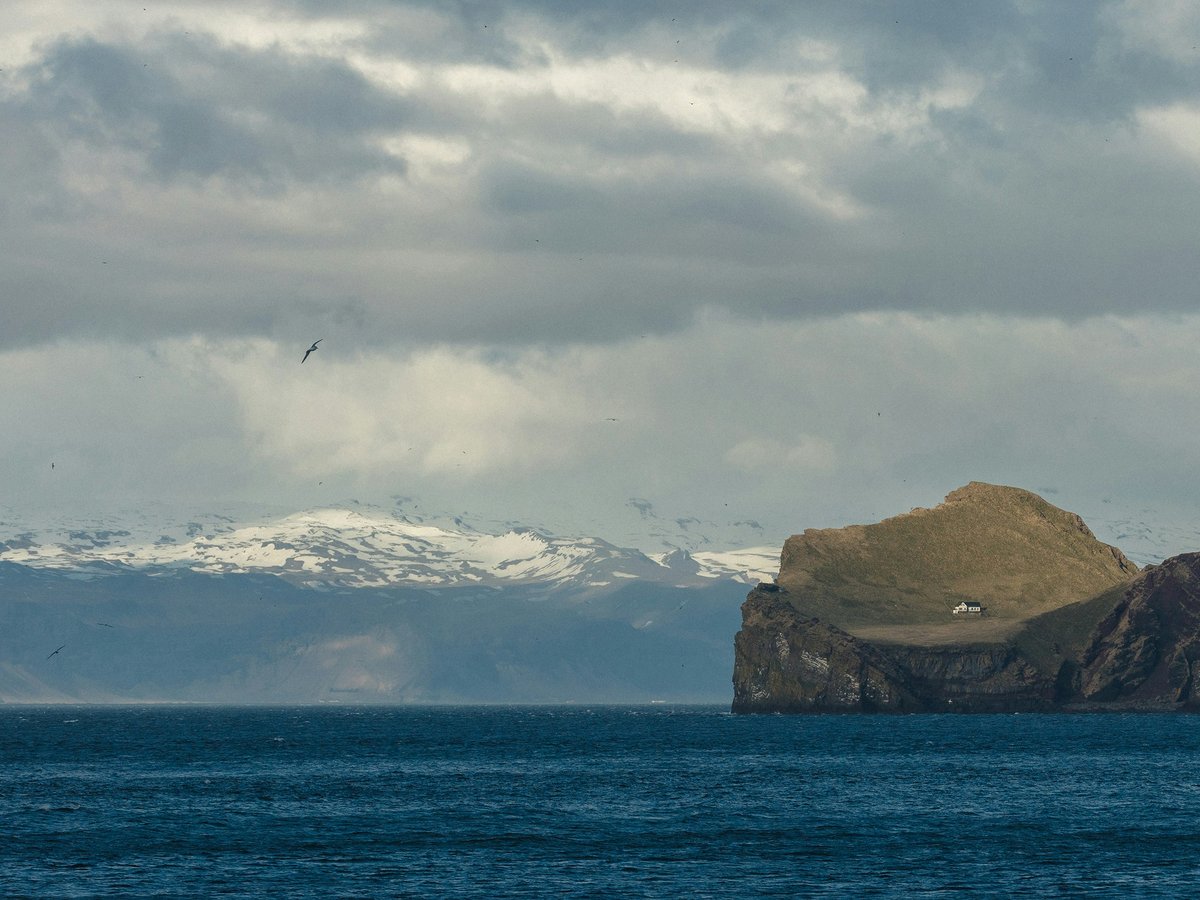
Stay in Vestmannaeyjar in February
7 hotels in the Trip.com pool for Vestmannaeyjar, from US$70 a night.
Opens Trip.com on Fri 5 Feb to Sun 7 Feb 2027; change the dates there.
February is the wettest month of the year in Vestmannaeyjar, with roughly 185mm of rain spread across 20 days. That single fact should frame everything else you read here. The Westman Islands sit about 15 kilometers off Iceland's south coast, and Heimaey, the only inhabited island, catches the full force of North Atlantic storms. Daytime temperatures hover between 2°C (36°F) and 6°C (42°F), which feels considerably colder once the wind picks up. Gusts at Stórhöfði, the exposed southern headland, regularly exceed 100 km/h in February. You'll have roughly 7 hours of daylight at the start of the month, improving to about 10 hours by the 28th.
That said, February is not without character. Þorrablót, Iceland's midwinter feasting tradition, runs through the first half of the month, and community halls around Vestmannaeyjar host their own celebrations with fermented shark, smoked lamb, and brennivín. The week of February 16 to 18 brings three consecutive Icelandic food holidays in a row. Bolludagur on the 16th, Sprengidagur on the 17th, and Öskudagur on the 18th. Then Konudagur, the traditional Women's Day, lands on February 22. You'll share the island with its 4,300 residents and almost nobody else. Northern lights are still possible on clear nights above Eldfell's dark lava fields.
Mind you, 'character' is doing some heavy lifting in that paragraph. This is not a casual visit. The Herjólfur ferry from Landeyjahöfn gets cancelled in rough seas, sometimes for days. Slippurinn, the island's best-known restaurant, closes for winter. February on Heimaey demands genuine cold-weather commitment, flexible plans, and an honest appetite for solitude. If that sounds like your kind of trip, read on. If not, come back in June.
Why visit in February
- Accommodation rates drop 40 to 50 percent compared to the August peak around Þjóðhátíð festival week, making Vestmannaeyjar's guesthouses genuinely affordable by Icelandic standards.
- You'll likely have Eldheimar museum, Eldfell's hiking trail, and most of Heimaey's coastline entirely to yourself, with fewer than a dozen tourists on the island at any given time.
- The northern lights are visible on clear February nights, and Vestmannaeyjar's minimal light pollution gives better viewing conditions than Reykjavik, which sits 120 kilometers to the northwest.
- Þorrablót feasts and the Bolludagur to Öskudagur food holiday sequence (February 16 to 18) offer an authentic window into Icelandic winter culture that summer visitors never experience.
Worth knowing
- February is the wettest month. 185mm of rain across 20 days, often driven sideways by wind, makes outdoor plans unreliable from one hour to the next.
- The Herjólfur ferry from Landeyjahöfn runs daily in theory, but February storms frequently cancel crossings or reroute to Þorlákshöfn, turning a 35-minute ride into a 3-hour crossing in heavy swells.
- Slippurinn and several other restaurants close from roughly October through April, leaving a limited dining scene of 3 to 4 year-round spots.
- Puffins are entirely absent. The Atlantic puffin colony at Stórhöfði doesn't return until late April or early May, so the island's most famous wildlife draw is unavailable.
Best for
Think twice if
February on Heimaey feels raw. The average high reaches about 6°C (42°F) and the low sits near 2°C (36°F), but wind chill regularly drops the perceived temperature below freezing. Rain falls on roughly 20 of the 28 days, often as a fine, persistent drizzle that the wind drives horizontally into your face. Humidity tends to stay around 76 percent. Clear skies are the exception, not the rule, though you might get 3 to 5 genuinely calm days scattered through the month. Snow is possible but rarely sticks at sea level. The air carries a constant salt-and-wet-grass smell, and the sound of wind against the corrugated-iron roofs of Vestmannaeyjar's houses is the defining ambient noise of a February stay.
Seasonal caution
- Sustained winds at Stórhöfði frequently exceed 100 km/h (62 mph) in February. This headland is one of the windiest measured points in Europe. Even in the town center, gusts of 60 to 80 km/h are common during storms.
- Sidewalks and trails can ice over without warning, particularly on the exposed paths around Eldfell and the 1973 lava field. Clip-on crampons are a practical safety item, not an overcaution.
- Ferry cancellations on the Herjólfur route happen multiple times per month in February. Getting stranded on the island for an extra day or two is a realistic possibility, not an edge case.
- Rogue waves occasionally crash over the harbor wall in Vestmannaeyjar. Stay well back from the waterfront during storm surges, particularly along the northern breakwater.
Year-round climate
Averages from the last 5 years.
| Month | Avg high (°C) | Avg low (°C) | Rainfall (mm) |
|---|---|---|---|
| Jan | 5 | 1 | 154 |
| Feb | 6 | 3 | 185 |
| Mar | 5 | 3 | 139 |
| Apr | 7 | 4 | 110 |
| May | 8 | 7 | 109 |
| Jun | 10 | 8 | 97 |
| Jul | 12 | 11 | 90 |
| Aug | 12 | 11 | 120 |
| Sep | 11 | 9 | 163 |
| Oct | 8 | 6 | 146 |
| Nov | 7 | 4 | 163 |
| Dec | 5 | 2 | 154 |
Best things to do in February
Hike Eldfell volcano in winter conditions
hikingThe 200-meter climb to Eldfell's crater rim takes about 30 to 45 minutes on the marked trail from Kirkjubæjarhraun. In February, the black scoria slope is often dusted with frost or thin snow, and the ground still radiates faint geothermal warmth in spots near the top, more than 50 years after the 1973 eruption. The crater view toward Heimaey harbor and the mainland coast of Iceland is stark and compelling on a clear winter morning.
Winter light at this latitude creates long golden hours in the late morning and early afternoon. The absence of other hikers means you'll likely stand on the crater rim alone. Frost on the black lava creates a visual contrast you won't see in summer.Booking tipNo booking needed. Check wind conditions on Vedur.is before starting. If sustained winds exceed 50 km/h, postpone.
Visit Eldheimar volcano museum
museumEldheimar, built directly over a house excavated from the 1973 lava flow, tells the story of the eruption that buried 400 homes and displaced all 5,300 residents of Vestmannaeyjar. The central exhibit is the partially uncovered house at Suðurvegur 21, preserved under a glass-walled structure. You can see the lava line on the walls and the personal objects left behind when the town evacuated on January 23, 1973. The audio guide is thorough and takes about 90 minutes.
February is prime storm season, and indoor attractions on Heimaey become essential. With virtually no queue in winter, you can spend as long as you want examining the excavation without being shuffled along. The museum's dim lighting and the grey February light outside create a mood that matches the subject matter.Booking tipOpen year-round but check winter hours, which are typically 11:00 to 17:00 on weekdays.
Northern lights viewing from Stórhöfði
natureStórhöfði, the southern headland of Heimaey, has almost zero light pollution and an unobstructed view of the southern and eastern sky. On clear February nights, the aurora borealis can appear anywhere from 21:00 onward. The lights reflect off the dark ocean in a way that landlocked viewing spots cannot replicate. The wind will be strong, and the temperature will feel well below freezing, but the isolation amplifies the experience.
February still offers 15 to 17 hours of darkness per night early in the month, and solar activity in the 2025-2026 period remains near its cycle peak. Vestmannaeyjar's offshore position means less atmospheric light interference than the Icelandic mainland.Booking tipNo booking required. Bring a tripod, extra camera batteries (cold drains them in 20 minutes), and a thermos of something hot. The Icelandic Met Office (Vedur.is) publishes a nightly aurora forecast.
Storm watching from the harbor breakwater
natureFebruary storms send waves crashing against Vestmannaeyjar's harbor wall with enough force to send spray 10 meters into the air. Watching from behind the safety barriers near Básaskersbryggja pier is genuinely dramatic. The sound is tremendous, a deep percussive boom followed by the hiss of water streaming back off the concrete. Locals sometimes gather to watch the bigger storms.
February produces the most intense North Atlantic storms of the year. The combination of peak rainfall (185mm) and sustained high winds makes this the most dramatic month for wave action against the harbor infrastructure.Booking tipFree and always accessible, but stay well behind the barriers. Rogue waves can overtop the wall without warning. Never stand on the breakwater itself during a storm.
Soak at Vestmannaeyjalaug swimming pool
wellnessIceland's public swimming pools are social institutions, and Vestmannaeyjalaug is where Heimaey's residents gather year-round. The complex has a 25-meter indoor pool, several outdoor hot tubs (ranging from 38°C to 44°C), and a cold plunge. Sitting in 42°C water while February rain hits your face and steam rises into the dark afternoon sky is a sensory experience worth the 1,100 ISK admission.
The contrast between the hot tub water and the February air temperature (2 to 6°C with wind chill below freezing) is at its most extreme this month. The pool is also one of the few social gathering spots open daily through the winter.Booking tipNo booking needed. Reduced winter hours, typically 06:30 to 20:00 on weekdays and 09:00 to 17:00 on weekends. Bring your own towel to save the rental fee.
Explore the 1973 lava field at Kirkjubæjarhraun
sightseeingThe lava from the 1973 Eldfell eruption buried the eastern third of Vestmannaeyjar. Walking through Kirkjubæjarhraun, you follow paths cut through 5-meter walls of solidified lava, passing spots where rooftops and fence posts still poke through the rock surface. The scale of destruction is easier to grasp on foot than from any museum exhibit.
Winter frost and occasional thin snow cover highlights the textures and folds in the lava surface. The absence of summer grass growth exposes the raw rock. February's low-angle light casts long shadows that accentuate the terrain's contours.Attend a Þorrablót community feast
culturalÞorrablót celebrations in Vestmannaeyjar take place in community halls and private homes through the first half of February. The format is a buffet of Þorramatur (traditional preserved foods), generous quantities of brennivín, and often live music or recitations of Icelandic poetry. The smell of hákarl hits you at the door. These are genuine community gatherings, not tourist-facing productions.
Þorrablót only happens during the old Icelandic month of Þorri, which ends around February 21. This is the one time of year these feasts take place.Booking tipThese are typically ticketed community events. Ask your guesthouse host or inquire at Ráðhúsið (town hall) about upcoming dates. Tickets tend to sell out locally, so ask early in your stay.
Walk the Heimaey coastal cliffs for winter seabirds
natureWhile puffins won't return until spring, February brings fulmars, kittiwakes, and the occasional guillemot to the cliffs along Heimaey's western coast near Herjólfsdalur. The birds ride the updrafts along the cliff face. The sound of the surf against the base of the 100-meter cliffs carries clearly in the cold air. A 3-kilometer loop from the Herjólfsdalur car park covers the best sections.
Fulmars begin returning to their nesting cliffs in late January and February, months before the summer seabird rush. You can observe them at close range without the crowds that descend during puffin season in June and July.Booking tipNo booking needed. Wear crampons on the cliff path if there's ice. Stay at least 2 meters from cliff edges, as the wind can gust without warning.
What to eat in February
On menus now
Plokkfiskur
A thick, warming fish stew made from boiled cod or haddock mashed with potatoes, onions, and béchamel. It's Icelandic comfort food at its most fundamental, and in February on a wind-battered island, a bowl of plokkfiskur at one of the year-round cafes on Strandvegur hits differently than in July.
What to drink
Brennivín
Iceland's signature caraway-flavored aquavit, served ice-cold alongside Þorramatur. Locals sometimes call it 'Black Death' with dry affection. A 50ml shot at roughly 1,200 ISK cuts through the intensity of fermented shark. February is the month when consumption of brennivín peaks across Iceland.
In markets
Harðfiskur
Wind-dried fish, typically haddock or cod, torn into strips and eaten with butter. The texture is jerky-like with a concentrated oceanic flavor. Available year-round in Vestmannaeyjar but consumed more heavily during the Þorri season. You'll find it at Krónan supermarket and at Þorrablót tables.
Festival food
Þorramatur
The traditional midwinter feast spread served during Þorrablót season, which runs through mid-February. Expect fermented shark (hákarl) with its sharp ammonia bite, singed sheep's head (svið), blood pudding (slátur), and pickled ram's testicles (hrútspungar). The textures range from gelatinous to chewy. Not all of it is pleasant, but the communal atmosphere in Vestmannaeyjar's community halls makes the experience worth trying.
Bollur
Cream-filled pastry puffs baked across Iceland for Bolludagur on February 16. Bakeries in Vestmannaeyjar fill them with whipped cream and drizzle chocolate on top. Children traditionally try to swat their parents with a paper baton before noon to 'earn' extra bollur.
Saltkjöt og baunir
Salt-cured lamb with yellow split peas, the traditional dish of Sprengidagur (February 17). The name means 'bursting day' because you're meant to eat until you physically cannot continue. The lamb is tender and deeply salty, the peas thick and starchy. Most households on Heimaey prepare this at home.
Regular events in February
BolludagurFree
Iceland's version of a pastry day. Bakeries and homes across Vestmannaeyjar produce cream-filled puff pastries (bollur) all day. Children carry paper batons and try to swat parents before noon to earn extra bollur. Every café on Heimaey participates.
February 16 in 2026SprengidagurFree
Literally 'Bursting Day,' the Icelandic Shrove Tuesday. Families eat saltkjöt og baunir (salted lamb with split peas) until they can eat no more. Restaurants on Heimaey that are open in winter typically offer it as the daily special.
February 17 in 2026ÖskudagurFree
Ash Wednesday in Iceland, but with a distinctly local twist. Children in Vestmannaeyjar dress in costumes and go shop to shop in the town center, singing songs in exchange for candy. It resembles Halloween trick-or-treating more than any solemn religious observance.
February 18 in 2026KonudagurFree
Iceland's traditional Women's Day, marking the first day of the old Norse month Góa. Partners give flowers and small gifts. In Vestmannaeyjar, the few open restaurants tend to offer special menus. It's a quieter holiday than Bóndadagur (Men's Day) in January, but still observed across Heimaey.
February 22 in 2026Þorrablót community feasts
Local midwinter celebrations held in community halls and club venues around Vestmannaeyjar during the old Icelandic month of Þorri. Live music, traditional food, and brennivín. Multiple events take place across the first three weeks of February.
Early to mid-February (Þorri ends around February 21)Best places this February
Eldheimar
museumVolcano museum built over an excavated house from the 1973 eruption. The partially uncovered building at Suðurvegur 21 sits under a glass canopy. Admission is around 2,500 ISK for adults. Budget 90 minutes for the full audio guide.
KirkjubæjarhraunSæheimar
museumA small natural history museum and aquarium with resident puffins that cannot survive in the wild due to injuries. In February, these rescued birds are likely the only puffins you'll see on the island. The collection also covers Vestmannaeyjar's volcanic and marine history.
Town centerStafkirkjan at Skansinn
landmarkA reconstructed Norse stave church gifted by Norway in 2000 to mark 1,000 years of Christianity in Iceland. The small wooden structure sits on the Skansinn promontory overlooking the harbor. In February's low light, the dark timber against grey sky and green-brown grass makes it one of the most photogenic spots on Heimaey.
SkansinnStórhöfði headland
viewpointThe southern tip of Heimaey and one of the windiest measured points in Europe. A weather station here has recorded gusts above 200 km/h. In February, the raw power of the wind and waves is staggering. The viewing platform overlooks the open North Atlantic. In summer this is puffin-watching territory, but in February it belongs to fulmars and the elements.
StórhöfðiHerjólfsdalur valley
natureA sheltered natural amphitheater on Heimaey's southwest side, formed inside an ancient volcanic crater. In August it hosts Þjóðhátíð, the island's massive outdoor festival. In February it's empty and still, surrounded by steep grass-and-rock walls. The relative shelter from wind makes it one of the more comfortable outdoor walks on the island.
HerjólfsdalurEldfell crater and lava field
natureThe 200-meter volcanic cone that erupted on January 23, 1973, burying a third of the town. The marked trail to the rim starts at the edge of Kirkjubæjarhraun. In February, geothermal warmth still radiates from patches near the summit. The lava field below shows the scale of what the town lost and rebuilt.
KirkjubæjarhraunVestmannaeyjar harbor
harborThe fishing harbor is the economic heart of Heimaey. Trawlers come and go year-round, and in February you can watch the fleet return with catches of cod and haddock. The fish processing smell is sharp in the cold air. The harbor wall also provides storm-watching opportunities during heavy weather.
BásvíkSkansinn historic area
historic siteThe oldest part of Vestmannaeyjar, where a 15th-century English trading fort once stood. The area includes the Stafkirkjan, a water tank from the British military presence during World War II, and views across the harbor. It's a 10-minute walk from the town center and is rarely crowded even in summer.
Skansinn
Your packing checklist
Tick items off as you pack. Your progress saves in this browser.
All packed — have a great trip.
Insider tips
The Herjólfur ferry schedule shows daily departures from Landeyjahöfn, but in February the actual sailing rate drops significantly due to weather. The backup departure port, Þorlákshöfn, adds roughly 2.5 hours to the crossing. Always build at least 1 buffer day into your return plan, and check Vedur.is the night before for wind forecasts above 20 m/s, which typically trigger cancellations or rerouting.
Vestmannaeyjalaug's outdoor hot tubs are the island's de facto social club in winter. Go between 17:00 and 19:00 on a weekday to overlap with locals finishing work. Conversation happens naturally. The etiquette is simple. Shower thoroughly before entering (this is strictly enforced in Iceland), and keep your voice at a normal volume.
If you want to attend a Þorrablót feast, ask your guesthouse host within the first hour of arriving. These community events sell out locally, and a host can often secure a ticket or an invitation that wouldn't be available otherwise. The feasts typically happen on Friday or Saturday evenings in the first two weeks of February.
Krónan supermarket on Strandvegur is your lifeline for self-catering in February. The restaurant options are limited to 3 or 4 year-round spots, and some close early on weekday evenings. Stock up on arrival, especially before weekends when hours shorten.
For northern lights, skip the town center and drive or walk 2 kilometers south toward Stórhöfði. The town's streetlights, while modest, still wash out fainter aurora displays. The parking area at the Stórhöfði trailhead has no artificial light and an unbroken horizon.
Avoid these mistakes
- Arriving without buffer days for ferry cancellations. At least 1 in 3 February crossings on the Herjólfur gets cancelled or rerouted. Booking a tight connection between the ferry and an international flight out of Keflavík on the same day is a recipe for a missed plane.
- Planning exclusively outdoor activities. February delivers rain on roughly 20 of 28 days, and wind can make even a short walk unpleasant. Visitors who don't have indoor alternatives (Eldheimar, Sæheimar, the swimming pool, a good book) end up frustrated by the third day.
- Expecting to see puffins. The Atlantic puffin colony at Stórhöfði arrives in late April at the earliest. February visitors who came specifically for puffins will find empty cliffs. The rescued puffins at Sæheimar are the only ones on the island.
- Underestimating the wind chill. The thermometer might read 4°C (39°F), but sustained 60 km/h winds drop the perceived temperature to well below minus 5°C (23°F). Visitors who pack for '4 degrees' without windproof layers end up cold within minutes of stepping outside.
Practical tips for February
Book the Herjólfur ferry through the official Herjólfur website at least 3 days ahead in February, not because it sells out (it won't) but because schedule changes due to weather are posted there first. The alternative is a 20-minute flight from Reykjavik domestic airport with Ernir (Vestmannaeyjar's local airline), which operates a few weekly flights year-round. Most guesthouses on Heimaey remain open in February, but confirm before booking, as a few close entirely from November through March. Slippurinn restaurant closes for winter (typically October through April). Gott, Einsi Kansen, and Tanginn tend to keep year-round hours, though February weekday evenings may see early closures around 20:00. Krónan supermarket is open daily but with reduced weekend hours. There is no ATM-free problem here. Vestmannaeyjar has both ATM access and widespread card payment, though bringing a Visa or Mastercard is more reliable than cash. The island has a single gas station. Tipping is not expected anywhere in Iceland. For Þorrablót events, business-casual dress is standard. For everything else, functional winter clothing is the norm, and nobody will look twice at hiking gear in a café.
FAQ
Is February a good time to visit Vestmannaeyjar?
Honestly, for most travelers, no. February is the wettest month (185mm of rain across 20 days), daylight is limited, ferry service is unreliable, and most of the island's summer attractions (puffins, Þjóðhátíð festival, the full restaurant scene) are unavailable. That said, if you specifically want winter solitude, northern lights over a volcanic island, and authentic Icelandic midwinter food culture during Þorrablót season, February delivers those things in a way that no summer month can. It ranks 11th out of 12 months for general visiting, but for the right traveler it has a raw appeal.
Can you see puffins in Vestmannaeyjar in February?
No. The Atlantic puffin colony at Stórhöfði headland typically arrives in late April or early May and departs by mid-September. In February, the nesting cliffs are empty. The only puffins on Heimaey in winter are a few rescued birds at Sæheimar natural history museum that cannot survive in the wild due to injuries. If puffins are your primary reason for visiting, plan for June or July instead.
How do you get to Vestmannaeyjar in February?
The main route is the Herjólfur ferry from Landeyjahöfn on Iceland's south coast, a 35-minute crossing. In February, rough seas frequently cancel this route or reroute it to Þorlákshöfn, which takes about 3 hours. Ernir airline also operates a small number of weekly flights from Reykjavik domestic airport (about 20 minutes). Always have a backup plan and at least 1 buffer day, because getting stranded by weather is common, not exceptional.
What is the weather like in Vestmannaeyjar in February?
Cold, wet, and windy. The average high is about 6°C (42°F) and the low is around 2°C (36°F), but wind chill frequently makes it feel below minus 5°C (23°F). Rain falls on roughly 20 of 28 days, totaling about 185mm for the month. Humidity sits around 76 percent. Snow is possible but rarely accumulates at sea level. You might get 3 to 5 genuinely calm, clear days in the month. Daylight ranges from 7 hours in early February to about 10 hours by month's end.
Are restaurants and shops open in Vestmannaeyjar in February?
A limited selection, yes. Krónan supermarket operates year-round on Strandvegur. Restaurants like Gott, Einsi Kansen, and Tanginn typically stay open through winter, though with reduced hours. Slippurinn, the island's most celebrated restaurant, closes from roughly October through April. Self-catering from the supermarket is a practical backup for evenings when dining options are limited or closed early. The swimming pool Vestmannaeyjalaug is open daily year-round with slightly shorter winter hours.
Find a flight to Vestmannaeyjar
Live fares to Vestmannaeyjar appear here once cookies are accepted.
Last verified by automated review (v1.7.2) on . What is automated review?