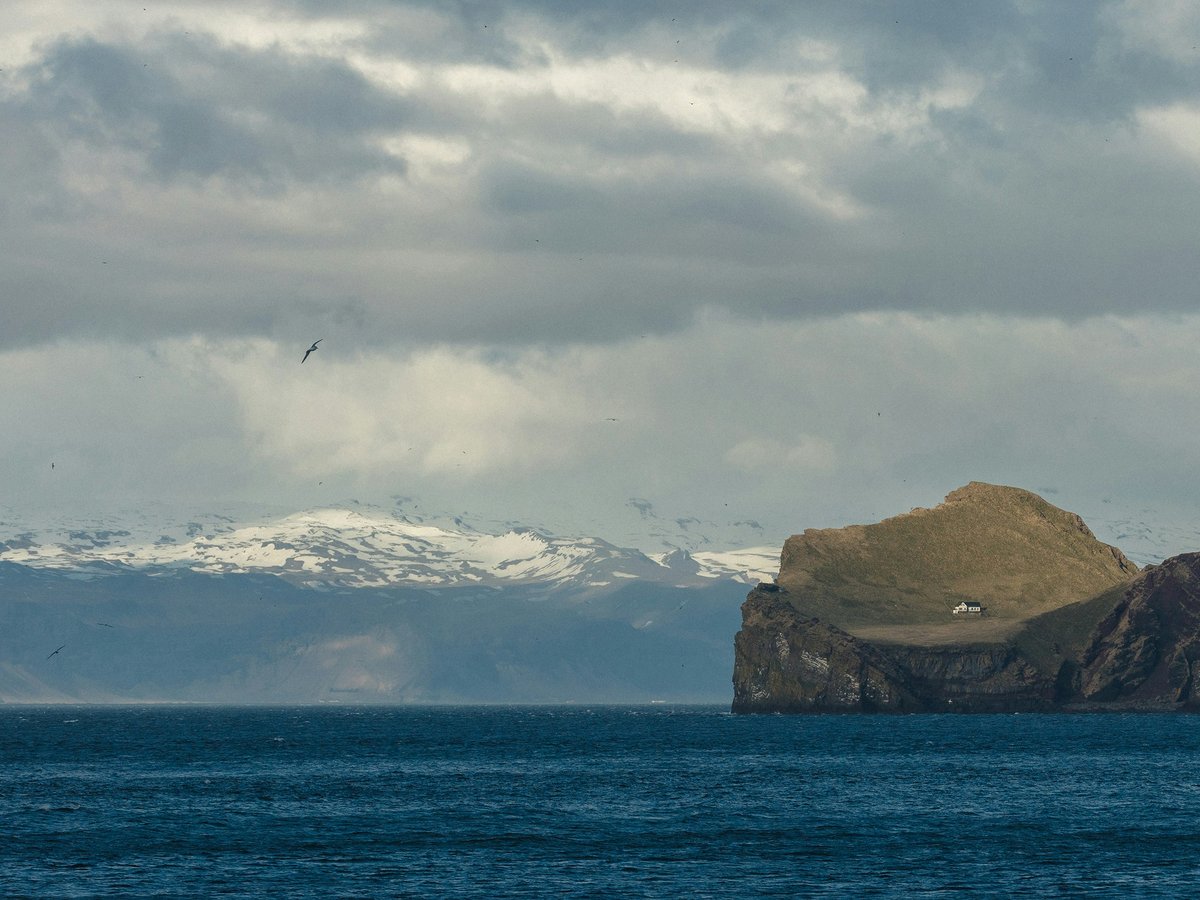
Stay in Vestmannaeyjar in July
7 hotels in the Trip.com pool for Vestmannaeyjar, from US$70 a night.
Opens Trip.com on Fri 2 Jul to Sun 4 Jul 2027; change the dates there.
July in Vestmannaeyjar means puffins. Around 8 to 10 million Atlantic puffins breed on these volcanic islands each summer, and July is when the colonies at Stórhöfði headland are at their most active. That's the headline. The supporting cast is decent, too. Average highs reach 12°C (54°F) with lows around 10.5°C (51°F), making this the warmest month on Heimaey, the only inhabited island in the archipelago. You'll get roughly 20 to 21 hours of functional daylight, with the sun barely dipping below the horizon around midnight.
That said, 'peak summer' on a windswept island 15 kilometres off Iceland's south coast still means 86% humidity, 13 rainy days, and wind that can feel cutting even at noon. Fog rolls in without much warning across the harbour. You might wake to blue sky over Eldfell volcano and eat lunch in sideways rain near Skansinn. The 90mm of monthly rainfall is the lowest of any month here, which tells you plenty about the rest of the year. Mind you, wind is the real adversary. Stórhöfði is consistently ranked among the windiest spots in Europe, and even the harbour side of Vestmannaeyjabær feels exposed on a rough day.
Still, July is the clear best window to visit. The Herjólfsdalur valley turns green, the 1973 Eldfell lava fields are walkable without ice, and the town's 4,500 residents settle into a summer rhythm. Restaurants along Bárustígur tend to open their outdoor seating when the wind cooperates, and the harbour fills with boats running puffin-watching tours. If you're timing a trip around the famous Þjóðhátíð festival, that typically starts the last days of July and runs through the first weekend of August. Late July visitors will catch the Herjólfsdalur festival grounds being assembled, and that buildup carries its own atmosphere.
Why visit in July
- Peak Atlantic puffin breeding season, with colonies of 8 to 10 million birds concentrated on Stórhöfði and the outer islands. Clifftop viewing platforms put you within 3 to 5 metres of active burrows.
- Warmest month of the year at 12°C (54°F) average high, with 20 to 21 hours of daylight and near-midnight sun lighting the volcanic landscape.
- Driest month at 90mm rainfall, compared to 154mm in January and 185mm in February, making cliff walks and outdoor exploration more reliable.
- Eldfell volcano's 1973 lava fields, Eldheimar museum, and the Skansinn historic area are all fully accessible without ice or snow.
- Þjóðhátíð festival preparations begin in late July at Herjólfsdalur, giving early arrivals a preview of Iceland's largest outdoor gathering.
Worth knowing
- Wind, fog, and rain remain constant companions even at peak summer. Expect 13 rainy days and gusts that make Stórhöfði headland genuinely difficult to stand on.
- Accommodation on Heimaey is limited to roughly 8 to 10 guesthouses and hotels. July availability often sells out 4 to 6 weeks ahead.
- Peak-season pricing across Iceland extends to Vestmannaeyjar. Ferry tickets, flights, and lodging all cost 30 to 50% more than shoulder months.
- The Herjólfur ferry from Landeyjahöfn is prone to cancellation from sand buildup and rough seas, which can strand visitors for a day or more.
Best for
Think twice if
July is the warmest and driest month in Vestmannaeyjar, though both terms are relative on a North Atlantic island. The average high reaches 12°C (54°F) with lows around 10.5°C (51°F). That narrow 1.5-degree gap between day and night reflects the near-constant daylight, with the sun hovering above or near the horizon for 20 to 21 hours. Rainfall averages 90mm across 13 days, the lowest total of any month. Humidity sits at 86%, which you'll feel as a persistent damp chill that the wind amplifies. Fog can appear within minutes on the cliffs south of town, especially around Stórhöfði. Even on calm days in Vestmannaeyjabær, the headlands might be getting 40 to 50 km/h gusts.
Seasonal caution
- Wind speeds at Stórhöfði headland frequently exceed 50 km/h (31 mph) even in July. The cliff edges have no guardrails in many sections. Check local wind reports before hiking the southern coast.
- Fog can reduce visibility to under 50 metres within minutes, particularly on the southern half of Heimaey. Carry a charged phone with GPS if walking the cliff trails.
Year-round climate
Averages from the last 5 years.
| Month | Avg high (°C) | Avg low (°C) | Rainfall (mm) |
|---|---|---|---|
| Jan | 5 | 1 | 154 |
| Feb | 6 | 3 | 185 |
| Mar | 5 | 3 | 139 |
| Apr | 7 | 4 | 110 |
| May | 8 | 7 | 109 |
| Jun | 10 | 8 | 97 |
| Jul | 12 | 11 | 90 |
| Aug | 12 | 11 | 120 |
| Sep | 11 | 9 | 163 |
| Oct | 8 | 6 | 146 |
| Nov | 7 | 4 | 163 |
| Dec | 5 | 2 | 154 |
Headline events
Þjóðhátíð í Eyjum (Westman Islands National Festival)
Late July to first Monday of August (dates shift yearly with the Verslunarmannahelgi bank holiday weekend)
Iceland's largest outdoor festival draws 15,000 to 17,000 people to Herjólfsdalur valley for 4 days of bonfires, live music, fireworks, and the traditional singing of national hymns in the natural amphitheatre. The festival typically begins in the last days of July and runs through the first Monday of August (Verslunarmannahelgi). For an island of 4,500 residents, the population triples. Camping in Herjólfsdalur is the traditional way to attend.
Best things to do in July
Puffin watching at Stórhöfði headland
wildlifeWalk to the clifftop viewing platforms at Stórhöfði, about 6 km south of Vestmannaeyjabær, where Atlantic puffins nest by the thousands in burrows along the cliff edges. You'll see them landing with beaks full of sand eels, shuffling around their burrows, and launching off the cliffs with that distinctive rapid wingbeat. The smell of guano and sea salt is strong up here. Bring binoculars, though the birds are often within 3 to 5 metres of the platforms.
July is peak breeding season. Puffins are feeding chicks and most active at the burrows, particularly before 9am and after 7pm.Booking tipNo booking required. The platforms are free and open. Drive or take a taxi from town. Go before 9am or after 7pm for the most active bird traffic.
Hiking the Eldfell volcano crater rim
hikingThe 30 to 45 minute hike up Eldfell, the volcano that erupted on 23 January 1973 and nearly buried Vestmannaeyjabær, takes you to a 200-metre summit with views across the entire archipelago. The ground near the crater still radiates warmth in places, over 50 years after the eruption. Red and black scoria crunches underfoot. On clear days, you can see Eyjafjallajökull glacier on the mainland.
July's snow-free conditions and long daylight make the loose-scoria trail safe and allow summit visits as late as 10pm.Booking tipNo booking needed. The trailhead is at the eastern edge of town, a 10-minute walk from Bárustígur.
Eldheimar eruption museum
museumEldheimar is built around an actual house excavated from the 1973 lava flow, preserved mid-burial. The exhibition walks through the night of 23 January 1973 when 5,300 residents evacuated Heimaey by fishing boat in 6 hours. The ash-filled rooms feel like a time capsule. The museum conveys the scale of it effectively without leaning on melodrama.
Summer hours mean extended opening, typically 10am to 6pm. The Goslokadagurinn commemoration around 3 July adds context to any visit.Booking tipWalk-in admission works most days, though weekends with cruise ships can get crowded. Arrive before noon.
Boat tour around the Vestmannaeyjar archipelago
boat tourSeveral operators run 1 to 2 hour tours from Vestmannaeyjabær harbour, circling Heimaey's sea caves, passing Bjarnarey and Elliðaey (with its famous lone house), and motoring through bird cliffs dense with guillemots, razorbills, and fulmars. The North Atlantic swell means you'll feel the boat move, and the salt spray and engine diesel mix into a particular scent you'll remember.
July offers the calmest sea conditions of the year and peak seabird nesting activity across the archipelago.Booking tipBook 3 to 5 days ahead for weekend departures. Tours run most days in July but cancel in high wind.
Walking the 1973 lava flow boundary through town
walking tourThe eastern edge of Vestmannaeyjabær is defined by the 1973 lava flow. You can walk along the boundary where the lava stopped, sometimes mid-street, and see where neat Icelandic homes sit beside raw volcanic rock 5 metres high. Plaques mark where streets and buildings once stood before the eruption buried them.
Snow-free ground makes the full boundary walk feasible, and long daylight allows self-guided evening walks with good visibility.Booking tipFree and self-guided. Pick up a lava walk map at Eldheimar museum.
Sprangan (cliff rope-swinging) at Herjólfsdalur
cultural activitySprangan is a traditional Vestmannaeyjar activity where participants swing on long ropes from cliff faces, originally developed by islanders collecting bird eggs. The cliffs at Herjólfsdalur have fixed rope points, and locals practise here through summer. Watching experienced practitioners swing out over the valley is something.
The Sprangan ropes at Herjólfsdalur are set up during the summer months, with July being the most active period before the Þjóðhátíð festival.Booking tipNo formal booking. Ask locally at the Herjólfsdalur campsite about practice sessions.
Helgafell summit walk at sunset
hikingHelgafell, the older and smaller of Heimaey's two volcanoes at roughly 230 metres, offers a 20 to 30 minute climb with panoramic views of the harbour, Eldfell, and the mainland. Local folklore holds that if you walk to the summit without speaking or looking back, you get to make 3 wishes. The trail is gentler than Eldfell's loose scoria.
Near-midnight sun in July makes late-evening summit walks possible. The 10pm light across the harbour toward Eyjafjallajökull is worth the climb.Booking tipFree, open access. The trailhead is in western Vestmannaeyjabær, about 15 minutes on foot from the harbour.
What to eat in July
In season: fruit
Rabarbari (rhubarb) desserts
Icelandic rhubarb reaches peak season in July. On Heimaey, you'll find it in tarts, jams, and compotes at bakeries and guesthouses. The stalks grow thick in the long daylight hours, turning up in everything from skyr to cakes.
Bláber (wild bilberries)
Wild bilberries start appearing on Heimaey's grassy slopes in late July. Locals pick them casually while hiking. They're smaller and more tart than cultivated blueberries, often showing up in skyr desserts at guesthouses.
On menus now
Fresh-caught ýsa (haddock)
Vestmannaeyjar's fishing fleet brings in peak summer haddock catches through July. The harbourside restaurants tend to serve it pan-fried with butter within hours of landing. The texture is noticeably different from anything that's been frozen or trucked to Reykjavík.
Rúgbrauð (Icelandic rye bread)
This dense, dark, slightly sweet bread appears alongside most July meals in Vestmannaeyjar. Traditionally slow-baked for up to 24 hours, it pairs with the fresh-caught fish and smoked meats that define island cooking.
Street food peaks
Harðfiskur (wind-dried fish)
Wind-dried haddock or cod, torn into strips and eaten with butter. Available year-round, but the summer batches dried in June and July winds have a particular reputation among locals on Heimaey.
Regular events in July
Goslokadagurinn (End of Eruption Day)Free
Commemorates 3 July 1973, the date the Eldfell eruption was officially declared over after 5 months of continuous volcanic activity. Local gatherings and events at Eldheimar museum mark the anniversary. The 1973 eruption displaced all 5,300 residents and added roughly 2.5 square kilometres of new land to Heimaey.
Around 3 JulyÞjóðhátíð setup and early gatherings at HerjólfsdalurFree
In the last week of July, Herjólfsdalur valley begins its transformation for Þjóðhátíð. Stages, sound systems, and temporary infrastructure go up. Early arrivals set up camp, and informal gatherings start days before the official festival programme begins. The atmosphere in Vestmannaeyjabær shifts noticeably as supplies and visitors arrive by ferry.
Last week of JulySæheimar summer exhibition programme
Sæheimar natural history museum runs extended summer programmes through July, with displays on Vestmannaeyjar's seabird populations, marine life, and volcanic geology. The museum has historically rehabilitated injured puffins, and summer visits sometimes coincide with active bird care.
Throughout July, dailyBest places this July
Stórhöfði headland
nature/wildlifeThe southern tip of Heimaey and one of the best land-based puffin viewing sites in the North Atlantic. Clifftop platforms sit within metres of active puffin burrows in July. A small weather station here records some of the highest sustained wind speeds in Europe. The drive from Vestmannaeyjabær takes about 10 minutes on a paved road.
StórhöfðiEldheimar museum
museumThe eruption museum built around an excavated house buried by the 1973 Eldfell lava flow. Multimedia exhibitions walk through the night of the evacuation and the 5 months of eruption that followed. Summer hours in July typically run 10am to 6pm.
Town centreSkansinn and Stafkirkjan (stave church)
historic siteThe old fort site on the harbour cliff, with views north toward Eyjafjallajökull. The wooden stave church was a gift from Norway to Iceland in the year 2000, marking 1,000 years of Christianity in Iceland. The views are particularly clear on calm July days when the mainland glaciers are visible.
SkansinnHerjólfsdalur valley and campsite
park/campsiteA natural amphitheatre formed by an ancient volcanic crater. Herjólfsdalur hosts the Þjóðhátíð festival and has a year-round campsite, a small golf course, and cliff-face Sprangan ropes. In July, the valley floor is green and the cliffs full of nesting birds. The acoustics of the natural bowl are remarkable.
HerjólfsdalurEldfell volcano
volcano/hikingThe 200-metre volcanic cone that erupted on 23 January 1973. The trail to the summit crosses red and black scoria, and the crater rim still radiates warmth in places. From the top, you can trace the entire lava flow that expanded Heimaey and nearly sealed the harbour.
Eastern lava fieldVestmannaeyjabær harbour (Tanginn)
harbourThe working heart of the island. Fishing boats unload catches, puffin tour boats depart from the quay, and the Herjólfur ferry docks here. In July, the harbour stays active late into the evening light. The fish-market smell carries across the water on still mornings.
TanginnSæheimar natural history museum
museumA small museum focused on Vestmannaeyjar's birdlife and marine ecology. It has historically housed rescued puffins during rehabilitation, and summer visits in July sometimes coincide with active bird care. The volcanic history displays complement Eldheimar's focus on the 1973 eruption.
Town centreLandakirkja
churchVestmannaeyjabær's main church, a white modernist structure near the town centre. It played a role in the 1973 evacuation. The graveyard holds memorials to islanders lost at sea over the centuries, a reminder that this has always been a fishing community first.
Town centre
Your packing checklist
Tick items off as you pack. Your progress saves in this browser.
All packed — have a great trip.
Insider tips
The puffin viewing platforms at Stórhöfði are free, open around the clock, and often better than the paid boat tours for close-range observation. Most tourists book boat trips and miss the land-based option entirely. Go between 7am and 9am for the most active burrow traffic.
Book Herjólfur ferry vehicle spaces at least 3 weeks ahead for July. Foot passenger tickets are easier to get, but arriving without a car limits access to Stórhöfði and the southern coast. The island has no public bus service.
If the Landeyjahöfn ferry is cancelled due to sand or sea conditions (this happens several times each July), the backup route runs from Þorlákshöfn. That crossing takes roughly 3 hours instead of 35 minutes. Check the Herjólfur website the morning of departure.
The lava field on Heimaey's eastern side is still warm in spots, over 50 years after the 1973 eruption. If you press your hand a few centimetres into the scoria on Eldfell's upper slopes, you'll feel residual heat. Locals know exactly where the warm patches are.
Vestmannaeyjabær's grocery stores stock basics but selection is limited, especially for fresh produce. If you're self-catering at a guesthouse, buy supplies in Selfoss or Reykjavík before catching the ferry.
Avoid these mistakes
- Dressing for 12°C without accounting for wind chill. The thermometer is misleading on Heimaey. At Stórhöfði, 12°C with 40 km/h wind feels like 6 or 7°C. Visitors in lightweight jackets are visibly miserable within 20 minutes.
- Planning a day trip from Reykjavík. The drive to Landeyjahöfn takes about 2 hours, the ferry crossing is 35 minutes, and the island needs at least a full day of exploration. With ferry scheduling, a day trip leaves you 4 to 5 hours on the island. That's not enough for both Stórhöfði and Eldheimar.
- Trying to see puffins at midday. The birds are out fishing from late morning through late afternoon. The best burrow activity at Stórhöfði happens before 9am and after 7pm, which the long July daylight makes entirely feasible.
- Not having a backup plan for ferry cancellations. The Landeyjahöfn harbour is affected by sand buildup from glacial rivers draining Mýrdalsjökull. Cancellations happen with little warning. Build at least one buffer day into your schedule.
Practical tips for July
Book accommodation on Heimaey 4 to 6 weeks ahead for July. The island has limited beds, and Þjóðhátíð preparations at month's end fill whatever remains. Reserve Herjólfur ferry vehicle spots 3 weeks ahead, foot passenger tickets at least 1 week. Flights from Reykjavík domestic airport on Ernir take about 20 minutes but run limited schedules, often one or two departures per day. Bring Icelandic króna for smaller establishments, though most places accept cards. Restaurants in Vestmannaeyjabær tend to stop serving dinner by 9pm, despite the bright sky suggesting otherwise. If you're camping at Herjólfsdalur, bring a 4-season tent or at least a wind-rated 3-season model, as gusts funnel through the valley even in July. Mobile coverage on Heimaey is reliable in town but can drop on the southern coast near Stórhöfði. There is no public transport on the island. Walking from the harbour to Stórhöfði takes about 90 minutes each way. Taxis exist but are limited in number.
FAQ
Is July a good time to visit Vestmannaeyjar?
July is the best month of the year for Vestmannaeyjar. It's the warmest (average high 12°C / 54°F), the driest (90mm of rainfall), and has the longest daylight at 20 to 21 hours. Atlantic puffin colonies at Stórhöfði are at peak breeding activity. That said, 'best' still means wind, fog, and about 13 rainy days on average. You will need full weatherproof gear. It's not warm-weather travel by any stretch, but it is the most reliable window for exploring the islands.
How do I get to Vestmannaeyjar from Reykjavík?
Two main options. The Herjólfur ferry runs from Landeyjahöfn (about a 2-hour drive southeast of Reykjavík) with a 35-minute crossing to Heimaey. Book vehicle spots at least 3 weeks ahead for July. Ernir also flies from Reykjavík domestic airport in about 20 minutes, typically one or two flights daily. If the Landeyjahöfn harbour closes due to sand buildup, the ferry reroutes to Þorlákshöfn, adding about 2.5 hours to the crossing time.
What is the weather like in Vestmannaeyjar in July?
Cool, windy, and frequently damp. Average high is 12°C (54°F), average low 10.5°C (51°F), with 90mm of rain across roughly 13 days. Humidity runs at 86%. Wind is the defining factor here. Exposed headlands like Stórhöfði regularly see 40 to 50 km/h gusts even on otherwise calm days. Pack full waterproof and windproof layers regardless of the forecast.
Is Vestmannaeyjar crowded in July?
By Vestmannaeyjar standards, yes. The island's 4,500 residents are joined by several hundred tourists daily throughout July, and the limited guesthouses and restaurants mean you'll notice the increase. It never approaches the density of a popular European summer destination, but accommodation sells out and Stórhöfði's viewing platforms can have 15 to 20 people at peak times. The last days of July bring a noticeable spike as Þjóðhátíð festival preparations begin.
Can I see puffins in Vestmannaeyjar in July?
July is the single best month for puffin watching in the Westman Islands. Around 8 to 10 million Atlantic puffins breed across the archipelago, and the land-based viewing platforms at Stórhöfði headland put you within 3 to 5 metres of active burrows. The birds are most active early morning before 9am and evening after 7pm. Boat tours from the harbour also pass sea cliffs where puffins nest alongside guillemots and razorbills. No booking is needed for Stórhöfði. It is free and open at all hours.
Find a flight to Vestmannaeyjar
Live fares to Vestmannaeyjar appear here once cookies are accepted.
Last verified by automated review (v1.7.2) on . What is automated review?