Stay in Vestmannaeyjar in January
7 hotels in the Trip.com pool for Vestmannaeyjar, from US$70 a night.
Opens Trip.com on Fri 1 Jan to Sun 3 Jan 2027; change the dates there.
January in Vestmannaeyjar is dark, wind-battered, and raw. That is the single most important thing to know. The sun barely clears the horizon, offering roughly 5 hours of usable daylight around the winter solstice's tail end, with highs near 5°C (41°F) and lows hovering at 1.4°C (35°F). Gale-force winds off the North Atlantic regularly cancel the Herjólfur ferry from Landeyjahöfn, which means you might find yourself stuck on Heimaey for a day or two longer than planned. Flights from Reykjavík domestic airport land at Vestmannaeyjar Airport, but those get scratched in bad weather too. This is not a month that forgives poor planning.
That said, January has a stubborn appeal if you are the right kind of traveler. The Þrettándinn bonfires on January 6th light up the harbor and the hillside above Skansinn, with half the town's 4,500 residents singing in the cold. Later in the month, Þorri season opens with Bóndadagur, and local restaurants start serving þorramatur, the fermented-and-dried midwinter spread that ranges from surprisingly good (hangikjöt, the cold-smoked lamb) to genuinely challenging (hákarl, the fermented shark that smells like industrial ammonia). Northern Lights appear regularly over Stórhöfði headland on clear nights, though clear nights in January are the exception rather than the rule. You might get 8 or 10 in a month.
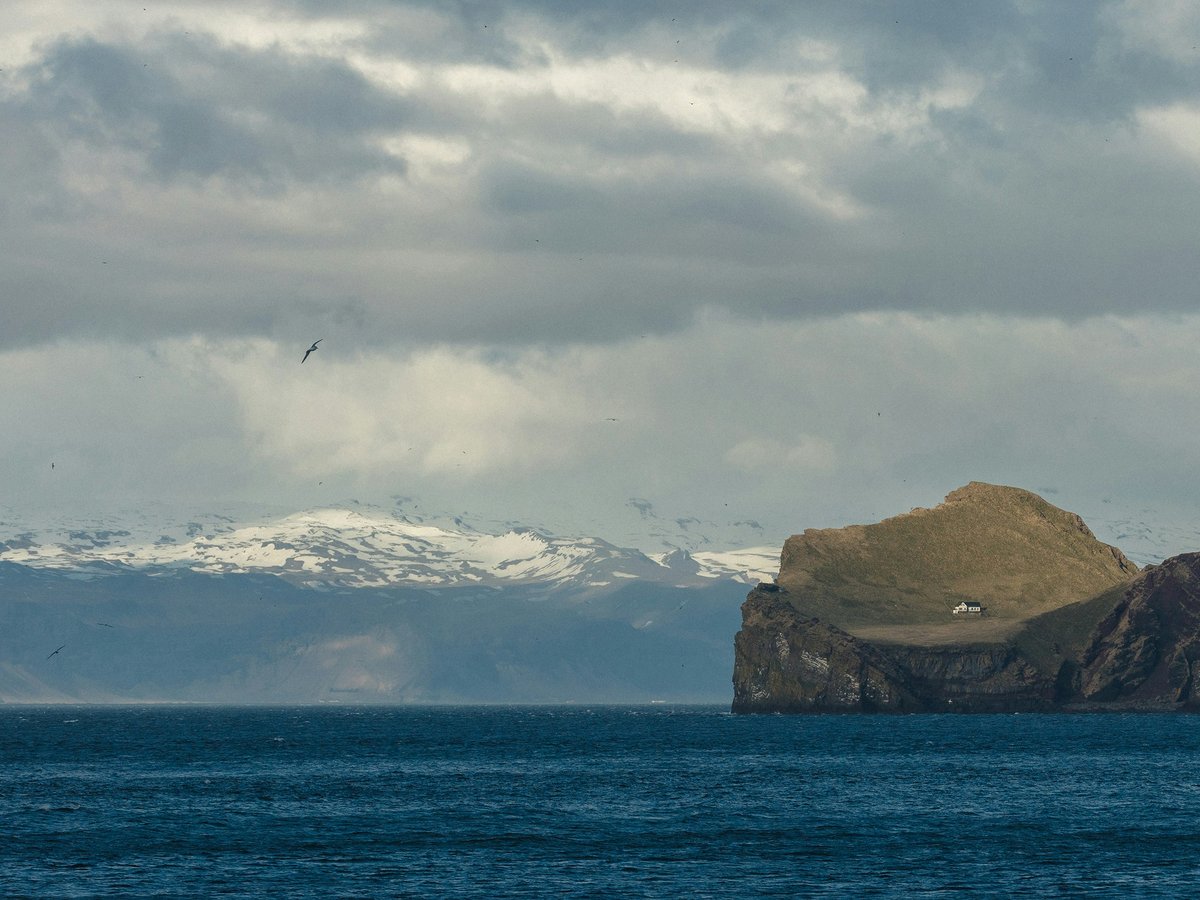
Vestmannaeyjar in January feels like a place that has drawn inward. The puffin cliffs at Stórhöfði are empty, the Þjóðhátíð festival grounds in Herjólfsdalur sit silent, and the harbor belongs to the fishing boats rather than the whale-watching tours. Eldheimar museum and Sæheimar aquarium stay open, and the walks up Eldfell volcano remain accessible if the wind allows it. The 1973 lava is still warm in places underfoot, which is a strange comfort when everything else is freezing. Mind you, this is a place for people who find beauty in weather-beaten isolation, not for anyone expecting a polished winter resort.
Why visit in January
- Northern Lights are visible on clear nights, with Stórhöfði headland offering some of the darkest skies in southern Iceland, free from light pollution.
- Þrettándinn (January 6th) brings community bonfires and singing at Skansinn, one of Iceland's more intimate Twelfth Night celebrations, attended by most of the island's residents.
- Deep off-season pricing. Guesthouses on Heimaey that charge 25,000-35,000 ISK per night in summer drop to 12,000-18,000 ISK in January. Ferry tickets are easy to get without booking ahead.
- Þorri season starts late January, and local restaurants serve traditional þorramatur platters that are harder to find in Reykjavík outside of dedicated Þorrablót events.
- The island feels genuinely lived-in rather than tourist-oriented. You'll share Kaffi Kró with fishing crews, not tour groups.
Worth knowing
- Daylight is limited to roughly 5 hours, from about 10:30 AM to 3:30 PM, which compresses sightseeing into a narrow window.
- Herjólfur ferry cancellations from Landeyjahöfn happen frequently due to North Atlantic storms. In a bad January week, 2 or 3 sailings out of 7 might get scratched.
- Wind chill regularly pushes the perceived temperature well below freezing despite air temps near 1-5°C (35-41°F). Walking the Eldfell trail in a 60 km/h gust is a different proposition than in July.
- Most wildlife tourism is dormant. Puffins do not return to the cliffs until late April, and whale-watching boats are in dry dock.
Best for
Think twice if
January on Vestmannaeyjar tends to be cold, wet, and dominated by Atlantic storm systems. Temperatures hover between 1.4°C (35°F) at night and 5°C (41°F) during the day, which sounds mild until the wind hits. Sustained winds of 40-60 km/h are normal, and gusts above 80 km/h happen several times a month. Expect rain on roughly 20 of the 31 days, often arriving as horizontal drizzle driven by the wind rather than heavy downpours. Snow falls occasionally but rarely sticks at sea level. Humidity sits around 75%. The 154mm of rainfall is moderate by Vestmannaeyjar standards, since February typically dumps 185mm.
Seasonal caution
- North Atlantic winter storms can bring sustained winds above 80 km/h (50 mph), strong enough to knock an adult off balance on exposed trails like the Stórhöfði path. Check vedur.is forecasts before heading out.
- Wind chill regularly drops perceived temperatures to -5°C to -10°C (23°F to 14°F) despite above-freezing air temps. Exposed skin risks frostnip within 15-20 minutes in strong gusts.
- Herjólfur ferry service from Landeyjahöfn is frequently disrupted by wave height. The backup route via Þorlákshöfn adds 2.5 hours. Always have a flexible schedule.
Year-round climate
Averages from the last 5 years.
| Month | Avg high (°C) | Avg low (°C) | Rainfall (mm) |
|---|---|---|---|
| Jan | 5 | 1 | 154 |
| Feb | 6 | 3 | 185 |
| Mar | 5 | 3 | 139 |
| Apr | 7 | 4 | 110 |
| May | 8 | 7 | 109 |
| Jun | 10 | 8 | 97 |
| Jul | 12 | 11 | 90 |
| Aug | 12 | 11 | 120 |
| Sep | 11 | 9 | 163 |
| Oct | 8 | 6 | 146 |
| Nov | 7 | 4 | 163 |
| Dec | 5 | 2 | 154 |
Holidays and festivals in January
Public holidays
- New Year's Day(Nýársdagur)1 January 2027
Headline events
Þrettándinn (Twelfth Night Bonfires)
January 6
The close of the Icelandic Christmas season on January 6th. Heimaey residents build large bonfires near Skansinn and along the harbor, sing traditional songs, and set off fireworks. The celebration draws most of the island's population outdoors despite the cold. It traces back to the belief that elves move between dwellings on this night.
Best things to do in January
Northern Lights viewing from Stórhöfði
natureThe Stórhöfði headland on Heimaey's southern tip has minimal light pollution and a wide northern horizon. On clear January nights, aurora displays reflect off the surrounding ocean. The drive from town takes 10 minutes, and there is a small parking area near the old meteorological station. Dress for serious wind exposure.
January's extended darkness (19+ hours) and Vestmannaeyjar's southern latitude give frequent aurora windows. The headland's isolation from town lights makes faint displays visible.Booking tipNo booking needed. Check the Icelandic Met Office aurora forecast (vedur.is) after 8 PM. A KP index of 3 or above usually delivers visible activity from Stórhöfði.
Eldfell volcano hike
hikingThe 200-meter (656-foot) climb up Eldfell takes 30-45 minutes on a scoria trail. The volcano erupted in January 1973, burying 400 homes. In places, the ground still radiates faint warmth from residual geothermal heat 50+ years later. On clear days, the summit offers views across to Surtsey and the mainland glaciers. January demands windproof layers and sturdy boots.
Snow dusts the red-and-black scoria, creating stark contrasts ideal for photography. Winter light hits the lava fields at extreme low angles in the early afternoon, and you will likely have the trail entirely to yourself.Booking tipFree and unguided. Start by 11 AM to get the best of the short daylight window. Abandon the attempt if sustained winds exceed 50 km/h.
Eldheimar museum visit
museumBuilt around a house excavated from the 1973 Eldfell eruption's tephra, Eldheimar tells the story of the evacuation of 5,300 people in a single night. The preserved home sits under a glass atrium, ash still on the kitchen table. The documentary footage of lava flowing through Vestmannaeyjar's streets is striking. Allow 1.5-2 hours.
January is the anniversary month of the 1973 eruption (it began January 23). The museum sometimes hosts commemorative talks or screenings around that date. With few visitors, staff tend to offer longer, more personal conversations about the event.Booking tipOpen year-round, typically 11 AM to 5 PM in winter. Confirm hours at eldheimar.is, as they occasionally close for maintenance in deep off-season weeks.
Þrettándinn bonfire celebration
cultural eventOn the evening of January 6th, Heimaey residents gather at bonfires near Skansinn and along the harbor for the close of the Christmas season. There is singing, fireworks, and a palpable sense of community. The fires are large, the crowd is small (a few hundred people), and visitors are welcomed warmly. Dress for standing outdoors in 2°C wind for 1-2 hours.
Þrettándinn only happens on January 6th. It is one of the few winter events that draws the whole Heimaey community outdoors, and the bonfire-against-dark-ocean backdrop is unique to the Westman Islands' setting.Booking tipNo booking. Show up at the bonfire site near Skansinn around 7-8 PM. Bring a thermos of hot chocolate or coffee.
Sæheimar aquarium and natural history museum
museumSæheimar houses rescued puffins, a small aquarium with local fish species, and natural history exhibits covering Vestmannaeyjar's volcanic geology and seabird colonies. The rescued pufflings are hand-fed by staff, and January is quiet enough that the staff often let visitors help. The collection of Surtsey eruption artifacts is worth 45 minutes alone.
With puffin colonies empty until April and outdoor wildlife viewing limited, Sæheimar is the best way to encounter Vestmannaeyjar's birdlife in January. The rescued puffins are year-round residents.Booking tipOpen most days in winter but hours vary. Call ahead or check locally, as the museum is volunteer-staffed in off-season.
Harbour walk and fresh fish buying
local experienceVestmannaeyjar's harbor (Hafnarbakki) is Iceland's largest fishing port by volume. In January, the fleet works cod and haddock. Walking the harbor in the morning, you'll see boats unloading, smell salt and diesel, and hear the screech of gulls competing for scraps. Fresh fish can sometimes be bought directly from the processing sheds at prices well below Reykjavík retail.
January is peak cod season in Icelandic waters. The harbor is at its most active, with boats coming and going despite the weather. Summer shifts the harbor's character toward tourism. Winter is when it works.Booking tipThe harbor is most active between 7 AM and noon. No booking needed, but be respectful of working crews and stay clear of crane operations.
Sprangan cliff rope swing
sightseeingA rope hangs from the cliff edge at Sprangan on Heimaey's western coast, used by locals to swing out over the sea in a tradition linked to historical egg-collecting on the bird cliffs. In January, this is strictly a spectator or local-knowledge activity. The ropes are weathered, the rocks are wet, and the drop is real. Worth seeing even if you do not swing.
January's dramatic seas below the cliffs make the site visually striking. Few tourists visit, so you can observe without the summer crowds. Some locals still swing year-round, which is a sight in itself.Booking tipFree access. Walk from town along the western coastal path, roughly 20 minutes. Do not attempt the swing without local guidance, especially in winter conditions.
What to eat in January
On menus now
Hangikjöt
Cold-smoked lamb, sliced thin and served on dark rúgbrauð (rye bread). A staple of the Þorri season platters that appear on Heimaey menus from late January. The smoking traditionally uses dried sheep dung or birch, giving the meat a distinctly earthy flavor.
Plokkfiskur
A fisherman's stew of mashed fish, potatoes, onions, and béchamel. Heimaey's version tends to use whatever the day boats brought in, often cod or haddock. Warm and filling on a 3°C afternoon. Available at Gott restaurant and most guesthouses.
Kjötsúpa
Traditional Icelandic lamb soup with root vegetables, herbs, and chunks of tender lamb. A winter staple across Iceland, but Vestmannaeyjar's version often includes locally grown angelica. Restaurants on Heimaey serve it as a lunch special throughout January for around 2,500-3,000 ISK.
What to drink
Brennivín
Iceland's signature caraway-flavored schnapps, nicknamed 'Black Death' for the old label design. Served ice-cold alongside þorramatur. The pairing with hákarl is a January rite of passage on Heimaey. 40% ABV, sharp and herbal.
In markets
Harðfiskur
Wind-dried fish, usually haddock or cod, torn into strips and eaten with butter. The Vestmannaeyjar harbor dries its own supply, and January's cold, steady winds produce some of the year's best batches. High protein, oddly addictive.
Festival food
Hákarl
Fermented Greenland shark, cured for 4-5 months and served in small cubes. The ammonia smell is powerful. January's Þorrablót gatherings are the traditional setting for first-timers to try it, washed down with Brennivín (caraway schnapps). Not for the faint of stomach.
Regular events in January
Eruption anniversary commemorationsFree
Around January 23rd, the anniversary of the 1973 Eldfell eruption, Eldheimar museum and local organizations sometimes hold talks, film screenings, or small gatherings. The eruption displaced all 5,300 residents in a single night. Check locally for scheduled events, as they vary by year.
Around January 23Bóndadagur (Husband's Day)Free
The first day of the old Icelandic month of Þorri, falling on a Friday between January 19-25. Traditionally, women serve their husbands þorramatur. Restaurants on Heimaey typically launch their Þorri menus on or near this date. Not a public holiday, but a cultural marker that shifts the island's food scene for the next month.
Friday between January 19-25Þorrablót season opening
Community Þorrablót feasts begin in late January across Iceland. Vestmannaeyjar's local clubs and organizations host their own, typically at Félagsheimilið community hall. These involve þorramatur spreads, Brennivín, singing, and storytelling. Some events are open to non-members for a fee.
Late January through mid-FebruaryBest places this January
Eldheimar
museumThe 'Pompeii of the North' museum, built around a home buried by Eldfell's 1973 eruption. The preserved house sits under glass with ash still on surfaces. Interactive exhibits cover the evacuation and reconstruction. Particularly resonant in January, the eruption's anniversary month.
SkansinnSkansinn
historic siteThe oldest surviving structure area on Heimaey, including the 15th-century fort ruins and the Stafkirkjan (a replica Norwegian stave church gifted in 2000 to mark 1,000 years of Christianity in Iceland). The Þrettándinn bonfires happen here on January 6th. In January, the dark harbor backdrop behind the lit stave church is quietly dramatic.
SkansinnEldfell
volcanoThe 200-meter volcano that erupted in 1973 and nearly buried the town. The scoria trail to the summit is accessible year-round, weather permitting. The ground still holds residual heat in spots. January snow on the red-black cinder creates stark visual contrasts, and the summit view reaches to Surtsey on clear days.
Nýja hraun (1973 lava field)Stórhöfði
viewpointThe southern headland of Heimaey, home to a weather station that records some of the highest wind speeds in Europe. In summer, this is a puffin colony viewpoint. In January, it is the island's best Northern Lights spot, with unobstructed horizons and zero light pollution. The road is paved but exposed to crosswinds.
StórhöfðiHerjólfsdalur
natural areaA sheltered valley south of town where the annual Þjóðhátíð festival happens each August. In January, the valley is deserted and silent, which gives it an eerie beauty. The natural amphitheater shape blocks some wind, making it one of the more comfortable outdoor walks on a stormy day. A golf course occupies part of the valley floor.
HerjólfsdalurSæheimar
museumA small aquarium and natural history museum near the harbor. Houses rescued puffins, local marine species, and Surtsey eruption exhibits. The volunteer staff are knowledgeable and generous with time in the quiet winter months.
HafnarbakkiThe 1973 Lava Field (Nýja hraun)
geological siteThe eastern edge of town where lava from the Eldfell eruption solidified over 400 homes. Walking through the lava field in January, with snow collecting in the crevices and steam occasionally rising from warm spots, feels post-apocalyptic. Some buried streets are still partially visible.
Nýja hraun (1973 lava field)
Your packing checklist
Tick items off as you pack. Your progress saves in this browser.
All packed — have a great trip.
Insider tips
The Herjólfur ferry from Landeyjahöfn has a backup departure point at Þorlákshöfn when seas are too rough for the Landeyjahöfn crossing. The Þorlákshöfn route takes nearly 3 hours instead of 40 minutes, but it runs more reliably in January storms. Check the Eimskip/Herjólfur website the morning of travel.
Eldheimar museum staff are often willing to spend 20-30 minutes in personal conversation about the 1973 eruption if you visit on a quiet January weekday. Several staff members lived through the evacuation as children. Ask, and they will tell you stories that are not in the exhibits.
The swimming pool (Sundlaug Vestmannaeyja) on Illugagata is heated geothermally and stays open year-round. After a wind-battered walk up Eldfell, the hot pots at the pool bring feeling back to your extremities. Entry is around 1,000 ISK. Locals use it daily, and it is the social hub of the island in winter.
If you are driving on Heimaey, fill up at the N1 station near the harbor before heading to Stórhöfði. There is only one fuel station on the island, and if you get stuck in weather or need to idle the heater while waiting for Northern Lights, a full tank matters.
For þorramatur, ask at Gott or Einsi Kansen whether they are running Þorri platters starting late January. The platters are not always on the regular menu. You need to ask. Portions are generous and meant for sharing between 2-3 people.
Avoid these mistakes
- Booking only the ferry and no backup flight. The Herjólfur cancels often enough in January that arriving or departing on a fixed schedule without a flight alternative is risky. Eagle Air and Icelandair domestic both fly the 20-minute Reykjavík-Vestmannaeyjar route. Book a refundable flight as backup if your mainland connection is time-sensitive.
- Planning a full outdoor itinerary without checking vedur.is wind forecasts. A day with 70 km/h gusts means the Eldfell trail and Stórhöfði are off-limits for safety. Having indoor alternatives (Eldheimar, Sæheimar, the swimming pool) for storm days is essential.
- Underestimating the darkness. Five hours of daylight sounds manageable until you realize it is grey, low-angle light that feels more like extended twilight than daytime. Photographers expecting golden-hour conditions need to recalibrate. Pack your headlamp and plan outdoor activities between 11 AM and 2:30 PM.
- Dressing for Reykjavík weather and assuming Vestmannaeyjar will be similar. The islands sit exposed in the open Atlantic with no landmass wind shelter. Wind speeds on Heimaey regularly run 15-20 km/h higher than the mainland, and the wind chill difference is significant.
Practical tips for January
Book accommodation on Heimaey through guesthouses like Guesthouse Hamar or Hotel Vestmannaeyjar directly, as availability is limited to perhaps 4-5 options in winter and not all list on international booking sites. The Herjólfur ferry should be booked online at least 2-3 days ahead through the Eimskip website, even in low season, because sailings are reduced in winter (typically 2-3 per day versus 5-7 in summer). Restaurants keep shorter hours in January. Gott, Einsi Kansen, and Slippurinn (if open, as Slippurinn sometimes closes January through March) are the main dining options. The Vínbúðin (state liquor store) near the harbor has limited hours, often closing by 6 PM. Krónan supermarket on Strandvegur stocks basics. There is no public transit on Heimaey, but the island is small enough to walk across in 25 minutes. Renting a car is useful for Stórhöfði trips in the dark. Roads are paved but not always cleared of ice promptly, so drive slowly. Credit cards work everywhere, and carrying cash is unnecessary. Tipping is not expected in Iceland.
FAQ
Is January a good time to visit Vestmannaeyjar?
It depends entirely on what you want. For Northern Lights, volcanic landscapes in winter solitude, and Þorrablót food culture, January has genuine appeal. For puffins, hiking in long daylight, whale watching, or the Þjóðhátíð festival, January is the wrong month. Expect roughly 5 hours of daylight, frequent wind, and rain on 20 of 31 days. The average high is 5°C (41°F). This is a destination for travelers who find beauty in harsh weather and empty landscapes, not for anyone seeking a comfortable winter holiday.
What is the weather like in Vestmannaeyjar in January?
Cold, wet, and windy. The average high reaches 5°C (41°F) and the low drops to 1.4°C (35°F), but wind chill frequently pushes the perceived temperature below -5°C (23°F). Expect 154mm of rainfall across roughly 20 rainy days. Humidity sits around 75%. Snow falls occasionally but rarely accumulates at sea level. The defining feature is the wind. Sustained speeds of 40-60 km/h (25-37 mph) are routine, with gusts above 80 km/h (50 mph) several times a month.
Can you see the Northern Lights from Vestmannaeyjar in January?
Yes, and Vestmannaeyjar is a strong location for it. The island has minimal light pollution, and Stórhöfði headland offers unobstructed dark-sky views. January's 19+ hours of darkness provide ample viewing windows. The limiting factor is cloud cover. Vestmannaeyjar has frequent overcast skies, so you might need 3-5 nights on the island to catch one clear enough for a good display. Check the aurora forecast at vedur.is each evening after 8 PM.
Is the Herjólfur ferry reliable in January?
Not entirely. The ferry from Landeyjahöfn runs 2-3 times daily in winter, but January storms cancel sailings regularly. Rough weeks might see 2 or 3 cancellations out of 7 days. The backup route from Þorlákshöfn runs more reliably but takes nearly 3 hours. Domestic flights from Reykjavík take 20 minutes and are a solid backup, though they also cancel in severe weather. Build at least 1 buffer day into your schedule.
Is Vestmannaeyjar crowded in January?
Not at all. January is the quietest month on the island. You might encounter a handful of other visitors at Eldheimar museum, but the Eldfell trail, Stórhöfði headland, and Herjólfsdalur valley will likely be yours alone. Restaurants rarely need reservations. This is one of the genuine advantages of a January visit. The island's 4,500 residents go about their winter routines, and the tourist infrastructure is essentially dormant.
Find a flight to Vestmannaeyjar
Live fares to Vestmannaeyjar appear here once cookies are accepted.
Last verified by automated review (v1.7.2) on . What is automated review?