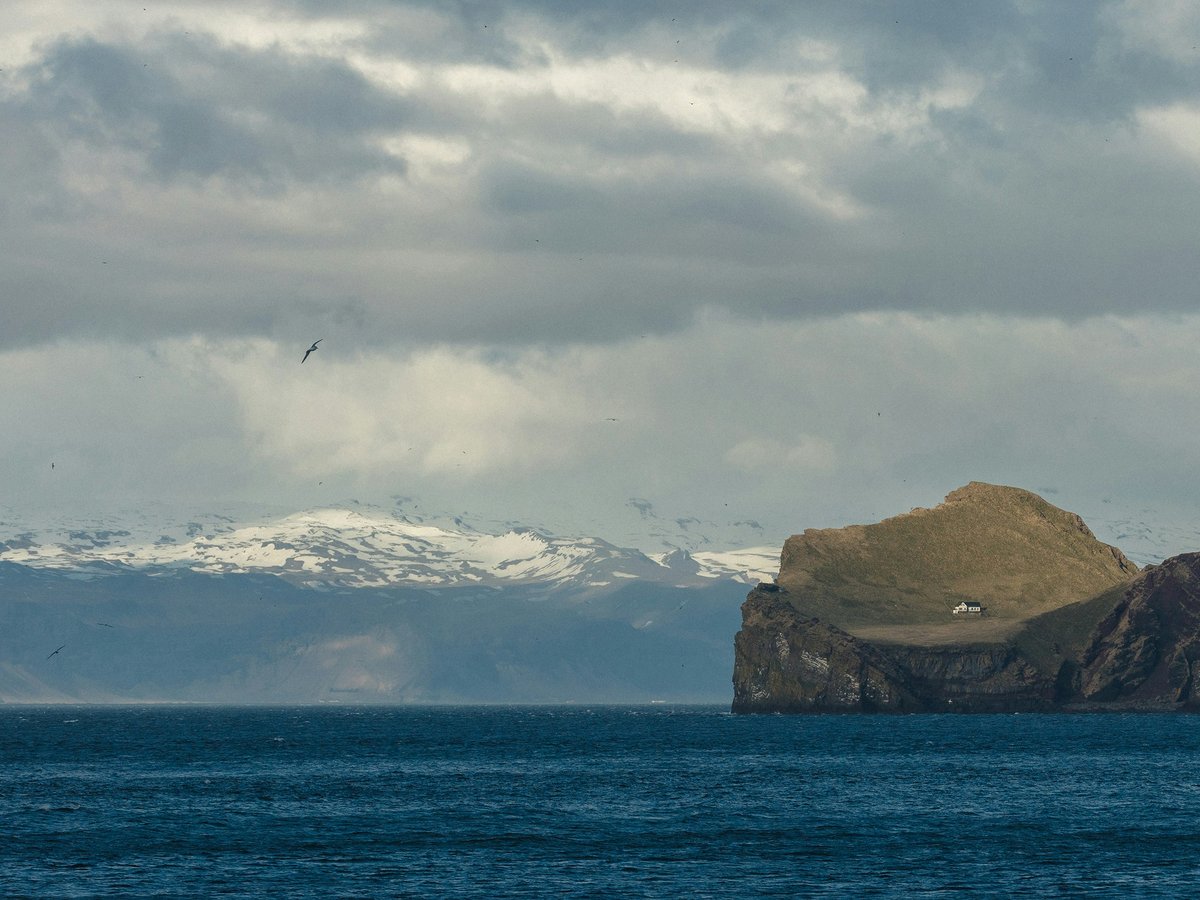
Stay in Vestmannaeyjar in November
7 hotels in the Trip.com pool for Vestmannaeyjar, from US$70 a night.
Opens Trip.com on Fri 6 Nov to Sun 8 Nov 2026; change the dates there.
The single most important thing to know about visiting Vestmannaeyjar in November is that the Herjólfur ferry from Landeyjahöfn might not run for days at a stretch. North Atlantic storms batter the Westman Islands with wind gusts that regularly reach 25-30 m/s (55-67 mph), and when the harbour conditions deteriorate, the ferry stays docked on the mainland. You could be stranded on Heimaey for an extra 2-3 days, or stuck in Landeyjahöfn unable to cross. Domestic flights from Reykjavik on Ernir operate a small prop plane, but those cancel in heavy wind too. November temperatures hover around 6.9°C (44°F) during the day and drop to 4.0°C (39°F) at night. Not brutally cold by Arctic standards, but the wind chill and horizontal rain make it feel closer to freezing. You'll get roughly 6 hours of usable daylight at the start of the month, shrinking to under 5 by month's end.
That said, the 4,500 residents of Vestmannaeyjar live here year-round, and the town doesn't shut down. The fishing fleet works through winter. The harbour still smells of salt and diesel, the Eldheimar museum stays open, and the geothermal swimming pool at Tankurinn sends steam into the dark sky every morning. The handful of visitors who do come in November tend to be Icelanders visiting family, birdwatchers tracking late-season seabirds, or northern lights chasers drawn by the low light pollution. You won't share the Eldfell crater rim with anyone.
To be fair, November sits in an awkward gap. The puffins left Heimaey by mid-August. Þjóðhátíð, the massive outdoor festival in Herjólfsdalur, is 3 months gone. The Christmas season hasn't properly started yet. First Advent, when the harbour lights go up and the town gets its winter charm, falls in late November or early December depending on the year. You're arriving before the party. If you come anyway, come for the raw volcanic landscape, the solitude, and the strange beauty of a North Atlantic island town in the dark months. Pack patience, weatherproof layers, and a flexible return plan.
Why visit in November
- Northern lights visibility is strong on clear nights, with almost zero light pollution outside the harbour area and dark skies from around 17:00 onward
- Deep off-season pricing. Guesthouses on Heimaey drop to roughly 40-50% below their July rates, and you won't compete with anyone for bookings
- The volcanic landscape takes on a different character in low light and storm conditions. Eldfell's red-and-black scoria against grey November skies is stark and photogenic in ways summer green softens
- Total solitude at sites like Stórhöfði, Herjólfsdalur, and the Skansinn fortress. In July these draw steady foot traffic. In November you might be the only person there all day
- The fishing harbour stays active through winter. Watching trawlers unload the catch at Stakkagerðistangi in the early-morning dark, with floodlights cutting through rain, is an experience specific to the off-season
Worth knowing
- Ferry cancellations from Landeyjahöfn are frequent. Expect at least 1-2 cancellation days per week in November, and plan buffer days into your trip
- Daylight drops below 6 hours by late November. Most outdoor activities require headlamps or need to be compressed into the midday window between roughly 10:30 and 16:00
- 163mm of rainfall across an estimated 17 rainy days. The rain tends to come sideways, driven by wind. A dry full day is genuinely unusual
- Several restaurants and the well-known Slippurinn close for winter. Dining options on Heimaey narrow to a handful of spots, and some may keep irregular hours
Best for
Think twice if
November on Heimaey is wet, windy, and dark. The average high reaches 6.9°C (44°F) and the low sits at 4.0°C (39°F), though wind chill frequently makes it feel several degrees colder. Expect 163mm of rain spread across roughly 17 days, often arriving as heavy horizontal squalls rather than steady drizzle. Humidity averages 77%. Snow is possible but not dominant at sea level. The defining feature is wind. Sustained speeds of 10-15 m/s are normal, with gusts above 25 m/s during storms. Calm days are the exception, not the rule.
Seasonal caution
- Wind gusts regularly exceed 25 m/s (55 mph) during November storms, strong enough to knock an adult off balance on exposed clifftops like Stórhöfði. Stay well back from cliff edges and avoid coastal walks during storm warnings
- Ferry and flight cancellations due to weather are a near-certainty at some point during a multi-day visit. The Herjólfur ferry from Landeyjahöfn and Ernir flights from Reykjavik domestic airport both suspend operations in high winds
- Daylight drops from roughly 7.5 hours on November 1 to under 5.5 hours by November 30. Outdoor hiking requires careful time planning. Carry a headlamp even for afternoon walks, as cloud cover can darken conditions well before official sunset
- Wet lava rock is extremely slippery. The 1973 Kirkjubæjarhraun lava field and Eldfell's slopes become treacherous in rain. Wear boots with strong grip and use trekking poles if you have them
Year-round climate
Averages from the last 5 years.
| Month | Avg high (°C) | Avg low (°C) | Rainfall (mm) |
|---|---|---|---|
| Jan | 5 | 1 | 154 |
| Feb | 6 | 3 | 185 |
| Mar | 5 | 3 | 139 |
| Apr | 7 | 4 | 110 |
| May | 8 | 7 | 109 |
| Jun | 10 | 8 | 97 |
| Jul | 12 | 11 | 90 |
| Aug | 12 | 11 | 120 |
| Sep | 11 | 9 | 163 |
| Oct | 8 | 6 | 146 |
| Nov | 7 | 4 | 163 |
| Dec | 5 | 2 | 154 |
Best things to do in November
Northern lights viewing from Stórhöfði
natureStórhöfði, the headland on the south tip of Heimaey, is one of the windiest places in Iceland but also one of the darkest. On a clear November night, you're facing open ocean with no light sources between you and Antarctica. The aurora appears regularly when solar activity cooperates, and without summer twilight interference the displays can run from early evening through dawn.
November darkness starts before 17:00, giving long viewing windows. No midnight sun. Minimal tourist competition for the best vantage points.Booking tipNo booking needed, but check aurora forecasts on the Icelandic Met Office site (en.vedur.is) and cloud cover maps before driving out. A clear sky is rare in November, so be ready to go on short notice when a gap opens.
Eldheimar museum visit
cultureThe Pompeii of the North museum is built around a real house excavated from the 1973 tephra fall. The exhibits walk through the eruption night of January 23, 1973, the evacuation of all 5,300 residents by fishing boat, and the 5-month struggle to save the harbour by cooling the advancing lava with seawater. The multimedia room plays original radio recordings from the evacuation. It smells faintly of volcanic dust even now.
November weather drives you indoors frequently. This is a 2-3 hour museum that rewards slow attention, and in November you'll likely have the exhibits to yourself.Booking tipCheck winter opening hours before visiting. The museum sometimes shifts to reduced hours (weekends only or shortened weekdays) in late autumn.
Eldfell crater hike
hikingThe 200m (660 ft) volcano that erupted in 1973 is a 30-45 minute hike from town. The trail climbs through red and black scoria, and near the summit the ground is still warm to the touch in places, nearly 50 years after the eruption. On a clear November day, the summit gives you a 360-degree view of the archipelago, Surtsey to the south, and the mainland glaciers to the north.
The warm volcanic ground contrasts sharply with the cold November air. Steam rises from vents on damp days. The lava colours are more saturated when wet, and the low-angle winter light creates long shadows across the crater.Booking tipNo booking. Time it for the midday light window between 11:00-14:00. Bring trekking poles for the loose scoria, which gets slippery in rain. Do not attempt in high wind.
Geothermal pool session at Tankurinn
wellnessThe local swimming pool has outdoor hot pots ranging from 38-44°C (100-111°F), a lap pool, and a steam room. Sitting in 42°C water while November rain hits your face and steam billows into darkness is a specifically Icelandic experience. The pool is a social hub, and this is where locals spend winter evenings.
Cold, dark November makes hot-pot culture peak. The temperature contrast between the 4°C air and the 42°C water is at its most dramatic. Locals are regulars and the pool has a communal, unhurried atmosphere absent in tourist season.Booking tipNo booking. Bring your own towel or rent one. Follow the posted shower rules carefully. Locals take the pre-swim shower protocol seriously.
Walking the 1973 Kirkjubæjarhraun lava field
natureThe lava flow that nearly closed Heimaey's harbour solidified into a black, textured landscape that now borders the eastern edge of town. You can walk along its edges and in some places climb onto it. Houses that were half-buried in 1973 are visible at the lava margin, with walls disappearing into solid rock. The scale of the flow is difficult to grasp until you stand at the edge where lava meets a residential street.
Rain darkens the lava to deep black and fills crevices with small reflecting pools. Moss growth, which softens the field in summer, goes dormant. November shows the raw geology.Booking tipFree and always accessible. Stay on marked paths. The lava surface is sharp and uneven, with hidden crevices. Not suitable in darkness without a strong headlamp.
Sæheimar aquarium and natural history museum
cultureA small but well-curated facility with exhibits on the seabird colonies, marine life around the archipelago, and volcanic geology. Sæheimar has occasionally housed injured puffins over winter, though this varies by year. The fish tanks hold species from the local waters, and the geological exhibits complement what you see at Eldheimar.
Another strong indoor option for storm days. November limits outdoor time, and Sæheimar fills a useful 1-2 hour slot. Combined with Eldheimar and the Stafkirkjan, you can fill a full storm-bound day with indoor cultural visits.Booking tipCheck seasonal hours. Like most Vestmannaeyjar attractions, winter hours may be reduced.
Storm watching from the harbour breakwater
natureWhen a proper North Atlantic storm hits Heimaey, the waves crash against the harbour walls at Stakkagerðistangi and the breakwater with genuine force. The spray can reach 10-15 metres. Watching from behind the harbour structures, with fishing boats straining at their moorings and the wind audible through the mast rigging, is raw and dramatic. The salt smell is intense.
November brings some of the year's strongest storms to the Westman Islands. The wave energy and wind intensity peak in the November-February window. This is not a summer spectacle.Booking tipFree. Stay well behind the breakwater edge. Rogue waves can sweep over harbour walls. Watch from elevated, sheltered positions. Never turn your back to the sea in storm conditions.
What to eat in November
On menus now
Plokkfiskur
Mashed fish stew made with cod or haddock, potatoes, onions, and béchamel. This is peak comfort-food season on Heimaey, and the local catch means the fish is often hours old. The texture is dense and creamy, served with dark rúgbrauð on the side.
Kjötsúpa
Traditional Icelandic lamb soup with root vegetables, herbs, and chunks of bone-in lamb. November marks the transition into heavy soup season, and the lamb comes from the réttir autumn roundup that finished in September and October. Rich, fatty, and warming after a wet hike.
Hangikjöt
Smoked lamb that starts appearing on menus and in grocery stores as Advent approaches in late November. The meat is cold-smoked over birch and dried sheep dung, giving it a distinctive earthy flavour. Served cold on bread or warm with potatoes and béchamel.
Street food peaks
Harðfiskur with butter
Wind-dried fish, typically haddock or cod, torn into strips and eaten with cold Icelandic butter. Vestmannaeyjar has been producing dried fish for centuries, and the harbour-area drying racks still operate. The texture is chewy and dense, with a concentrated sea-salt flavour.
In markets
Fresh catch from Stakkagerðistangi harbour
November is an active fishing month in Vestmannaeyjar. Cod, haddock, and sometimes lobster come off the boats daily. The harbour-side fish shops sell the catch at prices well below Reykjavik, and you might find today's haddock filleted and on your plate by dinner.
Regular events in November
Dagur Íslenskrar Tungu (Icelandic Language Day)Free
National observance on November 16 marking the birthday of poet Jónas Hallgrímsson. Schools on Heimaey typically hold readings and language events. Shops and services operate normally, but you might catch a poetry reading or literary gathering at the library.
November 16First Sunday of Advent celebrationsFree
Falls in late November or early December depending on the calendar year. The harbour area and town centre along Vestmannabraut light up with Christmas decorations. Locals gather for the lighting ceremony, and some homes open for advent coffee. Marks the unofficial start of the Vestmannaeyjar winter social season.
Late November (varies by year)Heimaey community centre events
The Félagsheimilið Herjólfi in the town centre hosts rotating cultural events through winter, including local music nights, craft markets, and film screenings. The schedule varies year to year, but November typically sees 2-3 community events as islanders settle into the indoor social season.
Various weekends throughout NovemberBest places this November
Eldheimar
museumThe volcano museum built around a house excavated from the 1973 eruption. The centrepiece is the partially buried home at Suðurvegur 10, preserved under ash with household items still in place. Plan 2-3 hours. The smell of volcanic sediment lingers in the excavation hall.
KirkjubæjarhraunSkansinn
historic siteThe oldest part of Vestmannaeyjar, a grassy promontory near the harbour where a 15th-century English trading fort once stood. The Stafkirkjan stave church sits here, a gift from Norway in 2000 to mark 1,000 years of Christianity in Iceland. In November, the exposed position means heavy wind, but on a calm day the views across to Helgafell and the mainland are worth the walk.
SkansinnEldfell summit
natural landmarkThe 200m volcanic cone still has warm ground in spots near the crater rim. On clear November days, visibility from the top can extend to Surtsey, 20 km to the southwest, and the Eyjafjallajökull glacier on the mainland. The red scoria slope is loose and steep. Budget 30-45 minutes up.
KirkjubæjarhraunStórhöfði headland
viewpointThe southern tip of Heimaey and reportedly the windiest place in Iceland, with a small weather station to prove it. In summer this is a puffin-watching site. In November the puffins are gone, but the cliffs, ocean views, and raw exposure make it worth the drive for storm-watching and northern lights. The access road is paved but exposed.
StórhöfðiHerjólfsdalur valley
natural areaThe natural amphitheatre that hosts Þjóðhátíð in August is empty and quiet in November. The valley is sheltered from wind on three sides, making it one of the more comfortable walking spots on the island. The grass is brown and wet, the stage structures sit dormant, and the whole place has an eerie off-season stillness. A golf course occupies the valley floor but is closed for winter.
HerjólfsdalurVestmannaeyjar harbour at Stakkagerðistangi
harbourThe working fishing harbour where trawlers unload catch under floodlights in the early morning dark. The harbour was famously saved from the 1973 lava flow by a seawater-cooling operation. The lava wall that formed the new breakwater is visible on the eastern side. Visit early morning (07:00-09:00) to see boats offloading.
StakkagerðistangiLandakirkja
churchThe main church on Heimaey, a white concrete structure from 1774 (rebuilt 1888), sitting prominently above the town. The interior is simple and calm, with views over the harbour from the churchyard. Open for visitors during daytime hours.
Town centre
Your packing checklist
Tick items off as you pack. Your progress saves in this browser.
All packed — have a great trip.
Insider tips
The Herjólfur ferry schedule looks reliable on paper, but locals know to check the Eimskip website and the Vestmannaeyjar Facebook community group the morning of travel. If wind is forecast above 20 m/s at Landeyjahöfn, assume cancellation and have a backup plan. Some locals book a same-day Ernir flight as insurance during storm weeks.
The hot pots at Tankurinn pool have an unspoken seating rhythm. The hottest pot (around 42-44°C) is where regulars sit and talk. If you settle in quietly and don't splash, you'll likely get drawn into conversation. This is the real social centre of winter Vestmannaeyjar, not any bar or restaurant.
Ask at the harbour fish shop (near Stakkagerðistangi) what came in that morning. If fresh cod or haddock is available, buy fillets and cook at your guesthouse. Prices at the source are noticeably lower than what you'd pay in Reykjavik, and the quality difference between 6-hour-old fish and 2-day-old fish is real.
The Skansinn area and Stafkirkjan are usually empty in November. Visit in the narrow midday light window around 12:00-13:00 for the best photography conditions. The low winter sun angle creates long shadows across the grass and church timber that you'd never get in summer.
If the Advent lights ceremony happens during your visit (late November), walk down to the harbour after dark. The town is small enough that the lights reflect off the water and the wet streets simultaneously. It is one of the few evenings where the whole community is out walking together.
Avoid these mistakes
- Booking a tight itinerary with same-day ferry connections. November weather cancels the Herjólfur ferry frequently, and if you've booked a flight out of Keflavik the same evening, you might miss it. Build at least 1 buffer day into your schedule, ideally 2.
- Assuming Slippurinn and other summer restaurants are open. Chef Gísli Matthías Auðunsson's well-known restaurant typically operates from May through September or October. In November, your dining options on Heimaey are limited to a few year-round spots. Check ahead or plan to self-cater with guesthouse kitchen access.
- Underestimating the wind on exposed trails. The Eldfell crater hike and Stórhöfði headland are genuinely dangerous in storm conditions. Wind gusts above 25 m/s can push you sideways on loose scoria. If the Icelandic Met Office issues a yellow or orange wind warning, stay off exposed ridges.
- Planning outdoor activities for late afternoon. Sunset arrives before 16:30 in early November and before 15:30 by month's end. If you start a hike at 14:00, you may finish in full darkness on unfamiliar lava terrain. Start outdoor excursions by 11:00 at the latest.
Practical tips for November
Book accommodation well before arrival. Though November has few visitors, Heimaey has limited guesthouses and holiday rentals, and some close entirely for winter. Confirm your booking includes kitchen access, as self-catering is the most reliable meal plan given reduced restaurant hours. The Herjólfur ferry from Landeyjahöfn takes about 35 minutes and runs 2-4 times daily in winter, but check the schedule the morning of travel. The Ernir flight from Reykjavik domestic airport takes 25 minutes and operates most days, weather permitting. A rental car on Heimaey is useful but not essential. The island is about 6 km across, and most sites are walkable from town in 20-40 minutes, though you'll want a car for Stórhöfði headland, especially in rain. There is one petrol station. The Krónan supermarket in town centre is the main grocery option and keeps regular hours year-round. ATMs are available but card payment works everywhere in Iceland. Dress in layers and expect to change plans based on weather. The Icelandic Met Office site (vedur.is) and the Safetravel.is alerts are your daily planning tools. Mobile signal coverage is reliable in town and along main roads but patchy on the south coast near Stórhöfði.
FAQ
Is November a good time to visit Vestmannaeyjar?
Honestly, no, not for most travellers. November is one of the least hospitable months on the Westman Islands. Daylight drops below 6 hours by month's end, rain falls on roughly 17 of 30 days, and the wind can be severe enough to cancel ferry service for days. That said, if you specifically want solitude, northern lights, and raw volcanic scenery without another tourist in sight, November delivers those things. You need to be comfortable with uncertainty, limited dining, and weather dictating your plans.
What is the weather like in Vestmannaeyjar in November?
Expect average highs around 6.9°C (44°F) and lows around 4.0°C (39°F), with 163mm of rainfall across roughly 17 rainy days. Humidity sits at about 77%. The defining feature is wind, not temperature. Sustained winds of 10-15 m/s are typical, with storm gusts well above 25 m/s. Rain arrives horizontally. Snow is possible but less common than rain at sea level. Wind chill makes the effective temperature feel several degrees below the thermometer reading.
Can I see puffins in Vestmannaeyjar in November?
No. The Atlantic puffin colonies on Heimaey's cliffs leave by mid-August and spend winter out at sea in the North Atlantic. They won't return to the nesting cliffs until April or May. If puffins are your reason for visiting, aim for late May through mid-August.
How do I get to Vestmannaeyjar in November?
Two options. The Herjólfur ferry runs from Landeyjahöfn on the mainland (about 35 minutes, 2-4 daily departures in winter), but cancels frequently in November storms. The Ernir domestic airline operates small propeller flights from Reykjavik domestic airport (about 25 minutes), also weather-dependent. Book both as backup if your schedule is tight. The drive from Reykjavik to Landeyjahöfn harbour takes roughly 2 hours along Route 1.
Is Vestmannaeyjar crowded in November?
Not at all. November is deep off-season. The permanent population of roughly 4,500 will outnumber visitors significantly. You might encounter a handful of other travellers at Eldheimar or the swimming pool, but at sites like Eldfell, Stórhöfði, or the lava field you'll likely be alone. Restaurants and shops that cater to summer tourists may be closed or on reduced hours.
Find a flight to Vestmannaeyjar
Live fares to Vestmannaeyjar appear here once cookies are accepted.
Last verified by automated review (v1.7.2) on . What is automated review?