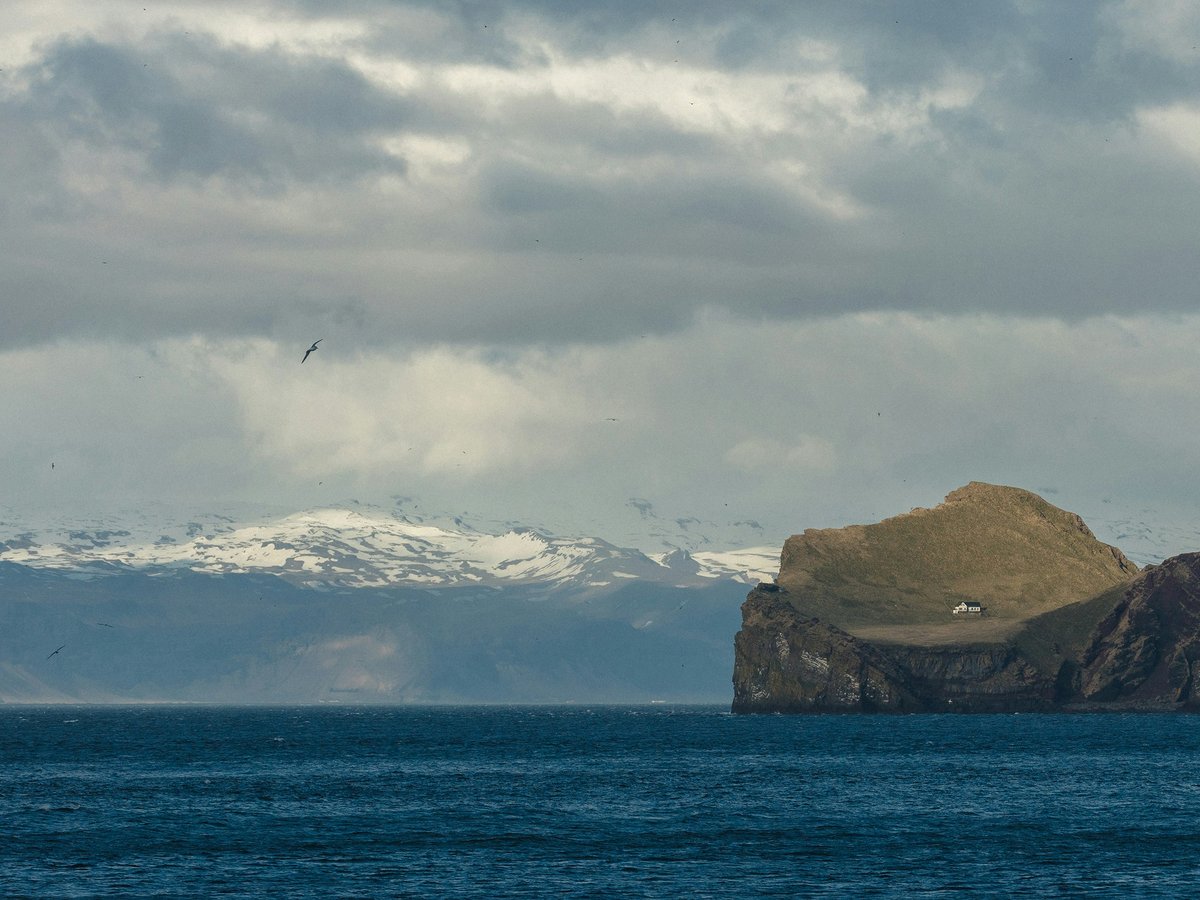
What language is spoken in Vestmannaeyjar?
Icelandic, a North Germanic language that has changed little since the settlement sagas of the 12th century. The alphabet is Latin-based but adds characters like þ (th-sound), ð (soft th), and æ (eye-sound) that complicate sign-reading. English proficiency on Heimaey sits around 8/10. Nearly everyone under 50 speaks it comfortably. Learning 'takk' (thanks) and 'bless' (goodbye) warms every interaction.
Icelandic is the daily language on Heimaey, the only inhabited island in the Vestmannaeyjar archipelago. The roughly 4,300 residents speak a language that 12th-century Norse settlers would still half-recognize. Icelandic kept its case system and verb conjugations while mainland Scandinavian languages dropped theirs centuries ago. The local dialect runs soft and fast compared to Reykjavik speech, with vowels that slide into each other like wind off Stórhöfði headland. You'll hear it from the dock crew on the Herjólfur ferry, at the Krónan supermarket checkout, and in the harbor-front cafés where espresso machines hiss between conversations. The alphabet uses Latin letters plus þ (thorn, the 'th' in 'think'), ð (eth, the softer 'th' in 'the'), and æ (roughly 'eye'). All three appear on every street sign, ferry timetable, and shop awning across Heimaey's 13.4 km².
English works well on Heimaey. Iceland places in the 'Very High' proficiency band of the EF English Proficiency Index, and Heimaey matches. Staff at Eldheimar, Hotel Vestmannaeyjar, and the tourism office on Ráðhústorg all speak fluent English. Most fishermen at the harbor do too, though conversations about bait and weather might stay in Icelandic. Where English gets thin is at the Vestmannaeyjalaug swimming pool during off-peak hours, and with some older residents who grew up before English-language TV reached every Icelandic household. The Herjólfur ferry announcements run in both Icelandic and English. Menus at Slippurinn and the other harbor-area restaurants are bilingual. That said, the tourist population on Heimaey skews Icelandic domestic outside the Þjóðhátíð festival in early August, so you might be the only non-Icelandic speaker in a room. Nobody minds. The island sees enough international puffin-tour visitors from May through mid-August that switching to English is second nature for most locals.
The two sounds that define Icelandic for visitors are þ and ð. Þ sounds like the 'th' in 'thin.' Ð sounds like the 'th' in 'then.' Both appear constantly. 'Vestmannaeyjar' itself breaks down as 'VEST-manna-AY-yar.' Locals will know what you mean from a rough attempt. The double-L (ll), as in 'Eldfell,' sounds closer to 'tl' than a standard L, which surprises most English speakers the first time they hear a guide say it at Eldheimar. For daily exchanges, 'takk' (thanks) covers 80% of what you'll need at shops and the harbor fish market, where the smell of fresh cod and salt air hangs in the 10°C breeze. 'Bless' (goodbye, pronounced exactly like the English word) is the sign-off everywhere from the Herjólfsdalur campsite to the harbor-front shops. 'Hvað kostar þetta?' (how much does this cost?) might earn a grin, though almost every purchase on Heimaey goes through a card terminal.
Google Translate handles Icelandic text reasonably well on its camera mode, good enough for reading the ferry schedule board at Landeyjahöfn on the mainland. For longer stays, the Icelandic Online course from the University of Iceland teaches pronunciation with native-speaker audio. To be fair, you could spend a full week on Heimaey speaking only English and never hit a wall. The practical reason to learn a few Icelandic words is social, not survival. A 'takk fyrir' when leaving Slippurinn after a slow-cooked lamb shoulder, or a 'góðan daginn' at the campsite reception on a grey morning with rain sheeting sideways off Helgafell, signals respect for a community of 4,300 that lives here year-round, not only during puffin season.
Languages spoken
Icelandic
Primary language: Icelandic.
Useful phrases
- HelloHallóHAL-lo
- ThanksTakktahk
- Thank youTakk fyrirtahk FIR-ir
- GoodbyeBlessbless (like the English word)
- YesJáyow
- NoNeinay
- Excuse meAfsakiðAF-sa-kith
- How much does this cost?Hvað kostar þetta?kvath KOS-tar THEH-ta
- I don't understandÉg skil ekkiyeg skil EH-ki
- Good dayGóðan daginnGO-than DA-yin
- One beer, pleaseEitt bjór, takkeyt byohr tahk
- Where is...?Hvar er...?kvar air
- CheersSkálskowl
Last verified by automated review (v1.7.2) on . What is automated review?