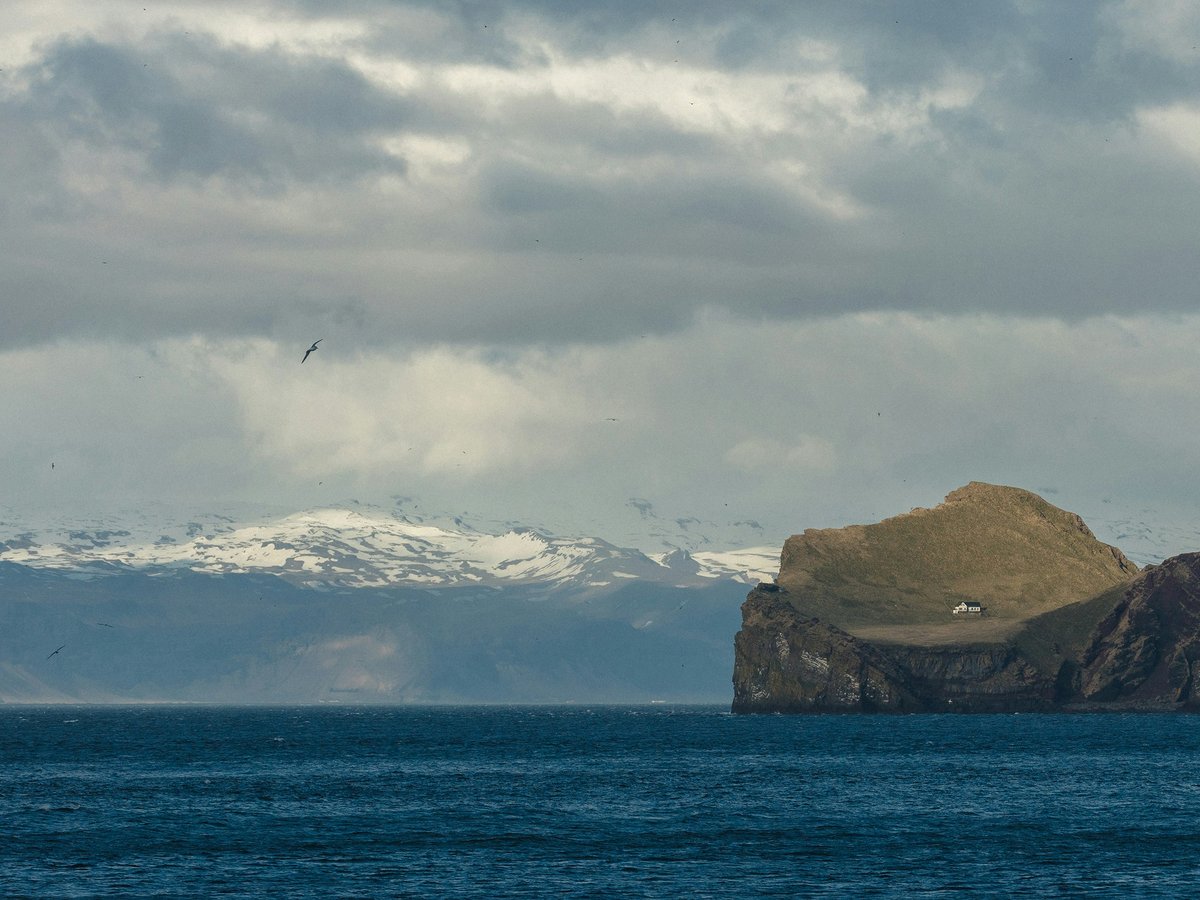
Stay in Vestmannaeyjar in September
7 hotels in the Trip.com pool for Vestmannaeyjar, from US$70 a night.
Opens Trip.com on Fri 25 Sep to Sun 27 Sep 2026; change the dates there.
September in Vestmannaeyjar comes down to one question. Can you handle the rain? The tourist season that peaks with Þjóðhátíð festival in early August has wound down. The puffin colonies on Stórhöfði have largely scattered to the open North Atlantic. And the 20-plus hours of June daylight have shortened to about 13 hours by month's end. What remains is a quieter, windswept Heimaey island where the air smells of salt and wet grass, and the town of 4,500 feels genuinely local again.
Daytime temperatures tend to hover around 10.9°C (52°F), dropping to about 8.8°C (48°F) at night. The Gulf Stream keeps these offshore islands a few degrees milder than mainland Iceland at the same latitude. Still, 163mm of rainfall spread across 17 days means you'll likely see drizzle or sideways squalls more days than not. Wind is the variable that matters most. North Atlantic gusts can reach 90 km/h (56 mph) in September, and the Herjólfur ferry from Landeyjahöfn gets cancelled more often than during summer sailings.
The one experience that makes early September genuinely different from any other month is puffling season. Until roughly mid-September, fledgling puffins crawl out of their cliffside burrows at night and get confused by Vestmannaeyjar's streetlights. They end up on roads and in gardens instead of reaching the ocean. Local children spend evenings collecting the disoriented birds in cardboard boxes, then release them at the harbour the next morning. It's specific to these islands, free, and worth timing a trip around if you can visit in the first two weeks of the month.
Why visit in September
- Puffling rescue season runs through roughly mid-September, offering one of Iceland's most unusual wildlife interactions at no cost
- Tourist crowds from the June-August peak have thinned dramatically, meaning trails on Eldfell and Stórhöfði are often empty
- Shoulder-season guesthouse rates on Heimaey typically drop 20-30% compared to July and August
- Northern Lights season opens in late September, and Vestmannaeyjar's minimal light pollution gives clearer skies than Reykjavik
- The annual Réttir á Heimaey sheep roundup in mid-to-late September is a distinctly local tradition rarely witnessed by tourists
Worth knowing
- Rain falls on roughly 17 of 30 days, totaling 163mm for the month, which makes sustained outdoor plans unreliable
- Wind gusts from the North Atlantic can reach 90 km/h on exposed headlands, making cliff walks on Stórhöfði uncomfortable or unsafe
- The Herjólfur ferry from Landeyjahöfn faces more weather cancellations than in summer, potentially stranding visitors on either side
- Daylight shrinks from about 14 hours at the start of September to under 12 by the end, cutting into hiking and sightseeing time
Best for
Think twice if
September on Heimaey tends to feel like late autumn arrived early. Daytime temperatures sit around 10.9°C (52°F) and nights rarely drop below 8.8°C (48°F), which is mild by North Atlantic island standards. The Gulf Stream keeps Vestmannaeyjar a few degrees warmer than mainland Iceland at this latitude. But the rain is the story. With 163mm falling across roughly 17 days, you might get 3 or 4 consecutive dry days if you're lucky. More likely, you'll experience a rotation of drizzle, sea mist, and the occasional horizontal squall that rolls in with little warning. Humidity hovers around 80%, so even on technically dry days the air feels damp against your skin. Wind chill can make 10°C feel closer to 4°C (39°F) on exposed headlands like Stórhöfði, which has been recorded as one of the windiest places in Europe.
Seasonal caution
- North Atlantic storms can bring wind gusts exceeding 100 km/h (62 mph) to Heimaey, particularly in the second half of September. Exposed cliff trails on Stórhöfði and the Eldfell summit become dangerous in these conditions. Check vedur.is forecasts before any headland walk.
- The Herjólfur ferry crossing from Landeyjahöfn faces increased cancellation risk in September due to rough seas. When Landeyjahöfn harbour is inaccessible, the ferry sometimes reroutes to Þorlákshöfn, which roughly doubles the crossing time to around 3 hours. Build a buffer day into your itinerary.
Year-round climate
Averages from the last 5 years.
| Month | Avg high (°C) | Avg low (°C) | Rainfall (mm) |
|---|---|---|---|
| Jan | 5 | 1 | 154 |
| Feb | 6 | 3 | 185 |
| Mar | 5 | 3 | 139 |
| Apr | 7 | 4 | 110 |
| May | 8 | 7 | 109 |
| Jun | 10 | 8 | 97 |
| Jul | 12 | 11 | 90 |
| Aug | 12 | 11 | 120 |
| Sep | 11 | 9 | 163 |
| Oct | 8 | 6 | 146 |
| Nov | 7 | 4 | 163 |
| Dec | 5 | 2 | 154 |
Headline events
Lundapysja (Puffling Rescue Season)
Late August through approximately mid-September (exact end date varies by season)
Fledgling Atlantic puffins leave their burrows on Heimaey's sea cliffs at night and get disoriented by the town's streetlights. They land on roads, in gardens, and against building foundations instead of reaching the ocean. Local children and visitors spend evenings collecting the confused pufflings in cardboard boxes and releasing them at the harbour or coastal cliffs the next morning. The tradition has run for generations in Vestmannaeyjar and typically draws media coverage from the BBC and National Geographic.
Best things to do in September
Puffling rescue evenings on Heimaey
wildlifeAfter dark in early September, fledgling puffins wander into Vestmannaeyjar's streets, confused by the lights. You walk the town with a flashlight and a cardboard box, gently picking up pufflings from gutters, garden walls, and building foundations. The birds are docile and small enough to hold in one hand. The next morning, you carry them to the harbour or coastal cliffs and release them toward the sea. It's free, unstructured, and unlike anything else in Iceland.
The fledging season runs from mid-August through about mid-September. The first two weeks of September are typically the tail end, with fewer birds each night.Booking tipNo booking needed. Head out around 10-11pm with a flashlight and a cardboard box. Check around streetlights, building foundations, and garden walls.
Hiking Eldfell crater rim
hikingThe 1973 eruption that buried a third of the town left a 200m volcanic cone on Heimaey's eastern edge. The trail to the summit takes about 30-45 minutes from the base and crosses loose, rust-red scoria that's still warm to the touch in places where geothermal heat rises through vents. On clear days, the view from the rim stretches south to Surtsey island and north to the mainland glaciers. The wind at the top can be fierce.
September offers the last reliable hiking window before winter storms make the exposed, loose-scoria trail slippery and dangerous from October onward.Booking tipNo booking required. Start from the marked trailhead near Eldheimar museum. Go in the morning when wind tends to be calmer.
Visiting Eldheimar volcano museum
museumEldheimar sits on Gerðisbraut in the centre of town, built around an actual house excavated from the 1973 lava and ash. The museum tells the story of the eruption that forced the evacuation of all 5,300 residents in a single night. You walk through rooms still half-buried in tephra, with household objects frozen in time. The audio guide adds firsthand accounts from evacuees. On a rainy September day, plan for 2-3 hours.
September's frequent rain makes indoor activities welcome, and the summer tourist queues have cleared. You'll likely have the excavated house exhibit nearly to yourself.Booking tipOpen daily in September, though hours may shorten from summer schedule. Check the Eldheimar website before visiting.
Stórhöfði headland hike
hikingThe southern tip of Heimaey juts into the open Atlantic at Stórhöfði, a windswept headland with a staffed weather station that records some of Europe's highest sustained wind speeds. The walk from town takes about 45 minutes each way along a gravel path that passes grassy slopes and sea cliffs. The headland itself feels exposed and raw, with views south toward Surtsey and the sound of waves hitting rock 50 metres below.
With the summer puffin-watchers gone, the headland trail is often empty in September. Migrating seabirds still pass through, and the dramatic autumn light makes the cliffs photogenic.Booking tipFree access. Check vedur.is wind forecasts before going. If gusts exceed 70 km/h, postpone. The exposed headland offers no shelter.
Swimming at Sundlaug Vestmannaeyja
recreationVestmannaeyjar's public geothermal swimming pool sits in the centre of town and has an outdoor 25m lap pool, children's pool, hot pots ranging from 38-42°C, and a steam room. The hot pots face the sky, so on clear evenings you can soak while watching for early-season Northern Lights. The pool smells of mild sulphur, the water feels silky, and the heat seeps into cold muscles after a day of hiking volcanic slopes.
September's cool, damp weather makes the 38-42°C hot pots feel especially restorative. This is when the pool shifts from a nice activity to a necessary one.Booking tipNo booking needed. The pool is open daily. Bring your own towel to avoid rental fees. Follow Icelandic pool etiquette and shower thoroughly without a swimsuit before entering.
Northern Lights viewing from Heimaey
natureVestmannaeyjar's position 10 km off Iceland's south coast means almost zero light pollution outside the small town centre. After the autumn equinox on September 22, true darkness returns to these latitudes by around 9pm. On clear nights, the aurora can appear as a green-white band across the northern sky, sometimes with purple and pink edges during strong solar activity. The black lava fields east of town offer unobstructed northern horizons.
September marks the start of aurora season at this latitude. Late September's lengthening nights and dark skies give the first real viewing opportunities after the bright summer months.Booking tipNo booking needed. Walk 10 minutes east of town into the 1973 lava field for the darkest skies. Download the Vedur.is aurora forecast app. Clear nights after September 20 offer the best odds.
Walking the 1973 lava field
walkingThe eruption buried about 400 homes under lava and ash on Heimaey's eastern side. Today, the lava field is a strange, silent landscape of black rock colonized by moss, lichens, and wild grasses. You can walk through it in 30-60 minutes, tracing the boundary where the lava stopped metres from the harbour. The ground still radiates faint warmth in places. Embedded in the rock, you'll spot remnants of the old town, fences and walls half-swallowed by basalt.
Autumn's lower sun angle casts long shadows across the black lava, and the moss shifts toward amber and gold tones by late September. The contrast between dark rock and autumn colour is strongest this month.Booking tipFree, self-guided. The main path starts near Eldheimar museum and loops through the eastern lava field. Wear sturdy shoes, as the surface is uneven and sharp in places.
Réttir á Heimaey sheep roundup
culturalEach September, Heimaey's free-roaming sheep are gathered from the island's grassy slopes and cliff edges where they've grazed since spring. The roundup involves local farmers and volunteers walking the hillsides to drive the sheep down to a sorting pen near town. It's smaller and more intimate than the mainland réttir gatherings, with perhaps a few hundred sheep and a few dozen participants. The sound of bleating sheep and shouting farmers carries across the island.
The annual sheep roundup happens once a year, typically in mid-to-late September, timed to bring the animals in before autumn storms arrive.Booking tipAsk at the local information centre or guesthouse for the exact date, which varies by year. Participation is informal. Show up, watch, and lend a hand if invited.
What to eat in September
In season: fruit
Krækiber (crowberries)
Wild crowberries ripen across Heimaey's lava fields and grassy slopes in late August and September. The small, dark berries have a mild, slightly tart flavour and grow close to the ground in mossy patches. Locals pick them for jams and desserts, and you'll sometimes find them in cakes at Heimaey's bakeries.
On menus now
Plokkfiskur
This traditional mashed fish stew of cod or haddock, potatoes, onions, and béchamel is September comfort food on Heimaey. The harbour's fishing boats bring in fresh cod through the autumn, and the dish warms you after a wet hike up Eldfell. The texture is somewhere between a thick chowder and mashed potatoes.
Kjötsúpa
Traditional Icelandic lamb soup built from root vegetables, herbs, and fresh lamb. It appears on menus across Heimaey as the weather turns cooler in September. The broth is clear and light, not heavy, flavoured with thyme and served steaming hot.
Street food peaks
Harðfiskur with smjör
Strips of wind-dried haddock or cod served with cold Icelandic butter have been a staple snack in the Westman Islands for centuries. September's fishing season keeps the supply fresh. The texture is chewy and dense, with a concentrated salt-and-sea flavour that pairs surprisingly well with the rich, almost sweet butter.
What to drink
Brennivín
Iceland's caraway-flavoured spirit, sometimes called 'Black Death' by locals with a grin, pairs with the cooler September evenings. Served ice-cold in a small glass, the sharp anise-and-caraway burn cuts through rich lamb dishes. Bars on Hafnargata pour it neat as a traditional accompaniment to Þorrablót-style foods.
In markets
Fresh Icelandic lamb
September's Réttir sheep roundup marks the end of free-range summer grazing on Heimaey's grassy slopes. The lamb reaches tables at peak flavour after months of feeding on wild herbs and grass. Restaurants on Heimaey typically feature it roasted or slow-braised through the autumn.
Regular events in September
Réttir á HeimaeyFree
The annual sheep roundup on Heimaey island. Free-roaming sheep are gathered from grassy slopes and cliff edges by local farmers and volunteers, then sorted in pens near the town. Smaller and more intimate than mainland réttir, with a few hundred sheep and a convivial atmosphere.
Mid-to-late September (exact date varies by year)Haustjafndægur (Autumn Equinox)Free
The autumn equinox around September 22-23 marks the return of balanced daylight and darkness to Vestmannaeyjar. After months of near-continuous summer light, true nighttime darkness returns, opening the Northern Lights viewing season. Not a formal festival, but a meaningful astronomical turning point that changes the character of evenings on the island.
September 22-23Best places this September
Eldheimar
museumThe 'Pompeii of the North' volcano museum on Gerðisbraut, built around an excavated house buried in the 1973 eruption. Exhibits include original household objects, ash layers visible in cross-section, and firsthand audio accounts from evacuees. Plan 2-3 hours on a rainy day.
Town centreStórhöfði
viewpointHeimaey's exposed southern headland, one of the windiest measured points in Europe. A 45-minute walk from town along gravel paths. Views south to Surtsey island, sea cliffs dropping 50 metres to the Atlantic, and a staffed weather station. Seabirds still pass through in September.
StórhöfðiStafkirkjan at Skansinn
historic siteA replica Norse stave church gifted by Norway in 2000 to mark 1,000 years of Christianity in Iceland. It sits on the Skansinn cliff above the harbour, surrounded by old fortification walls and turf-roofed buildings. The wooden interior smells of tar and timber. Free to enter.
SkansinnEldfell summit
natural landmarkThe 200m volcanic cone created by the 1973 eruption. The trail crosses rust-red scoria, and geothermal vents still warm the ground near the top. The summit view on clear days reaches Surtsey to the south, Eyjafjallajökull to the north, and the full layout of the town below.
Eastern HeimaeySæheimar Natural History Museum
museumA small aquarium and natural history collection focused on Vestmannaeyjar's marine and bird life. Exhibits cover puffin ecology, local fish species, and volcanic geology. A good rainy-day complement to Eldheimar, and typically takes about an hour.
Town centreHerjólfsdalur valley
natureA natural amphitheatre-shaped valley southwest of town, site of the Þjóðhátíð festival each August. In September, the valley is empty and quiet, ringed by steep green walls. The campground is still accessible for walks. Golf course nearby. The acoustics of the valley are remarkable even without the festival crowds.
HerjólfsdalurSundlaug Vestmannaeyja
recreationThe town's geothermal swimming pool with outdoor 25m lap pool, hot pots (38-42°C), waterslide, and steam room. A social hub for locals year-round. The hot pots face open sky, making them ideal for early aurora watching in late September.
Town centreHafnargata harbour street
neighbourhoodVestmannaeyjar's main commercial strip runs along the harbour. Fishing boats unload their catch here, and the few restaurants, cafes, and shops in town line this street. In September, you'll see the working-harbour side of the islands without the tourist-season crowds. The smell of fresh fish and diesel lingers in the morning air.
Hafnargata
Your packing checklist
Tick items off as you pack. Your progress saves in this browser.
All packed — have a great trip.
Insider tips
The Herjólfur ferry schedule shifts to a reduced autumn timetable in September. Check the Herjólfur website or the Eimskip booking system before finalising travel dates, and always build at least one buffer day into your Vestmannaeyjar itinerary in case a sailing gets cancelled.
For the puffling rescue, go out around 10-11pm and look along building foundations, stone garden walls, and directly under streetlights. The birds are docile. Pick them up gently with both hands and place them in a cardboard box. Release at the harbour cliffs or the coast the next morning, always facing the sea.
Sundlaug Vestmannaeyja is where locals socialise. The hot pots between 38-42°C are the social centre of the town, especially on cold evenings. Go in the late afternoon to catch the after-work crowd. Follow Icelandic pool etiquette and shower thoroughly without a swimsuit before entering the water.
If the Herjólfur gets cancelled, domestic airlines operate daily flights from Reykjavik's domestic airport to Vestmannaeyjar airport. The flight takes about 20 minutes. Consider pre-booking a flexible flight ticket as a backup when visiting in September.
The 1973 lava field east of town is the darkest spot on Heimaey for Northern Lights viewing. Walk about 10 minutes past Eldheimar museum into the lava field after 9pm on clear nights in late September. The lack of streetlights and the black rock underfoot make for an eerie, effective viewing platform.
Avoid these mistakes
- Arriving in late September expecting to see pufflings. The fledging season typically ends around mid-September, and each night produces fewer birds than the last. If puffling rescue is your main reason for visiting, come in the first week of September or late August.
- Not having a backup plan for the Herjólfur ferry. September weather can cancel sailings with short notice, stranding you on Heimaey or preventing you from reaching the island at all. A flexible return-flight booking or an extra night's accommodation reservation can save a trip.
- Underestimating the wind on Stórhöfði headland. The weather station there has recorded gusts exceeding 200 km/h (124 mph) in winter, and September gusts of 90-100 km/h happen regularly. Walking to the cliff edge in strong wind is dangerous. Check vedur.is forecasts before any headland walk, and postpone if gusts exceed 70 km/h.
- Packing for the temperature without packing for the wind and rain. 10°C (52°F) sounds mild, but 10°C with 80% humidity, 60 km/h winds, and horizontal rain feels genuinely cold. Every outer layer needs to be windproof and waterproof, not water-resistant.
Practical tips for September
Book accommodation on Heimaey well ahead. Vestmannaeyjar has limited guesthouse and hotel rooms, and September options shrink further as some seasonal properties close after August. The Herjólfur ferry from Landeyjahöfn runs on a reduced autumn schedule starting in September, so check departure times before planning your day. Most restaurants on Hafnargata close earlier than in summer, often by 9pm on weekdays. The Eldheimar museum may also shift to shorter autumn hours. If you're driving to Landeyjahöfn on the mainland, note that the car park fills during summer but is rarely an issue in September. You can bring a car on the ferry, though walking and cycling on Heimaey is practical since the whole town is within about 15 minutes on foot. Mobile phone coverage is reliable on Heimaey but patchy on the far side of Stórhöfði. Dress in layers for the 8-11°C range and assume you'll get rained on at least once a day.
FAQ
Is September a good time to visit Vestmannaeyjar?
September is a fair time, not a great one. The main tourist season ends with Þjóðhátíð in early August, and by September the puffin colonies have largely left Stórhöfði. Temperatures around 10.9°C (52°F) are still mild, but 163mm of rain across 17 days means wet weather is more common than dry. The first two weeks of September offer the puffling rescue tradition, which is genuinely unique to these islands. After mid-September, the main draws are solitude, dramatic weather, and the start of Northern Lights season. If you want reliable weather and wildlife, June through August is a safer window.
What is the weather like in Vestmannaeyjar in September?
Cool, wet, and windy. Average highs reach 10.9°C (52°F) and lows sit around 8.8°C (48°F). Rain falls on roughly 17 of 30 days, totaling about 163mm for the month. The Gulf Stream keeps temperatures milder than mainland Iceland, but wind is the bigger factor. Gusts from the North Atlantic can reach 90 km/h (56 mph) on exposed headlands like Stórhöfði. Pack waterproof layers for everything, and expect wind chill to make 10°C feel closer to 4°C (39°F) on open ground.
Can you see puffins in Vestmannaeyjar in September?
Barely. Adult Atlantic puffins leave their Stórhöfði nesting colonies by late August and head to open sea until the following spring. However, the first two weeks of September typically see the tail end of puffling season, when fledgling puffins crawl from their burrows at night and get disoriented by the town's streetlights. Locals collect them in cardboard boxes and release them at the coast the next morning. By mid-September, this season is usually over too. If puffins are your priority, visit in July or early August.
Is the Herjólfur ferry to Vestmannaeyjar reliable in September?
Less reliable than in summer. The Herjólfur ferry from Landeyjahöfn to Vestmannaeyjar takes about 35 minutes, but September weather brings rougher seas and higher winds to the strait. Cancellations happen several times per month. When Landeyjahöfn harbour conditions are too rough, the ferry sometimes operates from Þorlákshöfn instead, which roughly doubles the sailing time to around 3 hours. Build a buffer day into your itinerary, and check the ferry schedule and status daily. Domestic flights from Reykjavik to Vestmannaeyjar airport take about 20 minutes and run year-round.
Can you see the Northern Lights from Vestmannaeyjar in September?
Possibly, in the second half of the month. Before the autumn equinox around September 22, Vestmannaeyjar still has too much twilight for strong aurora viewing. After the equinox, true darkness returns by about 9pm, and the islands' minimal light pollution gives you a clearer sky than Reykjavik. September is the very start of aurora season at this latitude, so odds are lower than October through March. But clear nights in late September can produce visible green-and-white displays, especially from the dark 1973 lava field east of Eldheimar museum.
Find a flight to Vestmannaeyjar
Live fares to Vestmannaeyjar appear here once cookies are accepted.
Last verified by automated review (v1.7.2) on . What is automated review?