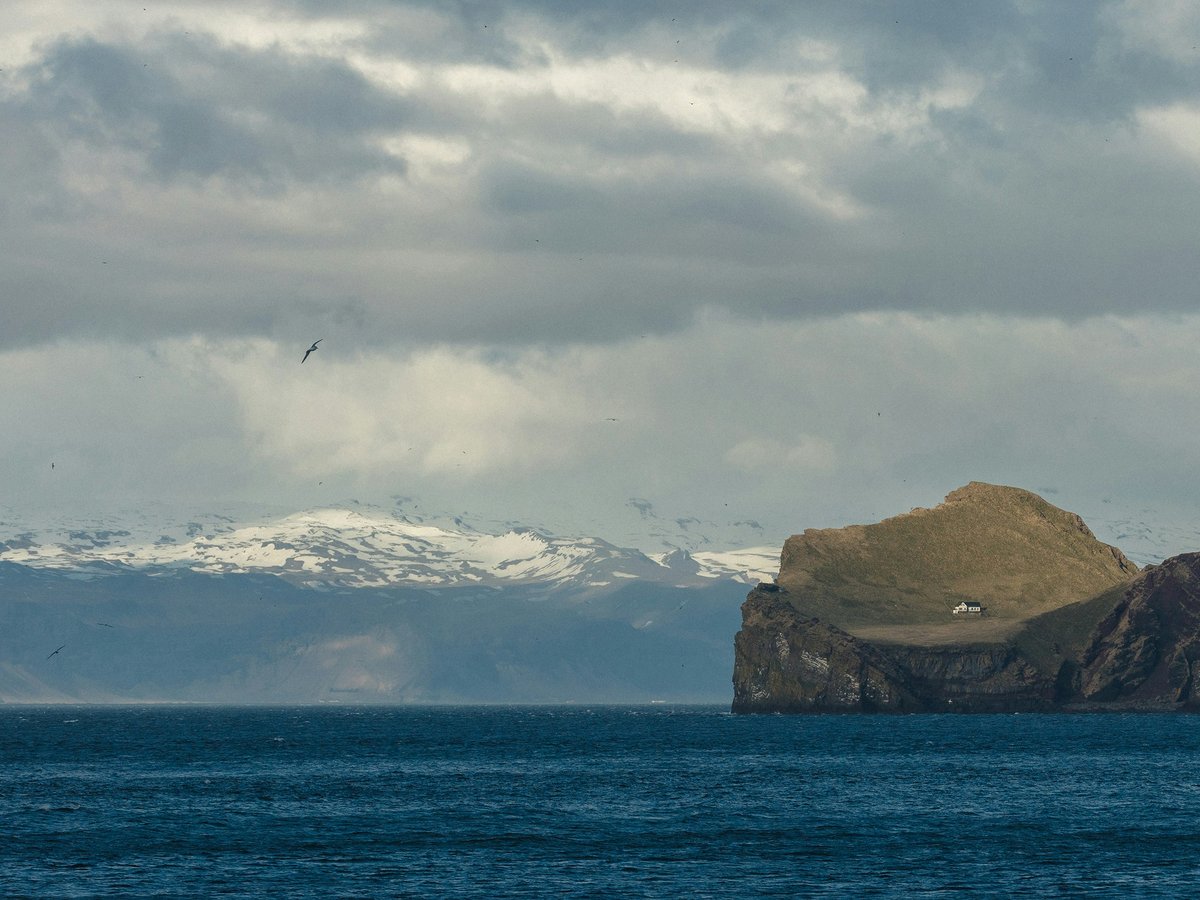
Stay in Vestmannaeyjar in August
7 hotels in the Trip.com pool for Vestmannaeyjar, from US$70 a night.
Opens Trip.com on Fri 6 Aug to Sun 8 Aug 2027; change the dates there.
August in Vestmannaeyjar is defined by one event. Þjóðhátíð, the islands' National Festival, fills Herjólfsdalur valley on the first weekend of the month and draws roughly 16,000 visitors to an archipelago that normally holds about 4,500 people. If you're planning a trip to the Westman Islands, this single weekend likely determines your entire August experience, whether you come for the festival or specifically avoid it.
Temperatures sit around 12°C (54°F) during the day and rarely drop below 10.7°C (51°F) at night. That qualifies as peak summer here. The 15 volcanic islands off Iceland's south coast still get around 120mm of rain spread across 15 days in August, up from July's 90mm, and the persistent 85% humidity means you'll feel damp more often than dry. Fog banks roll across Heimaey without warning. Wind at the Stórhöfði headland regularly hits 25 m/s even in summer.
Outside the festival weekend, August tends to be quieter but still busy by local standards. Puffin colonies at Stórhöfði remain active through mid-month, daylight stretches past 18 hours at the start of August, and the harbor fish stalls run daily. The Herjólfur ferry from Landeyjahöfn takes 35 minutes but cancels in rough seas, so you might want a flexible schedule. By late August, the pufflings start wandering into town at night, confused by streetlights, and local children head out with cardboard boxes to rescue them. That tradition alone is worth timing a visit around.
Why visit in August
- Þjóðhátíð festival (first weekend of August) is the largest outdoor festival in Iceland, with bonfires, fireworks, and live music in the natural amphitheater of Herjólfsdalur valley.
- Puffin colonies at Stórhöfði are still active through mid-August, and the late-August puffling rescue tradition is a genuinely unique cultural experience found nowhere else in Iceland.
- August ties with July for the warmest temperatures of the year at 12°C (54°F), making it one of only 2 months where hiking Eldfell volcano and the coastal cliffs is reliably comfortable.
- Daylight runs from roughly 04:30 to 22:00 at the start of August, giving you over 17 hours of usable light for outdoor activities.
Worth knowing
- Rainfall reaches 120mm across 15 rainy days, a 33% increase over July's 90mm. You will get rained on.
- Þjóðhátíð weekend quadruples the island's population. Accommodation sells out months in advance, and the festival crowd skews young and rowdy. If you didn't book by April, you're likely sleeping on the mainland.
- The Herjólfur ferry from Landeyjahöfn cancels in heavy seas, which happen more often as autumn swells build in late August. The backup route from Þorlákshöfn takes nearly 3 hours each way.
- Peak-season pricing across all of Iceland hits Vestmannaeyjar hard in August. The limited hotel supply on Heimaey means rates sit 40-60% above the annual average.
Best for
Think twice if
August is tied with July as the warmest month in Vestmannaeyjar, though it comes with noticeably more rain. Expect grey skies on roughly half the days, with fog common in the mornings, especially around Stórhöfði. The temperature range is narrow, typically between 10.7°C (51°F) at night and 12.4°C (54°F) during the day. Wind is the constant companion. Even on clear days, gusts at exposed headlands feel biting. The humidity sits around 85%, which makes 12°C feel cooler than the number suggests. Compared to July's 90mm of rain, August's 120mm across 15 days means you'll likely see rain every other day, though individual showers tend to pass within an hour.
Seasonal caution
- Wind at Stórhöfði regularly exceeds 25 m/s (56 mph) even in summer. Stay behind safety barriers at cliff edges and avoid the headland entirely in sustained gale-force conditions.
- Ferry service from Landeyjahöfn to Vestmannaeyjar cancels when wave height exceeds safe thresholds, which happens more frequently as autumn swells build in late August. Always have a flexible travel day as backup.
- Fog can reduce visibility to under 100 meters without warning, particularly along coastal trails. Carry a GPS device or downloaded offline map if hiking the island's perimeter.
Year-round climate
Averages from the last 5 years.
| Month | Avg high (°C) | Avg low (°C) | Rainfall (mm) |
|---|---|---|---|
| Jan | 5 | 1 | 154 |
| Feb | 6 | 3 | 185 |
| Mar | 5 | 3 | 139 |
| Apr | 7 | 4 | 110 |
| May | 8 | 7 | 109 |
| Jun | 10 | 8 | 97 |
| Jul | 12 | 11 | 90 |
| Aug | 12 | 11 | 120 |
| Sep | 11 | 9 | 163 |
| Oct | 8 | 6 | 146 |
| Nov | 7 | 4 | 163 |
| Dec | 5 | 2 | 154 |
Holidays and festivals in August
Public holidays
- Commerce Day(Frídagur verslunarmanna)2 August 2027
Headline events
Þjóðhátíð í Eyjum
First weekend of August (aligned with Verslunarmannahelgi bank holiday, typically August 1-4)
Iceland's largest outdoor festival fills the natural amphitheater of Herjólfsdalur valley with 3 days of live music, a massive Saturday-night bonfire, fireworks, and traditional singing. The event dates to 1874 and draws up to 16,000 people to an island of 4,500. Camping in the valley is part of the experience. The atmosphere tends to be rowdy, fueled by Icelandic fellowship and considerable quantities of alcohol.
Best things to do in August
Attend Þjóðhátíð in Herjólfsdalur
festivalCamp in the volcanic valley, watch the Saturday-night bonfire light up the amphitheater walls, and join thousands of Icelanders in traditional songs as fireworks crack overhead. The festival runs across 3-4 days with live bands on multiple stages. The atmosphere peaks Saturday night around midnight when the bonfire is lit. It's loud, communal, and messy. Prepare for minimal sleep.
Þjóðhátíð happens exclusively on the first weekend of August, timed with the Verslunarmannahelgi bank holiday. No other month offers this.Booking tipFestival tickets and Herjólfsdalur camping spots typically go on sale in early spring. Book by April. Ferry tickets for the festival weekend sell out weeks ahead.
Puffin watching at Stórhöfði
wildlifeWalk the 4 km trail south from town to Iceland's windiest headland, where thousands of Atlantic puffins nest in burrows along the grassy cliff edges. In early August, adults are still feeding chicks, and you can watch them shuttle back and forth from the sea with beaks full of sand eels. Observation platforms keep you at a safe distance. Binoculars help, but the birds often pass within 2-3 meters.
Puffin colonies are active through mid-August before fledglings depart. By September, the cliffs are empty. Early August gives you adults and nearly-grown chicks.Booking tipNo booking needed. The trail to Stórhöfði is open. Go in the morning when wind tends to be slightly calmer and puffins are most active at the burrows.
Puffling rescue patrols (pysjuveiðar)
wildlifeStarting in mid-to-late August, newly fledged pufflings leave their burrows at night and head for the sea. Town streetlights disorient them, and they end up wandering through gardens, streets, and parking lots. Local children and families patrol after dark (around 22:00-01:00) with flashlights and cardboard boxes, collecting lost pufflings and releasing them at the coast at dawn. Visitors are welcome to join.
Puffling fledging begins in mid-August and peaks in the last 2 weeks of the month. This tradition exists nowhere else in Iceland.Booking tipNo booking needed. Ask at the Sæheimar aquarium for current puffling activity and which streets to patrol.
Hike Eldfell volcano
hikingThe 200-meter-high cinder cone erupted in January 1973 and nearly buried the town. The trail from the eastern edge of town climbs through black and red scoria to a summit crater that still vents warm steam in spots. On a clear day, you can see Eyjafjallajökull and Mýrdalsjökull across the water. The ground is warm underfoot near the crater rim. If you dig 15 cm down, the scoria is still hot to the touch, over 50 years after the eruption.
August's 12°C (54°F) temperatures and long daylight make this exposed, wind-battered hike as comfortable as it gets all year. Winter and shoulder months add ice, darkness, and dangerous wind chill.Booking tipNo booking needed. Allow 1.5-2 hours round trip. Start from the Eldheimar museum at the base.
Visit Eldheimar eruption museum
museumBuilt around a house excavated from the 1973 lava flow, Eldheimar tells the story of the night 5,300 residents evacuated Heimaey in fishing boats. The exhibits include original footage, preserved interiors buried under ash, and a timeline of the 5-month eruption. The buried house at the center of the museum still has dishes in the cupboards.
August foot traffic means the museum runs extended summer hours and full guided tours. The staff are often locals whose families lived through the evacuation.Booking tipNo advance booking typically needed, but during Þjóðhátíð weekend the museum may have adjusted hours. Check their posted schedule.
Sprangan cliff rope-swinging
adventureA tradition unique to Vestmannaeyjar. Locals swing on ropes attached to cliff faces, launching out over the ocean and scrambling for footholds on the basalt. It originated from egg collecting on the sea cliffs. During Þjóðhátíð, informal demonstrations happen, and visitors sometimes get a turn under supervision. The smell of salt spray and the sound of rope creaking against rock stays with you.
Sprangan demonstrations are most common during Þjóðhátíð weekend in early August. Outside the festival, organized sessions are rare.Booking tipWatch for informal sessions near the cliffs south of town during festival weekend. The local rescue team sometimes organizes supervised tries.
Circumnavigate Heimaey by boat
boat tourBoat tours circle the island in about 90 minutes, passing sea caves, basalt columns, and the 1973 lava field that extended the island's eastern shoreline by nearly 2 square kilometers. You'll see puffins on the water and the raw geology of the younger islands in the archipelago. The boat passes through Klettsvík bay where Keiko the orca was kept in a sea pen from 1998 to 2002.
Calm-enough sea conditions for reliable boat departures align with the last weeks of puffin presence on the water. By September, both the birds and the tour frequency decline.Booking tipBook at least 2-3 days ahead during peak August. Tours depart from the main harbor.
Walk the 1973 lava field boundary
hikingFollow the edge where the 1973 lava flow stopped, in some places within meters of existing houses. Locals point out the exact line where the lava was halted by seawater pumping. The contrast between the black, ropy lava surface and the painted wooden houses beside it is eerie. The eastern edge of town is built directly against the solidified flow.
Long August daylight and mild temperatures allow the full 2-3 hour walking route along the lava boundary without cold or darkness pressing the schedule.Booking tipNo booking needed. Start from Eldheimar museum and follow the marked trail east.
What to eat in August
In season: fruit
Crowberries (krækiber)
Small, dark wild berries that ripen across the islands' lava fields in August. Locals pick them on walks and use them in jams, syrups, and alongside cured meats. The flavor is tart and slightly astringent. You'll spot the low bushes growing through the moss on Eldfell's slopes.
On menus now
Lundi (smoked puffin)
A traditional Vestmannaeyjar delicacy, smoked puffin breast has a dark, gamey flavor somewhere between duck and liver. August is the tail end of the hunting season before colonies leave the cliffs. You'll find it at restaurants near the harbor, often served thinly sliced with crowberry jam. Worth noting that attitudes toward eating puffin are shifting even among locals.
Fresh-caught Atlantic cod (þorskur)
The harbor boats bring in cod daily through August. The 12-hour turnaround from ocean to plate gives it a sweetness and firmness you won't find in mainland Reykjavík restaurants working with day-old fish. Pan-fried or baked, it shows up on nearly every menu on Heimaey.
Rhubarb desserts (rabarbari)
Icelandic rhubarb peaks in late July through August, and bakeries on Heimaey turn it into crumbles, porridges, and tarts. The stalks grow thick in the short summer and carry an intense sourness that balances well against Icelandic dairy cream.
Street food peaks
Harðfiskur (wind-dried fish)
Dried haddock or cod, torn into strips and eaten with butter. The summer-dried batches coming off the racks in August have a milder, less pungent flavor than winter-dried stock. Vendors near the harbor sell bags of it for around 500-800 ISK.
Festival food
Brennivín with hangikjöt
Iceland's caraway-flavored spirit appears at every Þjóðhátíð gathering alongside hangikjöt (smoked lamb) sandwiches. The caraway burn and the smoky lamb fat form a pairing that grows on you after the first round. Festival weekend is the time to try it.
Regular events in August
Verslunarmannahelgi (Bank Holiday Weekend)Free
Iceland's national Commerce Day falls on the first Monday of August. It's a public holiday across the country, and in Vestmannaeyjar it coincides with Þjóðhátíð. Shops and services on Heimaey may have reduced hours from Friday through Monday.
First Monday of AugustSummer concerts at SkansinnFree
Local and visiting Icelandic musicians perform occasional open-air concerts in the Skansinn historic area near the Stafkirkjan stave church during August weekends outside the main festival. Attendance tends to be small, maybe 50-100 people on the grass.
Weekends throughout August (irregular schedule)Pysjuveiðar season openingFree
Not a formal festival, but Sæheimar aquarium and local families mark the start of puffling rescue patrols around mid-August. The aquarium provides information sessions for visitors wanting to participate in the nightly patrols along Heimaey's streets.
Mid-August onwards (typically around August 15-20, weather dependent)Best places this August
Herjólfsdalur
natural areaThe volcanic valley that hosts Þjóðhátíð. Even outside the festival, it's a striking natural amphitheater with a small golf course, a campsite, and hiking trails up the valley walls. The acoustics are remarkable. You can stand at the bottom and hear conversations from the rim. The grass is thick and soft in August, a bright green against the dark cliff walls.
HerjólfsdalurStórhöfði headland and lighthouse
viewpointThe southernmost point of Heimaey and officially one of the windiest places in Europe. The observation platforms overlooking puffin burrows are the main draw in August. The lighthouse sits at the tip. On clear days the view south is open ocean to the horizon. The wind here has a physical weight to it.
StórhöfðiEldheimar museum
museumThe excavated house at the center of this museum sat buried under 1973 volcanic ash for decades. The museum built around it tells the evacuation story through film, artifacts, and first-person audio recordings. In August, extended hours typically run until 18:00 or later.
Town centerSkansinn
historic siteThe oldest settled area of Vestmannaeyjar, with a 15th-century fort ruin, the Stafkirkjan (a replica Norwegian stave church gifted in 2000), and views over the harbor. The grassy terraces are good for sitting in the long August twilight. The stave church is dark pine and tar, with a smell like a campfire that never went out.
SkansinnSæheimar aquarium and natural history museum
museumA small, slightly old-fashioned facility that serves as the base for puffling rescue information in August. Staff can tell you where puffling activity is likely and how to help. The aquarium has held rescued puffins that can't be released, and watching them waddle around the indoor pool at close range is different from binoculars at Stórhöfði.
Town centerHeimaey harbor (Tangagata)
harborThe working fishing harbor is the town's economic core. In August, boats come and go all day, and you can watch the catch being unloaded. The fish processing smell is strong on warm days. Several restaurants and cafés line the harbor road, and the Herjólfur ferry terminal sits at the north end.
TangagataEldfell and Helgafell twin volcanic peaks
volcanoEldfell (1973 eruption, 200m) and neighboring Helgafell (5,000+ years old, 226m) offer contrasting hikes within 30 minutes of each other. Eldfell is barren red and black scoria with warm ground. Helgafell is green and grassy in August. From Helgafell's summit, you look across to Eldfell and see how close the eruption came to the town below.
Eastern HeimaeyKlettsvík bay
natural areaThe sheltered bay on Heimaey's north side where Keiko the orca was housed from 1998 to 2002 in a sea pen before his release. A sign marks the site. The bay itself is calm even when the outer coast is rough, and you can sometimes spot harbor seals from the shore.
Northern Heimaey
Your packing checklist
Tick items off as you pack. Your progress saves in this browser.
All packed — have a great trip.
Insider tips
The Herjólfur ferry from Landeyjahöfn is the 35-minute route, but it cancels in rough seas. If your trip is tight, book a backup flight with Ernir (the domestic airline serving Vestmannaeyjar) for the 20-minute hop. The flights use small prop planes and the views of the archipelago on approach are extraordinary.
During Þjóðhátíð, the real festival happens Saturday night between 23:00 and 03:00 in Herjólfsdalur. The daytime hours are relatively calm. If you want the full bonfire experience, nap in the afternoon. If you want to avoid the heaviest crowds, visit the valley on Friday or Sunday instead.
For puffling patrols in late August, talk to the staff at Sæheimar aquarium around 16:00 to get that evening's patrol advice. They track which streets had the most puffling activity the previous night. The area around the town's streetlights along Strandvegur tends to be productive.
Sundlaug Vestmannaeyja (the swimming pool) is heated by geothermal water and stays open through August. After a windblown day on Stórhöfði, it might be the best 1,000 ISK you spend. The hot pot has a view of Eldfell.
Bring your own alcohol for Þjóðhátíð. There's one Vínbúðin (state liquor store) on Heimaey, and it will have a queue out the door the Thursday before the festival. The mainland Vínbúðin shops in Selfoss or Reykjavík are better stocked and less chaotic.
Avoid these mistakes
- Showing up for Þjóðhátíð weekend without advance accommodation. The island has perhaps 200 hotel and guesthouse beds total, and they sell out months ahead. Last-minute arrivals end up sleeping in rental cars or catching the last ferry back to the mainland.
- Wearing cotton layers in August because 12°C sounds mild. The 85% humidity and 20+ m/s wind create a wind chill that makes cotton feel like wet cardboard against your skin. Wool and synthetics are not optional here.
- Planning a fixed-schedule trip without a buffer day for ferry cancellations. If the Herjólfur doesn't sail due to swells, the backup from Þorlákshöfn takes 3 hours, and flights fill quickly. Build in at least one flexible day.
- Skipping Stórhöfði because it looks like a short, easy walk on the map. The 4 km trail is exposed to the full force of Atlantic wind the entire way. Without proper gear, it goes from pleasant to miserable within minutes when a gust front rolls in.
Practical tips for August
Book the Herjólfur ferry at least 1 week ahead for any August weekend, and at least 1 month ahead for Þjóðhátíð weekend. Same applies to accommodation. If flying, Ernir operates small aircraft from the mainland. The Vestmannaeyjar campsite in Herjólfsdalur is the cheapest option and fills during the festival. A Vínbúðin (state liquor store) on Skólavegur in town is the only place to buy alcohol outside of restaurants. Its hours are limited, typically closing at 18:00 on weekdays and shorter on Saturdays. Most restaurants accept cards, but carry some cash for small vendors at the harbor. Dress in layers every day, regardless of the morning forecast. The weather will change at least twice before dinner. The town is walkable end to end in 20 minutes, but consider renting a car if you want to reach Stórhöfði and Herjólfsdalur without battling headwinds on foot.
FAQ
Is August a good time to visit Vestmannaeyjar?
August is one of the 2 best months to visit, tied with July for the warmest temperatures at 12°C (54°F). The first weekend brings Þjóðhátíð, Iceland's biggest outdoor festival, which is either the main draw or the main reason to avoid the early part of the month, depending on your tolerance for crowds. After the festival, the island quiets down and you get puffin watching, long daylight, and the puffling rescue tradition in late August. The tradeoff is rain. At 120mm across 15 days, August is wetter than July's 90mm, and ferry cancellations become more likely as the month goes on.
What is the weather like in Vestmannaeyjar in August?
Expect average highs of 12.4°C (54°F) and lows of 10.7°C (51°F) with 85% humidity and about 120mm of rain spread across 15 days. Wind is the defining feature. Stórhöfði headland is one of Europe's windiest points, and even sheltered parts of town get steady breezes. Fog is common in the mornings. You will need waterproof, windproof layers every day. Clear, calm days happen but you can't count on them.
How do I get to Vestmannaeyjar?
The Herjólfur ferry runs from Landeyjahöfn on Iceland's south coast, about 130 km east of Reykjavík. The crossing takes 35 minutes. In rough seas, the ferry reroutes to Þorlákshöfn, which extends the trip to nearly 3 hours. Ernir operates small propeller flights from the mainland that take about 20 minutes. Book ferries at least a week ahead in August, and further out for the Þjóðhátíð weekend.
Can I see puffins in Vestmannaeyjar in August?
Yes, early August is still active puffin season at Stórhöfði headland. Adults feed chicks through mid-August before the colonies start to thin. By late August, the adult puffins are leaving, but the puffling fledging season begins. Lost baby puffins wander into town at night, and locals rescue them. Sæheimar aquarium coordinates information about both the cliff colonies and the puffling patrols.
Is Vestmannaeyjar crowded in August?
The first weekend of August is the most crowded the islands get all year. Þjóðhátíð draws up to 16,000 visitors to an island with 4,500 permanent residents. After the festival weekend, crowd levels drop but remain high by Vestmannaeyjar standards, as August is peak tourist season across all of Iceland. You will still have ferry runs and hiking trails to share, though nothing like the festival crush.
Find a flight to Vestmannaeyjar
Live fares to Vestmannaeyjar appear here once cookies are accepted.
Last verified by automated review (v1.7.2) on . What is automated review?