Stay in Vestmannaeyjar in May
7 hotels in the Trip.com pool for Vestmannaeyjar, from US$70 a night.
Opens Trip.com on Fri 7 May to Sun 9 May 2027; change the dates there.
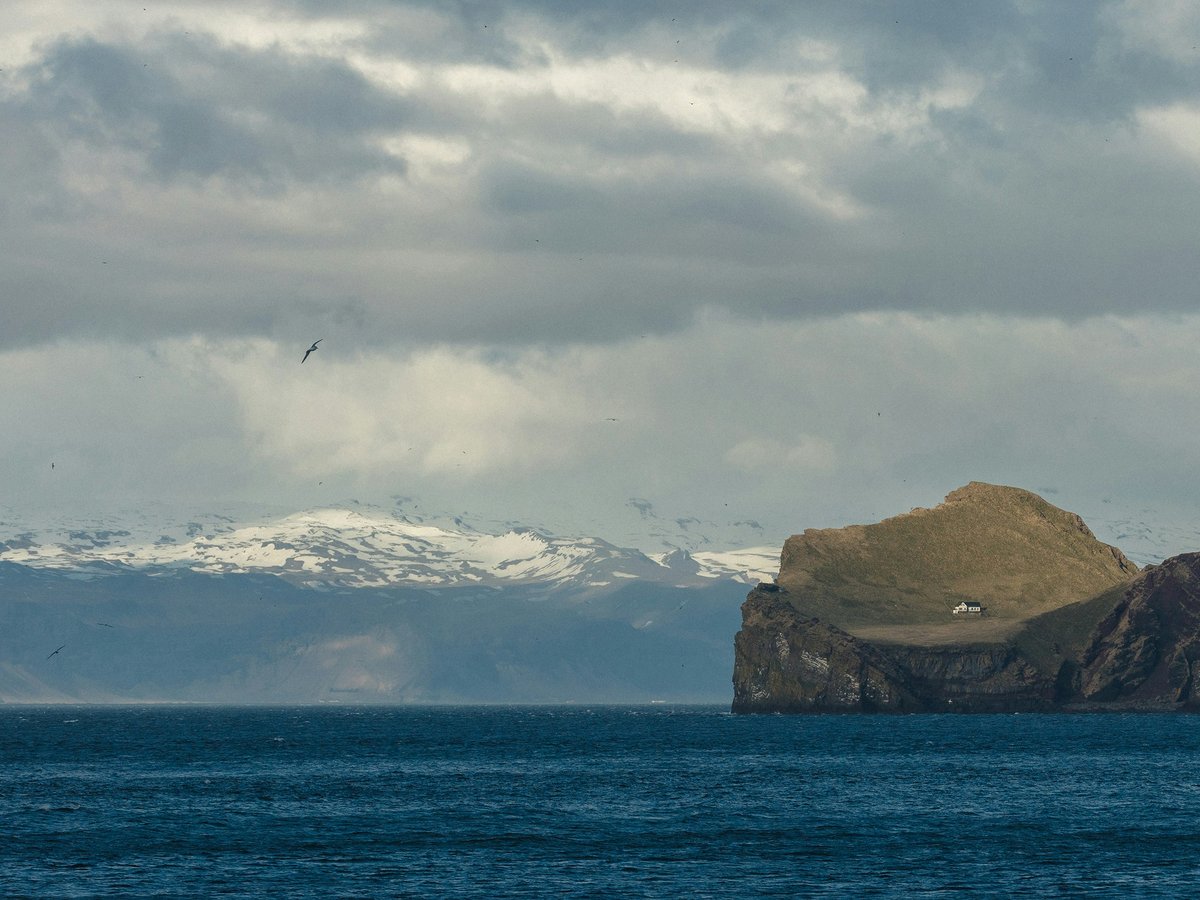
The defining fact about May in Vestmannaeyjar is puffins. Roughly 8 to 10 million Atlantic puffins return to Heimaey and the surrounding islands through this month, and the Stórhöfði headland observation platform becomes one of the finest birdwatching seats in the North Atlantic. Daytime highs sit around 8°C (47°F) with lows near 6°C (44°F), and the wind off the ocean tends to make those numbers feel 5 to 8 degrees colder. You'll get about 109mm of rain spread across 15 days, so roughly every other day brings precipitation. The tradeoff is nearly 20 hours of daylight by late May, and that low subarctic glow at midnight over Surtsey and the outer islands is something that stays with you.
The town on Heimaey is still waking up from winter in May. Some seasonal boat tours and zodiac excursions begin operating, though not all reach full capacity until June. The Herjólfur ferry from Landeyjahöfn runs year-round, but May crossings still get cancelled in heavy seas, sometimes 2 to 3 times per month. About 4,500 people live here year-round, and in May you might share Eldfell's crater rim with 2 other hikers instead of 20. That quiet carries real weight on an island this small.
If comfortable weather and a full menu of organized tours matter most to you, June or July serves Vestmannaeyjar visitors better. May is for the kind of traveler who packs wool layers without complaint and finds Heimaey more compelling at 5% tourist capacity than at its summer peak.
Why visit in May
- Atlantic puffins begin arriving at Stórhöfði and coastal cliffs through May, with colonies building toward a peak population of 8 to 10 million birds by midsummer
- Nearly 20 hours of daylight by late May, with low-angle golden light lingering past 11pm on clear evenings
- Visitor numbers are a fraction of the July and August peak. Eldheimar museum, Eldfell crater, and Herjólfsdalur valley are largely empty on weekdays
- Shoulder-season pricing on guesthouses and rental properties on Heimaey, typically 20 to 30% below July rates
Worth knowing
- Average highs of 8°C (47°F) with persistent wind chill. Rain falls on roughly 15 of 31 days, and horizontal rain driven by North Atlantic gusts is common on exposed headlands like Stórhöfði
- Several seasonal boat tours and zodiac excursions around the archipelago don't start until June, limiting water-based exploration
- The Herjólfur ferry from Landeyjahöfn can be cancelled in rough seas, potentially stranding you on Heimaey or delaying arrival by a full day
- Dining options on Heimaey are limited year-round. In May, before summer staffing, you might find only 2 or 3 restaurants open on a given evening
Best for
Think twice if
May on Heimaey feels like the tail end of winter slowly loosening its grip. The average high reaches 8.3°C (47°F) and the low sits at 6.5°C (44°F), though wind chill regularly knocks the perceived temperature down by 5 to 8 degrees. Humidity hovers around 80%. You'll see 109mm of rainfall across roughly 15 rainy days, often arriving as short, sharp showers driven sideways by wind. Fog can settle over the harbor at Hafnarbakki for hours at a stretch. That said, May delivers stretches of calm, clear days where the ocean around the archipelago turns a deep steel blue and Eldfell's red-brown scoria slopes glow in the low sun. The weather shifts fast here. You might get all four seasons in a single afternoon walk from Skansinn to Stórhöfði.
Seasonal caution
- Wind speeds at Stórhöfði headland regularly reach 50 to 70 km/h and occasionally exceed 100 km/h. The weather station there has recorded some of the highest sustained wind speeds in Europe. Stay well back from cliff edges, especially on wet grass
- Hypothermia risk is real if you get soaked and windblown on exposed coastal trails. The combination of 6 to 8°C air temperature and 40 km/h wind creates effective temperatures near 0°C (32°F)
Year-round climate
Averages from the last 5 years.
| Month | Avg high (°C) | Avg low (°C) | Rainfall (mm) |
|---|---|---|---|
| Jan | 5 | 1 | 154 |
| Feb | 6 | 3 | 185 |
| Mar | 5 | 3 | 139 |
| Apr | 7 | 4 | 110 |
| May | 8 | 7 | 109 |
| Jun | 10 | 8 | 97 |
| Jul | 12 | 11 | 90 |
| Aug | 12 | 11 | 120 |
| Sep | 11 | 9 | 163 |
| Oct | 8 | 6 | 146 |
| Nov | 7 | 4 | 163 |
| Dec | 5 | 2 | 154 |
Holidays and festivals in May
Public holidays
- May Day(Verkalýðsdagurinn)1 May 2027
- Ascension Day(Uppstigningardagur)6 May 2027
- Pentecost(Hvítasunnudagur)16 May 2027
- Whit Monday(Annar í hvítasunnu)17 May 2027
Best things to do in May
Puffin watching at Stórhöfði headland
wildlifeWalk the 3km trail from town south to Stórhöfði, where a wooden observation platform overlooks one of the largest Atlantic puffin colonies on earth. The birds return from the open ocean through May, and by month's end you'll see thousands on the cliffs and circling in formation. Bring binoculars. The platform keeps you at a respectful distance while offering clear sightlines down to the burrows.
Puffins arrive at Stórhöfði through May after wintering at sea. Early May brings the first scouts. Late May sees nesting pairs established in burrows. This is the opening of a window that runs through mid-August.Booking tipNo booking needed. The headland and viewing platform are free and open. Go on a morning with lower wind for steadier viewing and photography conditions.
Hike Eldfell volcano
hikingClimb the 200m cinder cone that erupted in January 1973 and nearly buried Heimaey's harbor under lava. The hike takes about 30 to 40 minutes up through loose black and red scoria that crunches underfoot. Near the summit, the ground is still warm to the touch in places. From the top you can trace exactly where the lava flow stopped at the harbor's edge, and on clear days the mainland glaciers of Eyjafjallajökull and Mýrdalsjökull are visible to the north.
May's extended daylight (18 to 20 hours) lets you hike Eldfell in evening light without headlamps. Low visitor numbers in May mean you'll likely have the crater rim to yourself.Booking tipNo booking required. Free access. The marked trailhead sits at the eastern end of town near the 1973 lava field edge.
Explore Eldheimar volcano museum
museumBuilt around a house excavated from the 1973 eruption's tephra layer, Eldheimar tells the story of the night all 5,300 residents evacuated Heimaey. The centerpiece is a real house, preserved under ash like a Nordic Pompeii. Multimedia exhibits include original footage, audio recordings from the evacuation, and rescued household objects from the 400 buried homes.
In May you'll typically have the museum's intimate galleries nearly to yourself. The exhibits benefit from quiet, unhurried viewing that's harder to get when summer tour groups fill the space.Booking tipNo advance booking needed in May. Open daily, typically 11:00 to 17:00. Hours may extend as the season progresses into June.
Walk the 1973 lava boundary through Skansinn
walkingThe Skansinn area at Heimaey's eastern edge sits directly against the 1973 lava flow. You can walk along the boundary where raw lava meets the old town, passing the Stafkirkjan stave church, a gift from Norway in 2000 built in dark timber against the ocean backdrop. The Skansinn fort itself dates to the 1500s and was the site of the 1627 Tyrkjaránið (Turkish Raid), when North African pirates kidnapped 242 islanders.
Low-angle May sunlight catches the lava textures and the Stafkirkjan timber beautifully in morning and evening. Fewer visitors means you can photograph the church and lava boundary without waiting for groups to clear.Hike Helgafell (Holy Mountain)
hikingThe older, gentler volcanic peak next to Eldfell. Helgafell last erupted roughly 5,000 years ago and is now grass-covered. The 30-minute hike to the 227m summit gives panoramic views of the 1973 lava field, the harbor, the town, and the outer islands. Local tradition says first-time climbers should walk from south to north without speaking or looking back, then make three wishes at the summit cairn.
May's new grass turns the slopes bright green against Eldfell's dark cinder next door. The visual contrast between the two neighboring volcanoes, one ancient and grassed over, one still barren from 1973, is at its sharpest in spring.Explore Herjólfsdalur valley and Norse settlement ruins
archaeologyA natural amphitheater ringed by volcanic walls. Archaeological excavations have uncovered one of Iceland's oldest settlement-era farmsteads on the valley floor, dating to the 9th or 10th century. The enclosed valley creates a microclimate noticeably calmer than the exposed headlands. A small golf course occupies part of the valley, and the stage infrastructure for Þjóðhátíð sits dormant.
The valley is completely empty in May, months before the August Þjóðhátíð festival when 15,000 people fill it. You can walk the Norse ruins and the valley floor without another person in sight.Visit Sæheimar natural history museum
museumA small but well-regarded museum focused on the marine and bird life of the Westman Islands. Sæheimar has historically been known for its rescued puffins and other seabirds. The aquarium section features North Atlantic species from the waters around the archipelago, giving context to the marine ecosystem you're seeing from shore.
Visiting Sæheimar in May provides context for the puffin season beginning outside. Understanding puffin nesting behavior and the island's bird ecology deepens what you observe at Stórhöfði.Booking tipNo advance booking needed. Check locally for May opening hours, which may differ from the summer schedule.
Ribsafari boat tour around the archipelago
boat tourZodiac boat tours circle Heimaey and approach the outer islands of the Vestmannaeyjar archipelago. You pass sea caves, basalt columns, and bird cliffs teeming with guillemots and fulmars. The island of Surtsey, formed by undersea eruptions from 1963 to 1967 and now a UNESCO World Heritage Site, is visible to the southwest. Landing on Surtsey is forbidden to all but researchers, but the boat gets close enough to see its barren volcanic profile.
Boat tours typically begin their season in May as seas calm relative to winter. Early-season departures tend to carry smaller groups. Whale sightings, including orcas and minke whales, are possible in the waters around the archipelago in late spring.Booking tipBook 3 to 5 days ahead. May departures depend heavily on sea conditions and may be cancelled on short notice. Not all operators run daily this early in the season.
What to eat in May
In season: fruit
Rabarbari (rhubarb)
Iceland's closest thing to a native fruit. The first rhubarb of the season appears in late May from home gardens and greenhouses across Heimaey. Look for rhubarb jam, rhubarb soup (rabarbaragrautur), and rhubarb compote at guesthouses and bakeries.
On menus now
Fresh-caught þorskur (Atlantic cod)
Vestmannaeyjar is one of Iceland's busiest fishing ports, and May brings strong cod landings. The harbor at Hafnarbakki processes the catch daily, and local restaurants serve it within hours of landing. The texture of same-day North Atlantic cod, firm and almost sweet, is noticeably different from anything that has spent days on ice.
Plokkfiskur (mashed fish stew)
A traditional Icelandic comfort dish of flaked cod or haddock mashed with potatoes, onions, and béchamel. In May on Heimaey, it's the meal that makes sense after a cold, wind-battered hike to Stórhöfði. Most restaurants serving Icelandic food will have some version.
What to drink
Brennivín with dried fish
The caraway-flavored spirit Icelanders call the Black Death, traditionally paired with harðfiskur. Not seasonal strictly, but the combination of cold May wind and a small glass of Brennivín with strips of wind-dried fish feels like it belongs to this climate. Available at any bar on Heimaey.
In markets
Harðfiskur (wind-dried fish)
Wind-dried haddock or cod, eaten torn into strips with a spread of Icelandic butter. May is when spring drying batches come in fresh. You'll find it at Krónan supermarket on Heimaey or offered as a starter at local restaurants. High in protein, zero cooking required.
Regular events in May
Verkalýðsdagurinn (May Day)Free
National public holiday across Iceland on May 1st. Most shops and services on Heimaey close for the day. Flags are raised across town. A quiet community observance rather than a spectacle.
May 1Uppstigningardagur (Ascension Day)Free
National public holiday in Iceland, falling on a Thursday 40 days after Easter. Many Icelanders take a long weekend. On Heimaey, some services close and locals head outdoors for spring hikes on Eldfell and Helgafell if weather permits.
Variable. Typically mid to late May.Mæðradagurinn (Mothers' Day Iceland)Free
Icelandic Mothers' Day falls on the second Sunday of May. Restaurants on Heimaey may offer special menus. A family-oriented, low-key celebration.
Second Sunday of MayBest places this May
Stórhöfði headland and puffin observation platform
natureThe southern tip of Heimaey and one of the windiest inhabited spots in Europe. The observation platform here overlooks massive puffin colonies that build through May. The walk from town takes about 45 minutes along a gravel road, or 10 minutes by car. The weather station at Stórhöfði has recorded sustained wind speeds that rank among the highest in Iceland.
StórhöfðiEldheimar museum
museumThe excavated house at the center of this museum sat buried under 1973 eruption tephra for over 40 years. The museum wraps around it with documentary footage, rescued household objects, and oral histories from the 400 families who lost their homes. One of the most affecting small museums in the North Atlantic.
SkansinnEldfell crater and 1973 lava field
volcanoThe 200m cinder cone still radiates heat over 50 years after the eruption. The lava field below buried 400 homes and extended Heimaey's landmass by roughly 2.3 square kilometers. Steam occasionally rises from fumaroles near the summit. The red, black, and ochre scoria landscape looks like the surface of another planet.
EiðiðSkansinn fort and Stafkirkjan stave church
historic siteThe old fort area at the edge of the 1973 lava flow. Skansinn dates to the 1500s and was the site of the 1627 Tyrkjaránið, when North African pirates kidnapped 242 islanders. The Stafkirkjan stave church, gifted by Norway in 2000 to mark 1,000 years of Icelandic Christianity, stands here in dark timber with the sea behind it.
SkansinnHerjólfsdalur valley
archaeologyA natural amphitheater ringed by volcanic walls, site of one of Iceland's oldest confirmed Norse settlements. In May the valley floor turns green and the 9th-century ruins are accessible without August's festival infrastructure blocking paths. The calm inside the valley walls is a stark contrast to the wind on exposed Heimaey.
HerjólfsdalurHeimaey harbor at Hafnarbakki
harborThe working fishing harbor is the economic heart of Vestmannaeyjar. Watch trawlers unload their catch in the mornings. The harbor area has the town's main dining options and the Herjólfur ferry terminal. The 1973 lava flow narrowed the harbor mouth, which improved its function as a natural breakwater. The smell of salt, diesel, and fresh fish is constant.
HafnarbakkiHelgafell summit
viewpointThe 227m grass-covered volcanic cone next to Eldfell. From the top, the panoramic view covers the entire town, harbor, and on clear May days, the glaciers of mainland Iceland across the water. The wish-making tradition (walk south to north without speaking or looking back) gives the hike a small ritual quality that sets it apart.
Eiðið
Your packing checklist
Tick items off as you pack. Your progress saves in this browser.
All packed — have a great trip.
Insider tips
The Herjólfur ferry from Landeyjahöfn is the standard route, but when seas are too rough it diverts to Þorlákshöfn, adding about 2.5 hours to the crossing. Check the Herjólfur schedule online the morning of your trip. Locals who absolutely need to guarantee arrival fly Ernir (Eagle Air) from Reykjavík domestic airport instead, a 25-minute flight.
Wind at Stórhöfði tends to be calmer in the morning before 10am. Most visitors arrive in the afternoon. If you want steadier conditions for photography and fewer people on the platform, start the walk from town by 7am.
Krónan supermarket on Heimaey is the only real grocery store on the island. With limited restaurant options in May, buying provisions there for self-catering saves both money and the frustration of finding places closed at dinner. Stock up when you arrive on the ferry.
The warm ground on Eldfell's upper slopes is not a gimmick. Dig your hand a few centimeters into the scoria near the summit and it's noticeably hot, over 50 years after the 1973 eruption. The geothermal heat is real and the contrast with the 8°C air temperature is strange.
If the forecast shows a clear evening in late May, stay up past 11pm and walk to Skansinn, which faces west. The sun barely dips below the horizon, and the amber light over the outer islands and the distant outline of Surtsey is unlike anything you'll see in high summer when the sun sits higher.
Avoid these mistakes
- Underestimating the wind on Heimaey. Visitors who check the temperature forecast (8°C) and pack for cool weather but not for 40 to 60 km/h gusts end up miserable. Wind is the defining feature of Vestmannaeyjar's climate, not the cold. Pack for wind first, cold second.
- Not building a buffer day into your schedule for the Herjólfur ferry. At least 2 to 3 sailings per month get cancelled in May due to rough seas. If you have a connecting international flight from Keflavík, allow a full extra day on the mainland before departure, or book a backup Ernir flight.
- Assuming everything runs on a summer schedule in May. Some tour operators haven't started their season yet, and restaurants open 7 days a week in July might only open Thursday through Sunday. Check locally when you arrive rather than relying on summer-oriented travel websites.
- Walking too close to cliff edges for bird photos at Stórhöfði. The combination of loose volcanic soil, rain-slicked grass, and sudden gusts creates genuine danger at unfenced cliffs. The observation platform exists for a reason, and the drop is sheer.
Practical tips for May
Book accommodation on Heimaey 2 to 3 weeks ahead. The island has limited guesthouses and rental properties, and even in shoulder season the small supply means things fill up. The Herjólfur ferry runs multiple daily crossings from Landeyjahöfn (35 to 40 minutes), but confirm the schedule online before travel, as May sailings may differ from the summer timetable. Virtually everywhere on Heimaey accepts credit cards, though the campground facilities and a few vending machines sometimes need Icelandic króna coins. The town is walkable end to end in about 20 minutes, but renting a car gives you flexibility to reach Stórhöfði and Herjólfsdalur without a 45-minute walk each way, which matters when the weather turns. Alcohol beyond what restaurants serve is only available at the Vínbúðin state liquor store, which has limited hours in May. Check the Vínbúðin schedule when you arrive on the ferry if you want wine or beer for your guesthouse. Mobile coverage on Heimaey is generally reliable with Síminn, Vodafone, and Nova, but signal drops in some valleys and at the Stórhöfði headland.
FAQ
Is May a good time to visit Vestmannaeyjar?
May is a fair time to visit Vestmannaeyjar. The Atlantic puffins begin returning to Stórhöfði, daylight stretches to nearly 20 hours by month's end, and visitor numbers are very low. The tradeoff is weather. Expect 8°C (47°F) highs, frequent rain on about 15 days, and persistent wind. If you're comfortable in those conditions and the puffins are your draw, May works well. If you want warmer weather and the full range of boat tours and restaurant options, June or July on Heimaey is a safer choice.
What is the weather like in Vestmannaeyjar in May?
Cold, windy, and wet by most standards. Average highs reach 8.3°C (47°F) and lows sit around 6.5°C (44°F) on Heimaey. Rain falls on roughly 15 of 31 days, totaling about 109mm. Humidity averages 80%. Wind is the bigger factor than temperature. Stórhöfði headland regularly sees gusts above 50 km/h. That said, May is drier than the winter months (February averages 185mm), and you'll get stretches of calm, clear days between weather systems.
Can I see puffins in Vestmannaeyjar in May?
Yes. Atlantic puffins begin returning to the Westman Islands in late April and through May. By late May, nesting pairs are typically established at Stórhöfði headland and along Heimaey's coastal cliffs. The colony builds through June and July, peaking in mid-summer. May offers early-season viewing with far fewer visitors than July, though overall puffin numbers are still building. Bring binoculars for the best experience from the Stórhöfði observation platform.
How do I get to Vestmannaeyjar from Reykjavík?
Two options from mainland Iceland. The Herjólfur ferry runs multiple daily crossings from Landeyjahöfn, a harbor about 30 minutes east of Selfoss on Route 1. The crossing takes 35 to 40 minutes. In rough weather the ferry diverts to Þorlákshöfn, extending the trip to about 3 hours. The alternative is a 25-minute flight with Ernir (Eagle Air) from Reykjavík domestic airport. In May, booking the flight as a backup for a critical travel day is worth the cost given ferry cancellation risk.
Is Vestmannaeyjar crowded in May?
Not at all. May falls well before the summer peak of July and August, when the Þjóðhátíð festival alone brings over 15,000 visitors to Heimaey in a single weekend. In May, the island's roughly 4,500 permanent residents far outnumber tourists. You'll share trails and viewpoints with a handful of other visitors at most. Accommodation still books up because the total supply is small, not because demand is high.
Find a flight to Vestmannaeyjar
Live fares to Vestmannaeyjar appear here once cookies are accepted.
Last verified by automated review (v1.7.2) on . What is automated review?