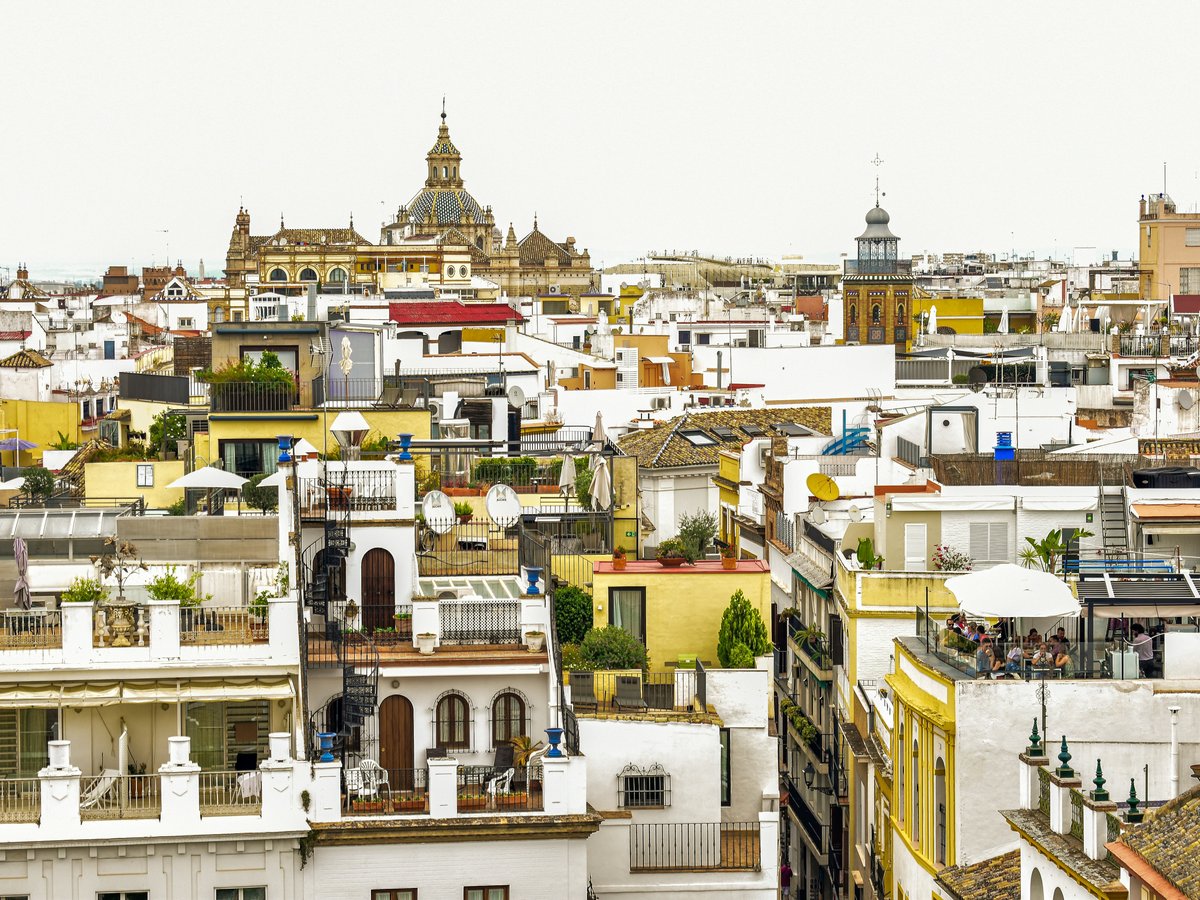
When's the best time to visit Seville in 2026?
Mid-October to mid-November works well, and so does May once the Feria de Abril has packed up. Highs sit around 22 to 27°C, the Reales Alcázares gardens are comfortable at noon, and hotels near the Cathedral cost far less than in Holy Week. July and August are another matter: the midday heat makes walking between sights a punishment.
For a first visit, mid-October to mid-November is where we'd start. The summer heat usually breaks in the first weeks of October, and by November, afternoons in Barrio Santa Cruz hover near 20°C (68°F), the paving on Calle Sierpes no longer throwing heat back up at your ankles. Queues at the Cathedral and the Giralda shrink once the European school holidays end, so a timed ticket bought two or three days ahead is usually enough. In November you'll often find chestnut sellers working smoky braziers around Plaza Nueva, and the scent drifts down Avenida de la Constitución by dusk. The trade-off is rain. November and December tend to be Seville's wettest months, and a downpour turns the polished stone lanes of Santa Cruz slick underfoot, so pack shoes with real grip and keep the Museo de Bellas Artes in reserve for a wet afternoon.
Spring is the season on the postcards, and for a first-timer it is the hardest one. In March the bitter-orange trees along Avenida de Menéndez Pelayo flower and the smell of azahar comes in through a taxi window, but then two events take over the city. Semana Santa runs from Palm Sunday, 21 March 2027, to Easter Sunday on 28 March, with processions closing streets around the Cathedral for hours and the lanes filling with incense, dripping candle wax and muffled drums past midnight. The Feria de Abril follows about two weeks later on the Real de la Feria fairground in Los Remedios, where most casetas (the striped marquee tents) are private, so without a local contact you will mostly watch from the walkways with a glass of rebujito, which is manzanilla sherry topped with lemon soda. Hotels within walking distance of the Cathedral can double or triple their rates during both weeks. For the blossom without the gridlock, book the first half of March or the first three weeks of May.
Skip July and August. Afternoon highs above 40°C (104°F) are routine, the Guadalquivir valley holds the heat overnight, and by 13:00 the tiled benches of Plaza de España are too hot to sit on. Sevillanos deal with this by disappearing: many family-run tapas bars in Triana and around the Alameda de Hércules close for two or three weeks in August, and the streets go quiet from about 14:00 until 20:00. If summer is your only window, see the Reales Alcázares at opening time, spend the afternoon by the hotel pool, and eat dinner after 22:00 as the locals do. June and September are the compromise, and midday is still brutal in both months, but evenings on the riverbank below the Torre del Oro cool down enough for a long walk.
December through February is the cheapest time to come. Days reach roughly 16 to 18°C but mornings can drop to around 6°C, and many older apartments in the centre have no central heating, so check a listing for a heat pump before you book. In December the Feria del Belén, a market selling nativity figurines, sets up beside the Cathedral, and on 5 January the Cabalgata de Reyes parade throws sweets into the crowds along the main avenues. In January, rooms in Santa Cruz and El Arenal often go for well under their October rates.
Month-by-month outlook
- Jan Shoulder
- Feb Shoulder
- Mar Ideal
- Apr Ideal
- May Ideal
- Jun Shoulder
- Jul Avoid
- Aug Avoid
- Sep Shoulder
- Oct Ideal
- Nov Ideal
- Dec Shoulder
Year-round climate
Averages from the last 5 years.
| Month | Avg high (°C) | Avg low (°C) | Rainfall (mm) |
|---|---|---|---|
| Jan | 16 | 7 | 66 |
| Feb | 19 | 9 | 40 |
| Mar | 20 | 10 | 129 |
| Apr | 24 | 13 | 40 |
| May | 29 | 16 | 18 |
| Jun | 33 | 20 | 16 |
| Jul | 38 | 22 | 0 |
| Aug | 37 | 23 | 3 |
| Sep | 31 | 19 | 34 |
| Oct | 27 | 17 | 111 |
| Nov | 20 | 11 | 52 |
| Dec | 17 | 8 | 92 |
January highs average about 16°C, and July and August push to about 35 to 36°C. Spring and autumn highs run 20 to 28°C. Most rain falls between October and April, and June to August is close to dry.
Go deeper into Seville
Nearby cities
Last verified by automated review (v1.7.2) on . What is automated review?