When's the best time to visit Lisbon in 2026?
April through May and September through October. Daytime temperatures hover around 22–26°C, rain is scarce, and Lisbon's hills are walkable without the 35°C heat that turns Alfama into a furnace in July. September evenings are still warm enough for outdoor sardines and vinho verde in Bairro Alto. Mid-May brings the jacaranda bloom across Príncipe Real.
Late April through May and September through October: that's the window. Daytime temperatures sit around 22–26°C, rain is rare, and the light over the Tagus at golden hour turns the Alfama rooftops the colour of apricot jam. You can walk the steep calçada cobblestones of Graça without soaking through your shirt, and the outdoor tables at cervejarias in Baixa are full but not three-deep. The jacaranda trees across Príncipe Real and Jardim da Estrela hit full purple bloom in mid-May: whole avenues go violet for about three weeks. Evenings cool to 15–17°C, which is the sweet spot for sitting on a Bairro Alto terrace with a glass of vinho verde that's been properly chilled.
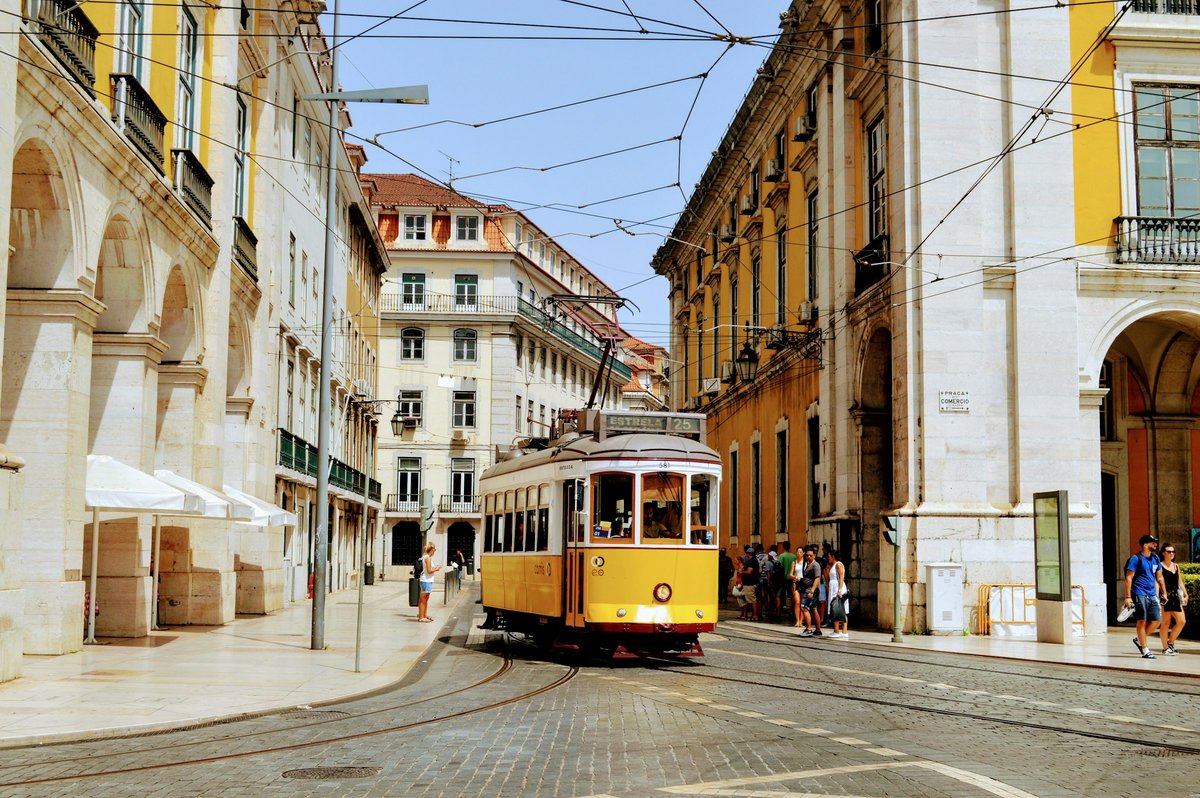
July and August are when Lisbon overheats, and I mean that literally. Afternoon temperatures push past 35°C in Alfama and Mouraria, where the narrow streets trap heat like an oven. The stone walls radiate warmth well after sunset. Tram 28 becomes a sardine tin of cruise passengers, Belém's pastéis de nata queue at Pastéis de Belém stretches to forty minutes, and hotel rates jump 40–60% over spring. The city half-empties of lisboetas, who leave for the Algarve or the Atlantic beaches at Comporta and Costa da Caparica. What remains feels like a theme park at capacity. That said, if August is your only option, go early: be at the Jerónimos Monastery by 9am, eat lunch before noon, and spend 2–5pm somewhere with air conditioning or at a rooftop pool.
March is the gamble month. You might get a week of 20°C sunshine with Lisbon almost to yourself, or five days of Atlantic rain that turns the calçada pavements into skating rinks. Worth noting: the polished limestone cobblestones covering most of the old city are dangerously slippery when wet, so pack shoes with real grip if you're coming before April. By late March the almond trees along the road to Sintra are flowering, and the Feira da Ladra flea market in Campo de Santa Clara starts filling up again after winter's quiet stretch. November is the mirror image: still warm enough for outdoor lunches at 18–20°C, and the Tejo estuary light goes silvery and flat in a way that photographers chase. Hotel prices drop 25–30% from October, and you can walk into any restaurant in Chiado without a reservation.
December through February brings rain (roughly 110mm per month versus May's 40mm) and shorter days, with sunset around 5:15pm in January. But Lisbon's winter is not northern Europe's winter. Daytime temperatures hover around 12–15°C, the kind of cool that feels good with a wool layer. The pastry shops in Rossio steam up from the inside, the smell of roasting chestnuts fills Rua Augusta, and you'll pay half what you would in May for a decent hotel in Baixa. Mind you, some attractions cut hours: the Calouste Gulbenkian Museum closes earlier, and boat tours on the Tejo run reduced schedules. If you can handle the rain and don't need beach days, January is when Lisbon feels most like a city where people live rather than a city people visit.
Month-by-month outlook
- Jan Avoid
- Feb Avoid
- Mar Shoulder
- Apr Ideal
- May Ideal
- Jun Shoulder
- Jul Avoid
- Aug Avoid
- Sep Ideal
- Oct Ideal
- Nov Shoulder
- Dec
Year-round climate
Averages from the last 5 years.
| Month | Avg high (°C) | Avg low (°C) | Rainfall (mm) |
|---|---|---|---|
| Jan | 15 | 9 | 78 |
| Feb | 17 | 10 | 77 |
| Mar | 18 | 11 | 84 |
| Apr | 20 | 12 | 59 |
| May | 23 | 14 | 18 |
| Jun | 26 | 17 | 22 |
| Jul | 29 | 18 | 3 |
| Aug | 29 | 19 | 0 |
| Sep | 26 | 17 | 48 |
| Oct | 24 | 16 | 91 |
| Nov | 19 | 12 | 83 |
| Dec | 16 | 10 | 110 |
Mediterranean: dry summers peak at 35°C in July–August; mild winters 12–15°C with ~110mm/month rain. Spring and autumn sweet spot: 22–26°C, under 50mm rain.
Go deeper into Lisbon
Last verified by automated review (v1.5.J.2) on . What is automated review?