What should I pack for Lisbon?
Broken-in shoes with grip: Lisbon's calçada portuguesa cobblestones are polished smooth and turn slick in any rain. Pack layers for 15–28°C swings between shaded alleys and sun-blasted miradouros, a crossbody bag for Tram 28 pickpocket territory, and a 230V Type F adapter. Skip the umbrella: buy one at any Continente for €3.
Shoes matter more here than in most European capitals. Lisbon is built on seven hills: that's not a tourist-board tagline, it's a warning about your ankles. The calçada portuguesa limestone cobblestones that cover most sidewalks in Alfama, Graça, and the Baixa look great and turn treacherous when wet. They're polished by centuries of foot traffic into something close to marble smoothness. You want shoes with rubber soles that have actual tread, not leather-bottomed loafers, not minimalist sneakers, not brand-new anything. Break them in before you go. A full day walking from Praça do Comércio up through the Castelo de São Jorge neighborhood and back down through Mouraria will put 15,000 steps on uneven surfaces that punish blisters without mercy.
Lisbon's weather runs warmer than most visitors expect for Western Europe (currently sitting around 20°C in late May with humidity near 70%) but the temperature drops fast once the sun dips behind buildings in those narrow Alfama lanes. The stone walls hold the cool air like a cellar. Pack light cotton or linen for daytime, and throw in a mid-weight jacket for evenings along the river at Cais do Sodré, where the Atlantic wind off the Tejo carries a real chill after dark. A light rain shell earns its luggage space from October through March; summer visitors can likely skip it. One thing that catches people off guard: some churches including the Jerónimos Monastery in Belém still expect shoulders covered, so keep a light scarf or long-sleeve layer accessible rather than buried in your hotel.
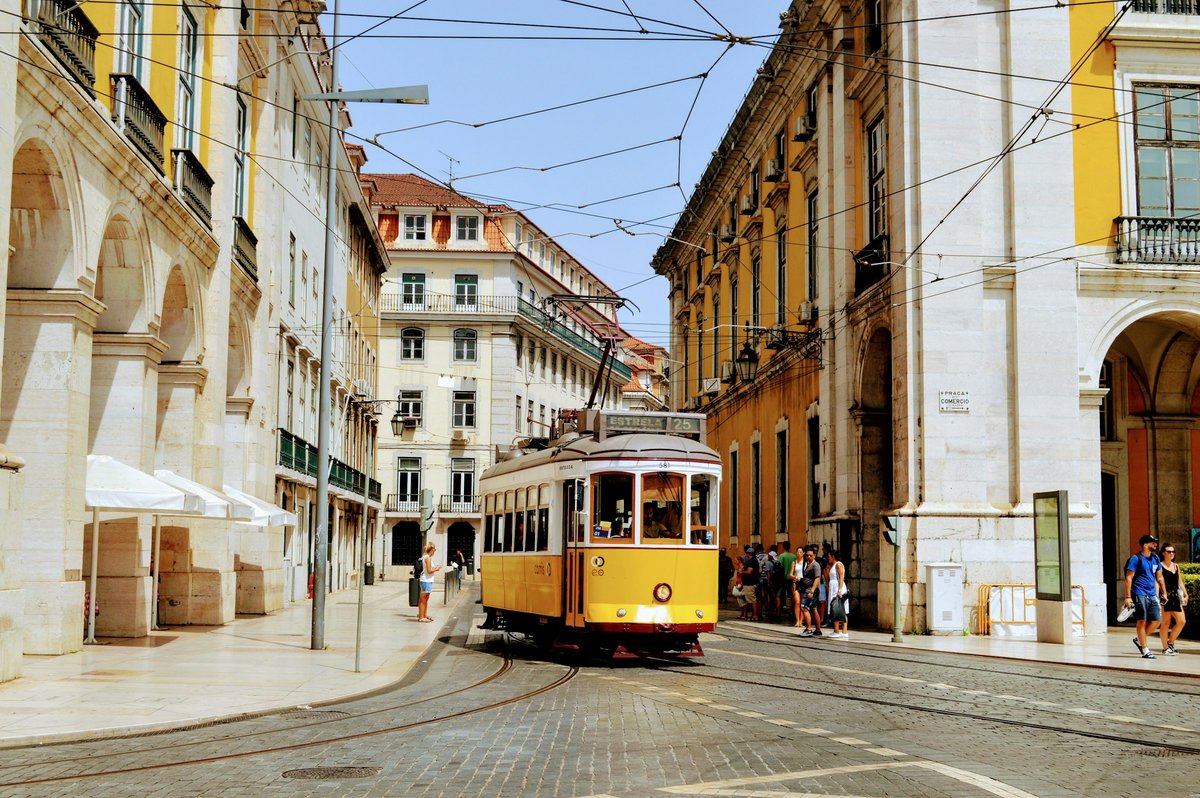
The single most important non-clothing item is a crossbody bag or money belt with a zip closure. Tram 28 (the one every guidebook tells you to ride through Alfama) is a working pickpocket corridor. That's not scaremongering; the Lisbon police post warnings at the stops. Front pockets aren't enough when you're pressed shoulder-to-shoulder on a swaying car. Portugal uses Type F outlets at 230V, so North American visitors need an adapter. Worth noting: your 110V hair dryer will burn out without a voltage converter, and most converters aren't worth the weight. A portable charger matters too: Google Maps navigation drains batteries fast in a city where GPS signal bounces between tight stone walls and drops out entirely inside tiled Pombaline corridors.
Save the suitcase space on things Lisbon sells better and cheaper. Sunscreen at any Farmácia Portuguesa runs €8–12 for European formulations that tend to feel less greasy on the skin than American brands. Umbrellas at Continente or Pingo Doce supermarkets cost €3–5, and they'll be the compact kind that fits your daypack. Over-the-counter medications like ibuprofen and antihistamines are cheaper at Portuguese pharmacies than at US drugstores, and the pharmacists speak enough English to help you find what you need. A local eSIM through NOS or MEO costs less than international roaming from most carriers. And wine: a solid bottle of Alentejo red at the supermarket runs €3–5, which is worth knowing before you lug duty-free across the Atlantic.
Essentials
- Broken-in walking shoes with rubber tread: calçada portuguesa cobblestones are slippery when wet and uneven when dry
- Crossbody bag with zip closure: Tram 28 and Rossio station are active pickpocket zones
- Light cotton or linen clothing for daytime (15–28°C depending on season)
- Mid-weight jacket or hoodie for cool evenings along the Tejo river
- Type F power adapter for 230V Portuguese outlets: leave 110V appliances at home
- Portable phone charger: GPS drains fast navigating between stone walls and tile corridors
- Light scarf or long-sleeve layer for church visits (Jerónimos Monastery, Sé Cathedral)
- Sunglasses with UV protection: Atlantic light reflects hard off white limestone and the Tejo
- Reusable water bottle: Lisbon tap water is safe and free refill fountains exist across the Baixa
- Small daypack for hill-heavy walking days: you'll want both hands free on steep Graça staircases
Seasonal extras
- Sun hat: June through September, miradouro terraces like Graça and Portas do Sol have zero shade at midday
- Swimwear: Cascais and Costa da Caparica beaches are 30–40 minutes by train from Cais do Sodré
- Warm fleece or wool mid-layer: December through February mornings drop to 8–10°C, and stone buildings hold the cold
- Waterproof shoes or shoe covers: winter rain on calçada portuguesa turns it dangerously slick
- Light rain shell: October through March sees regular Atlantic storms; summer visitors can skip it
- Light cardigan for over-AC'd restaurants: Lisbon restaurants in summer tend to crank the air conditioning hard
Buy on arrival
- Sunscreen: €8–12 at any Farmácia Portuguesa, better European formulations that feel lighter on skin
- Umbrella: €3–5 at Continente or Pingo Doce, compact enough for a daypack
- Over-the-counter meds: Portuguese pharmacies are cheaper than US drugstores, and pharmacists speak English
- Local eSIM: NOS or MEO shops around Rossio; cheaper than international roaming from most carriers
- Wine: €3–5 for a quality Alentejo red at any supermarket, far less than duty-free markup
- Pastéis de nata, not a packing item, but at €1.20 each at Manteigaria in Chiado they'll replace the breakfast bars you were going to pack
- Cork accessories: Portugal produces over half the world's cork; bags and wallets in Baixa shops cost a fraction of export prices
Last verified by automated review (v1.5.J.2) on . What is automated review?