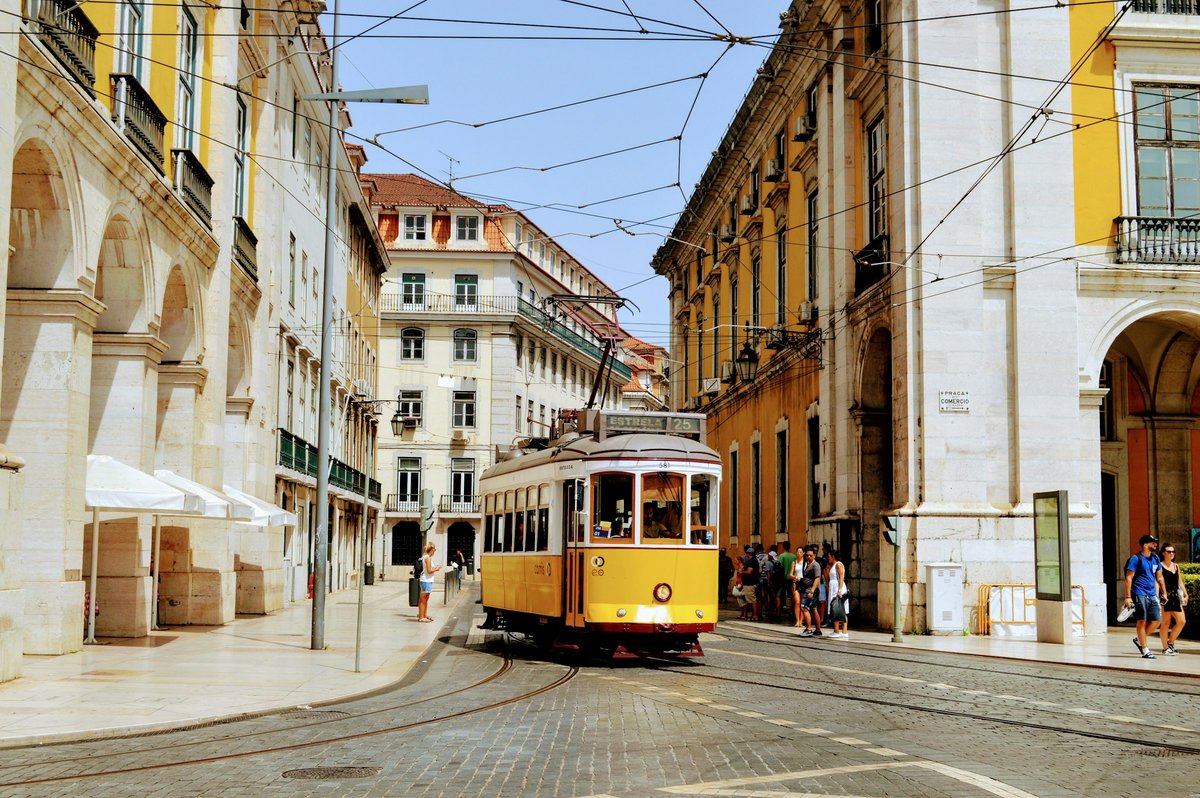
Lisbon sprawls across seven hills along the north bank of the Tagus estuary, and the way neighborhoods stack against each other (literally, vertically) shapes everything about how you experience the city. The historic core runs roughly west to east from Belém along the waterfront through Santos, up into Baixa's flat grid, then climbs steeply into Alfama, Mouraria, and Graça on the eastern hills. To the west and uphill from Baixa you hit Chiado, then Bairro Alto, then Príncipe Real: each one a few minutes' walk but noticeably different in pace and personality. The thing to understand is that Lisbon is small enough to walk across in an afternoon, but the hills make distances deceptive. Two neighborhoods that look adjacent on a map might involve a calf-burning climb up calcada cobblestones or a rattling ride on the 28 tram. Where you base yourself matters less for access (you can get anywhere) and more for what you wake up to. The sound of fado drifting from a doorway at midnight, or the quiet of a residential square where someone is hanging laundry from a fourth-floor window, or the clatter of skateboard wheels in a converted riverside warehouse. That ambient texture is what defines your Lisbon.
Neighborhoods
-
Alfama
Alfama is the oldest part of the city, a tangled hillside of narrow alleys and stairways that survived the 1755 earthquake largely intact. The buildings lean close enough overhead that neighbors could nearly shake hands across the street. It smells like grilled sardines in summer and damp limestone in winter. Fado still comes out of actual doorways here, not just the tourist casas de fado, but from open windows above Rua dos Remédios on warm evenings. The pace is slow. Old women sit on folding chairs outside their doors. Cats own the staircases. It has gotten more touristy in the last five or six years, and some of the old tascas have become cocktail bars, but the bones of the neighborhood resist gentrification in a way that feels stubborn rather than staged.
- Best for
- First-time visitors who want to feel the weight of the city's history, couples looking for atmospheric walks, and anyone who does not mind steep terrain underfoot
- Key streets
- Rua de São Miguel for the most photogenic laundry-draped facades; Beco do Carneiro for a dead-quiet alley with azulejo walls; Largo de São Rafael where you can still see remnants of the Moorish-era city wall; Rua dos Remédios running the length of Alfama's lower edge with tascas and mini-markets
-
Baixa
The flat grid between Praça do Comércio on the riverfront and Rossio square at the top. This is Pombal's post-earthquake rebuild: rational, wide, neoclassical, and a little austere compared to the organic tangle of the hills around it. During the day it hums with commuters and shoppers. Rua Augusta is the pedestrian spine, and it tends to feel like a shopping mall crossed with a town square: buskers, chain stores, tourist restaurants with laminated photo menus, but also a handful of genuine old shops selling buttons or dried cod or tinned fish that have been here for decades. At night Baixa mostly empties out. It is functional rather than atmospheric. The architecture is handsome in a sober way: look up past the shop signs and you will notice the ironwork balconies and the uniform facade heights that Pombal mandated.
- Best for
- Visitors who want flat walking and easy metro access to everywhere, families with strollers or anyone with mobility concerns, and people who treat their hotel as a base camp rather than a destination
- Key streets
- Rua Augusta from the triumphal arch to Rossio; Rua da Prata and Rua do Ouro running parallel with more local foot traffic; Praça do Comércio for the waterfront scale of the thing; Rua dos Fanqueiros on the eastern edge where you start to find actual neighborhood restaurants
-
Chiado
Chiado sits on the hill between Baixa and Bairro Alto, and it has always been Lisbon's literary and theatrical district. The Livraria Bertrand on Rua Garrett has been open since 1732: the oldest operating bookshop in the world, which sounds like a gimmick but the staff still curate serious Portuguese literature sections. The Teatro Nacional de São Carlos anchors the southern end. A Brasileira cafe on the corner of Rua Garrett still trades on the Pessoa connection, and the bronze statue of the poet sitting outside draws a permanent queue for photos. The neighborhood burned badly in 1988 and was painstakingly rebuilt by Siza Vieira, so you get this interesting mix of 18th-century bones and late-20th-century Portuguese modernist intervention. The foot traffic is denser than Bairro Alto during the day but thins out at night. Coffee culture is strong: this is where Lisbon's third-wave roasters set up alongside the old-school pastelarias.
- Best for
- Culture-oriented visitors, anyone who wants walkable access to both the nightlife hill and the commercial flat, and travelers who like their neighborhood to have a cafe on every corner
- Key streets
- Rua Garrett is the main artery; Largo do Carmo for the roofless Carmo Convent: the earthquake skeleton they deliberately left open to the sky; Rua Serpa Pinto toward the opera house; Rua Nova da Trindade for the old cervejaria
-
Bairro Alto
During the day, Bairro Alto is quiet enough to hear pigeons. The streets are narrow, the buildings are mostly 16th and 17th century, and the ground floors are split between tiny independent shops (vintage clothing, Portuguese design, record stores) and restaurants that do not open until evening. Then around ten at night the whole neighborhood flips. The bars open their doors directly onto the street, people drink on the cobblestones, and the sound carries up the hill in layers: conversation, clinking glasses, someone playing guitar badly. It is not clubbing exactly; it is more like a very large outdoor house party that happens to be spread across thirty blocks. The noise is real. If you stay here, bring earplugs for Thursday through Saturday. By three in the morning the street cleaners come through and by nine it is silent again.
- Best for
- Night owls and solo travelers in their twenties and thirties who want to step outside and be in the middle of things, or anyone who sleeps like the dead and wants character over quiet
- Key streets
- Rua da Atalaia and Rua do Diário de Notícias are the main bar strips; Rua da Rosa for restaurants and vintage shops during the day; Travessa da Queimada connects through to Príncipe Real
-
Príncipe Real
This is the neighborhood Lisbon's creative class moved to when Bairro Alto got too loud. It centers on the garden of the same name: a small square with a massive cedar tree that creates a natural canopy over the whole space. Saturday mornings there is an organic market. The streets radiating out are lined with concept stores, natural wine bars, and restaurants that cost twice what you would pay in Mouraria but are generally worth it. The architecture is 19th-century bourgeois: tall townhouses with ornate ironwork, many of them converted to boutique hotels or coworking spaces. The LGBTQ+ scene has deep roots here, centered on the bars around Rua de São Marçal. It feels unhurried and slightly self-conscious about its own good taste, if that makes sense. The kind of place where the coffee shop has a curated magazine rack.
- Best for
- Design-minded travelers, couples looking for a walkable base with good restaurants, and anyone who wants the historic-center location without the tourist density or the Bairro Alto noise
- Key streets
- Praça do Príncipe Real for the garden and Saturday market; Rua da Escola Politécnica leading down toward the botanical garden; Rua de São Marçal connecting through to Bairro Alto; Rua Dom Pedro V with its antique shops and the Miradouro de São Pedro de Alcântara at the far end
-
Mouraria
Mouraria is where the Moors were confined after the Christian reconquest: the name literally means Moorish quarter. Today it is the most multicultural neighborhood in central Lisbon. Rua do Benformoso has Bangladeshi and Chinese grocers, Indian restaurants, and African hair salons alongside traditional Portuguese tascas. The streets are steep and the buildings show their age more honestly than in the polished tourist zones: cracked plaster, exposed brick, tiles missing from facades. Gentrification is happening, but slowly and unevenly. You will see a craft cocktail bar next to a shop selling plastic buckets. The Largo do Intendente at the northern edge has been cleaned up significantly in the last decade: it was rough for a long time and still carries a faint edge, though the ceramic-fronted buildings are beautiful. Fado originated here, not in Alfama, which is something Mouraria residents will tell you with some feeling.
- Best for
- Travelers who want to see a working neighborhood rather than a curated one, budget-conscious visitors looking for genuinely cheap meals, and anyone interested in how immigration is reshaping southern European cities
- Key streets
- Rua do Benformoso for the multicultural commercial strip; Largo do Intendente for the renovated square and the ceramic facade of the old factory; Escadinhas de São Cristóvão climbing steeply up to the castle walls; Rua da Mouraria itself, though it is short
-
Graça
Graça sits on the hill just above and east of Alfama, and it has the best viewpoints in the city. The Miradouro da Graça and the Miradouro da Senhora do Monte both look west over the entire downtown and the Tagus, and on clear days you can see the Cristo Rei statue across the river. But beyond the viewpoints, Graça is genuinely residential in a way that most of the historic center is not anymore. The Feira da Ladra flea market spreads across the Campo de Santa Clara on Tuesdays and Saturdays: mostly junk, honestly, but the kind of junk that tells you about a city. Old azulejos, broken radios, military surplus, somebody's grandmother's entire kitchen. The buildings are a mix of crumbling 19th-century apartments and social housing blocks. The restaurants serve daily lunch specials for six or seven euros, written on chalkboards in Portuguese only.
- Best for
- Repeat visitors who already know the center, travelers who want a residential feel within walking distance of the historic core, and budget travelers: accommodation here costs less than Chiado or Alfama for a similar or better location
- Key streets
- Calçada da Graça climbing up from Largo da Graça; Campo de Santa Clara for the flea market and the terrace of the Panteão Nacional; Rua da Voz do Operário for local shops; the path connecting the two miradouros along the ridge
-
Belém
Belém stretches along the waterfront about six kilometers west of the center, and it is where Lisbon keeps its imperial-era monuments and its most famous pastry. The Jerónimos Monastery and the Tower of Belém are the headline acts: Manueline architecture at its most ornate, all carved rope motifs and maritime symbolism. The MAAT museum adds a contemporary counterpoint down by the water. Pastéis de Belém, the bakery, has had a line outside since roughly forever, and the custard tarts are genuinely better than the ones everywhere else in the city: the crust shatters differently, the filling has a slight caramelization that the imitators miss. The neighborhood itself is quieter and more spread out than the center. There are parks and wide avenues and a feeling of being slightly removed from the density of the hills. The waterfront promenade running from the Padrão dos Descobrimentos to the tower is flat and pleasant, with the Tagus wide enough here to feel almost oceanic.
- Best for
- Families with kids who want space and parks, history-focused visitors who want to be near the monuments, and anyone who finds the density and hills of the center tiring, though you will commute to restaurants and nightlife
- Key streets
- Rua de Belém from the monastery to the tower is the main axis; the waterfront promenade for walking or cycling; Rua Vieira Portuense running behind the monastery has a few local restaurants away from the tourist crush
-
Santos and Madragoa
These two neighborhoods blend into each other along the riverfront west of Cais do Sodré, and they represent a Lisbon that most visitors never see. Santos has some nightlife spillover from the clubs near the river (Lux is technically next door) but mostly it is residential streets with small grocers, laundries, and the kind of restaurants where the owner seats you, takes your order, cooks it, and brings it out. Madragoa, slightly further west and uphill, is even quieter. The streets are narrow, the houses are modest, and you can hear church bells clearly because there is so little competing noise. The Mercado da Ribeira (now the Time Out Market on one side) sits at the eastern edge where Santos meets Cais do Sodré. It is one of the only genuinely useful food halls in Europe, which is saying something given how many cities have tried the concept.
- Best for
- Travelers who have visited Lisbon before and want something quieter, long-stay visitors looking for a neighborhood feel, and anyone who values being near the river without the monument crowds of Belém
- Key streets
- Rua das Janelas Verdes (named for the green shutters) runs past the Museu Nacional de Arte Antiga, one of the best museums in the city that tourists routinely skip; Rua da Esperança in Madragoa for local tascas; Avenida 24 de Julho along the waterfront
-
Cais do Sodré and Pink Street
Cais do Sodré used to be the red-light district: sailors' bars, flophouses, the whole waterfront-port atmosphere. About a decade ago the city painted one block of Rua Nova do Carvalho pink and the bars shifted from seedy to trendy almost overnight. Now it is the bridge point between Bairro Alto's late-night scene and the riverfront clubs. The energy peaks between midnight and four in the morning on weekends. During the day, the neighborhood is defined more by the Cais do Sodré train and ferry terminal: commuters from the south bank of the Tagus pour through here every morning. The Mercado da Ribeira sits at the western end. The noise at night is comparable to Bairro Alto, concentrated into a smaller area. The architecture is less interesting than the hills (mostly utilitarian 20th-century blocks) but the location between the river and the historic center is hard to beat for access.
- Best for
- Nightlife-focused visitors in their twenties and thirties, anyone who wants walkable access to the Time Out Market and the ferry to Cacilhas, and travelers who prioritize central location and transit connections over neighborhood character
- Key streets
- Rua Nova do Carvalho (the Pink Street) for the concentrated bar scene; Avenida Ribeira das Naus along the waterfront toward Praça do Comércio; Rua do Alecrim climbing up toward Chiado
FAQ
Which neighborhood in Lisbon is best for a first-time visitor?
Chiado or Alfama, depending on what you prioritize. Chiado gives you the most walkable access to everything (Baixa downhill, Bairro Alto next door, the river ten minutes south) and has the densest concentration of good restaurants and cafes relative to its size. Alfama is more atmospheric but less convenient as a base; the hills and narrow streets mean you are always climbing, and getting home after midnight involves some steep cobblestones. If you want the Lisbon postcard experience, Alfama. If you want a comfortable base that still has character, Chiado.
Is Bairro Alto too noisy to stay in?
Thursday through Saturday nights, genuinely yes: unless your accommodation has serious soundproofing or faces an interior courtyard. The street noise from the bars runs from roughly eleven at night until three in the morning, and it carries through single-pane windows easily. Sunday through Wednesday it is a different neighborhood entirely, quiet enough to hear the trams. If you are a light sleeper, stay in Príncipe Real or Chiado, which are both a five-minute walk from the action without the ambient noise.
How do I get between Lisbon's neighborhoods without exhausting myself on the hills?
The 28 tram is the famous option but it is usually packed to sardine-tin density with tourists, and pickpockets work the crowded cars. Locals take it, but not at peak tourist hours. The Elevador da Glória funicular connects Baixa to Bairro Alto, and the Elevador da Bica connects the Santos waterfront to the top of the hill near Chiado. Both run frequently and cost a standard transit fare with a Viva Viagem card. For Alfama and Graça, the 737 bus climbs the hill and is rarely crowded. Tuk-tuks are everywhere and overpriced: a Bolt or Uber across the center costs three to five euros and is almost always the pragmatic choice for tired legs.
Where should I stay in Lisbon on a budget?
Graça and Mouraria currently offer the best value for accommodation in the historic center. Both are within walking distance of Alfama and Baixa but draw fewer tourists, which keeps rental and guesthouse prices lower. Graça in particular has a residential infrastructure (laundries, cheap lunch spots, supermarkets) that makes a longer stay practical. Avoid Airbnbs in Alfama and Chiado if budget matters; those neighborhoods have been tourist-priced for years now.
Is Belém worth staying in or just visiting for the day?
For most visitors, it is a half-day trip from the center. The monastery and the tower take two to three hours, add the pastry stop and maybe the MAAT museum, and you have a full morning or afternoon. Staying in Belém makes sense mainly if you are traveling with small children (the parks and flat terrain are genuinely easier) or if you specifically want quiet and space over nightlife and restaurant density. The commute back to the center by tram or train takes about twenty minutes, which is not bad, but it does mean you are always commuting to dinner.
What is the best neighborhood in Lisbon for food?
It depends on what kind of eating you mean. For traditional Portuguese food at honest prices, Mouraria and Graça still have tascas serving daily lunch specials for under eight euros: places like O Velho Eurico in Alfama or the chalkboard-menu spots on Rua da Voz do Operário in Graça. For contemporary Portuguese cooking, Príncipe Real and the Santos-Chiado corridor have the highest concentration of interesting restaurants. For the widest variety including non-Portuguese food, Mouraria's Rua do Benformoso has Bangladeshi, Chinese, and Mozambican options you will not find elsewhere in the center. The Time Out Market in Cais do Sodré is a curated sampler but the prices reflect the tourist footfall.
Last verified by automated review (v1.7.1) on . What is automated review?