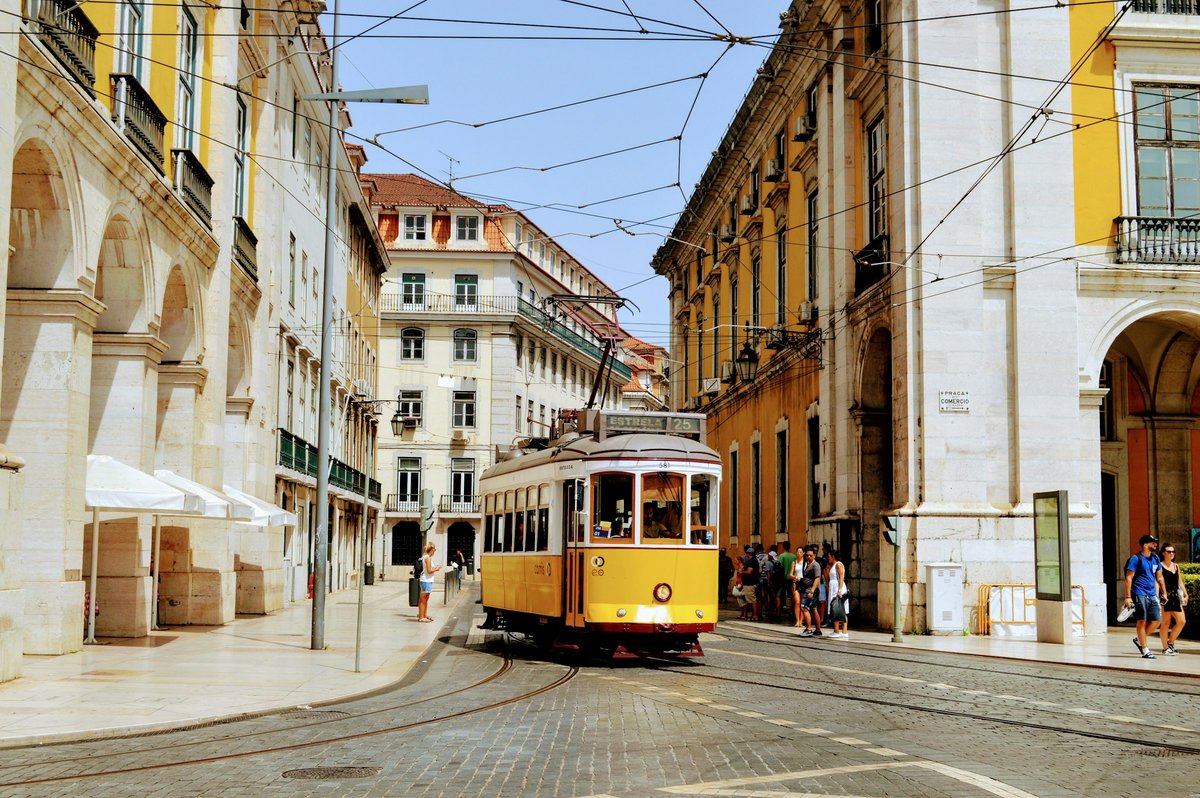
Is Lisbon good for digital nomads in 2026?
Lisbon scores 8.6/10 for digital-nomad suitability (sourced from TTDI's editorial rubric). Fibre runs 200-500 Mbps in post-2018 apartments, coworking hot-desks start around €225/month, and the D8 Digital Nomad Visa (launched October 2022) covers stays beyond 90 days. Monthly all-in runs about $2,500. It loses points for summer rent inflation and afternoon cafe noise in tourist-facing neighborhoods.
Príncipe Real and Santos are where most nomads land first, and for good reason. Fibre at 300-500 Mbps is standard in post-2018 renovations. That said, Airbnb listings in Alfama and Mouraria tend to overstate their wifi. Rentals advertised as "high-speed" regularly clock 12 Mbps on a good day. The walls in those 18th-century buildings are thick stone, and routers sit in hallways three floors down. For a stay longer than two weeks, look at Arroios or Campo de Ourique instead. Arroios has the Mercado de Arroios for daily groceries, at least four self-service laundromats within a 10-minute walk, and rents that run €1,100-1,500 for a furnished one-bedroom with confirmed fibre. Campo de Ourique is quieter, without the Instagram appeal of Alfama or Graça. The Mercado de Campo de Ourique handles breakfast through dinner, the tram 28 stop sits at the neighborhood's edge, and you'll find pharmacies, a post office, and a Continente supermarket all on Rua Ferreira Borges. Both neighborhoods are livable for three months, which is the point.
Second Home in Príncipe Real (hot-desk €290/month, dedicated €350) is the space that ends up in magazine features. The interior is filled with hanging plants and curved, color-coded desks. It looks great. The wifi holds at 200+ Mbps. Worth noting, the open floor plan gets loud after 2 PM when the afternoon crowd fills in. For quieter full-day sessions, Cowork Central in Baixa (dedicated desk €380/month) runs a stricter atmosphere, and the industrial-warehouse feel keeps sound from bouncing. Avila Spaces near Saldanha (hot-desk €225/month) is where the Portuguese startup crowd tends to work, so you'll hear more Portuguese than English. Heden in Santos (day pass €25, monthly €280) opened in 2019 and stays emptier than the others midweek. If you don't want a membership, Copenhagen Coffee Lab on Rua Nova da Piedade lets you sit for 3-4 hours on a single flat white (€3.80) without pressure. Fábrica Coffee Roasters on Rua das Flores is the opposite. Buy your bica, take a photo, leave. They need the table.
Monthly all-in for a single nomad in Lisbon currently runs around $2,500 (at 1 USD = €0.8749 as of July 2026). That breaks down to roughly €1,300-1,600 for a furnished one-bedroom in Arroios or Santos, €250-380 for coworking, and €300-400 for groceries and eating out. Add €40 for a monthly Navegante pass covering all metro, bus, tram, and ferry zones, and €50-80 for a Portuguese eSIM with 20+ GB data. Eating out is still cheaper than Paris or Amsterdam, but it has been climbing. A lunch prato do dia at a tasca in Intendente might cost €8-10 with a drink. Dinner at a sit-down restaurant in Príncipe Real will run €18-25 per person. Mind you, summer changes the math. Between June and September, short-term rental prices rise 30-40%, and some landlords switch entirely to tourist bookings. If you arrive in October or February, you'll find three-month leases on Idealista and Uniplaces at rates that make the budget work. Summer arrivals should budget $2,900-3,100.
Portugal offers two visa paths that matter for nomads. The D7 visa (often called the "passive income" visa) requires proof of €820/month in regular income and takes 3-4 months to process through VFS Global. It was designed for retirees, but remote workers with stable contracts use it. The D8 Digital Nomad Visa, launched in October 2022, requires proof of €3,280/month in income (4x the Portuguese minimum wage) and processes faster, typically 2-3 months. Both grant a one-year residency permit, renewable. The catch for shorter stays. Portugal is Schengen. You get 90 days in any 180-day window on a US, UK, Canadian, or Australian passport without any visa at all. Most nomads on a 1-3 month stay don't need either. The D7 or D8 becomes relevant when you want to stay beyond 90 days, open a Portuguese bank account with Millennium BCP or ActivoBank, or establish tax residency under the NHR (Non-Habitual Resident) regime, which still offers a flat 20% rate on Portuguese-sourced employment income for qualifying applicants.
Lisbon's friction points show up after the first week. The Alfama-to-Graça climb is no joke in July heat. If your apartment is in upper Alfama, you will sweat through your shirt walking home with a laptop bag when afternoon temperatures reach 33-35°C. The metro doesn't cover Príncipe Real or Santos, so you're relying on Carris buses or the Elevador da Bica (which is a tourist attraction, not a commute). Power is generally reliable, but older buildings in Mouraria and Alfama sometimes trip breakers when air conditioning draws full load alongside a laptop charger and monitor. Tram 28 grinds past Alfama windows starting at 7 AM. Weekend nightlife in Bairro Alto runs until 4 AM, and the sound carries through the narrow ruas. For a quiet 90-day stay, skip Alfama and Bairro Alto. Campo de Ourique, Avenidas Novas, and Arroios deliver the boring infrastructure that matters. The bus from Campo de Ourique to Cais do Sodré takes about 15 minutes, and the Navegante pass covers all Carris routes for €40 a month.
Composite of cafe + coworking download speeds and reliability.
Apartment, coworking membership, food, and transit at a comfortable level.
Coworking spaces
- Second Home (Príncipe Real)
- Cowork Central (Baixa)
- Avila Spaces (Saldanha)
- Heden (Santos)
- Outsite Lisbon (Santos)
- Selina Secret Garden (Intendente)
- Impact Hub Lisbon (Alcântara)
- LACS (Anjos)
Visa options
D7 visa requires €820/month passive income proof, 3-4 month processing via VFS Global. D8 Digital Nomad Visa (launched October 2022) requires €3,280/month income (4x Portuguese minimum wage), processes in 2-3 months. Both grant renewable one-year residency. Schengen rules give US, UK, Canadian, and Australian passport holders 90 visa-free days per 180-day window.
Last verified by automated review (v1.7.2) on . What is automated review?