Is Lisbon safe?
Yes. TTDI rates Lisbon 8.2/10 for solo-traveler safety (see the TTDI Solo-Safety Index), and violent crime against visitors is rare. What you are more likely to run into are pickpockets on packed trams, fake-drug sellers downtown, slick pavements on steep hills and rowdy late-night crowds at Cais do Sodré. Dial 112 for police, fire or ambulance.
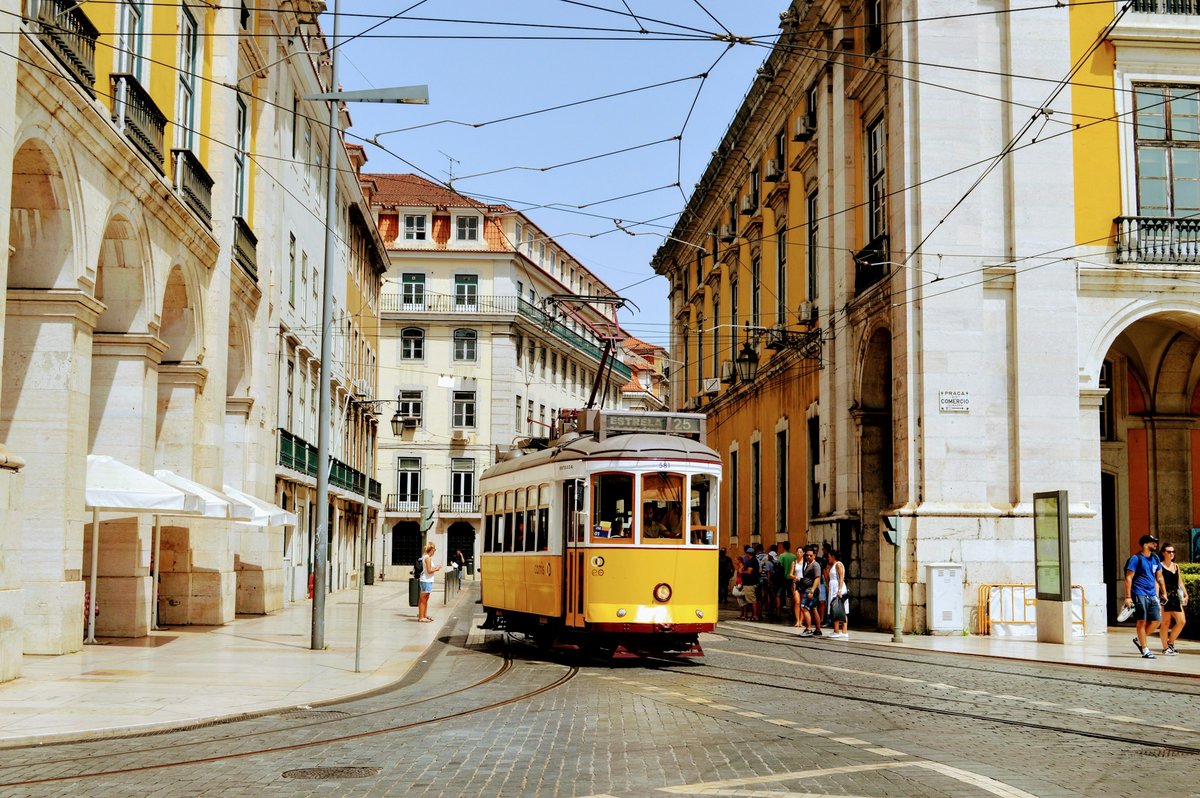
Theft is the main risk in Lisbon, and most of it happens on the Tram 28 line. The yellow cars grind uphill from Martim Moniz toward Graça and Alfama with 20 people standing, the wooden seats creaking and the bell clanging, and that crush is where wallets go missing. Pickpocket teams also work the queue for the Santa Justa lift on Rua do Ouro and the long escalators at Baixa-Chiado metro station. We'd board Tram 28 at Martim Moniz before 9am, or ride the quieter 12E loop through Mouraria instead. Keep your phone in a front zip pocket and never leave it on a café table at Praça do Comércio. On Rua Augusta and in Rossio, men will murmur 'hashish, cocaine' as you pass. What they sell is usually bay leaf or crushed paracetamol, and a shake of the head ends the pitch. Portugal decriminalised possession of small personal amounts in 2001, which is why the sellers work so openly. Buying from them on Rua Augusta still gets you nothing but a con.
Bairro Alto on a Friday or Saturday packs thousands of drinkers into its grid of narrow lanes until the bars close around 2am. The air smells of spilled Super Bock and cigarette smoke, and the crowd is loud but good-natured. Rua Nova do Carvalho in Cais do Sodré, the pink-painted street, gets messier once Bairro Alto empties into its clubs, and the few drink-spiking reports Lisbon gets tend to come from there, so order bottled drinks and keep a hand over the glass. The alleys of Mouraria and the side streets off Largo do Intendente go quiet and badly lit after midnight, and we would not cut through them alone in the small hours. The stairways of Alfama feel much the same once the fado houses shut. From Alfama, walk down to Avenida Infante Dom Henrique on the river, which stays lit and has passing taxis. For a calmer evening base, our pick is Príncipe Real or Campo de Ourique, where dinner wraps up by 11pm and the streets in both neighbourhoods stay populated.
The Lisbon Metro stops running around 1am, and after that the Carris night buses in the 200 series fan out from the hub at Cais do Sodré. A Bolt or Uber across the centre currently costs roughly €5 to €9, and the app tracks your route, which beats hailing a car on a dark corner of Graça. The bigger physical danger in Lisbon is underfoot: the calçada, hand-laid white limestone cobbles, wears to a glassy sheen, and after rain the slopes of Rua do Carmo and Rua da Misericórdia feel like ice under leather soles, so pack rubber-soled shoes. On 3 September 2025 the Glória funicular derailed on Calçada da Glória and killed 16 people, and the city then halted the Bica and Lavra funiculars for inspection, so check the Carris notices before you plan around them. On 19 October the early evening read 20.1°C under clear skies, but the Tagus breeze made it feel nearer 17.5°C, so carry a light layer for the walk home.
If something is stolen, the PSP tourist police desk at Palácio Foz on Praça dos Restauradores has English-speaking officers who will write the report your insurer asks for. Rip currents are the hazard visitors overlook: at Carcavelos and Costa da Caparica, swim between the flags during the lifeguarded season, roughly June to September, because the Atlantic there runs cold and pulls hard. For company, the free walking tours that meet at Largo de Camões and Praça do Comércio most mornings often end with the group eating together, which solves the table-for-one problem. Many tascas in Mouraria and Graça seat lone diners at the counter without fuss, and with plates clattering and chouriço sizzling, eating alone there feels ordinary. Hostels in Baixa and Chiado commonly sell private rooms for less than a single traveller pays for a double hotel room in the same streets.
Emergency number: 112
Official travel advisories
Normal precautions the most cautious of 3 government assessments
- Government of CanadaLevel 1Take normal security precautions View advisory
- UK Foreign OfficeLevel 1No FCDO travel restriction View advisory
- US State DepartmentLevel 1Exercise Normal Precautions View advisory
Verified from the issuing governments' own feeds.
Areas to avoid
- Mouraria back alleys after midnight
- Side streets off Largo do Intendente late at night
- Rua Nova do Carvalho (Pink Street), Cais do Sodré, in the small hours
- Tram 28 standing crush at midday
Common concerns
- Pickpockets on Tram 28, in the Santa Justa lift queue and on the Baixa-Chiado escalators
- Fake hashish and cocaine sellers on Rua Augusta and in Rossio
- Slippery limestone calçada on steep streets after rain
- Funicular status after the September 2025 Glória derailment
- Occasional drink-spiking reports around Cais do Sodré clubs
- Rip currents at Carcavelos and Costa da Caparica
Last verified by automated review (v1.7.2) on . What is automated review?