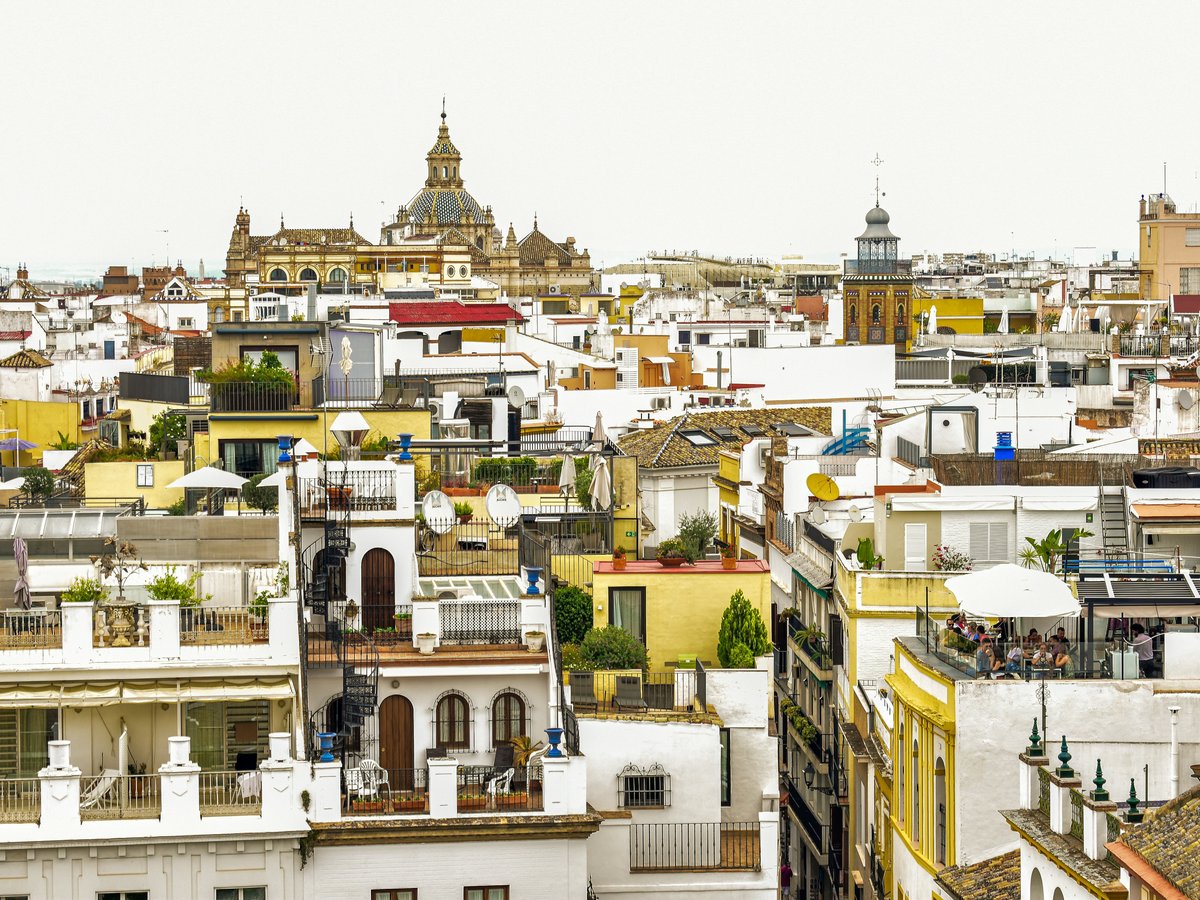
What's the must-see thing in Seville?
The Real Alcázar, not the Cathedral. Both sit 200 metres apart in Barrio Santa Cruz. The Cathedral is larger, but the Alcázar lands harder, a palace occupied since 913 AD where running water echoes through Mudéjar courtyards and orange blossom hangs thick in the garden air. Book a timed ticket at least 3 days ahead. €14.50 entry.
The Real Alcázar is the building that makes Seville feel like Seville. The palace has been continuously occupied since Abd al-Rahman III ordered its construction in 913 AD, and the Spanish royal family still uses the upper floors when they visit the city. That continuity matters because you can feel it. The Patio de las Doncellas has the same cool, wet-stone smell it had when Pedro I rebuilt it in 1364. Tiled walls in cobalt and gold catch light from a pool so still it looks solid. In June, the Jardín de los Poetas runs about 36°C, but the shade of 400-year-old cypress trees and the constant sound of fountain water dropping into stone basins bring the felt temperature down noticeably. Tickets are €14.50 for the ground floor, €6 more for the Cuarto Real Alto. Book 3 days ahead minimum in summer. The 9:30am slot is the one to get. By 11am, tour groups from the cruise terminal at Muelle de las Delicias arrive and the courtyards lose their quiet.
Seville Cathedral sits on Avenida de la Constitución, a 2-minute walk south from the Alcázar's Puerta del León. It is the largest Gothic cathedral on earth by volume, 126 metres long, and the interior is dark enough that your eyes need a full minute to adjust after the Andalusian sun. Columbus's tomb hangs suspended above the nave floor, carried by four bronze kings, and the main altarpiece took 82 years to complete, from 1482 to 1564. Worth noting, the Cathedral alone might feel like a large, dim church if you skip the Giralda. The Giralda is the minaret that survived from the original 12th-century Almohad mosque. You climb 34 ramps, not steps, because the muezzin rode a horse up. At the top, 104 metres up, the whole city spreads flat and white below you, and on clear days you can see the Sierra Norte hills 50 kilometres north. Combined ticket with the Cathedral is €12. No separate booking needed.
Plaza de España is the third pick, and it is free. Aníbal González designed this semicircular complex for the 1929 Ibero-American Exposition, and the 48 tiled alcoves around the curved wall each represent a Spanish province. You'll find the Sevilla alcove about two-thirds of the way around. The ceramic work is some of the best azulejo tilework outside of Portugal. That said, come before 10am or after 6pm. Midday in June, the brick and tile radiate stored heat and the open plaza has zero shade. The moat that curves around the building has rowboat rentals for €6 per 35 minutes, which sounds touristy and sort of is, but the view from the water back at the north tower is one of the better photos you'll take in Spain. The plaza sits inside Parque de María Luisa, a 10-minute walk south of the Cathedral. The park itself has thick canopy, peacocks, and cool tiled benches. If you're fading from the heat, sit in the park first and walk to the plaza when you've cooled down.
The right sequence for a first visit is Alcázar at 9:30am, Cathedral and Giralda immediately after at around 11:30, then lunch in Barrio Santa Cruz. Walk to Plaza de España in the late afternoon when the light turns golden and the temperature drops below 30°C. Mind you, Seville in summer is hot. Not pleasantly warm. Hot. The 35°C-plus afternoons between 2pm and 5pm are not warm weather in the way Northern Europeans imagine. Locals disappear indoors for siesta, and you should too. A cerveza and some jamón ibérico in a tiled bar in Triana, across the Guadalquivir from the old centre, is the correct use of those hours. Triana has less foot traffic and lower prices than Santa Cruz. Try the carrillada, slow-braised pork cheek, at any bar along Calle San Jacinto. It tends to run €10-13 per ración and the meat falls apart at the touch of a fork.
The top three
Real Alcázar
The palace has been continuously occupied since 913 AD. Mudéjar courtyards, a 36°C garden cooled by 400-year-old cypresses, and tiled walls in cobalt and gold that Pedro I commissioned in 1364. Book a 9:30am slot at least 3 days ahead. €14.50 entry.
Seville Cathedral and the Giralda
The largest Gothic cathedral by volume at 126 metres long. The Giralda minaret survived from the 12th-century Almohad mosque. You climb 34 ramps, not steps, to 104 metres for a city-wide view. €12 combined ticket, no booking needed.
Plaza de España
Aníbal González built this semicircular plaza for the 1929 Ibero-American Exposition. Free entry. 48 tiled alcoves each represent a Spanish province. Come before 10am or after 6pm to avoid the midday heat radiating off the brick and tile.
Reservations required for at least one of these.
Verified attractions
Sourced from Wikidata and OpenStreetMap: each entry links to its authoritative page.
-
Seville Cathedral
churchCatholic Cathedral in Seville (Formerly a Mosque), Spain
View on Wikidata -
Ramón Sánchez Pizjuán Stadium
stadiumfootball stadium in Seville, Spain
View on Wikidata -
Reales Alcázares
castleroyal palace in Seville, Spain
View on Wikidata -
Giralda
towerMonument in Seville, Spain
View on Wikidata -
Estadio de La Cartuja
stadiumfootball stadium
View on Wikidata -
Estadio Benito Villamarín
stadiumstadium in Seville, Spain
View on Wikidata -
Italica
archaeological siteancient city of Hispania Baetica
View on Wikidata -
Torre del Oro
castletower in Seville, Spain
View on Wikidata -
Plaza de España
plazaplaza in Seville, Spain
View on Wikidata -
Plaza de toros de la Maestranza
theatercultural property in Sevilla, Spain
View on Wikidata -
Casa de Pilatos
palacemuseum
View on Wikidata -
Museo de Bellas Artes de Sevilla
museumcultural property in Sevilla, Spain
View on Wikidata -
Palacio de San Telmo
palacecultural property in Sevilla, Spain
View on Wikidata -
Metropol Parasol
monumentlarge wooden structure in Seville
View on Wikidata -
Parque de María Luisa
monumentcultural property in Sevilla, Spain
View on Wikidata -
Isla Mágica
theme parktheme park in Seville, Spain
View on Wikidata -
Torre de la Plata
castlecultural property in Sevilla, Spain
View on Wikidata -
Isabel II Bridge
monumentcultural property in Sevilla, Spain
View on Wikidata -
Teatro de la Maestranza
theateropera house located in Seville, Spain
View on Wikidata -
Amphitheatre of Italica
archaeological siteAncient Roman amphitheatre in Santiponce, Spain
View on Wikidata -
Palacio de las Dueñas
palaceHistorical Monument (15th Century)
View on Wikidata -
Antiguo Monasterio de la Cartuja de Santa María de las Cuevas
place of worshipmonastery
View on Wikidata -
Archeological Museum of Seville
museumarchaeology museum in Seville, Spain
View on Wikidata -
Church of St Mary Magdalene and chapel of Nuestra Señora de Montserrat
churchchurch building in Seville, Spain
View on Wikidata -
Hospital de las Cinco Llagas
monumentcultural property in Sevilla, Spain
View on Wikidata -
Lope de Vega Theatre
theatertheatre in Seville, Spain, built for the Ibero-American Exposition of 1929
View on Wikidata -
plaza de América
plazasquare in Seville, Spain
View on Wikidata -
Archbishop's Palace
place of worshipcultural property in Sevilla, Spain
View on Wikidata -
Basílica de la Macarena (Sevilla)
churchminor basilica in Seville, Spain
View on Wikidata -
Iglesia de San Luis de los Franceses
churchcultural property in Sevilla, Spain
View on Wikidata -
Iglesia del Divino Salvador
churchchurch building in Sevilla, Spain
View on Wikidata -
Plaza Nueva
plazasquare in Seville, Spain
View on Wikidata -
Puerta de la Macarena (Seville)
castlewall gate in Seville
View on Wikidata -
Рождение Нового Человека
monumentmonument in Seville
View on Wikidata -
Alamillo Park
parkpark in Seville, Spain
View on Wikidata -
Dolmen de La Pastora
monumentdolmen
View on Wikidata -
Dolmen von Montelirio
monumentdolmen in Castilleja de Guzmán, Spain
View on Wikidata -
Hospital de la Santa Caridad
churchchurch and Hospital baroques in Seville, Spain
View on Wikidata -
murallas de Sevilla illojuan
castlecultural property in Sevilla, Spain
View on Wikidata -
Palacio de la Condesa de Lebrija
palaceSpanish house-museum
View on Wikidata
Last verified by automated review (v1.7.2) on . What is automated review?