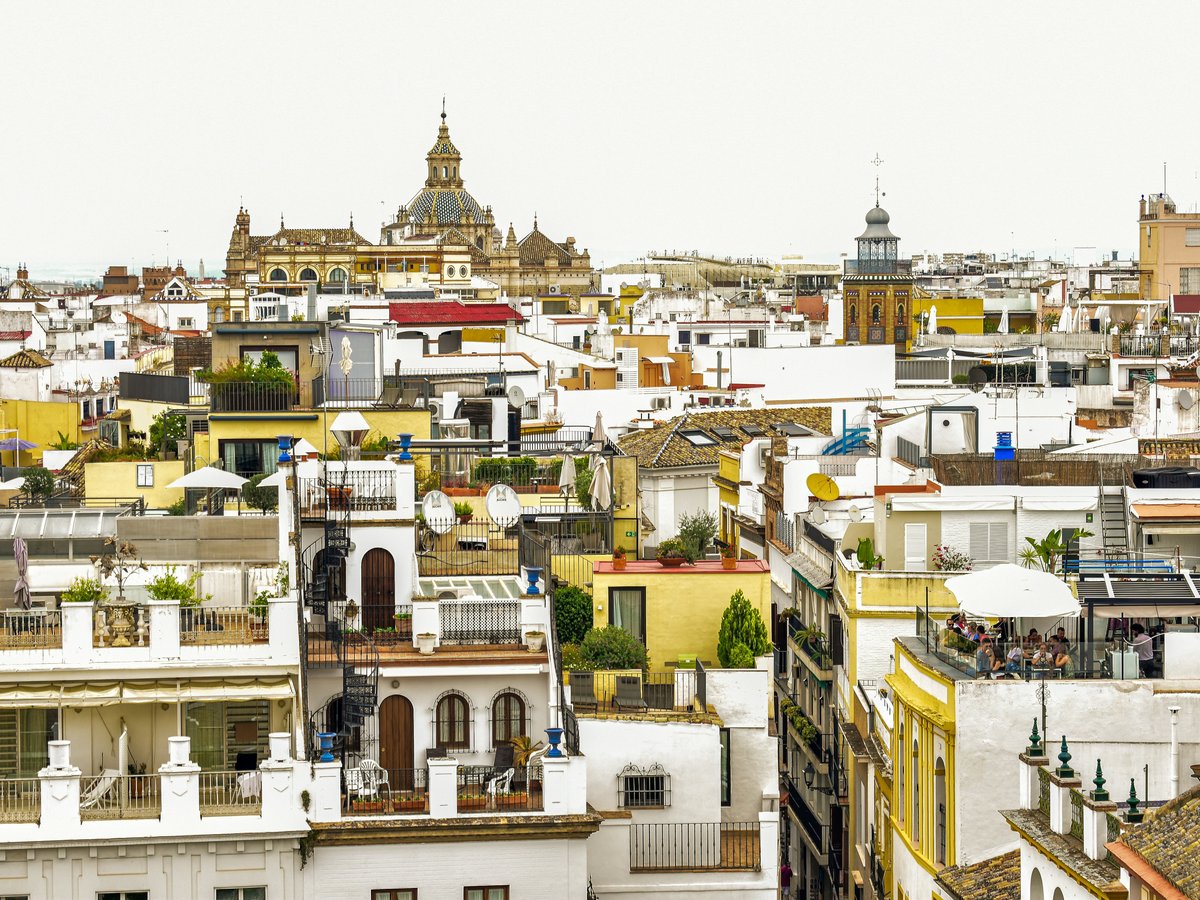
What should I avoid in Seville?
Skip the rosemary women outside Seville Cathedral, the horse carriages at midday, and any terrace on Calle Mateos Gago with a photo menu and paella. Book the Reales Alcázares online rather than queuing. From June to September, plan no outdoor sightseeing between 14:00 and 18:00, and never drive a rental car into the Casco Antiguo, where cameras enforce access zones.
Start with the woman who presses a sprig of rosemary into your hand on Plaza Virgen de los Reyes, beside the Giralda. Take it and she reads your palm, then asks for €5, sometimes €20, and gets loud if you refuse. Keep your hands at your sides, say "no, gracias," and keep walking. The same women work the Alcázar entrance and the edges of Plaza de España. The horse carriages lined up along Avenida de la Constitución are the second skip: in July the asphalt there throws up heat you can feel through sandal soles, the horses stand in it for hours, and the ride covers ground you can walk in 15 minutes. If you want a carriage at all, take one in María Luisa Park after 20:00 and agree the fare before you climb in.
Calle Mateos Gago runs uphill from the Giralda, and its terraces face the tower with laminated menus in six languages. Skip them, and skip paella anywhere in Seville. Paella is a Valencian dish, and in Santa Cruz it tends to arrive reheated and dyed yellow, often at €15 or more a head. Walk four minutes to Bodega Santa Cruz on Calle Rodrigo Caro, which locals call Las Columnas: you order at a packed bar, the waiter chalks your bill on the wooden counter, and a montadito of pringá costs around €3. El Rinconcillo on Calle Gerona has poured sherry since 1670, and its espinacas con garbanzos, spinach stewed soft with chickpeas and cumin, is the safe first order if the menu baffles you. Sevillanos eat lunch at 14:00 and dinner after 21:00, so a dining room full of tourists at 19:00 is a warning sign.
Never queue at the ticket window of the Reales Alcázares. The line at the Puerta del León can run 90 minutes in spring, the sun bounces hard off the white walls, and timed tickets on the official alcazarsevilla.org site cost the same, around €15. Book the Cathedral the same way, since its ticket includes the Giralda, a climb of 35 ramps instead of stairs. Seville's heat is the bigger trap. Summer afternoons routinely pass 40°C, and the city still read 32°C on the evening of 14 October 2026, with 27% humidity that dries your throat within an hour. Plan the Alcázar for its 9:30 opening, eat lunch around 14:00, then rest until 18:00, when the smaller shops on Calle Sierpes reopen and the clink of glasses starts up again in Plaza del Salvador.
Two arrival mistakes cost first-timers real money. The first is a rental car: the Casco Antiguo runs camera-controlled access zones, and if your hotel has not registered your plate, the fine reaches you weeks later. The second is a taxi driver at San Pablo Airport quoting above the posted fixed fare to the centre, roughly €25 to €30 depending on hour and day. The EA bus to Plaza de Armas costs about €4 and runs every 20 to 30 minutes. In Santa Cruz, skip the hour-long tablao packages that hotel desks sell for €40 or more. Casa de la Memoria on Calle Cuna is small enough that the heel stamps carry through the wooden floor. Seville scores 7.8/10 for solo-traveler safety (see the TTDI Solo-Safety Index), and your realistic risk is a pickpocket in the Semana Santa crowds.
Tourist traps to skip
- Terraces with photo menus on Calle Mateos Gago facing the Giralda
- Paella anywhere in Santa Cruz (a Valencian dish, often reheated here)
- Horse carriages on Avenida de la Constitución in midday heat
- The walk-up ticket queue at the Reales Alcázares
- Hour-long tablao flamenco packages sold by hotel desks in Santa Cruz
- Driving a rental car into the Casco Antiguo access zones
Common scams
- Rosemary sprig and palm reading on Plaza Virgen de los Reyes, followed by a demand for €5 to €20
- Airport taxi quotes above the posted fixed fare from San Pablo Airport to the centre
- Carriage drivers who name a price only after the ride ends
Seasonal hazards
- June to September afternoons often pass 40°C; do outdoor sightseeing before 13:00 or after 19:00
- October afternoons can still run hot and dry; carry water on the Giralda ramps
- Itálica in Santiponce has almost no shade, so visit at opening time
Last verified by automated review (v1.7.2) on . What is automated review?