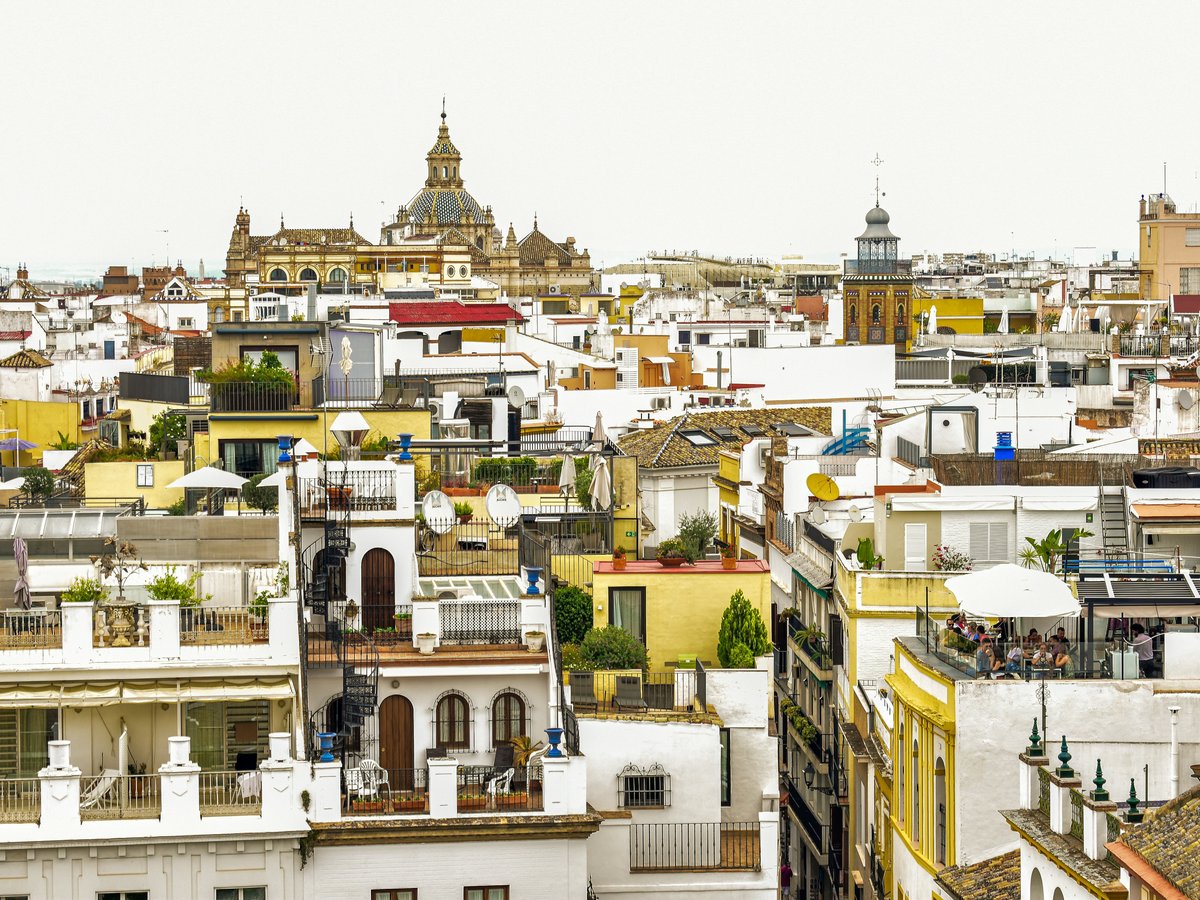
What's a good 3-day itinerary for Seville?
Day 1 covers Santa Cruz on foot. Enter the Reales Alcázares at 8:30am, then climb the Giralda before lunch. Day 2 shifts to Plaza de España and crosses into Triana for the market and riverside tapas. Day 3 takes the northern quarter from Metropol Parasol to the Basílica de la Macarena. About 22 km total, split between mornings and evenings to avoid June's 36°C afternoons.
Day 1 belongs to Santa Cruz and the cathedral quarter. Book your Reales Alcázares timed entry for 8:30am, the first slot. You'll have the Patio de las Doncellas nearly to yourself for 20 minutes before the tour groups arrive. The Alcázar's tilework catches low morning light in a way that photographs don't quite capture. Warm terra-cotta underfoot in the Patio del Yeso, jasmine thick in every courtyard, and you can hear the fountains from three rooms away. Spend 90 minutes, then cross Calle Mateos Gago to the Cathedral, the largest Gothic cathedral in the world (construction began in 1402 on the footprint of the old Almohad mosque). The Giralda's 35 ramps take about 15 minutes to climb, not a single staircase among them. They date to the 12th century, wide enough for a horse and rider. At the top, the breeze off the Guadalquivir is the first cool air you'll feel all day. Lunch at Bodega Santa Cruz on Calle Rodrigo Caro around 1pm. Order the espinacas con garbanzos, Seville's signature tapa of spinach and chickpeas, for about €3.50 and a cold caña for €1.80.
Return to your hotel by 2pm. In June, afternoon temperatures reach 36°C and the streets empty until 5pm. Walk to the Guadalquivir by 6pm, when the shadow of Torre del Oro (built 1221 as a military watchtower) falls long across the riverbank path. Dinner at El Rinconcillo on Calle Gerona at 9pm. The bar has been open since 1670, and the bartenders still chalk your tab on the wooden counter. Order the pringa montadito, slow-cooked pork pressed into bread, for about €3, with a cold glass of fino sherry. Day 2 shifts to Plaza de España and Triana. Arrive at the plaza by 9am. The 1928 semicircular building has 48 tiled alcoves, one for each Spanish province, each with a hand-painted historical scene. Walk south through Parque de María Luisa for 30 minutes under the shade of orange trees, then cross Puente de Isabel II into Triana by noon. Mercado de Triana sits on the ruins of the Castillo de San Jorge, the old Inquisition headquarters. There's a free exhibit in the basement. Gambas al ajillo at the upstairs counter bars runs about €8.
Triana's Calle Betis runs along the river with a direct sunset view back toward the Cathedral and Torre del Oro. Claim a table at La Primera del Puente by 8:30pm, before the terraces fill at 9. Day 3 covers the Macarena and Alameda neighborhoods. Start at Metropol Parasol at 9am. Locals call it Las Setas (the mushrooms), and the €5 rooftop walkway gives you the best elevated view in the city. Walk north along Calle Feria to the Basílica de la Macarena, about a 15-minute walk to the old city wall. The basilica holds the Virgen de la Esperanza Macarena, the most venerated image in Semana Santa, and entry is free. By early afternoon, head to the Museo de Bellas Artes on Plaza del Museo. The collection holds more than a dozen Murillos and several Zurbaráns inside a converted 17th-century convent. Admission is free for EU residents, €1.50 for others. Mind you, the museum closes on Mondays, so if your Day 3 lands on a Monday, swap it with Day 2.
For Day 3's evening, the Alameda de Hércules draws a younger local crowd. Bar Eslava near the south end does a slow-cooked egg on mushroom base that has won Seville's annual tapas prize, about €4. For your last dinner, try Enrique Becerra on Calle Gamazo. The rabo de toro (oxtail braised for 6 hours) costs about €18. That said, one thing that catches first-timers off guard is Seville's dinner hour. Restaurants rarely open before 8:30pm, and 10pm is a normal arrival time. If you show up at 6pm, you'll find closed kitchens. Total walking across the three days comes to about 22 kilometres, but June heat compresses your usable hours into two windows, roughly 8am to 1pm and 6pm to 10pm. Flat shoes matter on Santa Cruz's polished cobblestones, and the Giralda's ramps get slippery from foot traffic. Carry at least a litre of water, and refill at the public fountains near Plaza del Salvador and throughout the centro.
Walking + transit across the three-day route.
Day one
-
8:30 AM Santa CruzEnter the Reales Alcázares on a pre-booked timed ticket. Start in the Patio de las Doncellas before tour groups arrive. Allow 90 minutes.
-
10:30 AM Santa CruzWalk to Seville Cathedral and climb the Giralda's 35 ramps for the rooftop view. About 75 minutes for both.
-
1 PM Santa CruzLunch at Bodega Santa Cruz on Calle Rodrigo Caro. Order the espinacas con garbanzos (about €3.50) and a cold caña.
-
2-5 PM Return to your hotel for siesta. Non-negotiable in June when temperatures reach 36°C. The city empties.
-
6 PM ArenalWalk the riverbank path past Torre del Oro (built 1221). The temperature drops along the Guadalquivir in the evening shade.
-
9 PM CentroDinner tapas at El Rinconcillo on Calle Gerona, open since 1670. Try the pringa montadito (about €3) with a cold fino sherry.
Day two
-
9 AM SurArrive at Plaza de España (built 1928). Walk the 48 tiled provincial alcoves, each with a hand-painted historical scene.
-
10:30 AM Parque de María LuisaWalk through Parque de María Luisa under the shade of the orange trees. About 30 minutes to the south gate.
-
12 PM TrianaCross Puente de Isabel II into Triana. Lunch at Mercado de Triana, built on the ruins of Castillo de San Jorge. Gambas al ajillo, about €8.
-
2-5 PM TrianaSiesta at hotel, or browse Triana's ceramics shops on Calle San Jorge and Calle Alfarería if the heat is bearable.
-
8:30 PM TrianaClaim a riverside table on Calle Betis at La Primera del Puente. Sunset is around 9:45pm in June, so arrive early for a seat.
-
10 PM TrianaDinner at Casa Cuesta on Calle Castilla, one of Triana's oldest taverns. Solomillo al whisky (pork loin in whisky sauce), about €12.
Day three
-
9 AM CentroStart at Metropol Parasol (Las Setas). The €5 rooftop walkway gives the best elevated view in Seville.
-
10:30 AM AlamedaWalk north along Calle Feria through the Alameda de Hércules, Seville's oldest public garden. Two Roman columns still stand at the south end.
-
12 PM MacarenaVisit the Basílica de la Macarena at the old city wall. Free entry. The Virgen de la Esperanza Macarena is the city's most venerated Semana Santa image.
-
1:30 PM AlamedaLunch at Bar Eslava near Alameda de Hércules. The slow-cooked egg tapa has won Seville's annual competition. About €4.
-
3 PM MuseoMuseo de Bellas Artes on Plaza del Museo. Free for EU residents, €1.50 for others. Closed Mondays. Over a dozen Murillos in a 17th-century convent.
-
7 PM ArenalWalk past Plaza de toros de la Maestranza (built 1881) on Paseo de Cristóbal Colón. Tours run until 7pm if you want to go inside (€10).
-
9:30 PM CentroFinal dinner at Enrique Becerra on Calle Gamazo. The rabo de toro (oxtail braised 6 hours) costs about €18.
Last verified by automated review (v1.7.2) on . What is automated review?