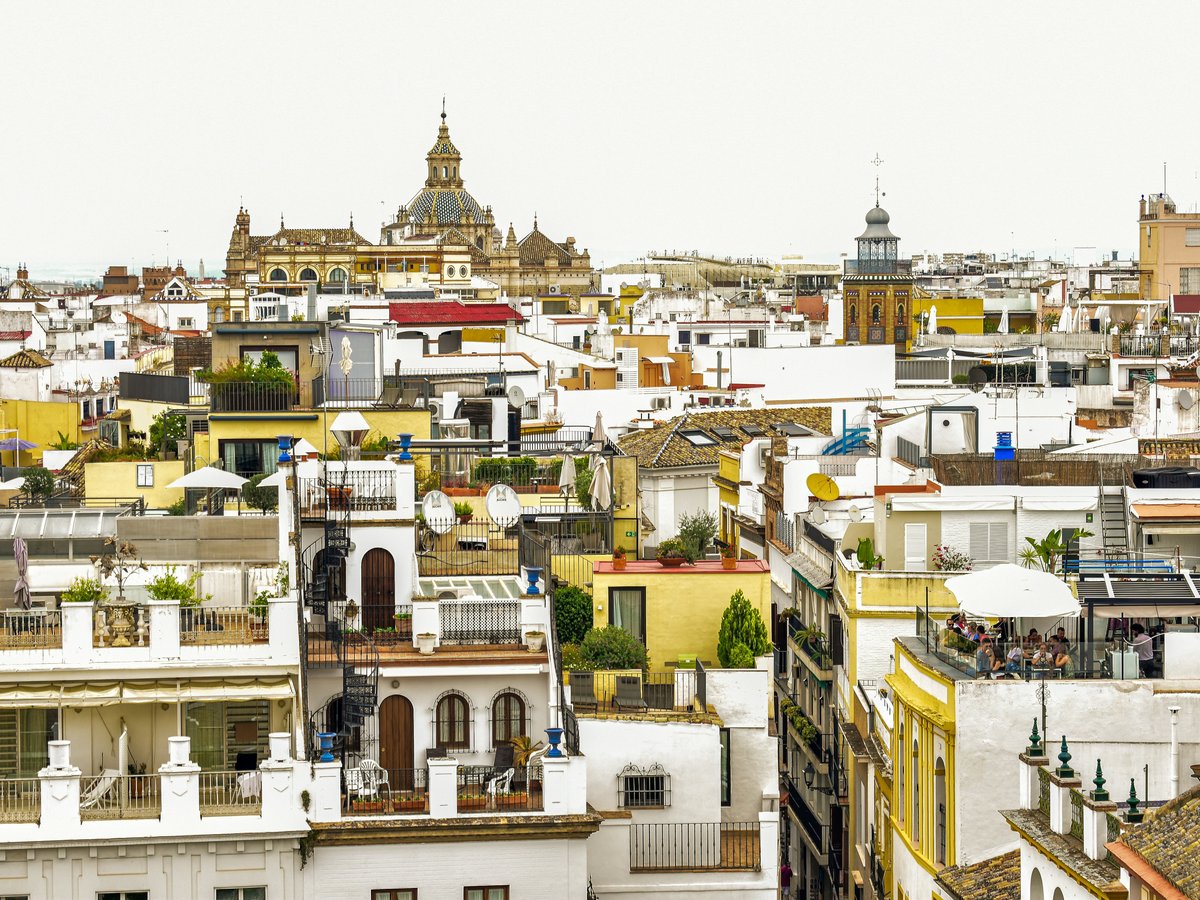
Seville might be the only European city where dinner at 10:30 PM counts as early. The rhythm here runs about 2 hours behind most of the continent, and that delay shapes everything about going out. Locals tend to leave the house around midnight on weekends, and the real peak at most bars lands closer to 1:30 or 2 AM. Clubs? Those don't properly fill until 3 AM, and many keep going past 6. The heat plays a role, especially from June through September, when daytime temperatures regularly hit 40°C and the city only becomes walkable after sundown. You'll notice terraces packed at 1 AM on a Tuesday in July. That's normal. The culture leans social over spectacle. Sevillanos go out to talk, to eat, to drink slowly. The default order is a caña of Cruzcampo and a plate of something. Cocktail culture has grown in the last decade, but wine and beer still dominate. Tinto de verano, red wine cut with lemon soda, is the warm-weather staple. During Feria de Abril, the whole city switches to rebujito, a mix of manzanilla sherry and 7Up served from pitchers. The nightlife here is not about one big club or one famous strip. It's scattered across neighborhoods, each with its own crowd and tempo.
Bars in Seville, from terrace wines to hidden cocktails
The default Seville night starts at a bar, and for many people it also ends at one. The city has relatively few dedicated cocktail bars compared to Madrid or Barcelona, but the ones that exist tend to be good. Look around the Alameda de Hércules and the streets south of it for the more inventive drinks lists. Expect to pay 8 to 12 euros for a cocktail in these spots, which still feels reasonable if you've been anywhere in northern Europe recently. That said, most sevillanos are not ordering Negronis. The standard round is cañas, small draft beers, usually Cruzcampo or sometimes Alhambra. A caña runs about 1.50 to 2.50 euros depending on the neighborhood. Tinto de verano appears on practically every table from April onward. Wine bars have been gaining ground, particularly around the Alfalfa area and parts of Triana. You'll find places pouring Andalusian sherries by the glass, fino and amontillado from Jerez and Sanlúcar, often for 3 to 4 euros. Worth noting, sherry culture feels more natural here than in most Spanish cities, given that Jerez de la Frontera sits only about an hour south. Rooftop bars have multiplied in the last few years, many of them attached to boutique hotels near the cathedral and Plaza Nueva. The views tend to be of the Giralda tower or the rooftops of Santa Cruz. Prices run higher at these spots, closer to 10 to 14 euros per drink, and some enforce a minimum spend. Most open seasonally, roughly April through October. The dive end of the spectrum lives around Alameda and in parts of Macarena. Small bars with cheap beer, plastic chairs on the sidewalk, maybe a TV showing Betis or Sevilla FC. These are where locals go on weeknights. No English menu, no cocktail list, and the caña might come with a free tapa.
Clubs in Seville, late starts and long nights
Clubbing in Seville follows a pattern that can disorient first-timers. Doors might open at midnight, but arriving before 2 AM means you'll likely be one of a dozen people in the room. The real crowd arrives between 2:30 and 3:30 AM, and peak hours run until about 5 or 6. Some spots keep going until 7 AM on Saturdays. The city's club scene is smaller than Madrid's or Barcelona's, but it has its own character. Reggaeton and Latin urban music dominate many of the mainstream spots, especially around Nervión and the Calle Betis area. You'll hear Bad Bunny and Rauw Alejandro at high volume. Electronic music has a following too, with techno and house nights drawing a more alternative crowd, often in the Alameda zone or at venues on the outskirts near La Cartuja. Dress codes tend to be more relaxed than in Madrid. Clean sneakers and a decent shirt will get you into most places. Some of the more upscale spots along the river or near the center might turn away flip-flops or very casual beachwear, but Seville is generally forgiving. Shorts are common in summer months, even at clubs. Entry fees vary. Many bars that turn into dance floors after 2 AM have no cover at all. Proper clubs typically charge 10 to 15 euros, which usually includes one drink. Thursday is a big student night, since the Universidad de Sevilla population keeps the midweek scene alive. Friday and Saturday are the main nights, obviously. Sundays are quiet. One thing to know about the summer months, roughly late June through August. Several indoor clubs close entirely, and the action shifts to open-air venues and terrazas that run late. The heat makes indoor dancing genuinely unpleasant unless the air conditioning is industrial-grade.
Live music and flamenco, the sound of Seville after dark
Flamenco is the obvious starting point, and in Seville it's not a tourist performance. It's a living tradition. Triana has historically been the heartland of flamenco in the city, and you'll still find small bars and peñas flamencas there where local artists perform in intimate rooms of 30 to 50 people. The quality of these shows tends to be higher than the large tablaos in Santa Cruz, which cater more to tour groups. A tablao show typically runs 20 to 35 euros and lasts about an hour. The peña experience is different, often free or donation-based, with performers who might be rehearsing new material or doing a favor for the bar owner. Thursday and Friday nights tend to have the most options. Mind you, schedules in Seville are not always published online. Sometimes you'll walk past a bar in Triana around 11 PM and hear palmas and a voice cutting through the warm air. That's your cue. Beyond flamenco, the live music scene covers rock, indie, and jazz, mostly concentrated around Alameda de Hércules and the Macarena neighborhood. Jazz nights happen regularly at a few dedicated spots, usually starting around 10:30 or 11 PM. Indie and rock acts, both local bands and touring Spanish groups, play at mid-sized venues scattered through the center. Seville also has a street music culture that picks up in spring and fall. The area around the Metropol Parasol and the Alameda fills with buskers on weekend evenings, some of them genuinely talented. During Feria de Abril, which usually falls in late April or early May, live music takes over the fairground casetas. Sevillanas, the dance music associated with the Feria, plays nonstop for 6 days. The city's other major live music moment is Noche en Blanco, typically held in October, when venues across the city host free concerts and performances until dawn.
Nightlife neighborhoods
-
Alameda de Hércules
Bohemian and left-leaning, with a long rectangular plaza lined by bars. The crowd skews younger and more alternative, especially on the north end. Buskers, dogs, kids playing, and people drinking on benches well past midnight.
- Best for
- Bar-hopping on any night of the week, especially for the 25-to-35 crowd that wants cheap beer and conversation over loud clubs
- Standouts
- The bars cluster along both sides of the plaza and in the side streets heading south toward Calle Amor de Dios. Thursday through Saturday are the busiest nights.
-
Triana
Across the Guadalquivir, Triana still feels like its own town. The flamenco history is real here. Bars tend to be smaller and more neighborhood-oriented, with older regulars mixed in with younger sevillanos. The ceramic-tiled facades glow under streetlights, and the smell of fried fish drifts out of freidurías past 11 PM.
- Best for
- Flamenco, wine, and a night that feels local rather than touristic. Good for couples and small groups who want to eat and drink slowly.
- Standouts
- Calle Betis has the riverside bars with terrace seating facing back toward the Torre del Oro. The interior streets of Triana have the more authentic flamenco spots and old-school tapas bars.
-
Calle Betis and the riverfront
The strip of bars along the Guadalquivir's west bank catches the evening breeze off the water and offers views of the illuminated city across the river. It gets loud and crowded on weekends, with a mix of tourists and locals in their 20s. Some bars transition into impromptu dance floors after 1 AM.
- Best for
- Pre-club drinks on warm evenings, weekend nights when you want energy and people-watching without committing to a club
- Standouts
- The terraces fill quickly on Friday and Saturday nights. Arriving before midnight is worth it if you want a riverside seat.
-
Alfalfa
A tangle of narrow streets near the old city center, Alfalfa is a traditional tapas and bar-hopping zone. The plaza itself is small, but the surrounding blocks hold dozens of bars. The crowd varies block to block, from university students to older couples. It's noisier and tighter than Alameda, with less room to breathe but more density.
- Best for
- Tapas crawls that turn into late nights, especially Thursday through Saturday. A good starting neighborhood before heading elsewhere.
- Standouts
- The streets radiating from Plaza de la Alfalfa have the highest bar density per square meter in the city. Pérez Galdós and the surrounding alleys are the core.
-
Nervión
A more modern, commercial neighborhood east of the center. Nervión has the Estadio Ramón Sánchez-Pizjuán, home of Sevilla FC, and several shopping centers. The nightlife here tends to be more mainstream, with larger venues playing reggaeton and commercial pop. The crowd is younger, often university-age.
- Best for
- Mainstream clubbing, post-match nights when Sevilla FC plays at home, large group outings
- Standouts
- Most of the action clusters near the commercial zones. This is where you go if you want a bigger, louder night out with a straightforward club experience.
-
Macarena
North of the old walls, Macarena has a growing alternative and student scene. Cheaper rents have drawn artists and younger residents, and the bar scene reflects that. Expect live music nights, dive bars with hand-painted signs, and a general feeling of rougher edges. It's still gentrifying, so you'll find empty lots next to trendy wine bars.
- Best for
- Budget nights out, live music, and a neighborhood that hasn't been fully polished for tourists. Best on Thursday and Friday.
- Standouts
- The streets around Calle Feria and the Mercado de la Feria hold most of the action. Saturday morning's Feria market is also worth seeing if you're still awake.
Safety after dark
Seville is generally safe at night, even in the early morning hours. Violent crime against tourists is rare. That said, petty theft is a real concern, particularly around tourist-heavy areas like the cathedral, Plaza de España, and Triana Bridge. Keep your phone in a front pocket and leave the passport at the hotel. Pickpockets tend to work in pairs and often target people leaving bars after midnight. Drink spiking has been reported, as it has across most Spanish cities. Don't leave your glass unattended, especially at crowded clubs or during Feria. If something feels off, the staff at most bars will help. Getting home is straightforward. Taxis are plentiful and relatively cheap. A ride across central Seville rarely exceeds 8 to 10 euros. The apps Free Now and Uber both operate in the city, though availability thins out between 4 and 6 AM. The Tussam night bus network, called búhos, runs on weekends and covers the main routes, with departures from Prado de San Sebastián roughly every 30 to 45 minutes after midnight. Seville is flat and compact enough that walking home is viable for many visitors, especially if you're staying in the center. The streets around Alameda and Alfalfa are well-lit and populated until 3 or 4 AM on weekends. Avoid the darker stretches of the river path alone at very late hours. The emergency number across Spain is 112.
Practical tips
- Tipping at bars
- Tipping is not expected at bars in Seville. Rounding up or leaving small change is appreciated but optional. At a sit-down cocktail bar or a rooftop spot, leaving 1 to 2 euros is generous by local standards. Nobody will look at you strangely for not tipping at all.
- Cover charges and club entry
- Many bars and smaller venues have no cover charge. Larger clubs typically charge 10 to 15 euros on weekends, often including one drink. Some promoters hand out flyers near Alameda or Alfalfa offering free or reduced entry. Showing up before 1:30 AM sometimes gets you in free at places that charge later.
- When to go out
- Dinner in Seville starts around 10 PM. Pre-drinks at a terrace bar happen from midnight to 1:30 AM. Clubs fill between 2:30 and 3:30 AM. If you arrive at a club at midnight, you will be alone. Adjust your body clock or plan a siesta.
- What to drink
- Order a caña for a small beer, about 200ml. Cruzcampo is the default local brand. Tinto de verano is red wine with Casera lemon soda, served everywhere from April through October. Rebujito appears during Feria de Abril. Fino sherry by the glass is underpriced and worth trying, usually 2.50 to 4 euros.
- Smoking culture
- Spain banned indoor smoking in 2011, but Seville's bar culture is built around terraces and outdoor seating. Expect smoke at most outdoor tables, particularly late at night. If you're sensitive to it, sit indoors or upwind.
- Language at bars
- English is spoken at tourist-facing spots in Santa Cruz and the rooftop hotel bars. At neighborhood bars in Alameda, Triana, or Macarena, expect Spanish only. Learning a few phrases helps. 'Una caña, por favor' and 'la cuenta' will cover most situations.
FAQ
What time do bars close in Seville?
Most bars stay open until 2 or 3 AM, sometimes later on weekends. Clubs typically run until 6 or 7 AM on Friday and Saturday nights. During Feria de Abril, some casetas keep going past dawn. On weeknights, many bars close by 1:30 AM, though Alameda de Hércules tends to stay lively a bit longer.
Is Seville nightlife expensive compared to other Spanish cities?
Seville is noticeably cheaper than Madrid or Barcelona for a night out. A caña of beer runs 1.50 to 2.50 euros at most bars. Cocktails cost 8 to 12 euros. Club entry with one drink is usually 10 to 15 euros. A full night out including dinner, drinks, and a taxi home can come in under 50 euros if you stick to local spots rather than rooftop bars.
What should I wear to go out in Seville?
Seville is more relaxed than Madrid about dress codes. Clean sneakers, a decent top, and jeans or chinos work at most clubs. In summer, shorts are common even at late-night spots. Flip-flops might get turned away at some of the nicer clubs along the river, but that's the exception. During Feria, the traditional traje de flamenca or suit is standard at the casetas.
Is the Feria de Abril good for nightlife?
Feria de Abril is possibly the biggest party event in southern Europe, running for 6 nights in late April or early May. The fairground casetas host live sevillanas music, dancing, and rivers of rebujito. Most casetas are private, belonging to families, businesses, or social clubs, but public casetas exist and welcome everyone. The atmosphere is festive and overwhelming. Expect to stay up until sunrise at least once.
Are there LGBTQ-friendly nightlife spots in Seville?
Alameda de Hércules has been the center of LGBTQ nightlife in Seville for years. Several bars around the plaza and its side streets cater to or welcome a queer crowd, especially on weekends. Seville also hosts an annual Pride celebration, usually in late June. The overall atmosphere in the nightlife areas is tolerant, though smaller neighborhood bars outside the center can feel more conservative.
Can I go out alone in Seville?
Solo nights out are common and generally safe. The terrace and plaza culture makes it easy to strike up conversations, especially around Alameda where tables are close together and the mood is social. Bar counters in Triana and Alfalfa are good spots for a solo drink. Stick to well-populated areas after 3 AM and keep your phone secure, and you'll likely be fine.
Last verified by automated review (v1.7.2) on . What is automated review?