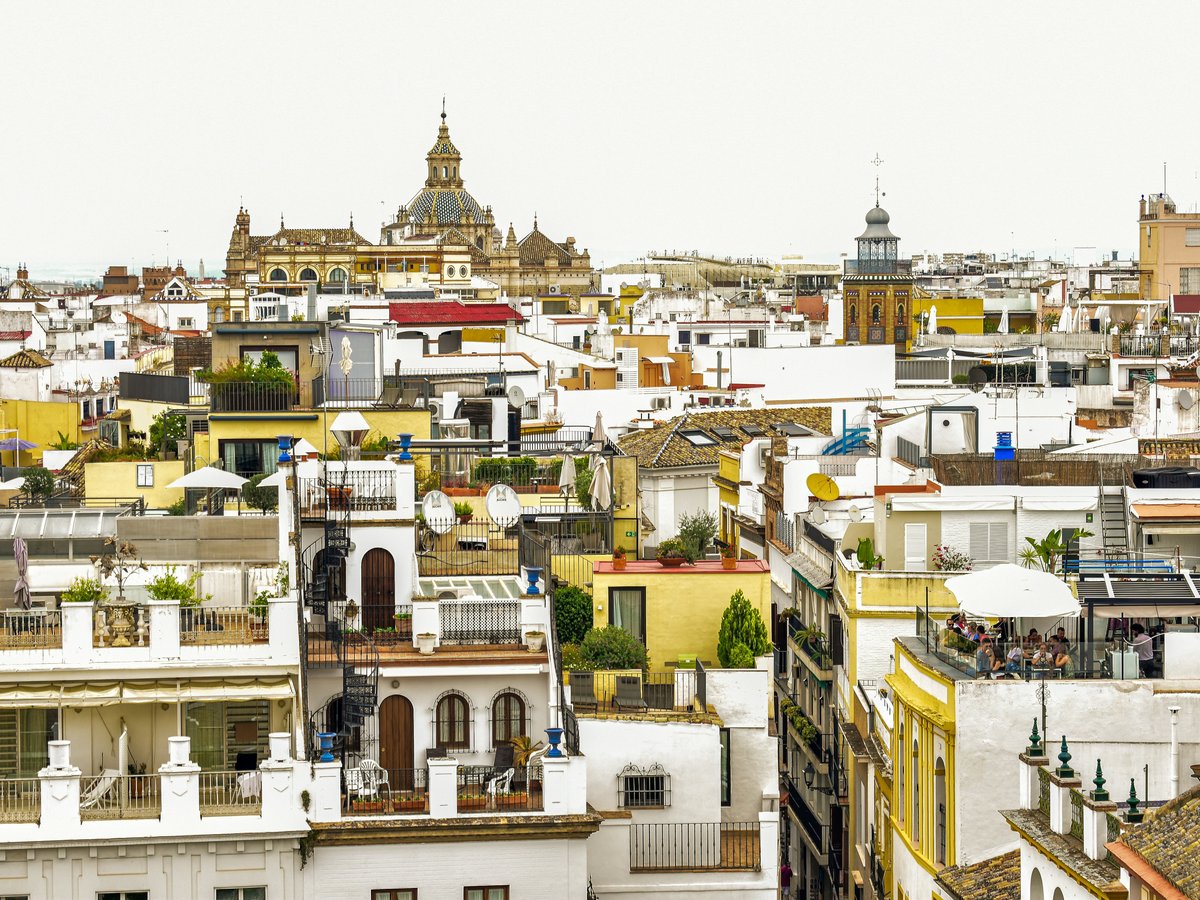
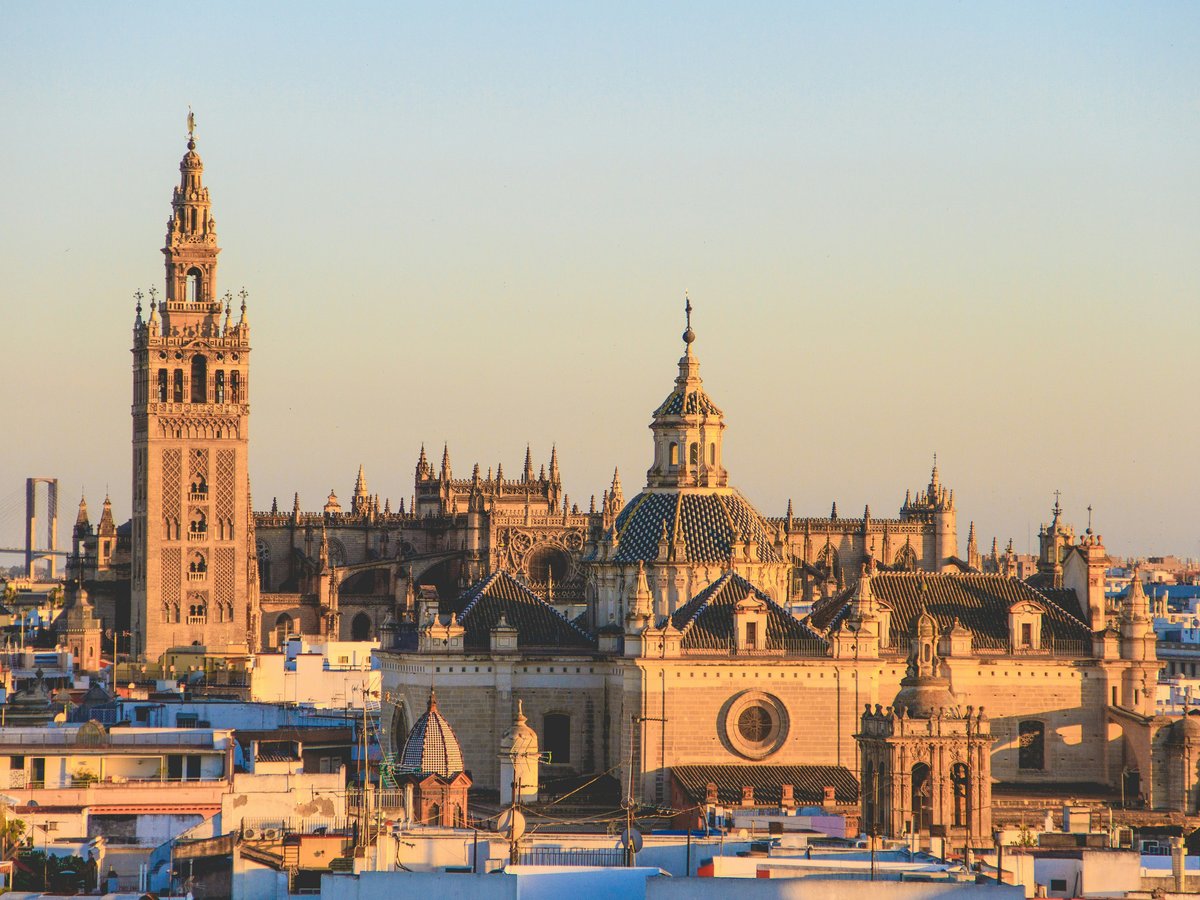
The Guadalquivir is the only major navigable river in Spain, and Seville sits at its head of navigation: the inland port that funnelled New World silver into the Spanish treasury for two centuries and made this relatively small Andalusian capital, home to roughly 688,000 people, richer than most European courts. That wealth calcified into limestone and ceramic tile: the Cathedral, finished in 1506 on the footprint of the old Friday mosque, remains the largest Gothic church on earth, and the Alcázar next door is still a working royal residence whose Mudéjar plasterwork predates the Alhambra's most famous rooms. But Seville is not a museum city. Morning starts late (breakfast at ten is normal, lunch rarely before two) and the rhythm makes sense only once you feel how the heat organises everything. From June through September, afternoon temperatures routinely clear forty degrees, and the city empties between two and six; locals retreat behind thick walls in Santa Cruz, the old Jewish quarter east of the Cathedral, or into the tiled courtyards of houses in San Lorenzo and the Alameda de Hércules, the long rectangular plaza now at the centre of the city's bar and live-music scene. Triana, across the river, still operates as its own village: ceramic workshops, flamenco schools, and a covered market on Calle San Jorge where fishmongers have sold from the same stalls for generations. What surprises first-time visitors most is the scale: Seville is walkable in a way that Madrid and Barcelona are not, and the historic core is dense enough that you cross centuries in a few blocks, from Roman columns embedded in a parking-garage wall to the Metropol Parasol, finished in 2011, that locals simply call las setas, the mushrooms. The city does not rush you, and it does not apologise for its own pace.
Seville in photos
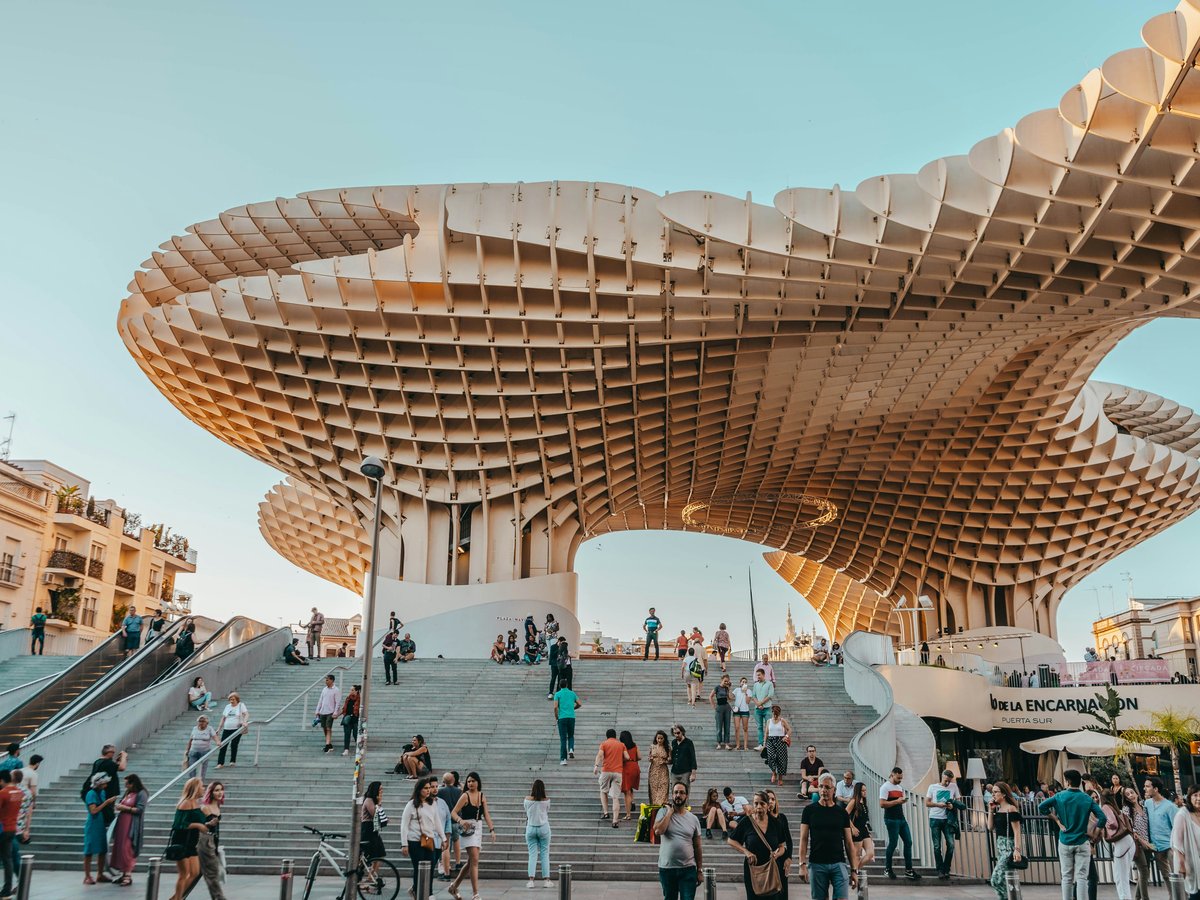
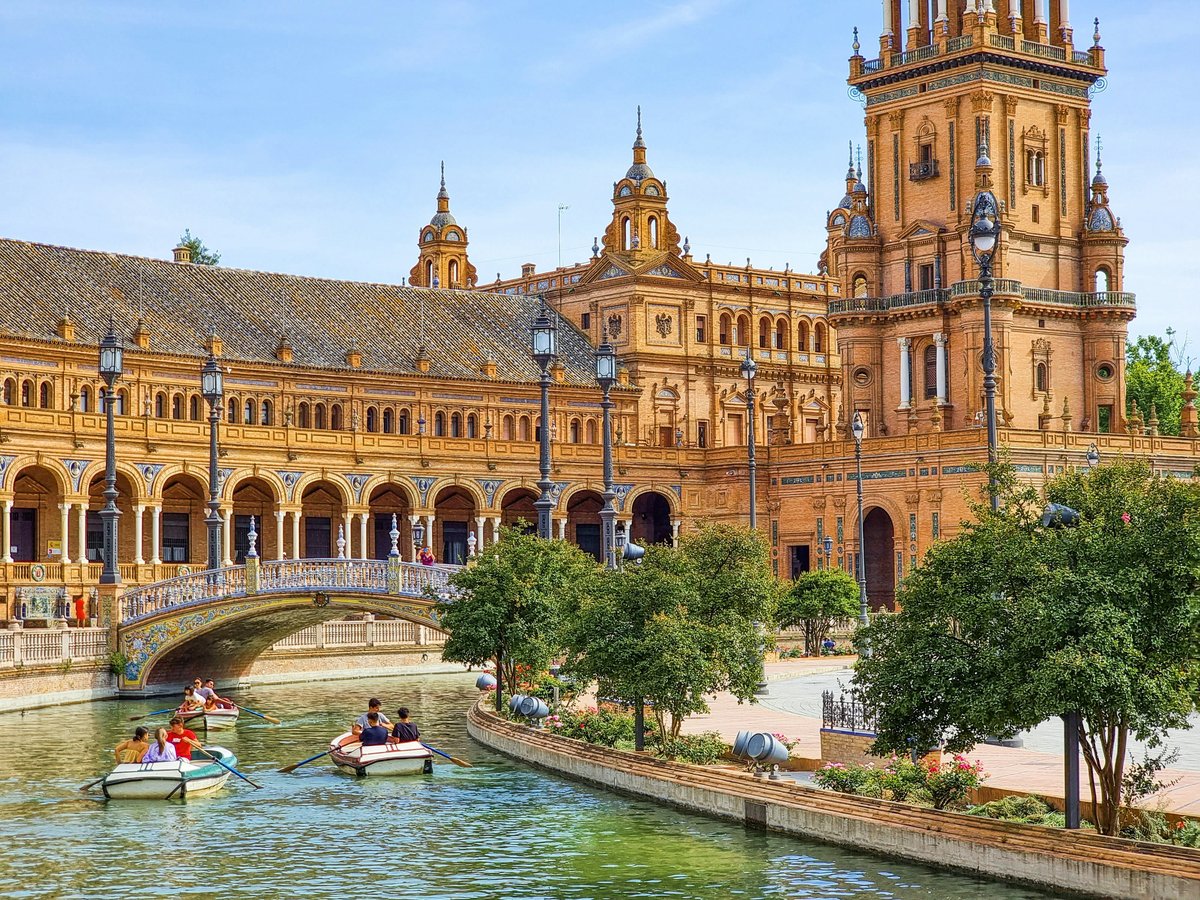
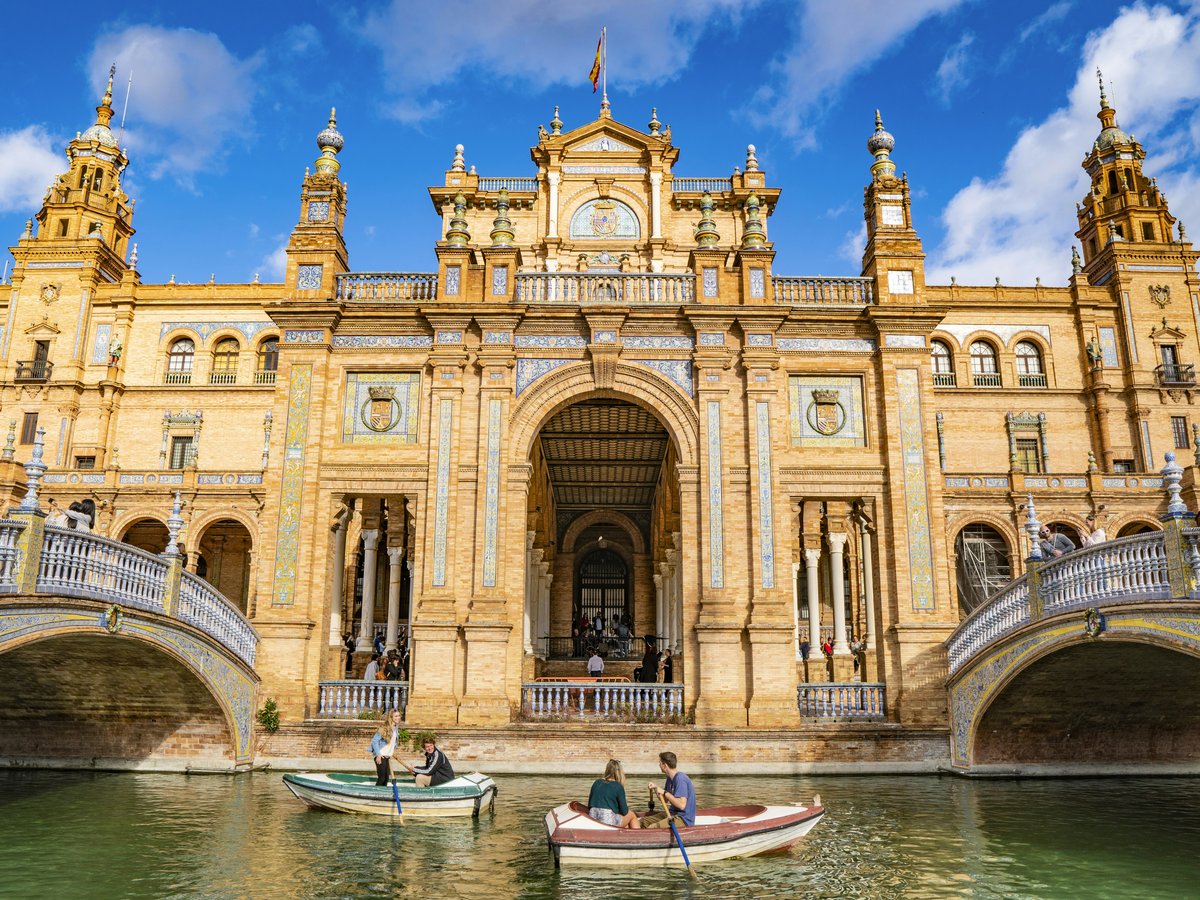
Seville right now
Answers about Seville
-
Airport to city
Take a fixed-fare taxi from San Pablo Airport (SVQ), 10 km northeast of central Seville. The regulated fare is around €23 daytime (roughly $26), and the ride to Santa Cruz or Triana takes 15-20 minutes. The EA airport bus runs every 20-30 minutes for €4 to Plaza de Armas and Santa Justa station.
Read the full answer → -
Best time to visit
March through May and October through November. Spring highs reach 24-28°C, the orange trees bloom across Santa Cruz, and Semana Santa and Feria de Abril run back-to-back in April. Autumn matches those temperatures with 30-40% lower hotel rates. Avoid July and August. Seville regularly hits 40-45°C, and the Reales Alcázares courtyards become unbearable by early afternoon.
Read the full answer → -
Cost per day
Budget €40-45/day ($46-52) in Seville covers a hostel dorm in Alameda de Hércules at €12-18, menú del día lunches for €10-13, and walking the compact center. Midrange is €95/day ($110) with hotel rooms in Santa Cruz. Free Monday evening entry at the Alcázar and Cathedral trims €25+ off an attraction-heavy day.
Read the full answer → -
Best day trips
Córdoba tops the list. The AVE high-speed train from Santa Justa reaches Córdoba in 45 minutes for €12-24 each way, and the Mezquita alone is worth the fare. Ronda's El Tajo gorge is more dramatic but needs a 2-hour bus ride each way. Cádiz adds an Atlantic beach day. Italica's Roman amphitheatre sits 9 km from Seville for a lazy half-day.
Read the full answer → -
Digital nomads
Seville scores 7.8/10 for digital-nomad suitability (sourced from TTDI's editorial rubric). Fibre at 300 Mbps is standard in Alameda de Hércules and Nervión rentals for €750-1,000 a month, coworking runs €100-200 monthly at Workinn or Espacio RES, and Spain's Digital Nomad Visa (January 2023) requires €2,520/mo income proof. Monthly all-in budget sits around $2,100. The score drops because summer heat tops 40°C and siesta closures compress productive hours.
Read the full answer → -
Family-friendly
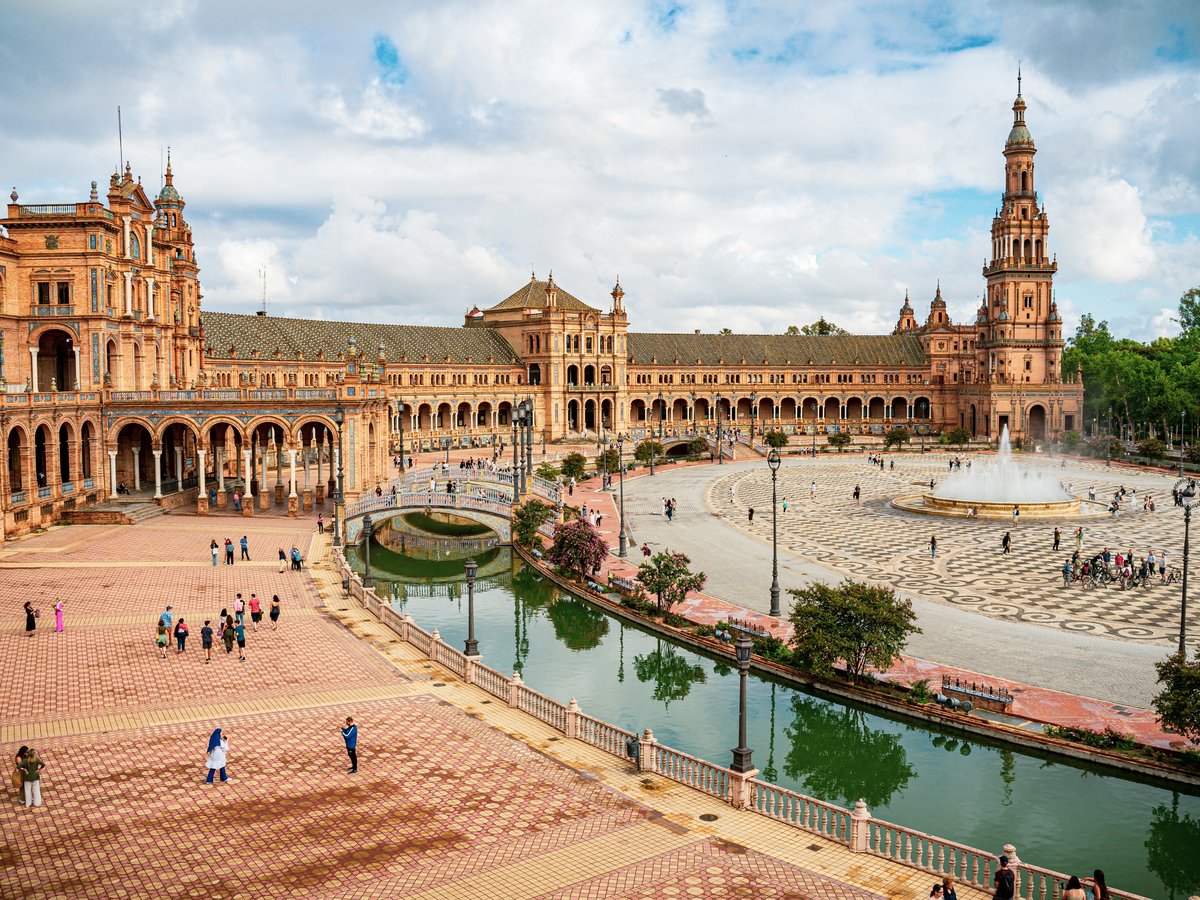
Seville suits families well outside summer, with 40°C July heat as the main qualifier. Plaza de España's rowboat lake, the Reales Alcázares gardens, and Isla Mágica theme park keep kids 3 to 12 occupied. Spaniards eat dinner at 9:30 pm. Your toddler will not. Plan around that tension or accept early-bird tourist restaurants.
Read the full answer → -
Food culture
Seville runs on tapas eaten late. Lunch starts at 2pm, dinner rarely before 10pm. The best bars sit in Triana and along Calle Feria in Macarena, not around the Cathedral. Salmorejo, espinacas con garbanzos, and pescaíto frito define the local plate, washed down with fino sherry poured cold from the barrel.
Read the full answer → -
Getting around
Walk. Seville's centro histórico is flat and compact, about 2.5 km from the Alameda de Hércules to Plaza de España. Beyond walking range, TUSSAM buses and the Sevici bike-share cover gaps at under 1.50 EUR per ride. Taxis run metered at roughly 0.90 EUR per kilometer. Bolt and Uber both operate but tend to match cab fares.
Read the full answer → -
How to get there
Seville's San Pablo Airport (SVQ) sits 10 km from the city center, with direct flights from London, Paris, Amsterdam, and Rome on Ryanair, Vueling, and easyJet. From North America, connect through Madrid or Lisbon. Spain's AVE high-speed train from Madrid reaches Seville Santa Justa station in 2 hours 30 minutes, often beating the connecting flight on price and convenience.
Read the full answer → -
Is it safe?
Yes. Seville is one of Spain's safer big cities, and we rate it 8 out of 10 overall. Three things cause the real trouble: pickpockets working the monument queues, palm-reading hustlers outside the Alcázar, and heat that stays punishing well into October. Give the housing estates on the city's southern edge a wide berth. Call 112 for any emergency.
Read the full answer → -
Language basics
Spanish. Sevillanos speak andaluz, an Andalusian dialect that drops final consonants and aspirates the 's' into a breathy 'h' sound. English proficiency near the Cathedral and Santa Cruz is around 5 out of 10 (EF English Proficiency Index rates Spain 'moderate'), stronger among staff under 40. Learn 'una caña, por favor' (a small beer, please) and 'la cuenta' (the bill). Those two phrases cover 80% of bar and restaurant interactions.
Read the full answer → -
Layover guide
Yes, with at least 6 hours. San Pablo Airport sits 10 km from central Seville, about 20 minutes by taxi for a fixed fare around 24 EUR. That leaves time for Seville Cathedral, the Guadalquivir riverbank, and counter-service tapas in Triana before heading back through security.
Read the full answer → -
LGBTQ-friendly
Seville scores 9.2/10 for LGBTQ+ friendliness (sourced from TTDI's editorial rubric). Spain legalized same-sex marriage in 2005, and Andalusia layered regional anti-discrimination protections on top. The queer scene centers on Alameda de Hércules, where terraza bars fill with mixed crowds most evenings. Same-sex couples hold hands through Santa Cruz without drawing a second look.
Read the full answer → -
Where locals go
Sevillanos gather at Alameda de Hércules after 10pm on weeknights, shop Mercado de Triana by 9am, and fill Calle Feria's Thursday flea market El Jueves from 8am to 2pm. Triana's interior streets around Calle Pureza stay local year-round. Skip the Santa Cruz quarter after noon. The real social calendar follows terrace season, roughly March through November, when the city lives outdoors.
Read the full answer → -
Must-see
The Real Alcázar, not the Cathedral. Both sit 200 metres apart in Barrio Santa Cruz. The Cathedral is larger, but the Alcázar lands harder, a palace occupied since 913 AD where running water echoes through Mudéjar courtyards and orange blossom hangs thick in the garden air. Book a timed ticket at least 3 days ahead. €14.50 entry.
Read the full answer → -
Solo travel
Seville rates 8/10 for solo travel. The tapas-bar culture normalizes eating alone (you stand at the counter, point at what looks good, nobody blinks). The centro histórico is compact enough to walk in 20 minutes end to end, summer heat excepted. Alameda de Hércules is the reliable first-night social hub for solo visitors arriving without plans.
Read the full answer → -
This week
Seville's week splits at the siesta. Mornings before 10am belong to the Alcázar and Cathedral. The city shuts 2pm to 6pm. Life restarts after sunset when tapas bars in Triana and Santa Cruz fill until midnight. Friday and Saturday are the loud nights. Sunday mornings are quiet. Monday closes the main museum.
Read the full answer → -
3-day itinerary
Day 1 covers Santa Cruz on foot. Enter the Reales Alcázares at 8:30am, then climb the Giralda before lunch. Day 2 shifts to Plaza de España and crosses into Triana for the market and riverside tapas. Day 3 takes the northern quarter from Metropol Parasol to the Basílica de la Macarena. About 22 km total, split between mornings and evenings to avoid June's 36°C afternoons.
Read the full answer → -
What to avoid
Skip the rosemary women outside Seville Cathedral, the horse carriages at midday, and any terrace on Calle Mateos Gago with a photo menu and paella. Book the Reales Alcázares online rather than queuing. From June to September, plan no outdoor sightseeing between 14:00 and 18:00, and never drive a rental car into the Casco Antiguo, where cameras enforce access zones.
Read the full answer → -
What to pack
Sun protection tops the list for Seville, where summer afternoons hit 40°C in the Guadalquivir valley. Pack a light cover-up for the Cathedral and Reales Alcázares dress codes, which require shoulders and knees covered. Sturdy sandals handle the cobblestones in Barrio Santa Cruz. Buy sunscreen and hand fans locally for half the price.
Read the full answer → -
Where to stay
Santa Cruz for a first visit to Seville. The narrow lanes between the Cathedral and the Reales Alcázares keep you within a 5-minute walk of the two sights you came for, and the tight streets shade you from summer heat that hits 36°C by noon. Budget €80-140 per night for a double. Triana, across the Guadalquivir, suits repeat visitors who want tapas bars without tour groups.
Read the full answer →
Deep guides for Seville
-
Seville Restaurants: What's Worth It
Twelve kitchens spanning Santa Cruz, the Nervión flats, and the quiet streets south of the centre. Two tiers, six in-depth verdicts, and a working guide to how Seville actually feeds itself on a Thursday night.
Read the guide → -
Best Time to Visit Seville, by Season
Seville's 37.8°C July peaks and 16.0°C January lows create two different cities across 12 months. This guide maps each month's weather against crowd pressure and pricing, then names the single best window for five kinds of traveller.
Read the guide →
Curated lists for Seville
accommodation
-
Best boutique hotels
Seville spreads its boutique hotels across neighborhoods that shift character block by block. The medieval core around the Cathedral and the Alcázar packs the densest inventory, with converted palaces and courtyard hotels tucked into lanes too narrow for a taxi. Walk in any direction and the price tier moves with you: the river-facing blocks of El Arenal trade history for breeze, the market squares of Alfalfa swap polish for personality, and across the Guadalquivir, Triana keeps its ceramic-workshop roots while adding rooftop pools. Ratings in these ten neighborhoods range from a solid 8.5 to a 9.5, and nightly prices stretch from $84 in Encarnación-Regina to $189 in the Casco Antiguo, so the tiers overlap enough to make the neighborhood choice matter more than the star count. The areas closer to the Cathedral cost more and deliver walking-distance access to the big monuments; the areas farther out cost less and deliver something the center cannot: quiet streets after dinner and a Seville that is not performing for visitors. This guide ranks ten neighborhoods by hotel density and names a mid-range pick in each, so you can compare what $84 buys against what $189 buys and decide whether the monument proximity is worth the difference.
See the picks → -
Best hostels
Seville splits into walkable pockets that each carry a distinct rhythm, and the hostel landscape follows that grain. The old center clusters most of the inventory: Casco Antiguo's two zones, San Bartolomé, Alfalfa, and El Arenal all sit within a tight radius around the Cathedral and the Alcázar. Museo and Triana bracket the Guadalquivir on opposite banks. Distrito Norte and the eastern residential belt around Santa Aurelia pull prices away from the tourist core without stranding you. Bed rates range from $20 a night near the bullring to $74 on the suburban edge, which tells you the Seville hostel market prices on walkability, not on room quality. The nine neighborhoods below are ordered by how much inventory each holds; the densest zones give you the most fallback options when your first choice sells out during Feria or Semana Santa. Read them as concentric rings: the innermost carry the foot traffic and the noise, the middle ring trades cobblestones for wider sidewalks, and the outer belt is where the locals live and the tourists thin out. Every pick listed scored above 7.9 on Trip.com, and many sit well above 9.0, so the floor is solid.
See the picks → -
Best luxury hotels
Seville's luxury hotels occupy narrow streets and tiled courtyards in a city built for walking. The addresses that matter here are ground-level: entries off pedestrian lanes, outdoor pools enclosed by old walls, lobbies opening onto interior gardens rather than motor courts. This is not a skyline market. Nightly rates across these 12 properties run from just over USD 200 to past USD 600, a spread wide enough to separate the value-conscious traveler from the one who books without checking the number. The properties span the old city and its neighboring barrios, and each earns its place with something concrete: a particular address, a specific amenity set, a guest-rating floor that the mid-range hotels on the same blocks cannot touch. If you want a Seville hotel that justifies the luxury rate with substance, start with these 12.
See the picks → -
Where to stay
Seville's accommodation map splits along the Guadalquivir. East of the river, the old city stacks centuries of street plans into a walkable core where most visitors sleep. West, Triana keeps its own rhythm on the far bank. The center fragments into neighborhoods with different price floors, noise levels, and closing hours, and the right choice depends less on which cathedral you want to see than on whether you want to hear flamenco or silence at midnight. Casco Antiguo holds the densest hotel cluster, from $42 hostals on Calle Tetuán to restored palaces above $400. San Bartolomé and Santa Cruz press against the Alcázar walls, quieter and narrower. El Arenal runs along the river toward the bullring, mixing $20 hostel beds with boutique rooftops. Alfalfa and Encarnación-Regina sit north of the cathedral axis, where the tapas bars outnumber the souvenir shops. Museo and Triana bracket the river crossings, and Distrito Norte trades atmosphere for airport access and conference-hotel pricing. The spread matters: Santa Cruz puts you at the Alcázar gate on foot, while Distrito Norte asks a bus ride to reach the same spot. Price tiers overlap across most neighborhoods, so the question is not budget alone but what you want outside the hotel door.
See the picks →
attractions
-
Best free attractions
Seville's best free hours are spent outdoors, and this list is honest about that: 11 of the 12 picks are public squares, and the other is a park. None of them requires a ticket, a booking, or a plan. What separates them is age, postcode, and timetable: Plaza Nueva dates from 1856, Plaza de España from 1928, and the latter carries Bien de interés cultural status. Alamillo Park opens at 07:00 all year and stays open until 02:00 in July and August, making it the one entry here with a published closing time worth planning around. The rest are open ground in the 41001, 41002, 41004 and 41013 postal areas. This list is for the visitor who has already paid for enough monuments, or who never intended to. Our verified record for several of these squares is short, and where that is the case, the entry says so and gives you what we can stand behind: a name, an address, and a view on how to use the place.
See the picks → -
Best museums
Seville's museums are not a single afternoon's work, and the twelve below were chosen to show how wide the range runs. The dates tell that story better than anything: an academy of fine arts dating from 1660 sits on the same list as an archaeological museum dating from 2011, with a fine-arts museum from 1835, an archaeology museum from 1879, a maritime museum from 1936 and a science museum from 2008 filling the years between. Two of the twelve carry the Bien de interés cultural designation. Painting, ships, rocks, soldiers, flamenco and contemporary art all get a slot here, so this is a list for visitors who want more than one famous room and a gift shop. We have been strict about what we print: where we hold verified hours or an address, you get them, and where we do not, we say so plainly and point you to the museum's own website. Closing times vary a great deal across the twelve, from 21:00 closes to a museum that shuts at 14:00, so read the hours before you plan the day.
See the picks → -
Must-see attractions
This is Seville at its most monumental: royal and noble palaces, a cathedral that was formerly a mosque, churches, a tower, a bullring, an opera house, and an ancient city of Hispania Baetica out at a Santiponce address. The Reales Alcázares and Seville Cathedral are each part of a UNESCO World Heritage Site, and eight more entries carry Bien de interés cultural protection. The dates run from 1198 for the Giralda to 1991 for the Teatro de la Maestranza, which means a few days of walking can cover several centuries of the city. We've put this together for first-time visitors who want the essentials done properly, and for returning visitors who skipped the house-museums the first time. Opening hours change with the season and the day of the week, and Sundays are the main trap, so read the hours in each entry before you plan the day. The order is a ranking, not a route.
See the picks →
food
-
Best cafes
Seville's cafes don't keep the same hours, and the most useful thing this list can do is match each one to the hour you are standing in the street. One pours from 08:00 every day of the week, another serves from 09:00 to 14:00, shuts for the afternoon, then reopens at 18:30 and runs to 01:00, and two take Sunday off entirely. The kitchens vary just as much: local cooking, Argentinian and French plates, sandwiches done as a speciality, and ice cream sold next to crepes and coffee. A cafe here can be a breakfast stop, a mid-morning sandwich, an afternoon merienda or a late drink, and picking the right one depends on the clock more than on the decor. Skip anything with a laminated photo menu propped in the doorway. Each place below has an address, a phone number or a website you can check before you walk over, and the paragraphs say which hour each one is best at. This is a list for people who plan their day around food and would rather sit down than queue.
See the picks → -
Best restaurants
Seville eats late, eats twice, and does not much care what you think of the schedule. The city's dining rooms open at 13:00 or later for lunch and often not again until 20:00 or 20:30 for dinner, a rhythm that catches every first-time visitor off guard and rewards anyone who learns it. What follows is a working editor's list of 12 rooms across the historic core and the barrios that ring it, from a century-old tavern near the old city gates to a ramen counter that opened when the neighbourhood finally admitted it wanted one. Andalusian tapas and Sevillian fish cookery hold the centre, with Italian rooms, a Japanese counter, a paella specialist and a bakery-turned-restaurant on the edges. None of these are secrets; several sit on streets a guidebook could name. The point of the list is not novelty. The point is to say which door to open at which hour, and why a visitor with one dinner in Seville should spend it here rather than three streets away at a room chasing the same tourist euro with half the conviction.
See the picks →
Browse by traveler type
- For foodies
Seville for foodies
- For families with kids
Seville for families
- For digital nomads
Seville for digital nomads
- For solo travelers
Seville for solo travelers
- For couples
Seville for couples
- For budget travelers
Seville on a budget
- For luxury travelers
Seville for luxury travelers
- For first-timers
Seville for first-time visitors
Book experiences in Seville
 Free cancellation
 White Villages and Ronda Day Tour from Seville
Day trip: 10 hours, free cancellation.
via Viator
Alcazar, Cathedral and Giralda Guided Tour with Priority Tickets
City tour: 3.5 hours.
via Viator Free cancellation
 Cordoba & Carmona with Mezquita, Synagoge & Patios from Seville
Day trip: free cancellation.
via Viator Free cancellation
 3 Cities in One Day: Cordoba, White Village & Ronda from Sevilla
Day trip: 13 hours, free cancellation.
via Viator Free cancellation
 Tour Welcome to Seville in Eco Tuk Tuk Private with Local Guide
City tour: free cancellation.
via Viator Free cancellation
 Alcazar of Seville: Exclusive Early Access Tour
City tour: 1.5 hours, free cancellation.
via Viator Free cancellation
 Seville: Paella & Tapas Cooking Class + Triana Market Tour
Cooking class: 3.5 hours, free cancellation.
via Viator
Seville Guided Tour: Alcazar, Cathedral & Giralda in English
City tour.
via Viator
Alcazar of Seville Tour with Skip the Line Ticket
City tour: 1.5 hours.
via Viator
Small Group Alcazar of Seville Guided Tour with Fast Track Ticket
City tour: 2 hours.
via Viator
Seville Cathedral Tour including tickets and skip the line entry
City tour: 1.5 hours.
via Viator Free cancellation
 Historic Gibraltar Rock and St Michael's Cave Tour from Seville
Day trip: 10 hours, free cancellation.
via ViatorBrowse by interest
Compare Seville with
Find a flight to Seville
Live fares to Seville appear here once cookies are accepted.
Last verified by automated review (v1.7.2) on . What is automated review?