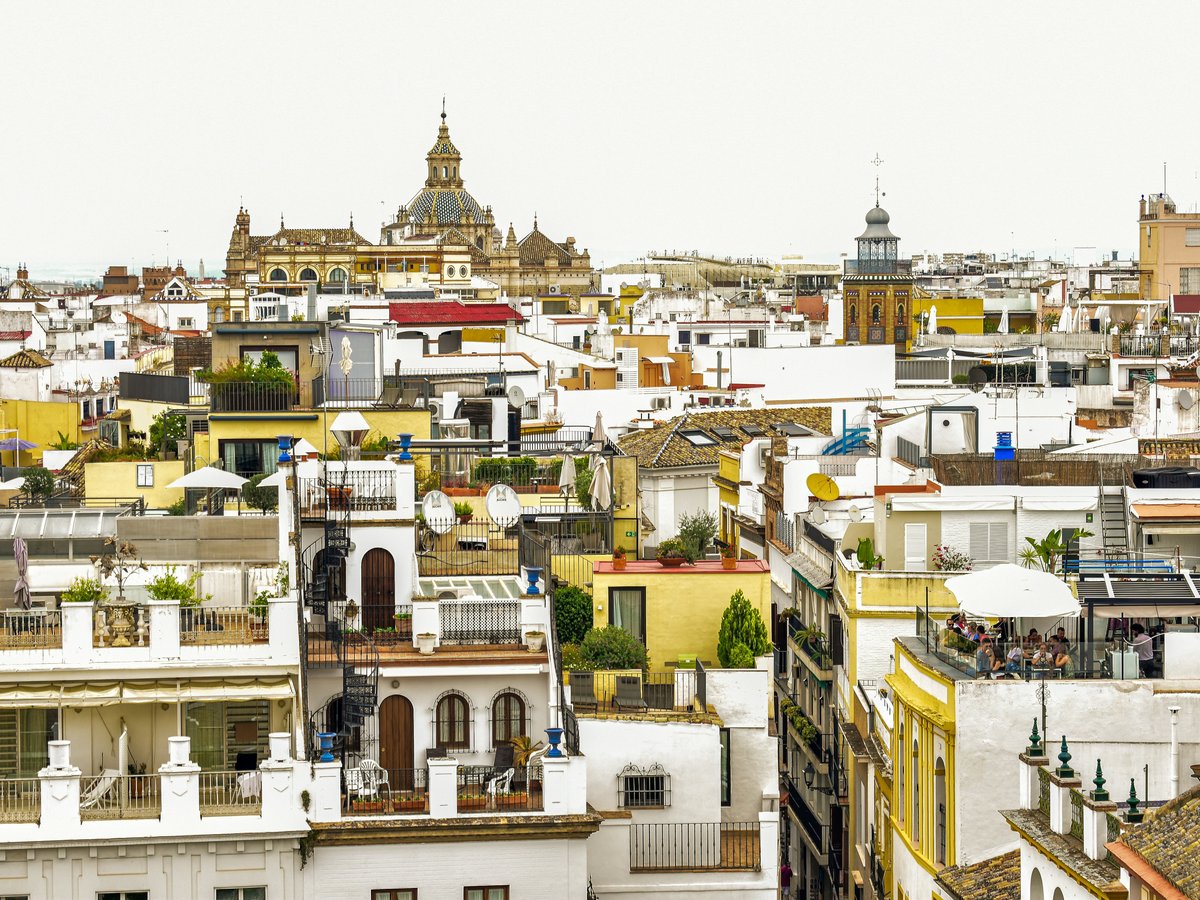
Is Seville safe?
Yes. Seville is one of Spain's safer big cities, and we rate it 8 out of 10 overall. Three things cause the real trouble: pickpockets working the monument queues, palm-reading hustlers outside the Alcázar, and heat that stays punishing well into October. Give the housing estates on the city's southern edge a wide berth. Call 112 for any emergency.
Most crime visitors encounter in Seville is opportunistic, and it clusters in a handful of known spots. Pickpockets work the queue for the Reales Alcázares in Patio de Banderas, the tram stop at Archivo de Indias, and the stretch of Avenida de la Constitución where the T1 Metrocentro tram rattles past the Cathedral. Outside the Puerta del León, women press a sprig of rosemary into your palm, ask for coins for a fortune, and get loud if you refuse; keep your hand closed and keep walking, because most give up within 10 metres. Crowd theft rises during Semana Santa and the Feria de Abril, when the lanes around Calle Sierpes pack solid and smell of incense, candle wax and churro oil, and for those two weeks we would carry a zipped anti-theft daypack worn on the front. Violent crime against tourists is rare, and the Wikivoyage safety notes for Seville describe the same pattern.
Seville stays out late, and the centre after dark is busier than most European cities at the same hour. Dinner starts around 9.30pm, and families with pushchairs are still out on Calle Betis in Triana and in the lanes of Barrio Santa Cruz past midnight. For a solo walk home, our first choice is Triana or El Arenal, where the bars spill noise and light onto the pavement. The Alameda de Hércules is lively and fine until about 2am, but after that the northern end gets broken glass and small-time dealing. Polígono Sur, the estate south of the centre that includes Las Tres Mil Viviendas, ranks among the poorest neighbourhoods in Spain, and there is nothing there for a visitor. Torreblanca on the eastern edge and the area around El Vacie are much the same. The riverside path below Paseo de Colón goes dark and empty after 1am, so cross by the Puente de Triana and stay on lit streets.
Seville scores 7.8/10 for solo-traveler safety (see the TTDI Solo-Safety Index), and late-night transport is what holds it back. Metro Line 1 is the only line, running until around 11pm Monday to Thursday and until around 2am on Fridays and Saturdays, while TUSSAM buses get sparse after midnight. For a late ride, take one of the white taxis with a yellow diagonal stripe from the ranks at Plaza Nueva or Puerta de Jerez. A trip within the centre tends to cost under €10. The historic core is flat and about 2 km across, so most nights you will walk anyway. Visitors underestimate the heat far more than any crime risk. Open-Meteo recorded 32°C at 7pm on 14 October 2026 with 27% humidity, and summer afternoons can go past 40°C. See the Plaza de España and the Roman ruins at Italica in the morning, and carry water.
Seville is easier to be alone in than most Spanish cities because people eat tapas standing at the bar, which means you never need a table for two to eat well. At El Rinconcillo on Calle Gerona, open since 1670, the waiter chalks your bill on the worn wooden counter, and the person next to you will probably start talking before your first cold Cruzcampo is gone. Bodega Santa Cruz on Calle Rodrigo Caro works the same way, with espinacas con garbanzos for a few euros. For company in your first days, small-group walking tours of the Cathedral and the Giralda are usually priced per person, so you avoid the single supplement many coach tours charge. Several hostels in Santa Cruz and around the Alameda now rent private rooms, which gets around the double-room price at hotels. For non-urgent reports, the Policía Nacional answers on 091 and the Policía Local on 092.
Emergency number: 112
Official travel advisories
Exercise increased caution the most cautious of 3 government assessments
- Government of CanadaLevel 2Exercise a high degree of caution View advisory
- UK Foreign OfficeLevel 1No FCDO travel restriction View advisory
- US State DepartmentLevel 2Exercise Increased Caution View advisory
Verified from the issuing governments' own feeds.
Areas to avoid
- Polígono Sur (Las Tres Mil Viviendas)
- Torreblanca
- El Vacie
- Northern end of the Alameda de Hércules after 2am
- Riverside path below Paseo de Colón after 1am
Common concerns
- Pickpockets in the Reales Alcázares queue and along Avenida de la Constitución
- Rosemary-sprig palm readers outside the Puerta del León
- Crowd theft during Semana Santa and the Feria de Abril
- Heat exhaustion from May to October
- Metro Line 1 closing around 11pm on weeknights
- Sparse TUSSAM bus service after midnight
Last verified by automated review (v1.7.2) on . What is automated review?