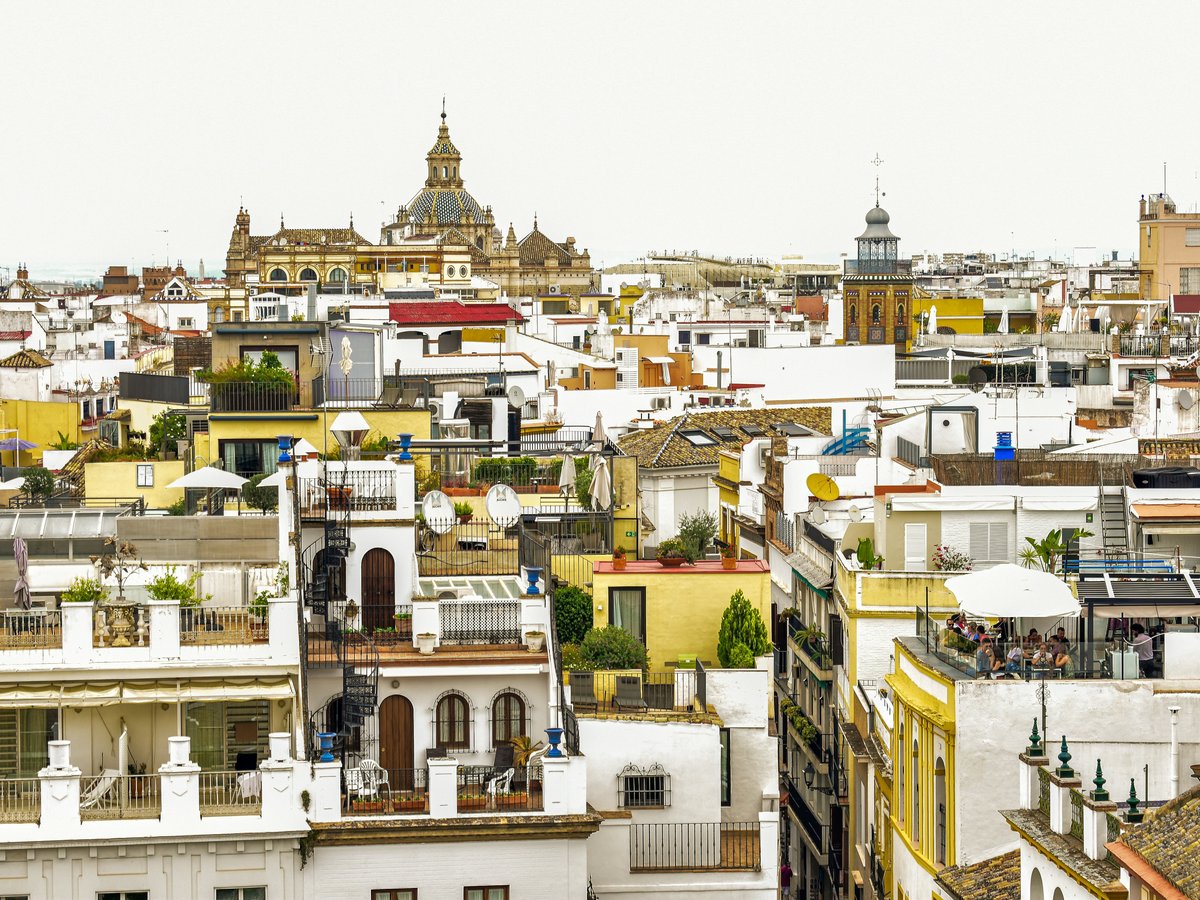
What's happening in Seville this week?
Seville's week splits at the siesta. Mornings before 10am belong to the Alcázar and Cathedral. The city shuts 2pm to 6pm. Life restarts after sunset when tapas bars in Triana and Santa Cruz fill until midnight. Friday and Saturday are the loud nights. Sunday mornings are quiet. Monday closes the main museum.
This week in Seville means 40°C afternoons. That number shapes your entire week. The Alcázar gardens open at 9:30am, and the first 90 minutes, when the orange trees still hold morning shade and the tile floors in the Salón de Embajadores feel cool underfoot, are the only comfortable window for outdoor sightseeing. By 11am the marble benches at Plaza de España, built in 1928 for the Ibero-American Exposition, radiate stored heat. By 1pm the narrow streets of the Barrio Santa Cruz smell like hot dust and jasmine wilting in window boxes. Between 2pm and 6pm, Seville shuts down. Shops pull down metal shutters. Restaurant kitchens stop serving. The Metrocentro tram on Avenida de la Constitución runs near-empty. Plan your week in two halves. The first runs 9am to 1pm, the second 8pm to midnight.
The recurring weekly rhythm starts at Mercado de Triana, open Monday through Saturday from 9am. The fish counters have the best gambas in the city, around €12 per kilo, and the smell of frying pescaíto reaches the entrance from 20 meters away. Across the Guadalquivir, Mercado de la Encarnación sits beneath the Metropol Parasol and runs the same schedule but leans toward prepared food and fresh juice. Friday and Saturday nights are when Sevillanos go out properly. The tapas bars along Calle Betis in Triana pack tight by 10pm, and the riverside tables stay full past 1am. Tuesday through Thursday evenings are quieter and better for first-timers who want seats without a wait. El Rinconcillo on Calle Gerona has been pouring since 1670 and still serves espinacas con garbanzos from a handwritten chalkboard. A caña of Cruzcampo there runs about €2.
Flamenco runs nightly across the city, but quality varies sharply. The smaller courtyard tablaos in Santa Cruz seat 60 to 100 people and book out 2 to 3 days ahead in summer. Tickets run €22 to €28. The 9pm show is standard. Skip the large tourist-oriented spots near the Cathedral that charge €35 or more and bundle a mediocre dinner. In the good venues, the sound carries differently than a theater. You hear the heel strikes on the wooden stage, the singer drawing breath between verses, the guitarist's nails scraping across the strings. Sunday mornings are dead quiet. The Cathedral holds Mass and tourist entry starts in the afternoon. Most of Santa Cruz is shuttered until noon. Monday, the Museo de Bellas Artes in the old Convento de la Merced closes, while the Alcázar stays open.
At 1am tonight the temperature still sits at 27.8°C with 42% humidity. That is standard for Seville this week. The sun does not set until after 9:30pm, and stone walls hold the day's heat well past midnight. The Guadalquivir does not provide much of a breeze. If you cross the Puente de Isabel II between Triana and the Cathedral quarter at 3pm, the heat radiating off the asphalt feels like standing near an open oven door. Cross before 10am or after 9pm. The Cathedral began construction in 1402 over the foundations of the Almohad mosque. On Monday it opens later than the rest of the week, and timed-entry tickets for same-day visits tend to sell out by mid-morning. Buy online a day ahead. The Giralda climb, 35 ramps inside the old minaret, is included in the Cathedral ticket, but the ramps trap afternoon heat.
No verified events are listed for this week. We publish only events we can confirm against an official source, never guesses.
Last verified by automated review (v1.7.2) on . What is automated review?