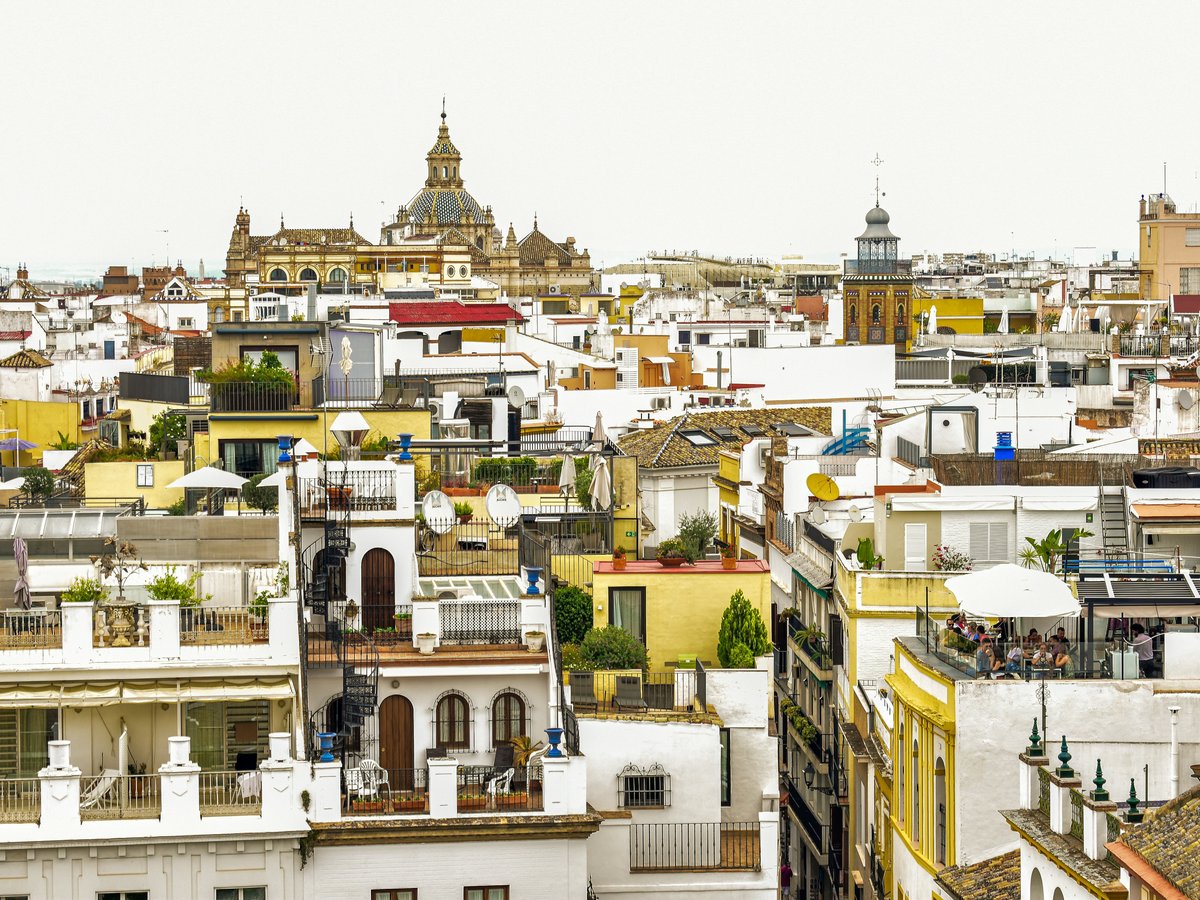
Seville for first-time visitors
Reales Alcázares is a working royal palace whose Mudéjar courtyards remain the finest surviving example in the city. The earliest of the picks for first-time visitors in Seville opens at 11:00 and the latest closes at midnight.
Seville for first-timers, in numbers
- Picks on this page
- 24 places across 2 lists, led by Reales Alcázares, Seville Cathedral, Plaza de toros de la Maestranza
- Posted hours
- 4 picks post hours earliest 11:00, latest 24:00; 0 open by 09:00, 3 past 21:00
Questions first-timers ask about Seville
-
Must-see
The Real Alcázar, not the Cathedral. Both sit 200 metres apart in Barrio Santa Cruz. The Cathedral is larger, but the Alcázar lands harder, a palace occupied since 913 AD where running water echoes through Mudéjar courtyards and orange blossom hangs thick in the garden air. Book a timed ticket at least 3 days ahead. €14.50 entry.
Read the full answer → -
Best time to visit
March through May and October through November. Spring highs reach 24-28°C, the orange trees bloom across Santa Cruz, and Semana Santa and Feria de Abril run back-to-back in April. Autumn matches those temperatures with 30-40% lower hotel rates. Avoid July and August. Seville regularly hits 40-45°C, and the Reales Alcázares courtyards become unbearable by early afternoon.
Read the full answer → -
Airport to city
Take a fixed-fare taxi from San Pablo Airport (SVQ), 10 km northeast of central Seville. The regulated fare is around €23 daytime (roughly $26), and the ride to Santa Cruz or Triana takes 15-20 minutes. The EA airport bus runs every 20-30 minutes for €4 to Plaza de Armas and Santa Justa station.
Read the full answer → -
How to get there
Seville's San Pablo Airport (SVQ) sits 10 km from the city center, with direct flights from London, Paris, Amsterdam, and Rome on Ryanair, Vueling, and easyJet. From North America, connect through Madrid or Lisbon. Spain's AVE high-speed train from Madrid reaches Seville Santa Justa station in 2 hours 30 minutes, often beating the connecting flight on price and convenience.
Read the full answer → -
Getting around
Walk. Seville's centro histórico is flat and compact, about 2.5 km from the Alameda de Hércules to Plaza de España. Beyond walking range, TUSSAM buses and the Sevici bike-share cover gaps at under 1.50 EUR per ride. Taxis run metered at roughly 0.90 EUR per kilometer. Bolt and Uber both operate but tend to match cab fares.
Read the full answer →
Curated for first-timers
-
Must-see attractions
This is Seville at its most monumental: royal and noble palaces, a cathedral that was formerly a mosque, churches, a tower, a bullring, an opera house, and an ancient city of Hispania Baetica out at a Santiponce address. The Reales Alcázares and Seville Cathedral are each part of a UNESCO World Heritage Site, and eight more entries carry Bien de interés cultural protection. The dates run from 1198 for the Giralda to 1991 for the Teatro de la Maestranza, which means a few days of walking can cover several centuries of the city. We've put this together for first-time visitors who want the essentials done properly, and for returning visitors who skipped the house-museums the first time. Opening hours change with the season and the day of the week, and Sundays are the main trap, so read the hours in each entry before you plan the day. The order is a ranking, not a route.
See the picks → -
Best restaurants
Seville eats late, eats twice, and does not much care what you think of the schedule. The city's dining rooms open at 13:00 or later for lunch and often not again until 20:00 or 20:30 for dinner, a rhythm that catches every first-time visitor off guard and rewards anyone who learns it. What follows is a working editor's list of 12 rooms across the historic core and the barrios that ring it, from a century-old tavern near the old city gates to a ramen counter that opened when the neighbourhood finally admitted it wanted one. Andalusian tapas and Sevillian fish cookery hold the centre, with Italian rooms, a Japanese counter, a paella specialist and a bakery-turned-restaurant on the edges. None of these are secrets; several sit on streets a guidebook could name. The point of the list is not novelty. The point is to say which door to open at which hour, and why a visitor with one dinner in Seville should spend it here rather than three streets away at a room chasing the same tourist euro with half the conviction.
See the picks →