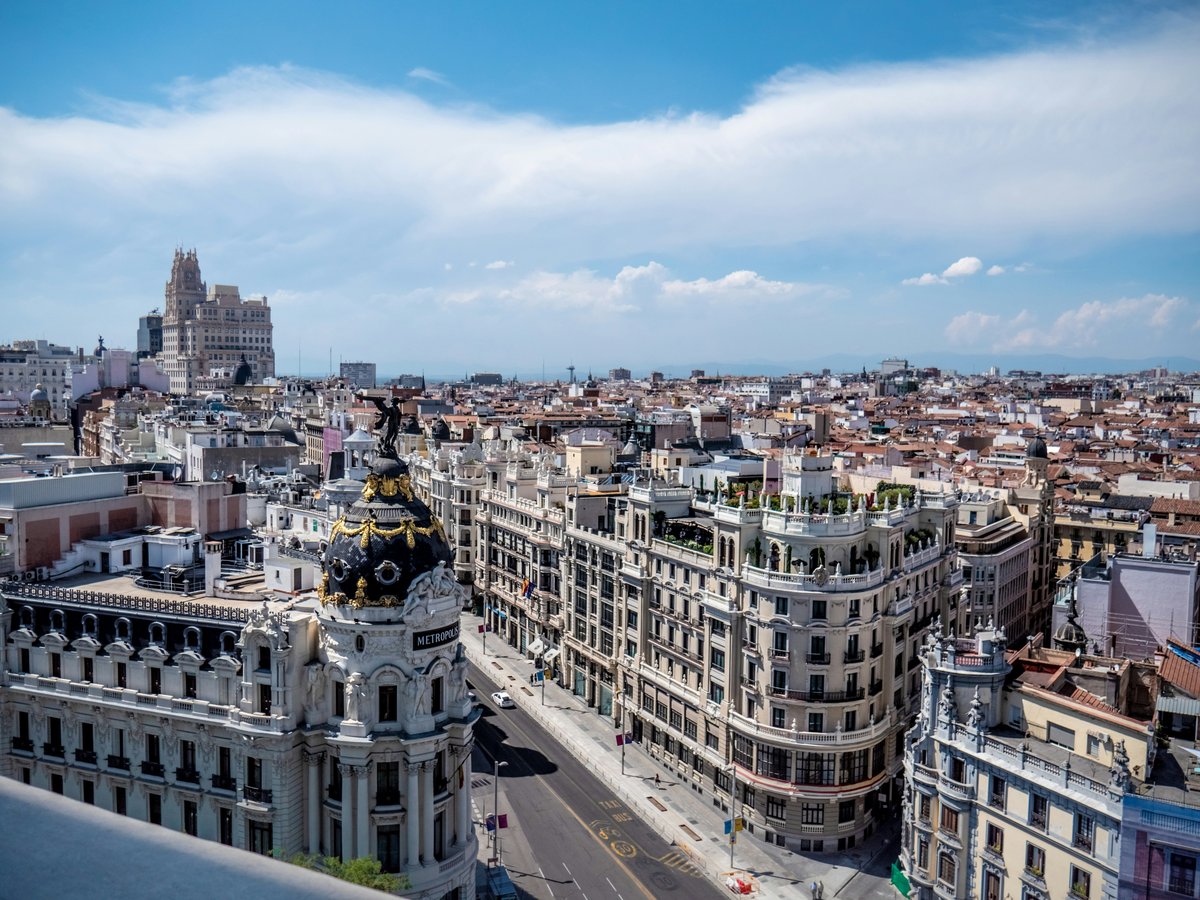
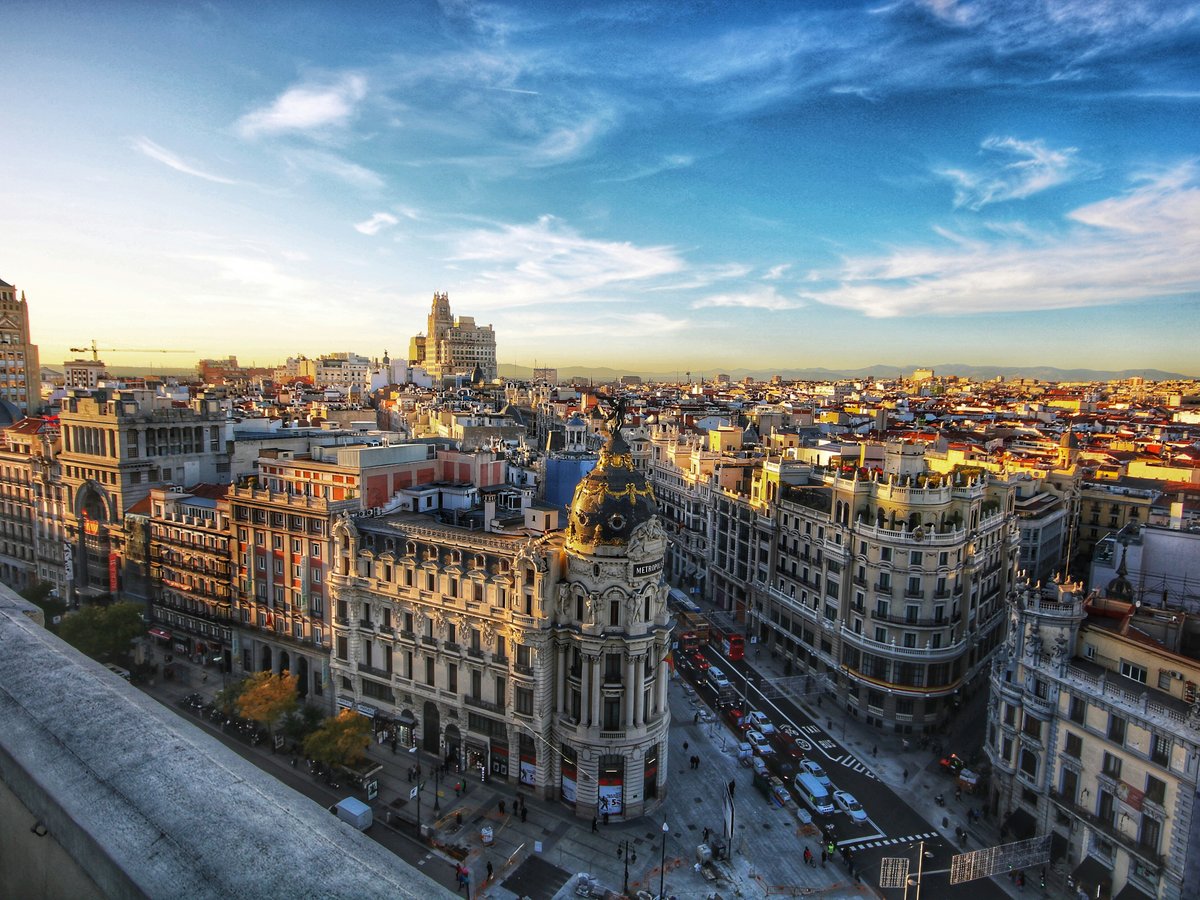
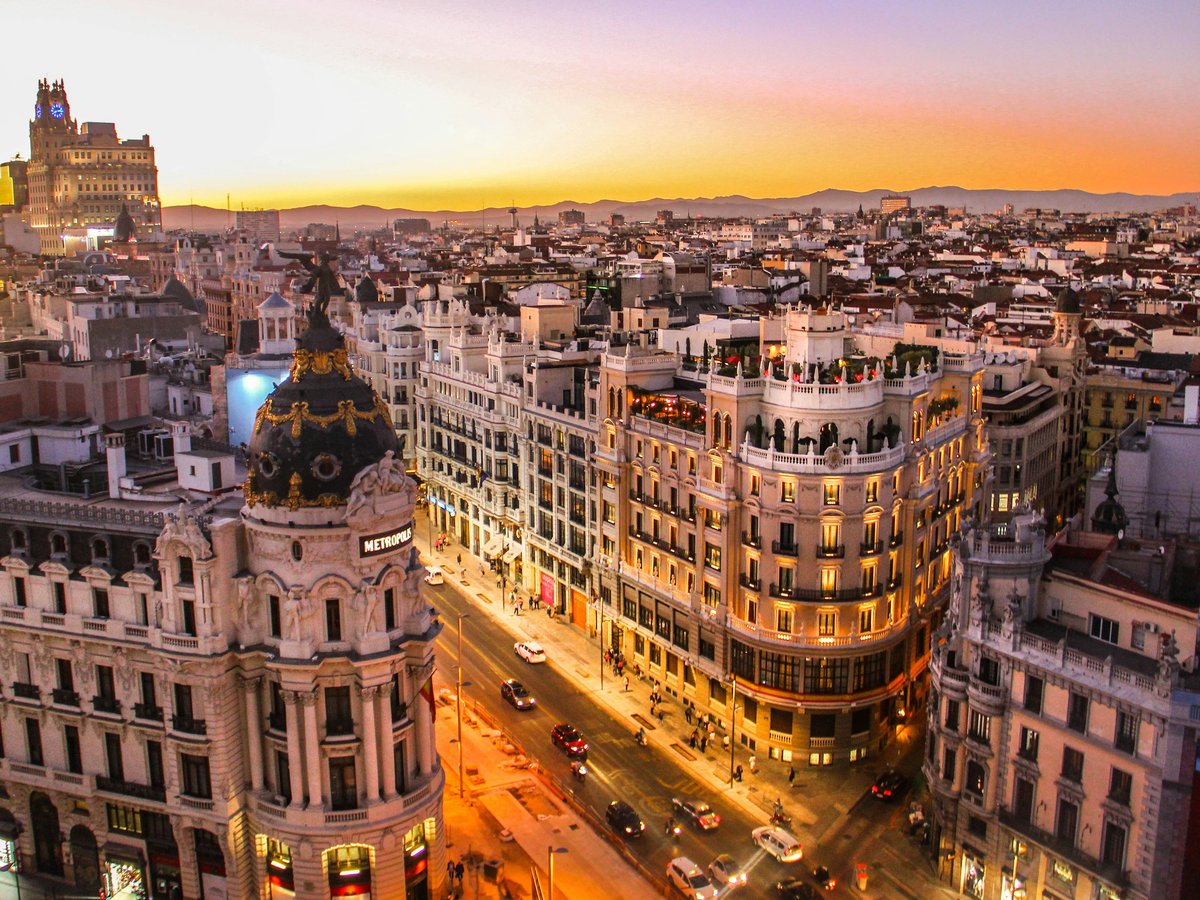
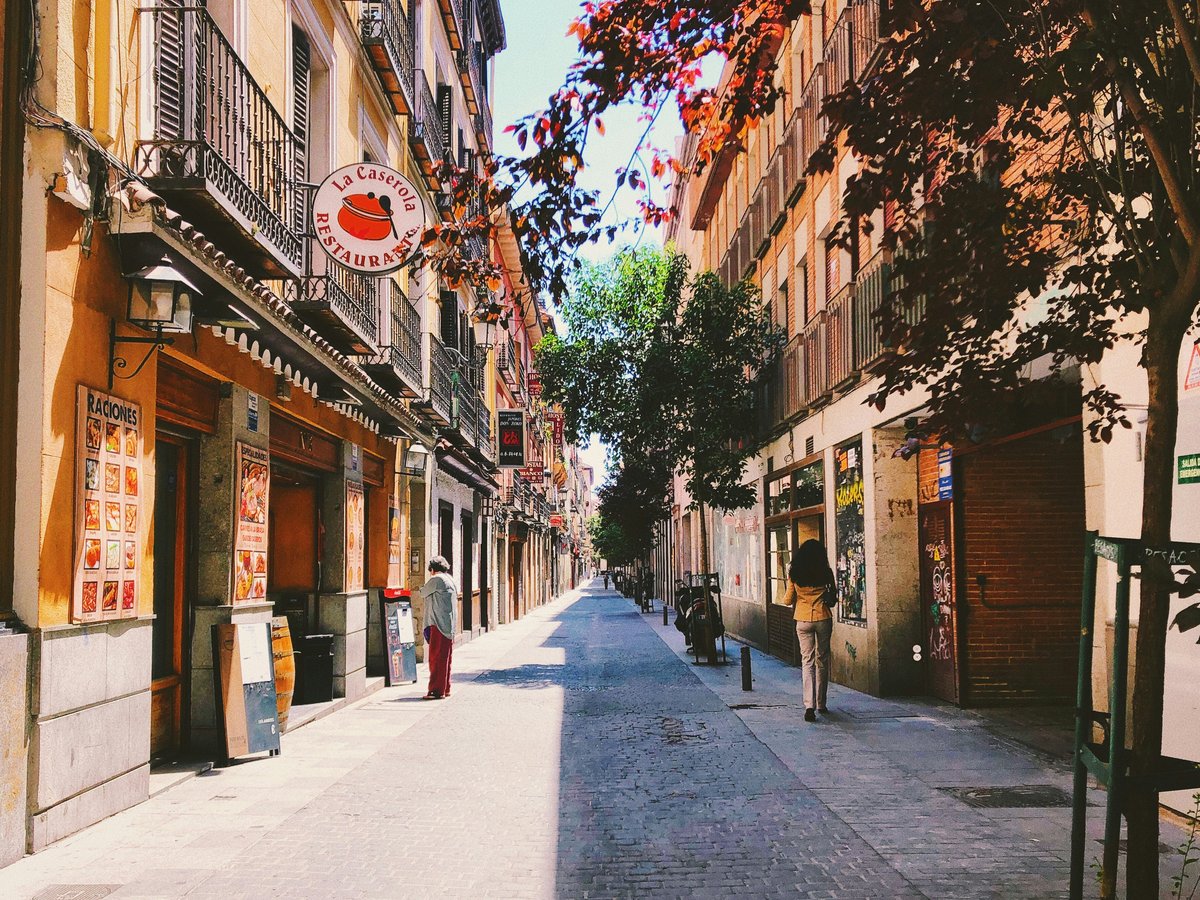
Madrid sits at roughly 650 metres above sea level, making it the highest capital in the European Union, and you feel that altitude in the dry, brilliant light that pours across the city from a sky locals half-jokingly call their best monument. The Manzanares river is modest (nothing like the Seine or the Thames) but the park that now lines its banks, Madrid Río, is one of the better urban reclamation projects in Europe and an early clue that this is a city more interested in living well than performing for visitors. The historic centre pivots around the Puerta del Sol, kilometre zero for Spain's radial road network, and from there the old Habsburg quarter around Plaza Mayor and La Latina gives way south to narrower streets where Sunday's Rastro flea market spills across every available surface. North along the grand Bourbon axis of the Paseo del Prado sit three museums whose combined holdings rival any city on earth: the Prado for Velázquez and Goya, the Reina Sofía for Picasso's Guernica, the Thyssen for everything between. But the rhythms of a first visit are shaped less by monuments than by the local clock. Lunch rarely starts before two, dinner almost never before nine, and the hours between reward sitting still in a café with no particular agenda. Malasaña and Chueca, north of Gran Vía, are where younger crowds concentrate: Malasaña skewing vintage and countercultural, Chueca more polished and openly queer since the eighties. The Retiro, once royal grounds, is where three million residents actually go to breathe, and on a given Sunday morning you will find more locals rowing small boats on its artificial lake than tourists anywhere near the Crystal Palace. Madrid does not try to charm you on arrival. It assumes you will stay long enough to understand.
Madrid in photos
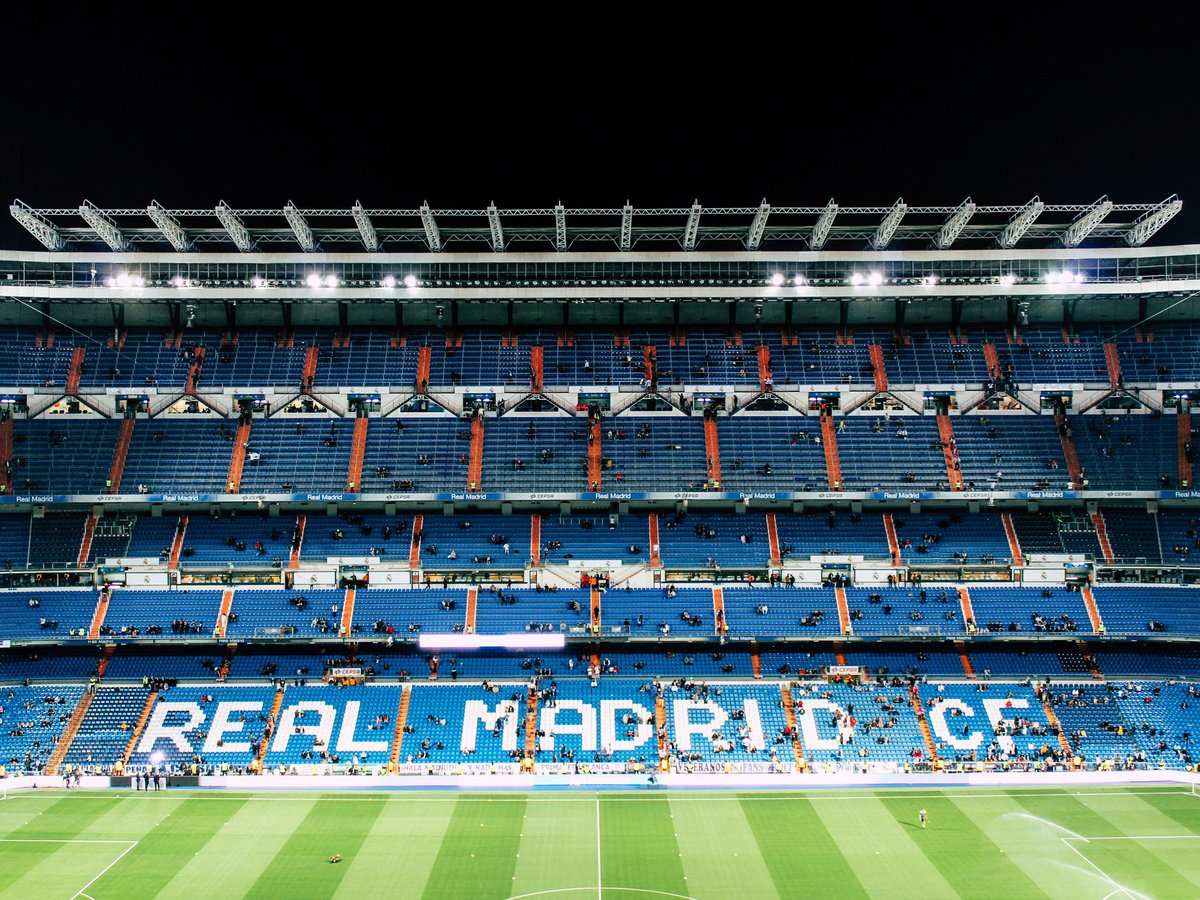
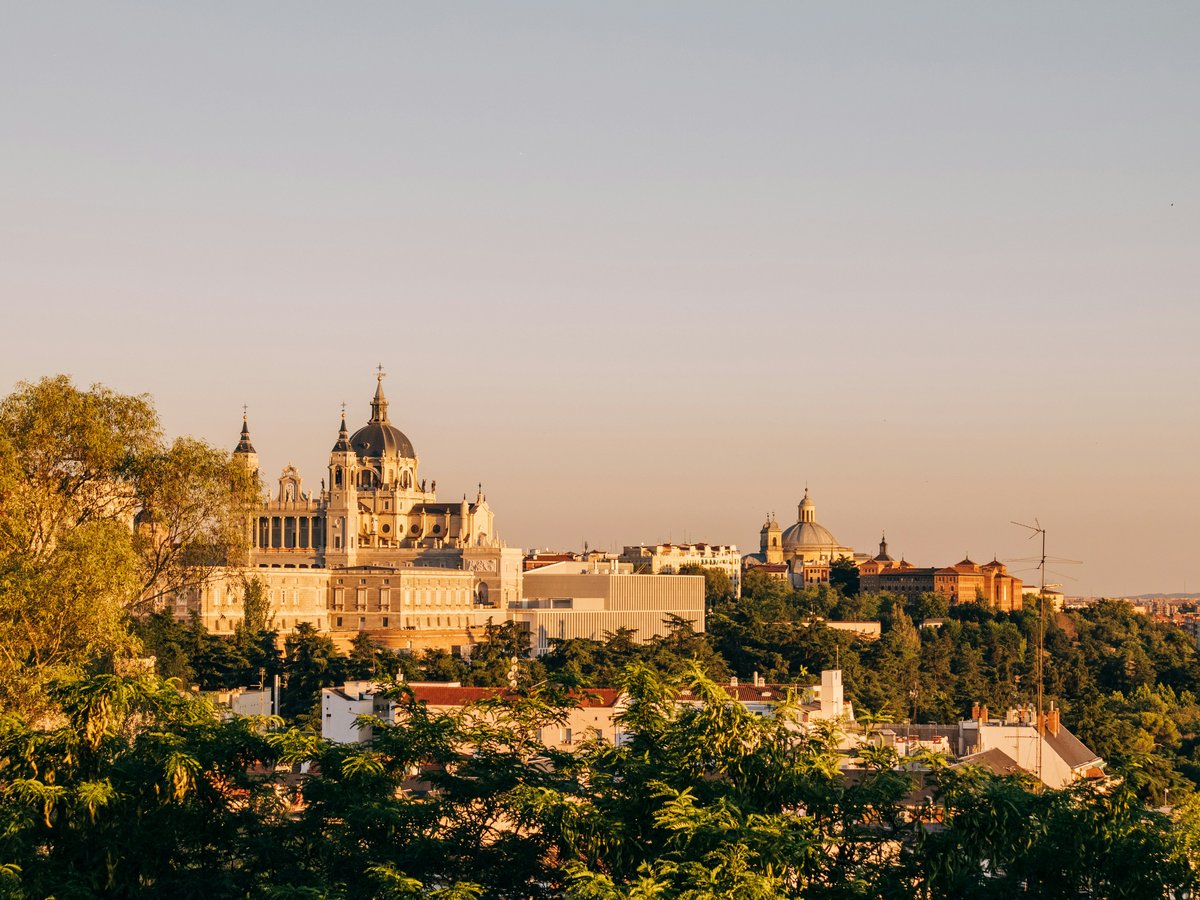
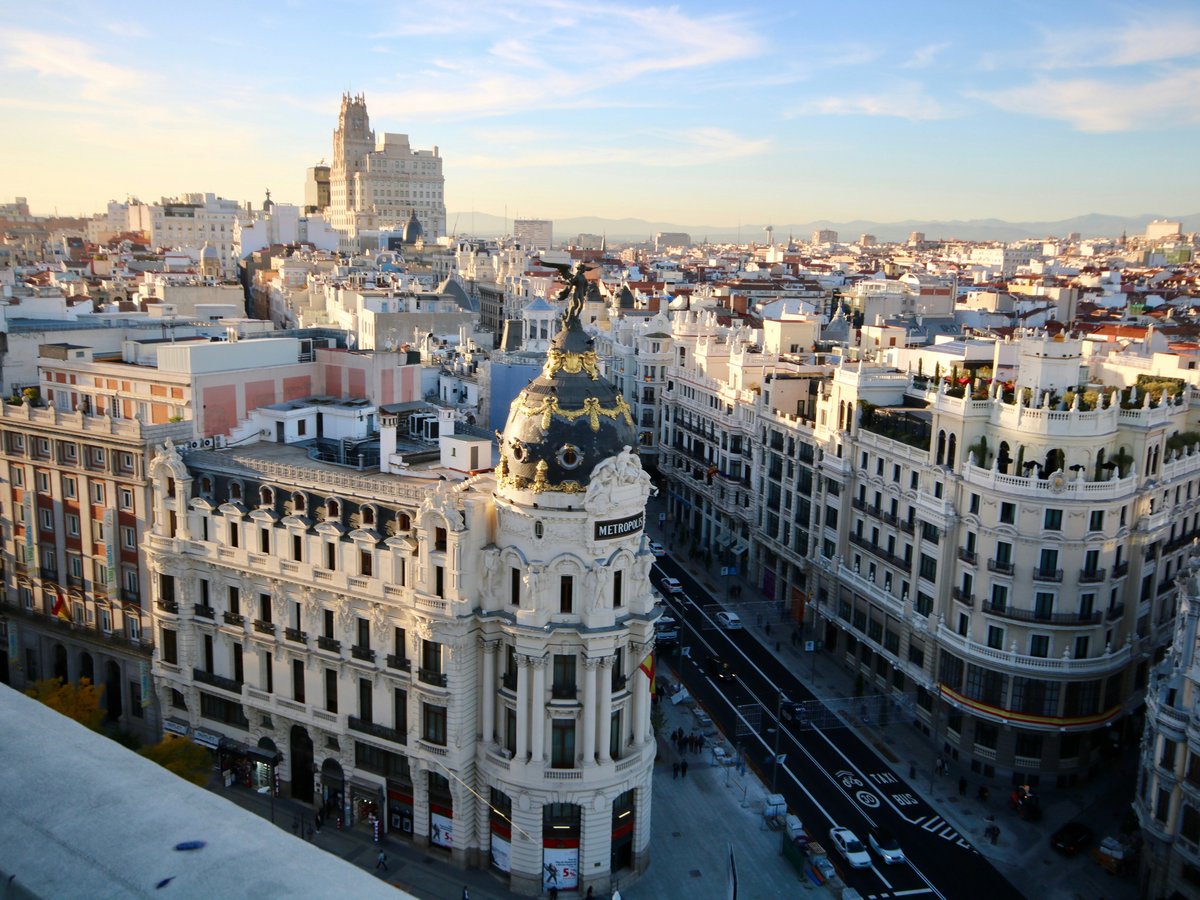
Madrid right now
Answers about Madrid
-
Airport to city
Take the Exprés Aeropuerto bus from Madrid-Barajas (MAD) to Atocha station for €5 (about $5.80), running 24 hours, 30 to 40 minutes. The fixed-fare taxi is €30 to anywhere inside the M-30 ring road, set by city ordinance and non-negotiable. Metro Line 8 reaches Nuevos Ministerios in 12 to 25 minutes for around €4.50 plus a €3 airport supplement.
Read the full answer → -
Best time to visit
April, May, and October give you Madrid at its most walkable. Spring highs sit around 18-24°C, autumn around 19-22°C, and both seasons dodge the July-August heat that pushes above 38°C and empties the city of locals. The Museo del Prado has shorter queues, and evening terrazas on Plaza de Santa Ana stay open past midnight.
Read the full answer → -
Cost per day
Madrid runs €48/day ($55) on a hostel-and-menú-del-día budget, €138/day ($160) at midrange, €350+/day ($400+) for luxury. The menú del día, a two-course lunch with drink for €11-13, does the heaviest lifting. All three major Paseo del Prado museums offer free evening entry windows if you time your visits.
Read the full answer → -
Cultural etiquette
Madrid runs 2-3 hours behind northern European schedules. Lunch starts at 2pm, dinner rarely before 9:30pm. Greet socially with dos besos (two cheek-touches, right side first). Tip 5-10% at sit-down restaurants, or round up at bars. Cover shoulders and knees at Almudena Cathedral. Always say 'hola' before requesting anything in small shops.
Read the full answer → -
Best day trips
Toledo is the strongest single-day choice from Madrid, 70 km south, 33 minutes by AVE from Atocha, roughly €13 each way. Segovia (90 km, 28 minutes by AVE from Chamartín) offers the best shared lunch in central Spain. Aranjuez and El Escorial work as half-day trips, leaving evenings free.
Read the full answer → -
Digital nomads
Madrid scores 8/10 for nomads. Apartments typically have 600-Mbps symmetric fiber for €35-45/month, coworking hot desks run €175-290/month at spaces like Impact Hub and Utopicus, and Spain's Digital Nomad Visa (Ley 28/2022) grants 3-year residency on proof of €3,256/month income. Monthly all-in budget sits around $2,400. The late dinner schedule takes a week to adjust to, but it frees your afternoons for focused work.
Read the full answer → -
Family-friendly
Madrid is solidly family-friendly. Spanish dining culture runs late, lunch at 2 pm and dinner at 9 pm, but restaurants welcome children at every hour. Retiro Park's rowing boats, the Teleférico cable car over Casa de Campo, and the Bernabéu stadium tour keep kids ages 3 through 17 engaged. Metro elevators cover most central stations. Summer heat above 38°C is the main constraint.
Read the full answer → -
Food culture
Madrid eats late. Lunch at 2pm, dinner after 10pm. Between meals, the city moves on cañas of Mahou draught and tapas at bar counters, 3-6 EUR a plate. The signature dishes are cocido madrileño stew, bocadillo de calamares from stands near Puerta del Sol, and huevos rotos at Casa Lucio in La Latina. Ibérico pork, eggs, olive oil, and bread anchor the kitchen.
Read the full answer → -
Getting around
Metro for most trips, walking for the center, taxi or Cabify after 1:30 AM when the Metro shuts. A Tarjeta Multi costs €2.50 and loads single rides at €1.50 each. From Barajas airport, the flat-rate taxi at €30 to central Madrid beats the Metro's €4.50 per person after the airport supplement.
Read the full answer → -
How to get there
Madrid-Barajas (MAD) sits 13 km northeast of Puerta del Sol and handles all commercial flights. Nonstop service runs from New York (8 hours on Iberia and American), London (2.5 hours on BA and Ryanair), and most European capitals. Metro Line 8 reaches Nuevos Ministerios in 25 minutes for €4.50. AVE high-speed trains from Barcelona and Seville take under 3 hours.
Read the full answer → -
Is it safe?
Madrid scores 7.4 out of 10 for solo-traveler safety (see the TTDI Solo-Safety Index). Violent crime against tourists is rare. The real risks are pickpocketing on Metro Line 1 between Sol and Gran Vía, and overcharging from unlicensed taxis near Atocha station. Streets stay populated past 2am most nights, which makes walking alone after dark far less stressful than in most European capitals. Emergency number: 112.
Read the full answer → -
Language basics
Castilian Spanish. Madrid is home to the Real Academia Española, founded in 1713, which sets the rules for the language across 20 countries. English works in the tourist triangle around Sol, Gran Vía, and Salamanca if your counterpart is under 40. Outside that radius, a handful of Spanish phrases will change every interaction from transactional to friendly.
Read the full answer → -
Layover guide
Yes, with 6 hours or more at Madrid Barajas. The Exprés Aeropuerto bus reaches the Atocha area in about 35 minutes, putting the Prado and Retiro Park within a single-stop layover. Non-Schengen passport holders face immigration both ways, which is where most of your buffer goes. Spain is Schengen, so verify your visa-free eligibility before leaving the terminal.
Read the full answer → -
LGBTQ-friendly
Madrid scores 9.5/10 for LGBTQ+ friendliness (sourced from TTDI's editorial rubric). Spain legalized same-sex marriage in 2005, and Chueca has operated as one of Europe's most visible queer neighborhoods since the 1990s. Same-sex couples hold hands across the city without drawing a second glance. Madrid Pride fills Gran Vía with over 1.5 million people each June.
Read the full answer → -
Where locals go
Madrileños drink on weeknights at Malasaña's Plaza del Dos de Mayo, eat €10 lunches at Chamberí's Mercado de Vallehermoso around 2pm, and pack Lavapiés tabernas past 10pm Thursday through Saturday. Usera's Sichuan restaurants on metro Line 6 are the local dinner circuit. La Latina's Cava Baja turns local on weeknights once the Sunday Rastro crowd leaves.
Read the full answer → -
Must-see
The Museo del Prado on Paseo del Prado. Spain's national art museum opened in 1819 and holds over 8,000 paintings, but Room 12's Velázquez Las Meninas (1656) is the single canvas that stops every visitor mid-step. General admission is €15. Book a timed 9:30am slot to skip the 40-minute midday queue.
Read the full answer → -
Solo travel
Madrid rates 7.4 out of 10 on solo safety, with the Metro running until 1:30am and Spanish dining culture revolving around standing at the bar rather than booking tables for two. Counter seating in neighborhoods like Malasaña and La Latina starts conversations on its own. Single-room hotel rates run lower than Paris or London.
Read the full answer → -
This week
Madrid this week operates on a split schedule. The reliable windows are mornings before 1:30pm and evenings after 6pm. El Rastro flea market fills La Latina every Sunday from 9am. Several major museums offer free evening entry. Expect clear skies, low humidity, and dinner starting around 10pm across most neighborhoods.
Read the full answer → -
3-day itinerary
Day 1 covers Habsburg Madrid on foot from the Royal Palace through Plaza Mayor to Puerta del Sol. Day 2 walks the Paseo del Arte triangle. The Prado, Thyssen-Bornemisza, and Reina Sofía sit within a 15-minute walk of each other, with Retiro Park between them. Day 3 shifts to Malasaña, Chueca, and La Latina for food and neighborhood life. About 24 kilometres total.
Read the full answer → -
What to avoid
Skip the restaurants ringing Plaza Mayor and Puerta del Sol, where laminated photo menus signal €18 paella that costs €9 two streets away. Avoid three-card monte crews on Gran Vía, clipboard petition scammers near the Prado, and Mercado de San Miguel's €3.50 croquetas. Use the fixed €33 Barajas taxi fare and never accept an unlicensed driver's offer.
Read the full answer → -
What to pack
Madrid in June runs 19°C mornings to 35°C afternoons with near-zero rain. Pack light cotton layers, broken-in walking shoes for the cobblestones around La Latina and Plaza Mayor, a Type C/F plug adapter for Spain's 230V outlets, and one shoulder-covering layer for the Almudena Cathedral dress code.
Read the full answer → -
Where to stay
Stay in Huertas, the Barrio de las Letras, for a first trip to Madrid. It sits between Puerta del Sol and the Museo del Prado. The walk to either is 10 minutes, and Metro lines 1, 2, and 3 converge at Sol station 5 minutes north. Budget €90-150 per night for a 3-star. Malasaña is the alternative if you want livelier streets at €20 less per night.
Read the full answer →
Deep guides for Madrid
-
Madrid With Kids: What Works
Madrid scores 8.5 out of 10 for family-friendliness, and the half-point it loses tells you more than the eight it earns. This is the itinerary shape that survives toddlers, the marquee museum that triggers meltdowns by Room 3, and the under-rated park day that quietly wins.
Read the guide → -
Best Time to Visit Madrid, by Season
Madrid's average high swings from January's 10.5°C to July's 34.7°C, a 24.2°C range that makes timing everything. Here is the single best window for every kind of traveller, projected from 5 years of daily weather observations.
Read the guide →
Curated lists for Madrid
accommodation
-
Best boutique hotels
Madrid's accommodation geography rewards travelers who look past the Gran Vía marquee. The historic center near Sol holds the densest hotel inventory and the shortest walk to the Prado, the Thyssen, and Retiro Park, but it also carries the highest per-night rates and the loudest streets past midnight. The metro network connects outer barrios to the center quickly, which means quieter residential neighborhoods like Chamberí or the northern reaches of Fuencarral-El Pardo offer genuine savings without isolation. Airport-adjacent zones along the Barajas corridor serve layover travelers and pre-dawn departures. The Golden Mile anchors the luxury tier to Calle Serrano and the Salamanca grid. Skip the instinct to book the first central result; the right barrio depends on whether you need late tapas within walking distance or a clean bed near Terminal 4. Madrid sprawls, but its transit is compact enough that the outer neighborhoods stay honest alternatives, not consolation prizes.
See the picks → -
Best hostels
Madrid's hostel inventory splits between two distinct maps. The center, anchored along Gran Vía and south through Lavapiés, concentrates the highest-rated dorm beds at the lowest nightly rates, and the transit web of metro and Cercanías lines means you rarely need a taxi. Step outside the M-30 ring road and the picture changes: districts like San Blas-Canillejas, Ciudad Lineal, and Hortaleza trade walkable nightlife for quieter blocks near metro termini, with private rooms that still undercut comparable center prices. Barajas serves the airport corridor; Villa de Vallecas sits at the southeastern edge near the La Gavia shopping center. Tetuan, just north of Chamberí, straddles the line between residential calm and central access. The price floor across all eight neighborhoods runs from $18 a night for a bunk in the Plaza Mayor orbit to $79 for a private room off Paseo de la Castellana. Ratings stay high even at the edges; several outer-ring picks clear 8.5. The neighborhoods below are ordered by hostel density, center first, periphery last, so the list matches how most travelers search: start where the inventory clusters, then weigh whether the quiet of an outer district suits the trip better.
See the picks → -
Best luxury hotels
Madrid's luxury hotels concentrate in the city center, but they split into distinct camps: the palace-named properties trading on heritage, the design-led newcomers that opened in recent years, and the international brands holding addresses along the main corridors. This list covers all three. Nightly rates run from USD 204 to USD 632, a spread wide enough that the word luxury means different things at each end. The highest-rated property earns 9.7 on Trip.com; the lowest sits at 8.9. What separates the best from the merely expensive is legibility: the pool that exists versus the one in the brochure, the restaurant that serves dinner versus the one that opens seasonally, the parking that works versus the lot you cannot find. Twelve properties survived the cut. Each one earns its place on something the guest can verify on arrival, not on a brand promise that dissolves at check-in.
See the picks → -
Where to stay
Madrid splits into neighborhoods that feel nothing alike once you step off the Metro. The historic core around Sol and Gran Vía packs hostels, boutique conversions, and palace hotels within a few blocks of each other, while the northern business towers and the airport fringe trade character for transit convenience and lower rates. Between those extremes sit residential quarters like Chamberí and Salamanca, where the hotel density thins but the street life stays local. The city's radial Metro network connects most stays to the Prado or Atocha in a short ride, so the real decision is not access; it is what you want outside the lobby door. A tapas crawl through Lavapiés at midnight is a different trip from a morning walk through Retiro, and the hotel tier you book matters less than the block you book it on. These neighborhoods cover the full price spectrum, from $18 hostel bunks near Plaza Mayor to $569 palace suites beside the Royal Palace, and each one rewards a different kind of traveler.
See the picks →
attractions
-

Best museums
Madrid keeps its museums in a tight walk along the Paseo del Prado and a handful of streets that climb north from Atocha, and the reward for staying on foot is a city where a national picture gallery, a private collector's house, and an Egyptian temple relocated stone by stone are all inside the same afternoon. The Prado, Reina Sofía, and Thyssen-Bornemisza form the Golden Triangle of Art, and the three sit within a few minutes of each other on and around the Paseo. Beyond that spine, the city has quieter rooms: the Royal Palace's staterooms above the Manzanares, a Goya self-portrait inside the San Fernando academy, a naval chart room off Cibeles, a private collection in a Serrano mansion. This list is for the traveller who wants to see Madrid's picture of itself, not tick a canon; the order runs from the unavoidable to the deeply local, so read the whole thing before you plan the day.
See the picks → -

Must-see attractions
Madrid's must-see list is not a museum roll call. The city stacks its landmarks the way a good tapas bar stacks plates, cathedral against opera house against parish church against covered market, all within a walk of the Palacio Real. What follows is twelve addresses that reward the visitor who reads a map on foot. Five of them are Roman Catholic sanctuaries of very different tempers, from the young Almudena on Plaza de la Armería to a 16th-century Senate chamber on Calle de Bailén [ref:C6.F3, C6.F5], and each one earns its slot for reasons the postcard shot will not tell you. Two are stages, one for opera and one for zarzuela, and both are working houses, not photo backdrops. One is the market that changed how Madrid eats standing up. One is the great green lung the city aims for on Sunday. Read this as a route, not a checklist. The coordinates cluster tightly around Plaza de Isabel II and Plaza de la Armería, then drift east toward Atocha and El Retiro, which is how a day here unfolds.
See the picks →
food
-

Best cafes
Madrid's cafe map is not one thing. It runs from a chocolatería that keeps night owls fed until 23:30 to a specialty roaster that opens for the working week at 08:00, and from a tea room on a plaza to a specialty coffee bar in Lavapiés. What ties the list together is not style; it is the fact that each address earns its place on foot, in a specific barrio, with hours that tell you who the room is really for. Some are made for a mid-afternoon pause, some for a slow breakfast, some for a churros stop after midnight when the city is still awake and the street is still loud. The twelve rooms below are chosen for that specificity: a plaza address in La Latina, a corner in Malasaña, a workshop counter in Chueca, a doorway in Embajadores. Read them as a walking sequence, barrio by barrio, and let the postal codes do the geography for you.
See the picks → -

Best restaurants
Madrid eats late, eats loudly, and eats on its feet. The list below is twelve addresses inside the old centre (Sol, Plaza Mayor, the tight lanes off Carrera de San Jerónimo) where the kitchens run past midnight and the counters fill with people who came to eat, not to be photographed. There is no tasting-menu theatre here and no chef-as-celebrity signage; there is a taberna that opens at 07:00 for the market crowd, a burrito counter that keeps going until 01:00 on weekends, a Peruvian dining room a few minutes from Ópera, and an Argentine parrilla off Plaza de Canalejas that lights its grill at lunch and does not stop until after midnight. The city rewards visitors who eat where the postal code is 28012 or 28013 and the phone number still starts with 91. Skip the pyramid-of-paella restaurants ringing the main square; walk one street off it. That is the whole editorial thesis of what follows.
See the picks →
Browse by traveler type
- For foodies
Madrid for foodies
- For families with kids
Madrid for families
- For digital nomads
Madrid for digital nomads
- For solo travelers
Madrid for solo travelers
- For couples
Madrid for couples
- For budget travelers
Madrid on a budget
- For luxury travelers
Madrid for luxury travelers
- For first-timers
Madrid for first-time visitors
Book experiences in Madrid
 Free cancellation
 Avila & Segovia Tour with Tickets to Monuments from Madrid
Day trip: 9 hours, free cancellation.
via Viator Free cancellation
 Three Cities in One Day: Segovia, Avila and Toledo from Madrid
Day trip: 12 hours, free cancellation.
via Viator Free cancellation
 Toledo Tour from Madrid: Cathedral, Synagogue & St. Tome's Church
Day trip: 8 hours, free cancellation.
via Viator Free cancellation
 Madrid Essential: Historic Center, Plaza Mayor & Royal Palace
City tour: 2.5 hours, free cancellation.
via Viator Free cancellation
 Toledo Half or Full Day Tour with Optional Lunch from Madrid
Day trip: free cancellation.
via Viator Free cancellation
 From Madrid: Toledo & Segovia Day Tour with Lunch & Tickets
Day trip: 11 hours, free cancellation.
via Viator Free cancellation
 Avila with Walls and Segovia with Alcazar from Madrid
Day trip: 9 hours, free cancellation.
via Viator Free cancellation
 Tour Welcome Madrid in Eco Tuk Tuk Private with Local Guide
City tour: free cancellation.
via Viator Free cancellation
 Madrid: Royal Palace Guided Tour with Skip the Line Ticket
City tour: 2 hours, free cancellation.
via Viator Free cancellation
 Toledo Tour & Vineyard Experience with Wine Tasting from Madrid
Day trip: 8 hours, free cancellation.
via Viator Free cancellation
 Madrid Walking Tour from Puerta del Sol to Retiro Park
City tour: 2.4 hours, free cancellation.
via Viator Free cancellation
 Madrid Tapas & Wine Tour with Rooftop Views and Local Guide
City tour: 4 hours, free cancellation.
via ViatorBrowse by interest
Compare Madrid with
Find a flight to Madrid
Live fares to Madrid appear here once cookies are accepted.
Last verified by automated review (v1.7.2) on . What is automated review?