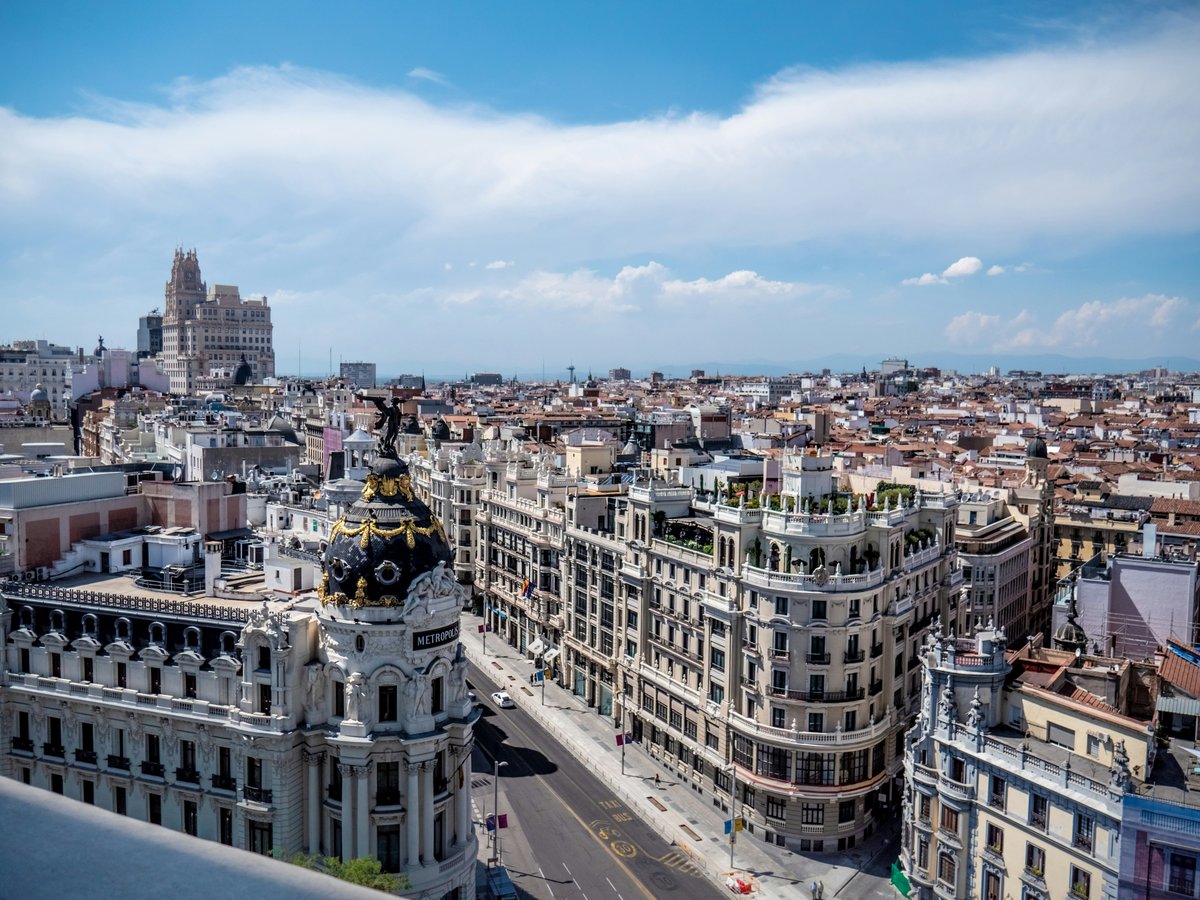
Is Madrid good for digital nomads in 2026?
Madrid scores 8.2/10 for digital-nomad suitability (sourced from TTDI's editorial rubric). Most flats in Chamberí and Malasaña carry 600-Mbps to 1-Gbps fibre, monthly hot desks run €150 to €250, and a full month runs around €2,700, or roughly $3,000 at 0.8985 euros to the dollar. Non-EU remote workers who stay past 90 days need Spain's Digital Nomad Visa.
Chamberí is the best month-long base in Madrid, and most visitors walk straight past it. The side streets around Mercado de Vallehermoso stay quiet, there's a Mercadona every few blocks, and self-service laundrettes tend to cluster near Bilbao metro, though Calle de Ponzano gets loud on Friday nights. Malasaña has better coffee and worse sleep. In summer the terraces on Plaza del Dos de Mayo clatter until 01:00, and the smell of beer and frying oil drifts up to second-floor windows. Lavapiés usually runs about €200 a month cheaper than Malasaña, and Mercado de San Fernando there sells fruit, Galician cheese and €3 vermouth under one roof. For anything longer than a weekend, skip Sol and the streets around Plaza Mayor: those blocks are mostly tourist flats, the nearest supermarket is often a cramped Carrefour Express, and around 23:00 the bin lorries empty the containers below your balcony with a hydraulic roar.
Locals mostly name two coworking chains, Impact Hub Madrid and Utopicus. Both sell monthly flex plans that tend to cost €150 to €250, far less than a €25 day pass adds up to over a month, so ask at the front desk for the tarifa mensual: the English booking pages often lead with the day rate. WeWork at Paseo de la Castellana 43 suits anyone on US-hours calls who needs a phone booth at 22:00, though it costs roughly double. Madrid's public libraries beat most of its cafés. Biblioteca Eugenio Trías sits in the old Casa de Fieras inside Retiro park, with free wifi, long wooden tables and a hush broken by nothing but birdsong, and it currently stays open until about 21:00 on weekdays. Madrid's cafés are trickier. Toma Café on Calle de la Palma pours a sharp, bright cortado, but tables turn over fast after 11:00, and several specialty shops in Malasaña ban laptops on Saturdays and Sundays. Federal Café on Plaza de las Comendadoras puts up with longer sessions if you order lunch around 14:00.
Spanish home broadband is fast and affordable, with Digi and Movistar both selling 1-Gbps fibre. When a listing promises fast wifi and delivers 30 Mbps, the router is usually wedged in a hallway behind 1920s brick, and the line itself is fine. Before you pay, ask the host for a Speedtest screenshot taken in the bedroom, and ask whether the flat is interior (facing the patio) or exterior. Interiors in Chamberí are quieter but darker. Furnished one-bedrooms in Chamberí or Malasaña currently go for €1,300 to €1,900 a month on mid-term platforms like Spotahome and HousingAnywhere. Since 2025 Madrid has been tightening tourist-flat licences in Centro, so some hosts have switched to contracts of 30 days or more, which helps if you're staying a month. A weekday menú del día in Lavapiés costs about €13 to €16, and a week of Mercadona groceries runs around €60.
Avoid August, when temperatures pass 38°C, many family-run bars on Calle de Argumosa close for three weeks, and a top-floor Lavapiés flat without air conditioning is an oven by 16:00. October, November, March and April are the months we'd choose, with crisp mornings and sunny terrace lunches in Plaza de Olavide. January mornings hover near 2°C, and older buildings often wait until November to switch on the shared heating, leaving them damp and cold until then. For non-EU passports, the Schengen 90-in-180 rule counts days in every Schengen country, so a fortnight in Lisbon before Madrid eats into your allowance; overstaying risks a fine and an entry ban, and since October 2025 the EU's Entry/Exit System has been recording border crossings digitally. Weekend escapes between work blocks are easy: Toledo is about 33 minutes from Atocha by AVANT train, and Segovia is under 30 minutes from Chamartín.
Composite of cafe + coworking download speeds and reliability.
Apartment, coworking membership, food, and transit at a comfortable level.
Coworking spaces
- Impact Hub Madrid
- Utopicus
- WeWork Paseo de la Castellana 43
- Spaces Madrid
- Biblioteca Eugenio Trías (free public library, Retiro)
Visa options
Spain's Digital Nomad Visa (Startups Law, 2023) requires income of about 200% of the minimum wage, roughly €2,760 a month, mostly from employers or clients outside Spain, plus at least three months with them. Apply at a consulate and you get one year; apply from inside Spain and you get a three-year permit. The Non-Lucrative Visa requires about €28,800 a year but bars work. Everyone else gets 90 days in 180.
Last verified by automated review (v1.7.2) on . What is automated review?