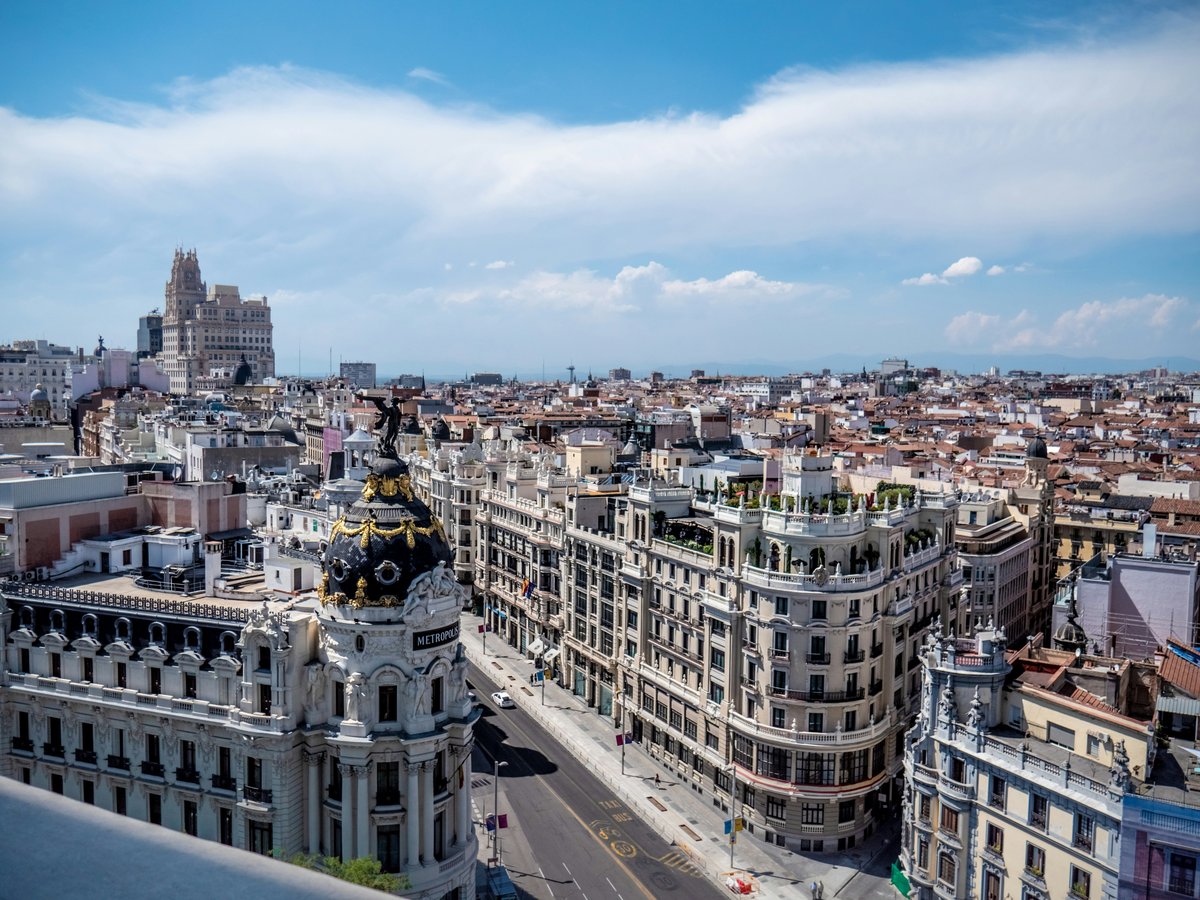
Is Madrid safe?
Madrid scores 7.4 out of 10 for solo-traveler safety (see the TTDI Solo-Safety Index). Violent crime against tourists is rare. The real risks are pickpocketing on Metro Line 1 between Sol and Gran Vía, and overcharging from unlicensed taxis near Atocha station. Streets stay populated past 2am most nights, which makes walking alone after dark far less stressful than in most European capitals. Emergency number: 112.
Madrid is one of the safer large cities in southern Europe for solo travelers. Spain's national homicide rate of roughly 0.6 per 100,000 ranks among the lowest in the EU, below France, Germany, and the United Kingdom. For visitors, the risk that materializes is pickpocketing, concentrated in three predictable spots. The Puerta del Sol pedestrian crush, the Rastro flea market on Sunday mornings, and Metro Line 1 carriages between Sol and Tribunal during rush hour. The method is bag-slashing, not the grab-and-run you see in Barcelona. Keep your daypack on your chest at Sol and the Rastro and the probability drops to near zero. The Policía Nacional maintains a dedicated tourist-assistance office, the SAT, at Calle Leganitos 19, a 4-minute walk from Plaza de España. English-speaking officers staff it daily.
Madrid's late dining culture is your best solo-safety asset. Restaurants fill their second seating around 10pm, and the warm clink of wine glasses and conversation spills out through open doorways along Calle de la Cava Baja in La Latina well past midnight. The streets between Malasaña's Plaza del Dos de Mayo and Chueca's Calle de Hortaleza stay thick with people until 1am on weekdays, later on weekends. I'd walk those neighborhoods alone at midnight without hesitation. Lavapiés is a different question after 2am. The blocks around Calle de Argumosa and the south end of Calle del Ave María empty out, and police data through 2023 flagged the Lavapiés triangle for a rise in street robberies. That does not mean avoid it. Lavapiés has the best cheap food in the city. The West African and South Asian restaurants along Calle de Lavapiés serve mafé, biryani, and dosa plates for 7-10 EUR. Go for dinner. After 1am, a Cabify from Lavapiés to most central hotels runs 6-8 EUR.
Madrid's Metro runs until 1:30am on weeknights and 2am on Fridays and Saturdays. The carriages feel safe at all hours, though Metro Line 1 between Atocha and Sol does attract pickpocket teams during evening rush. The NocheBús network picks up after the Metro closes, with 27 routes fanning out from Cibeles. Wait times sit around 15-20 minutes after 2am. A single ride costs 1.50 EUR. The warm rubber-and-diesel smell of a Madrid night bus at 3am is its own kind of reassurance. Uber and Cabify both operate legally in Madrid, and the app-based paper trail gives you a safety record that hailing a street taxi does not. Avoid the unlicensed drivers who cluster around Atocha and Puerta del Sol after midnight, quoting flat fares of 20-30 EUR for trips the meter would price at 8-12 EUR. Licensed Madrid taxis are white with a diagonal red stripe on the front door. Green roof light means available.
Solo women report Madrid as one of the more comfortable European capitals to walk alone. The piropos (street catcalls) that older guidebooks warned about have dropped off in central Madrid over the past decade. Chueca, between Gran Vía and Calle de Alcalá, is the LGBTQ+ neighborhood and tends to feel safe for women alone at any hour. Madrid scores 9.5 out of 10 for LGBTQ+ friendliness (sourced from TTDI's editorial rubric). For meeting other solo travelers on day one, free walking tours leave from the Plaza Mayor at 10am and 2pm and draw a mostly-solo crowd. The Devour Madrid tapas tour through La Latina runs groups of 6-10 people, small enough that you end up talking over cañas and croquetas de jamón. Worth noting, the croquetas at Casa Julio on Calle de Madera in Malasaña, with their crisp shell that cracks into a molten, salty core of jamón ibérico, cost 1.50 EUR each. Five of them with a caña at the bar comes to under 10 EUR.
Summer heat is the risk nobody files under safety, but it should be. Madrid sits at 667 meters elevation on the Meseta Central, and July afternoons push past 38°C with humidity in the single digits. The dry heat radiates off the granite pavement along Calle Mayor until 9pm. Carry water. The public drinking fountains throughout Retiro Park dispense clean, cold tap water. For longer solo stays, coworking spaces double as social infrastructure. Impact Hub Madrid charges around 200 EUR per month for a flex desk and runs weekly community events. The 24-hour pharmacies marked with a blinking green cross (farmacias de guardia) rotate nightly. If you need a hospital, Gregorio Marañón on Calle del Doctor Esquerdo has a 24-hour emergency department with English-speaking staff in the international-patient unit. Spain's universal emergency number is 112 for police, fire, and ambulance.
Emergency number: 112
Official travel advisories
Exercise increased caution the most cautious of 3 government assessments
- Government of CanadaLevel 2Exercise a high degree of caution View advisory
- UK Foreign OfficeLevel 1No FCDO travel restriction View advisory
- US State DepartmentLevel 2Exercise Increased Caution View advisory
Verified from the issuing governments' own feeds.
Areas to avoid
- Lavapiés south of Calle de Argumosa after 2am
- Puerta del Sol during peak tourist hours (pickpocket teams)
- Atocha station surroundings after midnight (unlicensed taxi drivers)
- Metro Line 1 between Sol and Tribunal during evening rush hour
- Casa de Campo park after dark
Common concerns
- Pickpocketing by bag-slashing teams at Puerta del Sol and on Metro Line 1
- Unlicensed taxi drivers quoting inflated flat fares near Atocha and Sol after midnight
- Extreme dry heat in July and August exceeding 38°C with single-digit humidity
- Street robbery in the Lavapiés triangle after 2am
- Scams targeting solo tourists near the Royal Palace and Plaza Mayor
Last verified by automated review (v1.7.2) on . What is automated review?