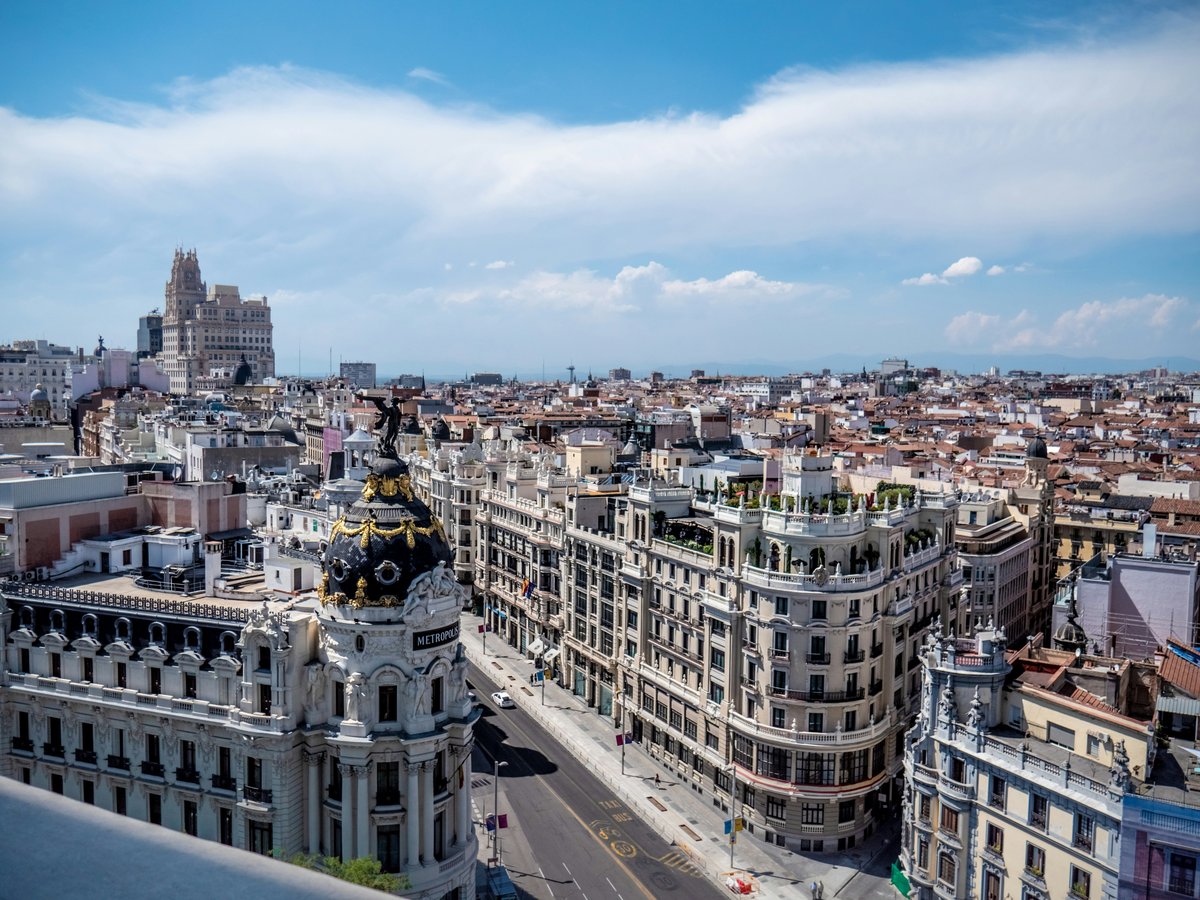
Madrid runs on a different clock. Dinner at 10 PM is normal. Leaving the house at midnight is standard. And the city still has people on the streets at 5 AM on a Tuesday. This is not some tourist marketing pitch. The Spanish capital has operated this way for decades, shaped by the post-Franco cultural explosion of La Movida Madrileña in the early 1980s and a climate where summer nights stay warm past 2 AM. The result is a nightlife culture that feels less like an industry and more like a habit. Madrileños treat going out the way other cities treat going to the gym. It happens regularly, it has its own rituals, and skipping it feels wrong. You will find yourself adjusting within a couple of nights. By your third evening in the city, eating before 9:30 PM will seem absurd.
Where Madrid Drinks: From Vermouth Taps to Rooftop Gin-Tonics
The gin-tonic has been Madrid's signature drink for over a decade now. Not a gin and tonic. A gin-tonic. Served in a balloon glass the size of a small fishbowl, heavy on the botanicals, with a specific garnish matched to the gin. You will see them on every terrace in the Barrio de las Letras from about 8 PM onward. But before the gin-tonic took over, vermouth was the drink of choice, and it has come back hard. Vermouth on tap, served in a small glass with an olive and a splash of soda, is what locals order at noon on a Sunday in La Latina or Lavapiés. It costs around 2.50 to 3.50 EUR in most traditional bars. The cocktail bar scene in Madrid has grown considerably since 2015 or so. Chueca and Malasaña both have clusters of serious cocktail spots where bartenders work with house-made syrups and local spirits. Prices for a craft cocktail tend to sit between 10 and 14 EUR, which is still well below London or Paris rates. The Triball area, that triangle of streets between Gran Vía and Malasaña, has a particularly dense concentration. For rooftop bars, Madrid delivers because of the climate. From May through October, hotel rooftops along Gran Vía open their terraces. The views over the Edificio Metrópolis and the Cibeles skyline are genuinely good, though you will pay 12 to 16 EUR for a drink and might wait 20 minutes for a table on a Friday around 9 PM. The locals tend to go on weeknights to avoid the weekend crush. Dive bars still exist, though gentrification has thinned the herd. Malasaña holds onto a few old-school spots where a caña (a small draft beer, roughly 200ml) still costs under 2 EUR. These places have sticky floors, football on a mounted TV, and regulars who have been drinking there since the 1990s. That is their charm. Lavapiés has a similar grit, with a more international crowd and a scattering of bars playing cumbia or Afrobeat on cheap speakers.
Clubbing in Madrid: Late Starts, Long Nights, and Genre Loyalty
Here is the thing about Madrid clubs. Nothing happens before 1:30 AM. Showing up at midnight marks you as a tourist or someone who does not know the rhythm. Most locals leave the house around 1 AM, arrive at the club between 1:30 and 2, and stay until 5 or 6. Some places run until 7 AM on weekends. The afters scene pushes it to mid-morning, though that crowd is a specific subset. Electronic music dominates the bigger clubs. Techno has had a firm grip on Madrid since the late 2000s, and the city draws international DJs regularly. You will also find house, minimal, and a growing bass music scene. Reggaeton and Latin urban have their own dedicated nights and venues, particularly in the Atocha and Lavapiés areas. Indie and rock club nights tend to cluster in Malasaña. Dress codes in Madrid are generally relaxed compared to, say, Barcelona's upscale clubs. Trainers are fine in most venues. A few of the posher spots near Salamanca or along Paseo de la Castellana might turn away flip-flops or very worn clothing, but smart-casual gets you in almost everywhere. The bouncers, called porteros, tend to be more concerned with group composition. A group of 5 men with no women might have a harder time than a mixed group. That said, it is less aggressive than London or Berlin door policies. Cover charges typically range from 12 to 20 EUR on a Saturday night, and most include 1 drink. Some clubs offer free entry before a certain hour, often 1 AM, or have guest lists you can sign up for online. Thursday is a big night out because of the university crowd, and many clubs offer reduced entry or free lists on Thursdays. Worth noting, the copas (mixed drinks at clubs) are strong. A cubata, which is the standard rum-and-coke or whisky-and-coke order, comes in a tall glass with a very generous pour. Two of those and you will feel it.
Live Sound: Flamenco Tablaos, Jazz Cellars, and Indie Stages
Flamenco is the obvious starting point, and Madrid has some of the best tablaos in Spain. The Corral de la Morería in the La Latina neighborhood has been running since 1956 and still books top-tier performers. Casa Patas, near Calle Huertas, closed its original location but the tablao tradition continues across several venues in the center. A full tablao show with a drink runs between 35 and 50 EUR at most spots. For something less formal, some bars in Lavapiés host spontaneous flamenco on weekend nights, often unpaid performers who play for the love of it. The sound of a cajón drum and a gravelly voice spilling out of a doorway at 1 AM is one of Madrid's better experiences. The jazz scene centers on a handful of committed venues. The Calle Huertas area and the streets around Plaza de Santa Ana have hosted live jazz for years. Sets typically start between 9 and 10 PM, and cover charges for jazz venues are usually 8 to 15 EUR, sometimes with a drink included. For indie and rock, Malasaña is the heart. Small stages in the neighborhood host local bands most nights of the week, and the crowds are loyal. Thursday and Saturday tend to be the strongest nights for live bookings. The city also has a healthy hip-hop and rap scene, with freestyle sessions popping up in Lavapiés and Usera. Madrid's festival calendar matters here too. Mad Cool, held in July at the Iberdrola Music venue in Valdebebas, pulls over 80,000 people annually with international headliners. Throughout the year, smaller festivals and one-off shows fill the mid-size venues along the Arganzuela waterfront and in the Matadero cultural complex. If you are visiting in summer, check listings for free open-air concerts in Retiro Park and the Jardines de Sabatini near the Palacio Real.
Nightlife neighborhoods
-
Malasaña
Still carries the spirit of La Movida, though the vintage shops have gotten pricier. Narrow streets around Plaza del Dos de Mayo fill with people drinking cañas on the sidewalk from about 9 PM onward. The smell of spilled beer and cheap tobacco lingers near the plaza benches. Younger crowd, lots of tattoos, band t-shirts, and a low tolerance for pretension.
- Best for
- Indie music fans, craft beer drinkers, anyone who wants a 2 AM taco from a street-facing window
- Standouts
- The Triball triangle (between Gran Vía, Fuencarral, and Corredera Baja de San Pablo) is where the newer cocktail and music spots concentrate.
-
La Latina
Sunday afternoon here is a Madrid institution. Cava Baja, a single curving street, has more bars per meter than almost anywhere in the city. By 1 PM on Sundays the whole neighborhood smells like fried croquetas and vermouth. At night it quiets down compared to Malasaña, but the tapas bars along Cava Baja and Cava Alta stay packed until midnight on weekends.
- Best for
- Sunday vermouth crawls, traditional tapas with groups, a more relaxed and food-focused evening out
- Standouts
- Cava Baja is the main artery. The streets branching off it toward the Mercado de la Cebada hold smaller, less touristy spots.
-
Chueca
Madrid's LGBTQ+ neighborhood since the 1990s, centered on Plaza de Chueca. The bars here range from quiet wine spots to packed weekend dance floors. During Orgullo (Madrid Pride, usually late June or early July, one of the largest in Europe with over 1.5 million attendees), the entire neighborhood becomes an outdoor party that runs for days. On a normal weekend, the streets hum with chatter and music leaking from open doors.
- Best for
- LGBTQ+ nightlife, cocktail bars, weekend dancing, anyone who wants a welcoming and social atmosphere
- Standouts
- The streets around Plaza de Chueca and along Calle Hortaleza have the highest concentration of bars and small clubs.
-
Lavapiés
Madrid's most multicultural barrio. Indian restaurants sit next to Senegalese shops and old Castilian taverns. The nightlife here feels less polished and more spontaneous. You might hear live Afrobeat coming from one doorway and a flamenco guitar from another. The crowd skews international and artsy, with a lot of Erasmus students and 30-something creatives. Gentrification is changing things, but it still has grit.
- Best for
- World music, cheap drinks, a less curated and more unpredictable night out
- Standouts
- The streets around Plaza de Lavapiés and the area near the Tabacalera cultural center tend to have the most activity after dark.
-
Huertas / Barrio de las Letras
The stretch along Calle Huertas and around Plaza de Santa Ana is probably the most tourist-heavy nightlife zone, but locals still go. The terraces along Santa Ana fill up by 8 PM in summer, and the gin-tonic bars further down Huertas do steady trade past 2 AM. It is louder and more chaotic than Chueca or La Latina, with more foot traffic and more hawkers trying to pull you into bars.
- Best for
- Pub crawls, groups looking for variety within walking distance, jazz and cocktails mixed with rowdier late-night bars
- Standouts
- Calle Huertas itself runs about 500 meters with bars on both sides. The jazz spots cluster nearer to Plaza de Santa Ana.
-
Arganzuela / Madrid Río
The area along the Manzanares river has changed dramatically since the Madrid Río park project opened around 2011. Matadero Madrid, the old slaughterhouse turned cultural center, hosts live events, film screenings, and occasional DJ sets. It is quieter than the central barrios but draws a creative crowd, especially for weekend programming.
- Best for
- Cultural events, open-air summer nights, a more curated and less boozy evening
- Standouts
- Matadero Madrid complex and the terraces along the river park. Summer pop-up bars appear here from June through September.
Safety after dark
Madrid is generally safe at night by European capital standards. Violent crime against tourists is rare, but petty theft is common in crowded nightlife areas, particularly around Sol, Gran Vía, and Plaza de Santa Ana. Keep your phone in a front pocket. Bag-snatching from terrace chairs happens. Pickpockets work in pairs on the Metro late at night, especially on Lines 1 and 3.
The taxi system is reliable and regulated. White taxis with a diagonal red stripe are the official ones. Fares from the center to most residential neighborhoods run 8 to 15 EUR between midnight and 6 AM (a nighttime surcharge of around 20% applies). The Uber and Cabify apps both operate in Madrid and show the fare upfront, which can be useful if your Spanish is limited. The Metro runs until about 1:30 AM on most lines, and the Búho (night owl) bus network covers major routes from 11:45 PM to 5:45 AM, departing from Cibeles every 15 to 35 minutes depending on the route.
Drink spiking, while not uniquely a Madrid problem, does happen. Keep your drink in your hand in crowded clubs. If you feel suddenly and disproportionately intoxicated, tell a friend immediately and get to a well-lit area or ask bar staff for help. The emergency number across Spain is 112.
One common scam around Sol and Gran Vía involves people offering you a "free" flamenco rose or bracelet, then demanding 10 to 20 EUR. A firm "no, gracias" and walking away is the standard response. Near clubs, unlicensed ticket sellers sometimes offer discounted entry that turns out to be for a different, much worse venue. Go directly to the club door or use the venue's official guest list.
Practical tips
- Tipping at bars
- Tipping is not expected in Madrid bars. Locals might leave 20 to 50 cents of change on the counter, or round up a tab from 8.60 to 9 EUR. In a cocktail bar you could leave 1 EUR per round if the service was good, but nobody will look at you funny if you don't. Clubs have no tipping culture at all.
- Cover charges and consumiciones
- Most clubs charge 12 to 20 EUR entry on Fridays and Saturdays, which typically includes 1 consumición (drink). Thursdays are often cheaper, around 8 to 12 EUR, or free before 1 AM. Guest lists, called listas, are common. Many clubs post sign-up links on Instagram. Getting on a lista can cut entry by 50% or make it free entirely. The drink included with entry is usually a basic cubata or a beer. Upgrading to a premium spirit at the bar costs 2 to 4 EUR more.
- When to go out
- The Madrid timeline goes roughly like this. Dinner at 9:30 or 10 PM. Pre-drinks (previas) at home or a bar from 11 PM to 1 AM. Arrive at the club between 1:30 and 2:30 AM. Stay until 5 or 6 AM. Eat churros con chocolate at a place like Chocolatería San Ginés (open since 1894, and yes, at 6 AM it is full of clubbers). On Thursdays the schedule shifts about an hour earlier because of the working crowd.
- What locals drink
- Beer is ordered as a caña (small draft, about 200ml, typically 1.50 to 2.50 EUR) or a doble (roughly a pint). Mahou is the house beer in most Madrid bars, Estrella Galicia the runner-up. Wine by the glass costs 2.50 to 4 EUR in a normal bar. Tinto de verano, red wine mixed with lemon soda, outsells sangria among locals by a wide margin in summer. At clubs, the cubata (spirit + mixer in a tall glass) is the default order.
- Smoking and terrazas
- Spain banned indoor smoking in bars and clubs in 2011. Since then, the terraza (outdoor terrace) has become even more central to the drinking culture. In warm months, which in Madrid means roughly April through October, most socializing happens outside. Terraza seating is free at most bars, though some tourist-facing spots near Sol add a small surcharge for table service. If you sit inside on a warm night, you might have the place almost to yourself.
- Cash vs card
- Most Madrid bars accept card payments, and contactless is widespread. That said, smaller tapas bars in La Latina and some older spots in Lavapiés might still be cash-only or set a minimum spend of 5 to 10 EUR for card payments. Carry at least 20 EUR in small bills for the night. Club cloakrooms almost always require cash, usually 2 EUR.
FAQ
What time do bars and clubs close in Madrid?
Most bars close between 2 and 3 AM. Clubs typically close at 5:30 or 6 AM on weekends, with some running until 7 AM. A few after-hours spots continue past that, but they operate in a legal gray area and change location frequently. On weeknights, things wind down 1 to 2 hours earlier.
Is Madrid nightlife expensive compared to other European cities?
Madrid is still considerably cheaper than London, Paris, or Amsterdam for a night out. A caña of beer costs 1.50 to 2.50 EUR in most bars, a cocktail runs 10 to 14 EUR, and club entry with a drink is 12 to 20 EUR. A full night out including dinner, drinks at 2 bars, and club entry might cost 50 to 80 EUR per person, roughly half what you would spend in central London.
Do I need to speak Spanish to go out in Madrid?
English gets you by in the tourist-heavy areas around Huertas, Sol, and Gran Vía. In neighborhoods like Malasaña, Lavapiés, and La Latina, bar staff might have limited English, especially at older traditional spots. Learning a few phrases helps. "Una caña, por favor" (a beer), "la cuenta" (the bill), and "dónde está el baño" (where's the bathroom) will cover 80% of your bar interactions.
What night of the week is best for going out in Madrid?
Thursday and Saturday are the peak nights. Thursday draws the university crowd and many clubs offer reduced or free entry. Friday is surprisingly quieter at clubs because locals often have dinner plans with friends or family. Saturday is the main event, with the biggest DJ bookings and the latest closings. Sunday afternoon in La Latina is its own category and well worth experiencing.
How do I get home safely after a night out at 5 AM?
The Metro reopens at 6 AM (6:30 AM on Sundays and holidays). Between 1:30 and 6 AM, the Búho night bus network runs routes from Plaza de Cibeles across the city, with departures every 15 to 35 minutes. Taxis are easy to flag down on main streets like Gran Vía and Calle Alcalá, even at 5 AM. Uber and Cabify both operate around the clock. Surge pricing on ride apps tends to peak between 3 and 4 AM on Saturdays.
Are there age restrictions for bars and clubs in Madrid?
The legal drinking age in Spain is 18. Most clubs enforce this at the door, and you will likely need to show ID (passport or EU national ID card). A photocopy is sometimes accepted but not always. Some venues set their own minimum at 21 or 23 for certain events, especially at more exclusive spots. Bars generally do not check ID unless you look notably young.
Last verified by automated review (v1.7.2) on . What is automated review?