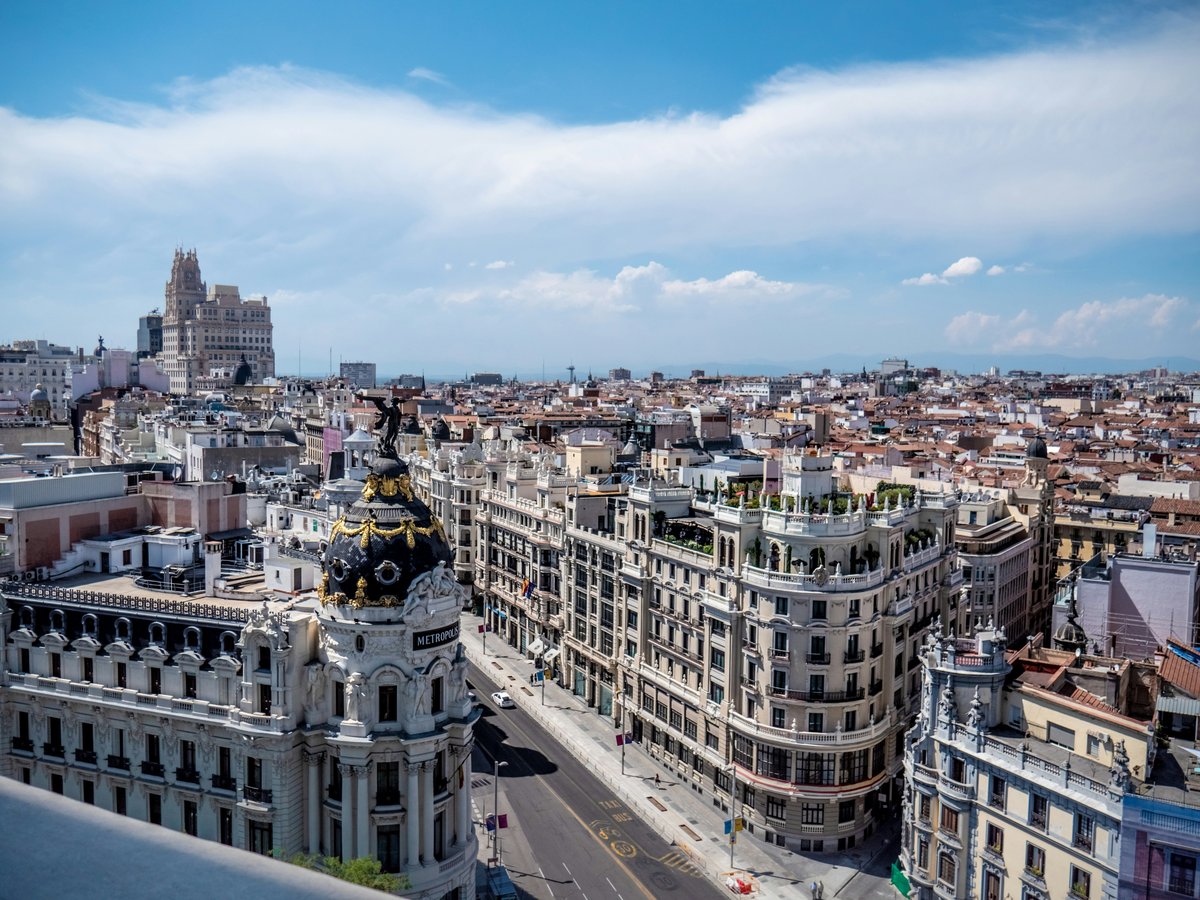
Madrid With Kids: What Works
Madrid scores 8.5 out of 10 for family-friendliness, and the half-point it loses tells you more than the eight it earns. This is the itinerary shape that survives toddlers, the marquee museum that triggers meltdowns by Room 3, and the under-rated park day that quietly wins.
Published
1 Madrid Scores 8.5 for Families, and the Half-Point It Loses Tells You Everything
The smell of toasted almonds from a street vendor on Gran Vía hits you before you even orient the stroller. Madrid scores 8.5 out of 10 on verified family-friendliness, which places it above Barcelona and Rome but below Copenhagen and Tokyo in the European family-travel hierarchy. That 8.5 deserves unpacking.
The eight points come honestly. Madrid's Metro runs from 6 AM to 1:30 AM, with elevators at more than 60% of stations. Retiro Park alone spans 125 hectares of flat, paved paths. Playgrounds appear every 300 metres in the central barrios. The city maintains free public drinking fountains throughout Salamanca, Chamberí, and Centro. Paediatric urgent care at Hospital Niño Jesús on Avenida de Menéndez Pelayo operates 24 hours. The sidewalks in Malasaña and Chueca tend to be wide enough for a double buggy, which is not something you can say about Lisbon's Alfama or Rome's Trastevere.
The missing 1.5 points? Almost entirely the dining clock. Madrid eats dinner between 9 and 11 PM. Kitchens at places like Casa Lucio on Calle de la Cava Baja do not open before 8:30 PM. A tired three-year-old at 9:15 PM in a restaurant that has not yet served the first course is a predictable disaster. Worth noting, the Spanish school schedule starts at 9 AM, meaning local families have adapted their children to this rhythm over years. Visiting families have not. The second friction point is the midday heat between June and September, when temperatures in Plaza Mayor regularly reach 38°C by 1 PM. That combination of late food and aggressive sun accounts for the gap between 8.5 and a theoretical 10.
To be fair, Madrid compensates with something Northern European cities lack. Children are genuinely welcome in restaurants, bars, and shops at all hours. Nobody glares at a noisy toddler in a tapas bar at 8 PM. The social tolerance for small children in adult spaces is higher here than in Paris, London, or Amsterdam.
The missing 1.5 points come almost entirely from the dining clock and the midday heat.
2 The Prado With a Four-Year-Old Is a Beautiful Disaster
The cold marble floors of the Museo del Prado echo every footstep, every whine, every dropped sippy cup. This is Madrid's marquee cultural institution, 8,600 works across 100 rooms, and it is a meltdown factory for anyone under six.
The Prado charges 15 EUR for adults (free for under-18s, which sounds generous until you are chasing a bored child past Velázquez's Las Meninas in Room 12). The building runs 700 metres end to end along Paseo del Prado. Average visit time for adults is 2.5 to 3 hours. Average tolerance of a four-year-old in a hushed gallery with "don't touch" enforced every 90 seconds is closer to 25 minutes. The maths does not work.
Mind you, the Prado is extraordinary. Goya's Black Paintings alone justify a trip to Madrid. But the family-friendly move is to skip it entirely with small children and visit the Museo Nacional de Ciencias Naturales on Calle de José Gutiérrez Abascal instead. The Natural Sciences Museum charges 7 EUR for adults, free for under-4s. It has a full-scale diplodocus skeleton that a three-year-old can walk beneath. The megalodon jaw replica on the ground floor is 3 metres wide. Children can touch specific specimens in the tactile gallery on the second floor. The whole visit takes 60 to 90 minutes, which lands perfectly in the pre-meltdown window.
The runner-up alternative is CaixaForum Madrid on Paseo del Prado itself, 6 EUR entry, which runs dedicated family workshops on Saturday mornings at 11 AM for ages 3 to 8. It sits 400 metres south of the Prado, so you get the same neighbourhood walk along the tree-lined boulevard without the museum silence. If your children are 8 or older and genuinely interested in painting, the Prado works, but try the 6 PM free-entry window (Monday to Saturday, last 2 hours) so you can leave after 45 minutes without feeling you wasted 15 EUR per adult.
Average tolerance of a four-year-old in a hushed gallery with 'don't touch' enforced every 90 seconds is closer to 25 minutes.
3 Retiro Park Runs a 4-Hour Morning Without You Lifting a Finger
The sound that defines a Sunday morning at Retiro Park is wooden oars clunking against aluminium rowboats on the Estanque Grande. The lake sits at the park's northern end, roughly 200 metres from the Puerta de la Independencia entrance on Calle de Alfonso XII.
Retiro Park covers 125 hectares and entry is free, every day, year-round. The rowboat rental on the Estanque costs 6 EUR for 45 minutes and fits 4 people per boat. That is 45 minutes of a toddler being genuinely entertained by water, ducks, and the novelty of a moving vessel. You might notice families queuing by 10:30 AM on weekends; arrive at 10 AM and the wait drops to under 5 minutes.
After the boat, the Títeres de Retiro puppet theatre runs free weekend shows at 12:30 PM in the open-air stage near the Paseo de Colombia. The puppeteers have performed here since 1933. Shows last 30 minutes, the seating is informal (blankets on grass work), and the physical comedy translates regardless of whether your children speak Spanish. The Crystal Palace (Palacio de Cristal) sits a 7-minute walk south from the puppet stage. It is a glass-and-iron greenhouse from 1887 that currently hosts rotating contemporary art installations. Children respond to the light, the space, the echo. It is free. You spend 10 minutes inside and it feels like a cathedral made of sky.
The playground near the Ángel Caído statue has climbing structures sized for 2-to-8-year-olds, and a sand pit. A lap of the Rosaleda rose garden (best in May and June, over 4,000 rose bushes) adds another 15 minutes of wandering on flat gravel paths. The total Retiro morning, boat to puppets to Crystal Palace to playground, runs 3.5 to 4 hours and costs 6 EUR. No other attraction in Madrid delivers that ratio of time-occupied to money-spent for families with children under six.
The total Retiro morning runs 3.5 to 4 hours and costs 6 EUR.
4 The Itinerary Shape That Survives Under-Fives: Morning Sprint, Siesta Drift, Evening Paseo
The warm gust rising from a Metro grate on Calle de Serrano at 9 AM carries the faint sweetness of a nearby bakery. This is the hour Madrid belongs to families with small children, before the heat, before the crowds, before the meltdown clock starts ticking.
The shape that works, tested across the 8.5-scoring city's rhythms, is a three-part day. First, the morning sprint from 9 AM to 12:30 PM. This is your window for anything structured. Retiro Park, the Museo Nacional de Ciencias Naturales, the Teleférico, the Zoo Aquarium de Madrid on the western edge of Casa de Campo. Plan one anchor activity, arrive when doors open, and build in 20 minutes of unstructured running at a nearby playground as a pressure valve.
Second, the siesta drift from 1 PM to 5 PM. Madrid's local rhythm already empties the streets between 2 and 5 PM. Use it. Lunch at 1 PM (early by Madrid standards, normal for a small child), then back to your accommodation for naps. That said, if you are staying in the Salamanca or Retiro districts, the shade under the trees along Paseo de la Castellana makes a tolerable stroller-nap route even in July, when afternoon temperatures sit around 35°C.
Third, the evening paseo from 6:30 to 8:30 PM. This is Madrid's magic window for families. The heat breaks, locals pour onto the streets, and Parque del Oeste or the Templo de Debod gardens fill with children. The Egyptian temple (gifted to Spain in 1968, free entry) faces west and catches golden light from 7 PM onward. You get 20 minutes of culture while children run on the surrounding grass. Then dinner at 8 PM, which is early enough to avoid meltdowns but late enough that restaurants like La Barraca on Calle de la Reina are open and serving.
The critical rule is one structured activity per day, maximum. Madrid's 8.5 family score assumes you are not trying to do three museums before lunch.
The critical rule is one structured activity per day, maximum.
5 Feeding Toddlers at 1 PM in a City That Eats at 10 PM
The clatter of small plates landing on zinc counters at Mercado de San Antón in Chueca starts around 12:30 PM. By Madrid standards, this is breakfast-adjacent. By toddler standards, it is already 30 minutes past hunger.
The feeding problem in Madrid is not quality. It is timing. Most sit-down restaurants open kitchens at 1:30 PM for lunch and 8:30 or 9 PM for dinner. Mercado de San Miguel near Plaza Mayor opens at 10 AM, which seems ideal, but it has become a tourist-pricing operation. A portion of jamón ibérico there costs 18 EUR; the same quality at Mercado de San Antón runs 11 EUR. Mercado de San Antón also has a rooftop terrace with a children's seating area and opens at noon.
The strategy that works for families scoring the full 8.5 experience is to eat a large late breakfast at your accommodation (most Madrid apartments include kitchen access), then target lunch at 1 PM at a neighbourhood bar that serves a menú del día. These set menus cost 12 to 16 EUR for two courses plus bread and a drink. Taberna La Bola on Calle de la Bola serves cocido madrileño (the city's traditional chickpea stew) starting at 1 PM. Portions are large enough to share with a child. The restaurant has operated from this location since 1870.
For dinner, the family-functional window is 8 to 8:30 PM. La Barraca on Calle de la Reina opens at 1 PM and again at 8 PM, and serves paella in sizes starting from 2 persons at 22 EUR per person. Lateral on Paseo de la Castellana has a children's menu at 9.50 EUR and high chairs at every table. If your children cannot survive past 7 PM, the fallback is Telepizza (locations every 500 metres in Centro), which delivers in 30 minutes and is not glamorous but solves the problem at 7 EUR for a medium pizza.
The honest truth is that Madrid's late-dining culture is the primary reason the city scores 8.5 rather than 9 or above.
The feeding problem in Madrid is not quality. It is timing.
6 The Teleférico to Casa de Campo Is Madrid's Best-Kept Family Win
The cable car cabin sways gently as it clears the treetops above Paseo del Pintor Rosales. Below, the Manzanares river flashes silver between stone bridges. Ahead, the 1,722-hectare expanse of Casa de Campo opens like a green inland sea. This is the ride that makes a three-year-old gasp.
The Teleférico de Madrid runs from Parque del Oeste (Argüelles neighbourhood) to Casa de Campo, covering 2.5 kilometres in 11 minutes. A return ticket costs 6 EUR for adults, 4 EUR for children aged 3 to 7. The cabins hold 6 people and depart every 10 seconds during peak times. It operates daily from April to September (11 AM to 9 PM) and weekends only from October to March. The ride height reaches 40 metres above the river at its midpoint, which is high enough to feel adventurous but enclosed enough that nervous parents cope.
Once you land in Casa de Campo, the options split by age. The Zoo Aquarium de Madrid charges 24 EUR for adults and 19 EUR for children aged 3 to 7, covers 22 hectares, and sits a 15-minute walk from the Teleférico station. The Parque de Atracciones (Madrid's main theme park) is a 10-minute walk in the opposite direction, with entry at 18 EUR for under-120cm children and rides sized for 3-year-olds in the Nickelodeon Land zone.
That said, the underrated move is neither. The lake at Casa de Campo (Lago de Casa de Campo) rents pedal boats for 5 EUR per 30 minutes, has a flat gravel shore where toddlers throw stones for free, and the café Chiringuito del Lago serves cold drinks and bocadillos from 10 AM. No entry fee. No queue. The whole circuit, Teleférico there, lake time, Metro back from Lago station on Line 10, costs under 20 EUR for a family of four and fills 3 hours.
Compare that to the Prado's 30 EUR entry for two adults (children free but miserable) and 25-minute tolerance window. The Teleférico-to-lake route is the family-friendliness score's 8.5 points made tangible.
This is the ride that makes a three-year-old gasp.
7 Templo de Debod at Sunset Is Your 20-Minute Cultural Win
The sandstone blocks of Templo de Debod glow amber in the low sun. A warm breeze carries the sound of children shrieking on the grass that surrounds the 2,200-year-old Egyptian temple. It is 7:30 PM on a Wednesday in June, and this is the moment Madrid's family score reaches its ceiling.
Templo de Debod sits in Parque de la Montaña, a 5-minute walk from Plaza de España Metro station. Egypt gifted the temple to Spain in 1968 as thanks for helping save Abu Simbel from the Aswan Dam flooding. Entry to the interior is free (Tuesday to Sunday, closes at 8 PM in summer). The interior takes 10 to 15 minutes to walk through. Children find it tolerable because it is small, because there are carved hieroglyphs to look at, and because it is over before patience runs out.
The real value for families is the exterior. The temple sits on a raised platform with a reflecting pool. The surrounding lawn is flat, unfenced, and full of local families every evening from 6:30 PM onward. Children run. Parents sit. The views west toward Casa de Campo catch the sunset. This is the spot where Madrid families spend their evenings, which tells you something about what works with children here.
The alternative cultural quick-hit is the Jardines de Sabatini behind the Palacio Real. Free entry, formal hedgerow gardens, a 10-minute circuit, open until 9 PM in summer. The Royal Palace itself costs 16 EUR per adult and takes 90 minutes through 50 rooms of polished floors and strict "no touching" rules. Skip the interior with children under seven. The gardens deliver the sense of place without the behavioural demands.
Templo de Debod at 7:30 PM is where Madrid's 8.5 family-friendliness score stops being a number and becomes a feeling. Free entry, 20-minute cultural content, an hour of grass-running afterward, and the whole city turning gold. The nearest playground is 200 metres south on Cuesta de San Vicente.
Free entry, 20-minute cultural content, an hour of grass-running afterward, and the whole city turning gold.
Last verified by automated review (v1.7.0_2026-08-02-schema-drift-80-a1) on . What is automated review?