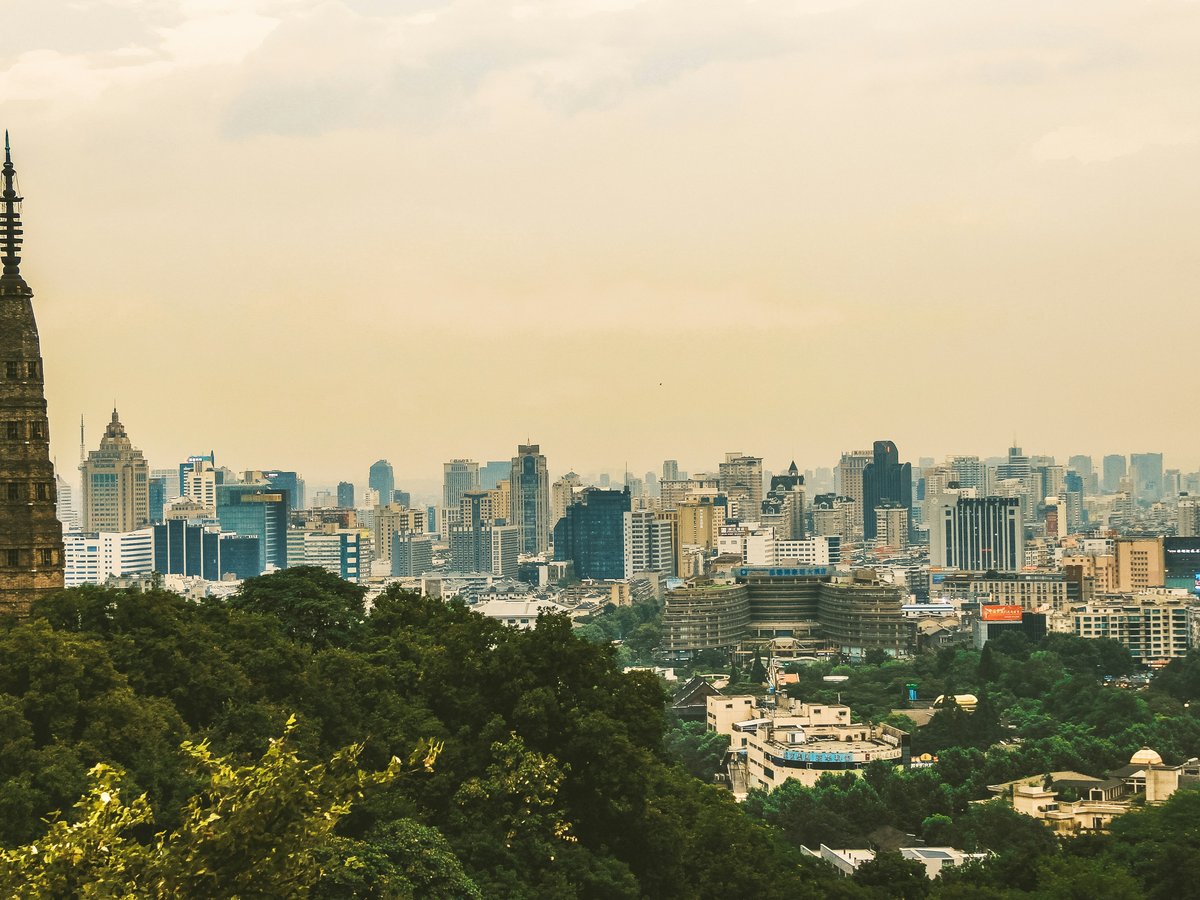
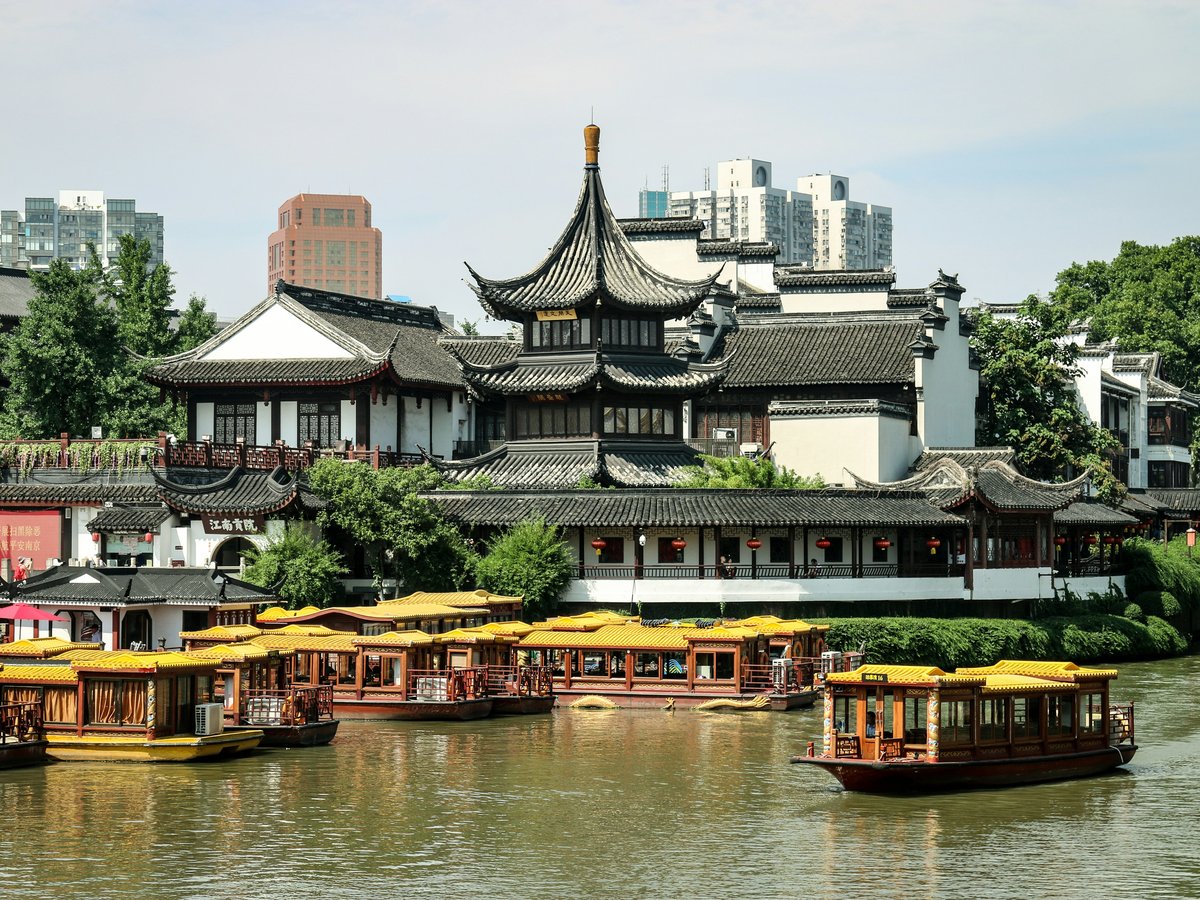
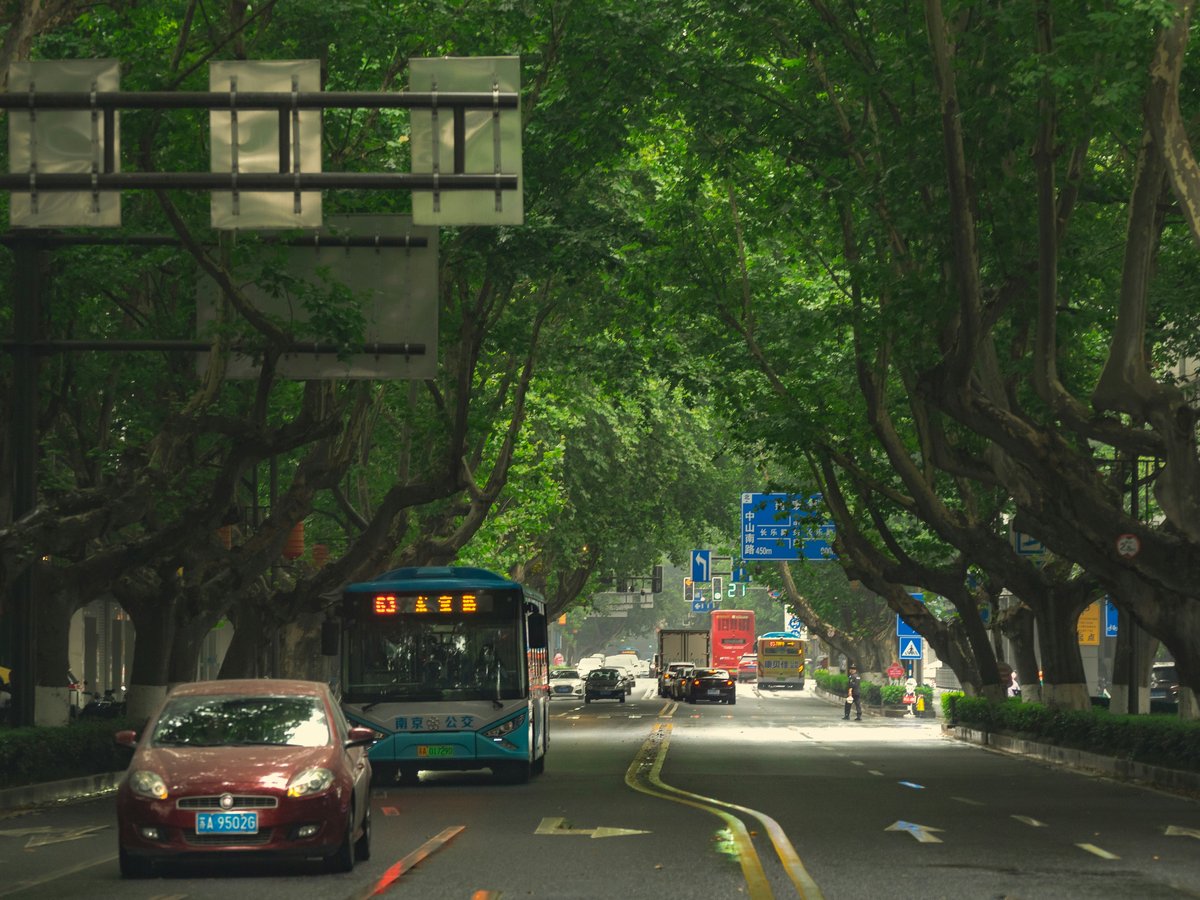
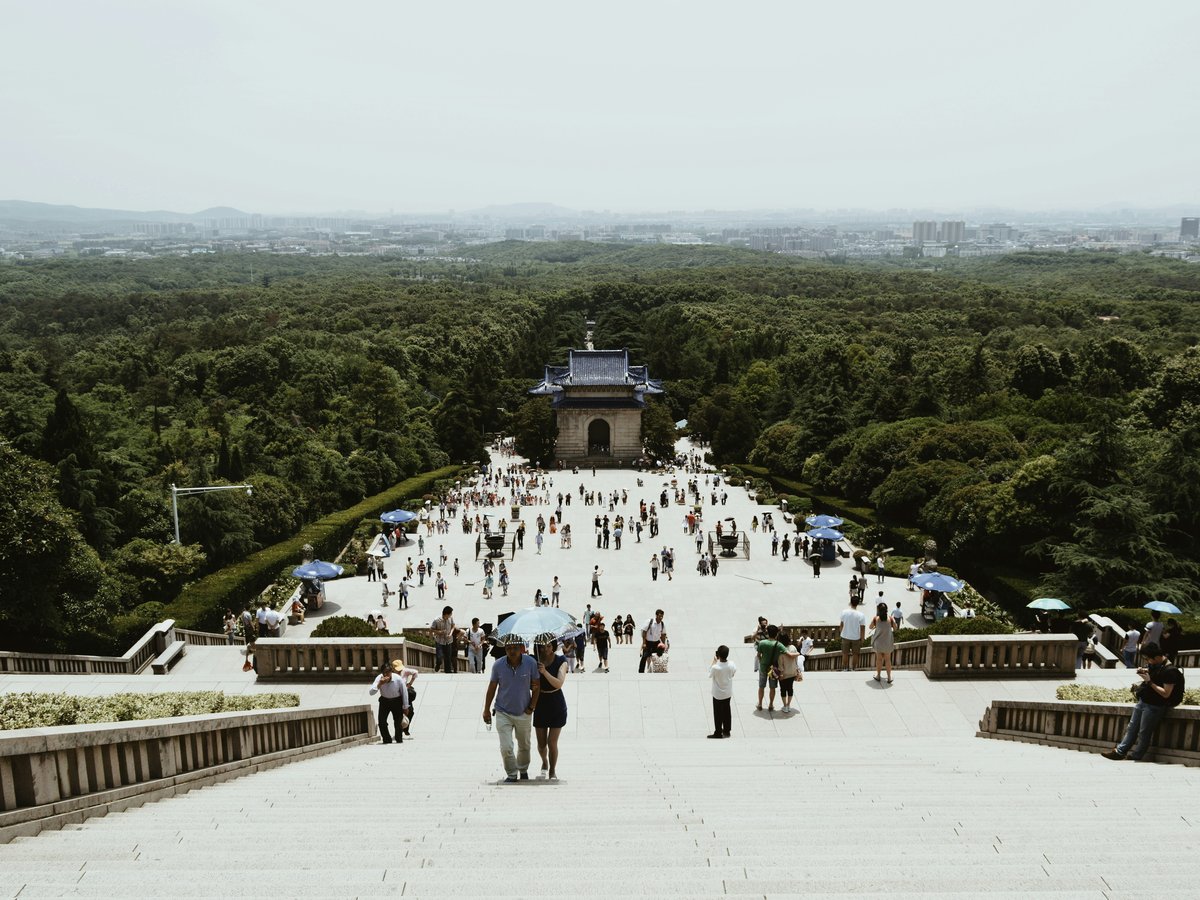
Nanjing sits where the Yangtze bends east toward the sea, a city of nearly nine and a half million people that has served as China's capital under ten different dynasties and still carries that layered past in its street plan, its monuments, and its local stubbornness about how to cook a duck. The Ming-era city wall, roughly thirty-five kilometres of it still intact, ranks as the longest surviving urban fortification on earth, tracing a circuit that no longer matches the modern city's edges but still defines its psychological centre. Xuanwu Lake sits against the wall's northern arc, and Purple Mountain rises to the east, where the Sun Yat-sen Mausoleum draws a patient line of visitors up 392 stone steps through plane trees planted in the Republican era. Down in the old quarter, the examination hall at Fuzimiao, once the empire's largest civil-service testing ground, now anchors a waterfront strip along the Qinhuai River where locals eat duck blood soup and salted duck, Nanjing's signature protein, prepared with a restraint that makes Peking duck look theatrical. Most of what a first-time visitor wants sits within the older urban core, loosely bounded by Xinjiekou, the commercial crossroads, and the quieter lanes near Gulou, where Nanjing University's campus bleeds into cheap noodle shops and used bookstores. The Nanjing Massacre Memorial, west of the centre, is not optional; it is the city's conscience, and visiting it early reframes everything else you see. Summers are punishing; Nanjing is one of China's so-called three furnaces, with July highs regularly clearing thirty-eight degrees. Spring and autumn are the practical windows, with late October the finest stretch, when the heat breaks and the ginkgo trees along Beijingxi Road carpet the sidewalks gold. The city runs on Shanghai time, keeps its own pace, and favours the visitor who walks.
Nanjing in photos
Nanjing right now
Answers about Nanjing
-
Airport to city
Take Metro Line S1 from Nanjing Lukou Airport (NKG) to Nanjing South Railway Station, then transfer to Line 1. The ride to Xinjiekou costs about 9 CNY ($1.35) and takes 50 minutes. After the last train around 11pm, a metered taxi to central Nanjing runs 120-150 CNY ($18-22) plus tolls.
Read the full answer → -
Best time to visit
October and November deliver the best conditions in Nanjing. Highs range from 15°C to 22°C, the plane trees along Zhongshan Road turn copper-gold, and hotel rates sit 30-40% below the Golden Week peak. Late March through mid-April is the second window, with cherry blossoms at Jiming Temple and fewer crowds. Avoid July and August, when temperatures regularly reach 38-40°C.
Read the full answer → -
Cost per day
Nanjing runs ¥170-200 ($25-30) per day on a backpacker budget. That covers a hostel dorm near Xinjiekou, three street-food meals, and metro rides. Midrange sits around ¥470 ($70) with a three-star hotel. Most major memorials and Nanjing Museum charge nothing, though Purple Mountain's paid attractions are the main exception.
Read the full answer → -
Best day trips
Yangzhou is the strongest single-day trip from Nanjing, 100 km north by CRH in 50 minutes for ¥65 (about $10). Fuchun Teahouse morning buns, Slender West Lake gardens, and Xu Garden's quieter south bank make it the best full day for two. Zhenjiang (18 minutes, ¥29) and Tangshan Hot Springs (30 km, taxi ¥80) work for shorter outings.
Read the full answer → -
Food culture
Nanjing is a duck city. Salted duck (yanshuiya), duck blood soup, and braised duck gizzards anchor nearly every meal, a tradition reaching back to the Ming capital era from 1368. The Fuzimiao and Shiziqiao districts concentrate the best street food, with bowls of ya xue fen si tang running 15-22 CNY. Tangbao soup dumplings fill the morning routine at neighborhood canteens.
Read the full answer → -
Getting around
Nanjing Metro handles most tourist routes, with fares from 2 to 9 CNY. Line 1 and Line 2 intersect at Xinjiekou, the commercial center. DiDi replaces Uber for everything the metro misses, including the climb to Zijin Shan's mausoleums. Set up Alipay's international version before arrival. Cash is nearly obsolete.
Read the full answer → -
How to get there
Nanjing Lukou International (NKG), 35 km south of central Nanjing, handles regional flights from Seoul, Tokyo, Bangkok, and Singapore. No nonstop service from North America or Europe. Most visitors fly into Shanghai Pudong (PVG) and ride the 65-minute high-speed train from Shanghai Hongqiao to Nanjing South for about ¥135 ($20).
Read the full answer → -
Is it safe?
Nanjing scores 6.8 out of 10 for solo-traveler safety (see the TTDI Solo-Safety Index). Violent crime against foreigners is rare; the real risks are traffic, petty theft on Metro Line 1 during rush hour, and the language barrier when you need help at 2am. Police: 110. Ambulance: 120.
Read the full answer → -
Where locals go
Nanjing locals gather around the Gulou university district for ¥15 noodle shops and basement bars, along Yihe Road's Republican-era lane cafes, and at Wutaishan's weekend basketball courts. Fuzimiao draws tourists. The real after-work crowd fills Hunan Road's second-floor restaurants and the dumpling windows near Sanpailou. The city scores 3.5/10 for digital-nomad suitability (sourced from TTDI's editorial rubric), reflecting limited coworking, not a lack of local life.
Read the full answer → -
Must-see
Sun Yat-sen Mausoleum on Purple Mountain. Its 392 granite steps lead to the tomb of the Republic of China's founder, completed in 1929. Entry is free, but you need a real-name timed booking through WeChat 1 to 3 days ahead; the hall closes on Mondays. Arrive for the 8:30am opening. Ming Xiaoling and the Nanjing Massacre Memorial round out the essential three.
Read the full answer → -
3-day itinerary
Day 1 covers the Presidential Palace and Nanjing Museum east of Zhongshan Lu. Day 2 climbs Purple Mountain for Sun Yat-sen Mausoleum and Ming Xiaoling. Day 3 heads southwest to the Nanjing Massacre Memorial Hall, then the Confucius Temple district along the Qinhuai River. About 30 km of walking total, with the Metro connecting the three zones.
Read the full answer → -
What to avoid
Skip the Fuzimiao commercial strip's overpriced duck restaurants, the tea-ceremony scam near Xinjiekou, and unlicensed guides at Sun Yat-sen Mausoleum. Nanjing is one of China's "Four Furnaces," with July and August temperatures regularly exceeding 38°C. The Ming Palace ruins are mostly bare foundations, not the imperial complex visitors expect.
Read the full answer → -
What to pack
Pack for wet stone steps, sticky Yangtze humidity, and a phone that needs configuring before you fly. In Nanjing, grippy shoes and a light rain shell matter more than outfits. Before landing at Lukou (NKG), set up Alipay or WeChat Pay and sort out a roaming eSIM or tested VPN. Umbrellas and toiletries are cheap in the city: buy those there.
Read the full answer → -
Where to stay
Xinjiekou for first-timers. Nanjing Metro Lines 1 and 2 cross at this station. The Presidential Palace is within walking distance, and Fuzimiao is three stops south. Mid-range hotels here start around ¥400 per night. Gulou, the university quarter near Nanjing University, costs less and sits closer to Xuanwu Lake and the Zijin Shan sites.
Read the full answer →
Deep guides for Nanjing
Curated lists for Nanjing
accommodation
-
Best boutique hotels
Nanjing's hotel options split between the walled old city and the newer riverside west, and choosing the right side matters more than choosing the hotel. Inside the Ming city wall, Xinjiekou, the Presidential Palace streets and the Xuanwu Lake shore put museums, temples, department stores and the city's busiest metro interchange within walking range. West of the old city, Hexi trades history for wide boulevards, the Olympic Sports Center, glass office towers and the Yangtze waterfront. Further out, Tangshan, Niushou Mountain and the Jiangning Development Zone work as resort and suburb bases: you sleep well and ride in for sightseeing. Well-reviewed mid-range rooms across these areas cost about $83 to $134 a night, and most carry Trip.com ratings above 9, so price barely separates them. Decide on character instead: lake mornings, shopping crowds, stadium nights, hot spring soaks or Buddhist hillsides.
See the picks → -
Best hostels
Nanjing splits into two very different cities for a budget traveler. Inside the Ming city wall, the old core runs from the lantern-lit Qinhuai River and the Confucius Temple in the south, north through the Xinjiekou metro interchange and the Presidential Palace, to the lakes and temples along the northern wall. Outside the wall are the transit and business districts: the high-speed rail hub at Nanjing South, the northern railway station near Hongshan Forest Zoo, the glass towers of Hexi, and the airport strip at Lukou. Nanjing has few true backpacker dorms. Budget travelers here mostly stay in compact chain hotels: the majority opened in the last few years: with smart-room fittings and high guest scores. So choosing a neighborhood matters more than choosing a hotel. Stay inside the wall if you want to walk to temples, river lanes and museums. Stay outside it only if a train, a flight, a concert or a trade fair is setting your schedule. The ten neighborhoods below cover both sides of that line, with the budget pick in each one.
See the picks → -
Where to stay
Nanjing rewards travelers who choose the neighborhood before the hotel. The old capital sits inside a Ming city wall, and most of what first-timers come to see: from the Presidential Palace to the Confucius Temple lanes along the Qinhuai River: lies within a few metro stops of Xinjiekou, the commercial crossroads at the center. Around that core, each district has a clear job. Xuanwu Lake and Jiming Temple give early risers green space and wall-top walks. Laomendong and the riverfront trade daytime quiet for lantern-lit evenings. Hexi's glass towers and the Olympic Sports Center serve concert crowds and business trips. Nanjing South Railway Station and Lukou airport handle arrivals and departures. Farther out, Hongshan Forest Zoo pulls families north and the Tangshan hot springs pull weekenders east. Value is strong across the city: well-rated new openings sit at budget prices almost everywhere, and mid-range rooms often deliver what a luxury rate buys in other capitals. Pick the area that matches how you want to spend your days, then pick the room.
See the picks →
food
-
Best cafes
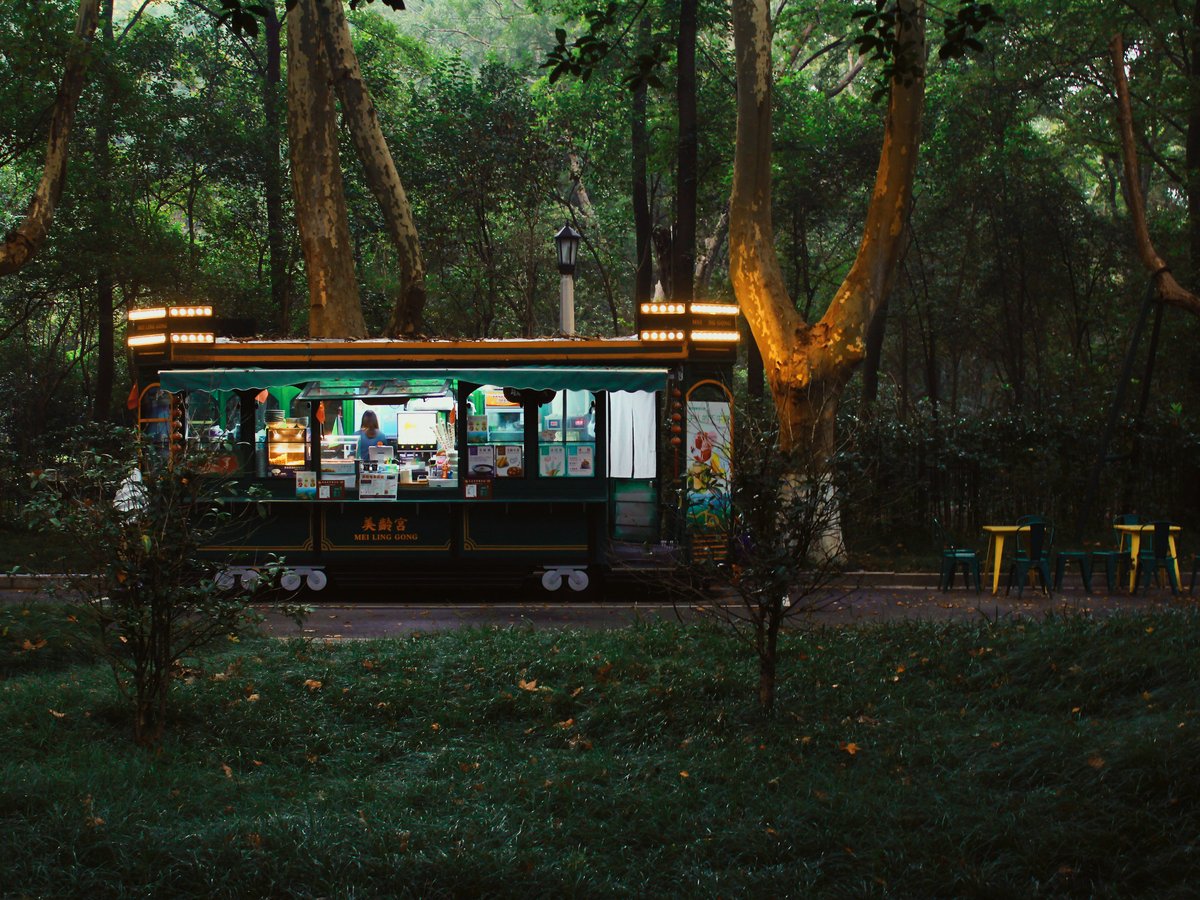
Nanjing's cafe list balances well-known international names with smaller local spots, and the reason to track all 8 is the clock, not the logo. The earliest door opens at 07:00 on 天骄路, two counters run until 22:00, and one place on 中山南路 does not open until 11:00. A cafe that is still shut when you need it is no use to you, however good the cup. This list is built for how a visitor's day runs: coffee before a long morning on foot, a table for the laptop in the afternoon, a late cup after dinner. Every entry gives the exact street address as it appears locally, Chinese characters included, so you can hand your phone to a driver and skip the pointing. Where the source records a phone number, we give it. Where it records no hours, we say so plainly.
See the picks → -
Best restaurants
Nine stops, meant to be used. The range runs from a cake and coffee counter at 195 碑亭巷 to a seafood kitchen at 1 升州路, a noodle shop at 56 莲池路, and a Chinese kitchen on the 4F food street in Terminal 1 at 禄口机场. Two names will look familiar to anyone who has eaten near a shopping district: Saizeriya and Pizza Hut. Both earn their place by being dependable at a fixed address. The rest are neighbourhood kitchens: Chinese cooking, seafood, fish and local dishes, pulled noodles. Each entry includes the name in characters for drivers and hours wherever known. Most kitchens here open at 10:00 or 11:00 and close at 22:00. This list is for travellers who would rather eat well than eat somewhere famous.
See the picks →
Browse by traveler type
Last verified by automated review (v1.7.2) on . What is automated review?