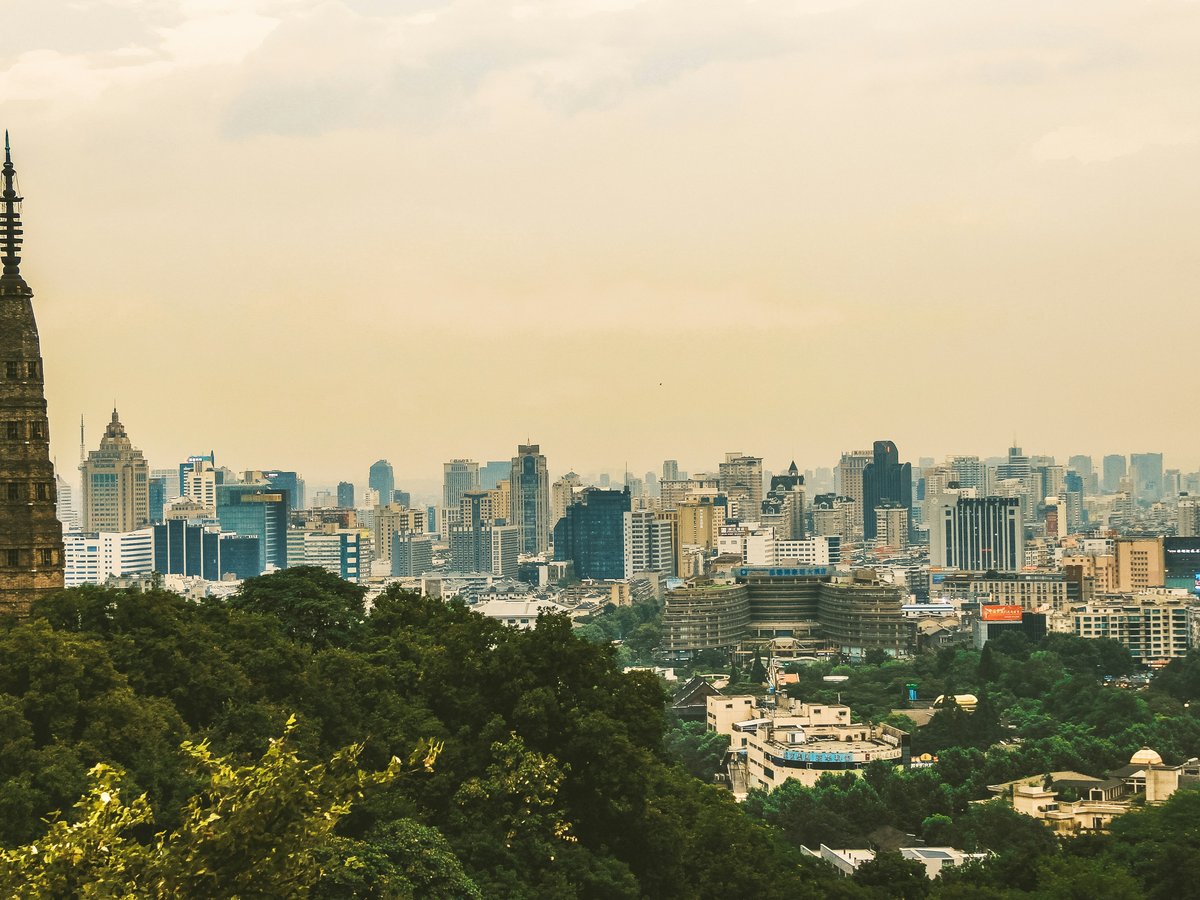
Nanjing's two biggest museums charge nothing. The city's most visited mausoleum and at least 4 major parks also operate on free-admission models, which tends to surprise visitors who budget for ticket fees at every stop. China's public museum policy dates to 2008, and Nanjing went further by removing gate fees from lakeside parks and memorial sites in the years that followed. You can fill 3 or 4 full days in this 2,500-year-old former capital of six dynasties without paying admission at a single attraction. The Qinhuai River promenade, the base of the Ming-era city walls, and forested trails on Zijin Shan add walking routes that cost nothing beyond comfortable shoes. To be fair, even the ticketed sights stay affordable at a current exchange rate near 6.71 CNY per dollar. Set up WeChat before arriving, because most free museums in Nanjing require advance booking through the app.
Free attractions
-
Memorial Hall of the Victims in Nanjing Massacre by Japanese Invaders (侵华日军南京大屠杀遇难同胞纪念馆)
This memorial opened in 1985 on the site of one of the mass burial grounds and has never charged admission. The permanent collection spans photographs, personal effects, survivor testimonies, and archaeological remains visible through floor panels in the main hall. The architecture by He Jingtang reinforces the gravity of the place with raw concrete and sharp angles that channel visitors through a deliberate emotional sequence. Allow at least 2 hours. Closed Mondays. Advance reservation through WeChat is required, and same-day slots fill quickly during national holidays.
Jiangdong Menmuseum, memorial -
Nanjing Museum (南京博物院)
Founded in 1950, Nanjing Museum houses more than 400,000 artifacts across 6 exhibition halls. The Art Hall tends to be quieter than the History Hall and holds scroll paintings that date to the Song dynasty. The Republic of China Hall reconstructs a 1930s Nanjing street with a working post office and tea house, complete with period advertisements on the walls and the hum of a gramophone playing in the background. Free with advance reservation. Closed Mondays. Plan for a half-day at minimum, longer if any of the rotating special exhibitions catch your attention.
Zhongshan Menmuseum -
Sun Yat-sen Mausoleum (中山陵)
The mausoleum sits on the southern slope of Zijin Shan, reached by a granite stairway of 392 steps from the memorial archway to the sacrificial hall at the summit. Entry is free with a timed reservation through the Zhongshan Scenic Area booking system. Morning visits before 10:00 tend to be less packed, and the view from the top back over dense forest canopy toward the Nanjing skyline rewards the climb. Mind you, other sites on Zijin Shan charge separate admission, so check before wandering into adjacent scenic zones.
Zijin Shanmausoleum, landmark -
Xuanwu Lake Park (玄武湖公园)
Nanjing removed the gate fee for Xuanwu Lake Park in 2010. The park covers 5 interconnected islands linked by causeways, with a stretch of the Ming city wall running along its southern shore. Willow-lined paths loop the water for roughly 10 kilometers, and the route is popular with joggers and early-morning tai chi groups. Lotus season peaks in July and August, when the northern bays fill with pink blooms and the humid air turns faintly sweet. You could spend 2 to 3 hours circling the full lake, or settle on one island with a thermos and a book.
Xuanwupark -
Qingliang Park (清凉公园)
A hillside park on the city's western edge, built around the site of a Southern Tang dynasty palace from the 937-975 period. Stone paths wind through old camphor trees, their bark rough and deeply furrowed, past carved inscriptions on the eastern slope. Qingliang Temple near the summit traces its origins to that same era. The park stays quiet on weekdays, a reliable retreat when the more popular sites feel crowded. Qingliang Park requires no reservation and charges no fee.
Qingliang Shanpark -
Cathedral of the Immaculate Conception (石鼓路天主教堂)
This Catholic cathedral on Shigu Lu has held services since 1870. The Gothic-style facade stands out against the modern shopping towers around Xinjiekou, maybe 500 meters to the east. Entry is free outside of service hours. The interior stays cool even in the sticky heat of a Nanjing summer, with stained glass filtering colored light through a vaulted nave. The Shigu Lu parish remains active, so expect to find parishioners at prayer and conduct yourself accordingly.
Shigu Lu, Xinjiekouchurch, landmark -
Yuhuatai Martyrs Memorial Park (雨花台烈士陵园)
A memorial park on a hill south of the city center, dedicated to those executed at this site between 1927 and 1949. The grounds spread across forested terrain with memorial sculptures, exhibition halls, and the distinctive Yuhua stones, rain-flower pebbles in translucent reds, yellows, and greens, that give the area its name. Yuhuatai is always free and open daily. The western paths see fewer visitors, and in summer the canopy is alive with cicadas and birdsong.
Yuhuataipark, memorial -
Ming Palace Ruins Park (明故宫遗址公园)
The ruins of the imperial palace that the Hongwu Emperor built after establishing Nanjing as his capital in 1368. What remains is mostly stone foundations, carved marble balustrades, and a few standing wall sections scattered across a grassy field. This palace served as the template for Beijing's Forbidden City, which borrowed its layout and orientation. The ruins park is free and rarely sees more than a dozen visitors on weekday afternoons. The site is more atmospheric than monumental, especially at dusk when the carved stone catches low amber light across the open ground.
Ming Gugongruins, park
Free activities
-
Qinhuai River and Fuzimiao Area Walk (秦淮河, 夫子庙)
The old inner Qinhuai River threads through the Fuzimiao district south of the city center. The Qinhuai riverside promenade is free to walk, day or night. After dark, red lanterns and neon signs reflect off the water while the smell of pan-fried dumplings and stinky tofu drifts from food stalls that line the banks. The Confucius Temple interior requires a ticket, but the surrounding streets, the Jiangnan Examination Hall exterior, and the river views cost nothing. Budget about 90 minutes for the loop from Wende Bridge (文德桥) south to Zhonghua Gate. For food recommendations along the route, see https://en.wikivoyage.org/wiki/Nanjing#Eat
Fuzimiao, Qinhuaiwalking route -
Laomendong Historical Block (老门东)
Laomendong sits south of Zhonghua Gate, a reconstructed neighborhood of grey-brick lanes modeled on late Qing and Republic-era architecture. Laomendong is free to walk through, no ticket. The alleys are narrow enough to hear conversations drifting from two courtyards away. At least half a dozen calligraphy studios, small galleries, and tea shops occupy the ground floors, with no obligation to buy. The southern end opens toward a quieter residential area where the careful restoration fades into real lived-in houses with laundry strung between balconies and the clatter of mah-jongg tiles behind screen doors.
Zhonghuamenwalking route, historic district -
Zijin Shan Forest Trails (紫金山步道)
Zijin Shan has a network of free hiking trails through dense forest. The main ridge route takes about 3 to 4 hours at a comfortable pace, from the eastern approaches near Xiamafang (下马坊) to the Taipingmen Gate area in the west. The canopy is thick enough that midsummer temperatures drop several degrees under the trees, and the leaf litter underfoot dampens sound to near-silence. The trail passes the outer walls of several ticketed attractions along the way without requiring entry to any of them. The summit reaches 448 meters and offers a panoramic view of the Yangtze River on clear days.
Zijin Shan (Purple Mountain)hiking -
Nanjing Yangtze River Bridge Walk (南京长江大桥)
The Nanjing Yangtze River Bridge completed a full renovation in late 2018 after more than 2 years of closure. The pedestrian walkway on the upper deck crosses the Yangtze with views of cargo ships, the wide brown river, and the city skyline from the southern bank. The bridge was built in 1968 as the first major Yangtze crossing designed and constructed with Chinese engineering alone. Walking the full span takes about 30 minutes in each direction, with the wind off the river picking up noticeably at mid-crossing. The bridgehead park on the south side has a small free exhibition on the construction history.
Xiaguanwalking route, viewpoint -
Ming City Wall Base Walk (明城墙)
Nanjing's Ming-era city wall stretches roughly 35 kilometers, likely the longest surviving ancient city wall in the world. Accessing the top at main entry points like Zhonghuamen or Jiming Temple requires a ticket at around 50 CNY. But walking along the base costs nothing and offers close-up views of brick construction dating to the 14th century. The stretch between Xuanwu Lake and Jiming Temple is particularly photogenic, with the weathered wall surface rising above the water on one side. The fortification was built between 1366 and 1393 under the first Ming emperor's orders.
Various (wall encircles the old city)walking route
Free events
-
Morning exercise gatherings (晨练)
Daily, sunrise to roughly 8:00Locals gather at dawn for tai chi, fan dancing, sword forms, and synchronized stretching routines in public parks across Nanjing. The southern causeway at Xuanwu Lake Park is the largest gathering point, where groups of 50 or more move in unison. The snap of silk fans opening in the cool morning air carries across the water. Visitors at any park can walk up, follow along, or watch from a bench.
Xuanwu Lake Park, Mochou Lake Park, Yuhuatai, and most neighborhood parks -
Community square dancing (广场舞)
Nightly, typically 19:00 to 21:00After dinner, groups of 20 to 50 women set up portable speakers and dance in synchronized routines on Nanjing's public plazas. The music ranges from folk songs to current pop, played at a volume that leaves no ambiguity about where the gathering is. The open area near the Confucius Temple riverside and the plaza outside Xinjiekou metro station both tend to draw regular groups on warm evenings.
Public squares and park entrances citywide -
National Memorial Day observances (国家公祭日)
December 13 annuallyDecember 13 is China's National Memorial Day for Nanjing Massacre victims, established in 2014. The Memorial Hall holds a public ceremony each year that is free and open to visitors, though security is heightened. Air raid sirens sound across the city at 10:00 that morning, and Nanjing observes a minute of silence. The mood across the city is solemn, with many businesses pausing at the siren.
Memorial Hall of the Victims in Nanjing Massacre -
Nanjing Museum rotating exhibitions
Ongoing, new exhibitions roughly monthlyThe museum's special exhibition hall cycles through free temporary shows, with several running at any given time. Topics have ranged from ancient jade to Republican-era photography to contemporary ink painting. Weekend lectures in the Nanjing Museum auditorium are also free, though seats fill quickly for popular speakers. Check the museum's WeChat mini-program for the current schedule and reservation availability.
Nanjing Museum, Zhongshan Men
What Costs Money, and Whether It Earns It
Not everything in Nanjing is free, and a few paid attractions carry enough weight to mention here. Ming Xiaoling (明孝陵), the mausoleum of the Hongwu Emperor on Zijin Shan, currently charges around 70 CNY. It holds a UNESCO World Heritage inscription from 2003, and the Sacred Way alone, a 600-meter stone path lined with carved animal guardians and military officials, makes the ticket worthwhile for anyone drawn to Ming funerary art. The Presidential Palace of Nanjing (总统府) runs roughly 35 CNY and covers the Republic-era government quarter where Sun Yat-sen was inaugurated as provisional president in 1912. Linggu Temple (灵谷寺) on Zijin Shan charges about 35 CNY and includes the Beamless Hall (无梁殿), a brick structure from 1381 built without a single wooden beam. Combo tickets covering multiple Zijin Shan sites tend to offer savings over buying individual admissions. The Jiangsu Nanjing Broadcast Television Tower charges for its observation deck, and Nanjing Botanical Garden, Memorial Sun Yat-Sen (中山植物园) on the eastern slope of Zijin Shan has a small entry fee as well. For a fuller list of sights and approximate prices, see https://en.wikivoyage.org/wiki/Nanjing#See
Free Walking Routes That Link the Sites
Several of Nanjing's free attractions sit close enough to connect on foot. The Fuzimiao-to-Laomendong loop takes about 2.5 hours at a relaxed pace, covering the Qinhuai River promenade, Zhonghua Gate viewed from outside, and the historical block's narrow lanes. The Zijin Shan circuit connecting Sun Yat-sen Mausoleum with the free forest trails fills a full morning with a solid workout. On the western side of the city, Qingliang Park and the Ming City Wall base trail near Qingliang Gate connect naturally for a 90-minute walk through quieter neighborhoods where the smell of frying scallion pancakes (葱油饼) drifts from corner shops. Nanjing Metro Line 1 and Line 2 intersect at Xinjiekou and reach most of these starting points for 2 to 5 CNY per ride, though the metro itself is not free. For detailed transit routing, see https://en.wikivoyage.org/wiki/Nanjing#Get_around
FAQ
Are museums in Nanjing really free?
Most national and municipal museums in Nanjing are free under a longstanding government policy. Nanjing Museum and the Memorial Hall both require advance reservations but charge nothing for entry. Some smaller private museums and specialized exhibition halls still charge admission. Be especially careful on Zijin Shan, where free and paid attractions sit right next to each other and it is easy to wander into a ticketed zone by mistake.
Do I need to book Nanjing's free sites in advance?
Yes, for the major ones. Nanjing Museum and the Memorial Hall use WeChat mini-programs for reservations. Sun Yat-sen Mausoleum uses the Zhongshan Scenic Area booking platform. Walk-up entry is not reliable at any of these three, especially on weekends and during national holidays in the peak season from April through October. Book at least a day ahead. For practical details on setting up payment apps and navigating language barriers, see https://en.wikivoyage.org/wiki/Nanjing#Cope
Is Nanjing safe for solo travelers?
Nanjing scores 6.8 out of 10 for solo-traveler safety (see the TTDI Solo-Safety Index). Street crime in Nanjing is low by global standards, and most free attractions sit in areas with visible security presence. The usual urban precautions apply around Fuzimiao at night, where pickpocket risk rises with the crowds. Public transit runs until roughly 23:00 on most metro lines. For more specific guidance, see https://en.wikivoyage.org/wiki/Nanjing#Stay_safe
What is the best time of year for free outdoor activities in Nanjing?
Spring from March through May and autumn from September through November offer the most comfortable walking weather. Late September, for reference, currently sits around 22 degrees Celsius with 95 percent humidity and frequent drizzle, typical for the tail end of the rainy season. Nanjing summers reach 38 to 40 degrees with high humidity, making extended outdoor time in July and August genuinely unpleasant. Winter is milder but grey, with January temperatures around 0 to 8 degrees. The plum blossom season on Zijin Shan in late February draws large crowds, though the best viewing areas fall within a ticketed scenic zone.
Is Nanjing a good city for families visiting on a budget?
Nanjing scores 6.5 out of 10 for family friendliness (see the TTDI Family-Friendliness Index). Parks like Xuanwu Lake and Yuhuatai have wide-open spaces where children can run freely. The Memorial Hall is free but deals with difficult subject matter, so parents should consider age-appropriateness before visiting with younger children. Most free attractions are stroller-accessible on main paths, though the Zijin Shan forest trails involve uneven terrain with exposed roots and loose gravel.
Can I visit all of Nanjing's free sites in a single day?
Not in a single day, given the distances between Zijin Shan and the Qinhuai River district. The Memorial Hall alone deserves 2 to 3 hours, and the Zijin Shan area with Sun Yat-sen Mausoleum plus the forest trails fills a full morning. A more realistic approach splits the free sites across 3 days. Day one for Zijin Shan. Day two for the Memorial Hall, Nanjing Museum, and the Yangtze River Bridge. Day three for the Qinhuai River walk, Laomendong, and Xuanwu Lake Park. That pacing also avoids the worst of the midday heat between May and September.
Last verified by automated review (v1.7.2) on . What is automated review?